Putting plays a crucial role in golf. You can often find yourself frustrated with missed putts. Many amateur golfers face challenges like the ‘yips’ or the belief that an anchored putter could ease their game. However, with practice and effective golf putting tips, you can enhance your skills and enjoy the game more.
Key Takeaways
Establish a consistent pre-putt routine to reduce anxiety and improve focus. Include steps like green reading, alignment, and mental preparation.
Maintain proper alignment and posture to enhance accuracy. Keep your eyes over the line and ensure your shoulders are parallel to the target.
Use a light grip pressure for better control. A relaxed grip allows for a smoother stroke and reduces anxiety during putting.
Consistent Routine
Pre-Putt Routine
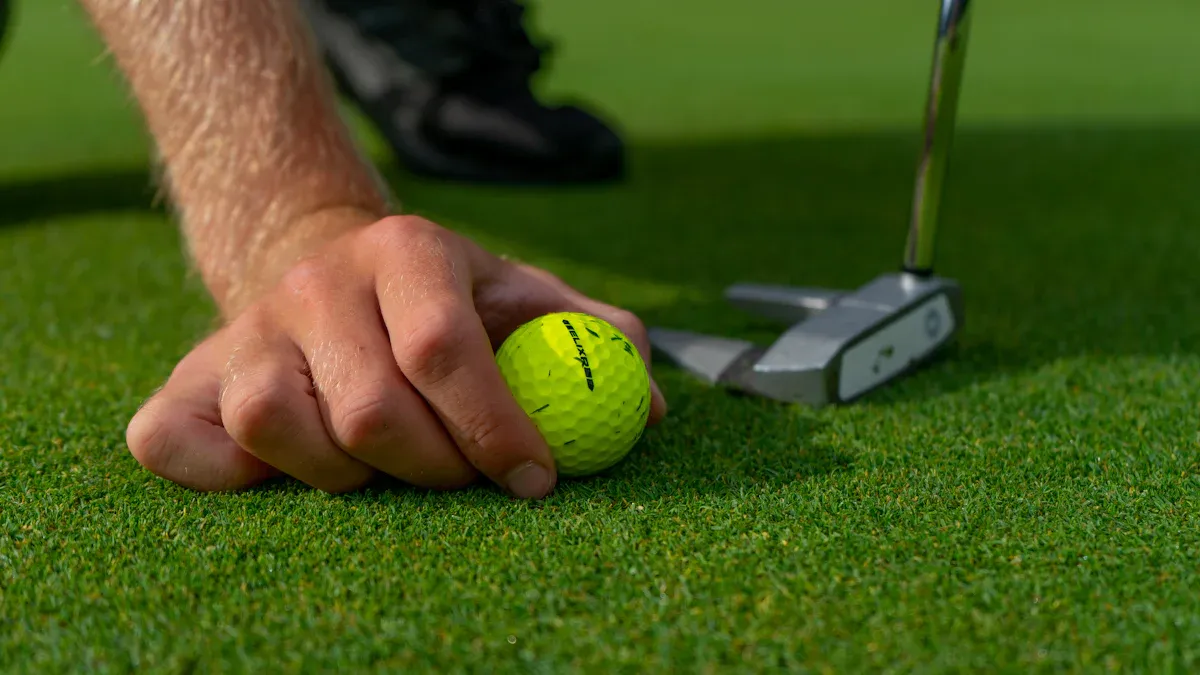
Establishing a consistent pre-putt routine is essential for improving your putting performance. This routine helps you focus and reduces anxiety. When you follow a specific sequence before each putt, you eliminate doubt and hesitation. Sports psychologists emphasize that a consistent routine enhances concentration, especially in high-pressure situations. If you skip steps or rush, your mind may wander, leading to inconsistent strokes.
Here are key elements to include in your pre-putt routine:
Green Reading and Visualization: Analyze the slope of the green and visualize the ball’s path.
Alignment and Setup: Ensure your clubface and body align correctly.
Practice Strokes: Take a few rehearsal strokes to calibrate your feel and pace.
Target Focus: Concentrate on the target line and where you want the ball to enter the hole.
Stroke Trigger: Establish a consistent trigger to start your stroke.
Mental Preparation: Use positive self-talk to build confidence.
Visualization Techniques
Visualization techniques can significantly enhance your putting accuracy. Many professional golfers visualize the trajectory and outcome of their putts before executing them. This practice boosts confidence and reinforces positive results. Nick Faldo once said, “Visualization is the most powerful thing we have.” Incorporating visualization, positive self-talk, and pressure simulation into your practice can lead to substantial improvements in your putting skills.
By developing a solid pre-putt routine and utilizing visualization techniques, you can gain better control over your putting game. Consistency in these practices will help you sink more putts and enjoy your time on the course.
Alignment for Success

Aim and Posture
Proper alignment is crucial for improving your putting accuracy. Research shows that golfers with correct alignment make 23% more putts from 6-10 feet compared to those who struggle with alignment. To achieve this, focus on these key points:
Maintain a steady posture: Set up with your feet shoulder-width apart and parallel to the target line. Lean forward from your hips so your eyes are directly over or just inside the ball.
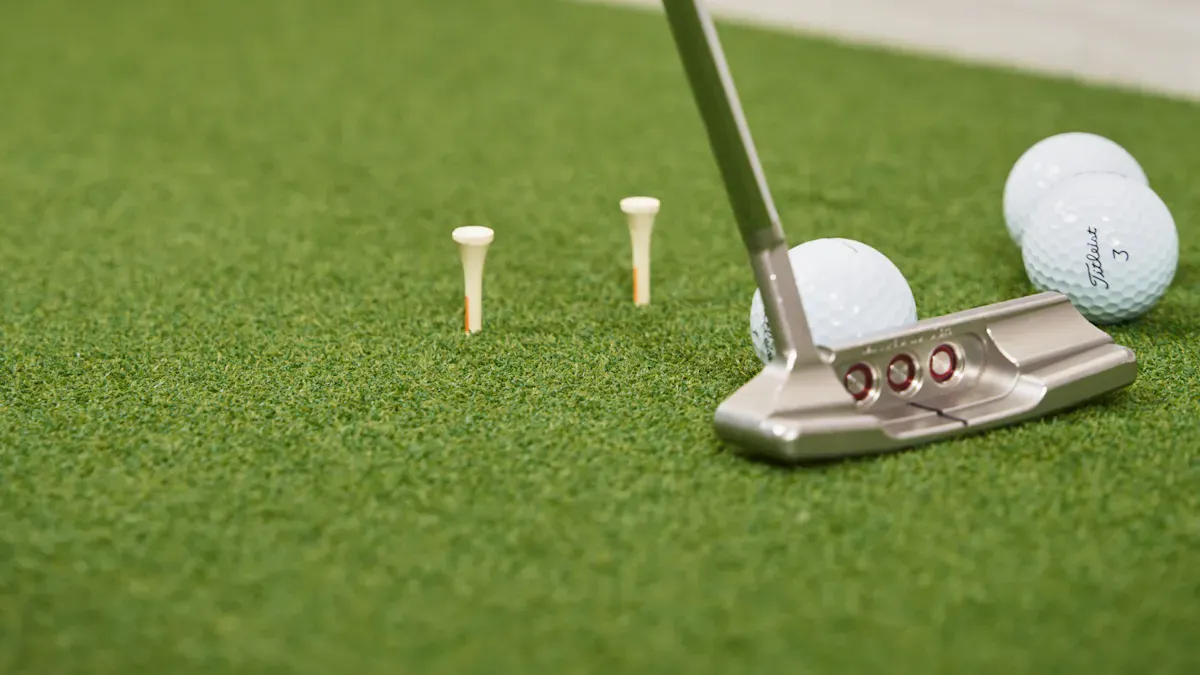
Align your shot: Ensure your body and putter face aim at the target. Visualize the path you want the ball to take.
Keep your head still: Focus on maintaining a steady head position and keep your eyes on the ball during the stroke.
Your shoulders play a significant role in directing your putting stroke. When your shoulders align parallel to the target line, your stroke naturally follows the correct path. Misaligned shoulders can lead to common errors, causing the putter face to open or close at impact.
Eyes Over the Line
The position of your eyes over the putting line greatly affects your accuracy. When your eyes are correctly positioned, you can better judge distances and angles. This natural ability often surpasses mechanical tools.
To ensure your eyes are in the right spot, aim from behind the ball to line it up with the hole. Remember, the direction of the putter face at impact determines the ball’s path. Keeping your eyes over the line helps you maintain focus and enhances your control during the stroke.
By mastering alignment and posture, you can significantly improve your putting game. Consistent practice of these techniques will lead to more successful putts and a more enjoyable experience on the course.
Grip and Control
Light Grip Pressure
Maintaining a light grip pressure is vital for optimal putting control. Professional golf instructors recommend a grip pressure rated around a 3 to 4 on a 10-point scale. This lighter grip enhances your feel and control during the putting stroke. When you grip the putter too tightly, you may experience increased cognitive anxiety, which can lead to performance decline.
Tip: Keep your hands and arms relaxed. A relaxed grip allows the putter head to swing freely, improving your overall control.
Hand Positioning
Proper hand positioning can significantly impact your putting accuracy. Here are some effective techniques to consider:
Grip Style: Many successful golfers, like Brad Faxon, use a finger-based grip with a reversed overlap. This grip promotes better control and feel.
Reverse Overlap Grip: About 60% of PGA Tour players use this grip. It encourages a unified hand action and consistent grip pressure.
Claw Grip: This grip is beneficial for golfers struggling with the yips. It reduces right-hand dominance and grip pressure, leading to a more stable stroke.
A proper grip directly influences your control and accuracy, which are essential for consistent putting performance. Common mistakes in grip pressure and hand positioning can lead to inconsistent shots. By focusing on these aspects, you can improve your putting game and reduce errors.
Speed and Distance
Controlling Speed
Controlling putting speed is crucial for sinking more putts. A strong putt holds its line longer, while a softer one is more likely to curve. Research shows that small errors in speed become magnified on longer putts. Therefore, mastering speed control is often more critical than perfect alignment. A ball rolling too softly can easily fall victim to the slope, moisture, and texture of the green.
Tip: Focus on both the line and speed during your practice sessions. Many golfers make the mistake of concentrating solely on the line, neglecting the speed component that significantly affects putt outcomes.
Drills for Distance
To improve your distance control, incorporate specific drills into your practice routine. Here are some effective exercises recommended by professional golfers:
Putt to 10, 20, 30, and 40 feet: Use targets at these distances to match your stroke size to the putt length. This helps with distance calibration.
Back-and-forth drill: Putt between two holes with different conditions. This exercise adjusts your stroke while maintaining the same putt length.
Eyes-closed putting: Putt with your eyes closed to enhance your feel and awareness of speed.
Draw-back game: Compete with a partner to finish your first putt within three feet of the hole. This promotes speed control.
Research indicates that golfers who engage in distance control training with immediate feedback show significant improvements in their putting performance. Practicing just five minutes daily, starting with shorter putts and gradually increasing distance, can lead to noticeable improvements in putting accuracy and distance control within a week.
Improving your putting skills requires dedication and practice. Focus on your pre-putt routine, alignment, grip, and speed control. Regular putting practice can lead to noticeable improvements in just a few weeks. Remember, consistency is key. Stay patient, and enjoy the journey to becoming a better putter!
FAQ
How can I improve my putting accuracy?
Focus on your alignment and grip. A consistent routine helps you sink more putts by building confidence and reducing anxiety.
What drills can help with distance control?
Practice distance drills like putting to targets at various lengths. This helps you develop a feel for speed and improves your overall putting performance.
Why is grip pressure important in putting?
Light grip pressure allows for better control and feel. A relaxed grip helps you maintain a smooth stroke, leading to more successful putts.