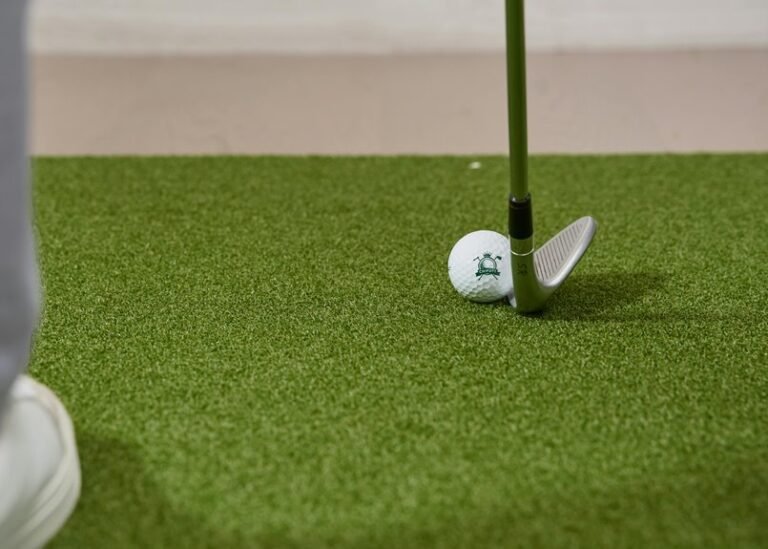

A better launch angle helps your driver send the ball farther with less wasted energy. Too little loft keeps the ball low and short. Too much loft sends it up too high and robs distance. The sweet spot comes from matching launch angle, swing speed, tee height, ball position, and spin.
What Is Golf Launch Angle?
Golf launch angle is the upward angle your ball leaves the clubface, and it plays a big role in how far and how well the ball flies.
As you watch your shot take off, you’re seeing launch angle at work, shaping your ball flight from the very beginning. A lower launch angle sends the ball out flatter, while a higher one sends it up sooner. That simple change can make your shots feel different, even as your swing stays the same.
For your driver, irons, woods, and hybrids, the right launch angle helps the ball match the club’s job.
Why Launch Angle Adds Distance
At the moment you launch the ball in the right window, you keep it in the air longer and gain more carry.
Too low, and the shot loses lift prematurely; too high, and it climbs too fast and falls short.
That’s why the best launch angle sits in a sweet spot that helps you turn swing speed into real distance.
Higher Carry Distance
Because launch angle shapes how the ball leaves the clubface, it plays a huge role in carry distance. You can consider carry optimization as your distance strategy, because the right launch angle helps the ball stay in the air longer without wasting energy. At the moment you match impact factors like speed, loft, and attack angle, you give yourself a better chance to add yards.
| Launch angle | Carry effect |
|---|---|
| Too low | Ball falls prematurely |
| Too high | Ball climbs fast |
| Just right | You gain more carry |
That’s why golfers like you often see better results as the ball leaves the face on a cleaner path. A small change can feel huge, and honestly, that’s where the fun starts.
Optimal Trajectory Window
The best launch angle sits in a small window, and that’s where extra distance starts to show up. At the moment you land in that sweet spot, your ball climbs enough to stay in the air, but not so fast that it stalls. You get cleaner carry, then more roll, and that feels like a win for your group and your game.
With flight path optimization, you’re matching launch and spin so the shot works with the wind, not against it. Small angle adjustments matter because a few degrees can change how high the ball peaks and how long it flies.
What Is the Ideal Driver Launch Angle?
For your driver, the ideal launch angle usually sits around 10 to 14 degrees, but your best number depends on your ball speed and how much spin you create.
Should you launch it too low, you’ll lose carry, and should you send it too high, the ball can stall and fall short.
At the moment you match launch angle with the right spin rate, you give yourself the best chance to squeeze out more distance without swinging like you’re trying to launch a satellite.
Optimal Launch Range
Upon teeing up a driver, the sweet spot is usually a launch angle of about 10 to 14 degrees, and that range gives most golfers the best mix of carry and roll.
You’ll often see launch angle trends line up near that window because solid club performance depends on a launch that rises, then keeps moving forward.
Should you launch it too low, the ball can bore through the air and lose distance. Should you send it too high, it can peak prematurely and fall short.
That’s why your best range feels like a friendly middle ground. It fits many swings, and it helps you stay in the same game with better players, without chasing perfect numbers.
Start there, then compare your own pattern from tee shot to tee shot.
Ball Speed Factors
Ball speed feels like the heartbeat of a good driver shot, and launch angle is a huge part of how far that beat can carry. You enhance ball speed with swing efficiency, so your body alignment, impact position, and club fitting all need to work together.
As your equipment selection matches your speed, the ball leaves the face with less wasted effort. You can build better contact through training drills that steady your tempo and sharpen your mental approach. Simple practice routines help you repeat the same strike, and that makes launch more reliable.
Then, use course strategy to pick the right moments to chase a higher flight and the right moments to keep it flatter. Once you belong to your own swing, the numbers start to feel friendly.
Spin Rate Balance
The best driver launch angle is a balancing act, because height and spin have to work together at the time you want real distance. You’re not chasing one perfect number; you’re matching spin rate to launch optimization, so your ball climbs, then keeps carrying.
As spin gets too high, it steals yards. If it’s too low, the shot can fall flat.
- Use trajectory control to keep your drive in the sweet zone.
- Check distance metrics and compare them with your swing efficiency.
- Make small equipment adjustments, like loft or tee height, to tune ball movement.
With better shot consistency, you’ll feel like you belong on the fairway more often.
For many golfers, the ideal driver launch angle sits near 10 to 14 degrees, but your numbers should guide you.
Match Launch Angle to Your Ball Speed
Whenever you match launch angle to your ball speed, you give your shot a much better chance to fly the way you want it to. You’re not chasing a perfect number alone. You’re finding your fit. Faster swings usually need a lower launch, while smoother speeds often benefit from a little more lift. That’s where smart launch angle adjustments help. Use ball speed correlations to guide your choices, not guesswork.
| Ball speed | Driver launch | Why it helps |
|---|---|---|
| 135 mph | 10-12° | Keeps flight from ballooning |
| 150 mph | 11-14° | Balances carry and roll |
| 165 mph | 12-16° | Supports solid carry |
Once your launch matches your speed, you’ll feel like you belong in the sweet spot group.
Set Up Your Driver for Better Launch Angle
You can get a better launch angle through starting with the right tee height, because it helps you meet the ball on the upswing.
Next, place the ball forward in your stance so you’re more likely to launch it higher without losing control.
Then fine-tune your driver loft, since small changes there can make your flight feel much easier and more powerful.
Tee Height Basics
Although tee height looks like a small detail, it can change how your driver strikes the ball and how easily you reach a better launch angle. You’re not alone when this feels tricky, but the right setup can make you feel settled and confident over the ball.
- Set the tee so half the ball sits above the clubface.
- Keep your ball placement just forward enough to help you catch it on the upswing.
- Match tee height to your driver loft and your normal strike pattern.
Should the tee be too low, you might lose launch and carry. Should it be too high, you can catch the ball thin.
Small changes help you build a smoother, more repeatable strike, and that’s where better distance starts.
Ball Position Setup
Now that your tee height is set, ball position is the next piece that shapes your driver launch angle. Place the ball just inside your lead heel, then check your alignment tips so your body doesn’t drift open or closed.
This ball placement helps you meet the ball on the upswing, which supports cleaner swing mechanics and better carry. Make small stance adjustments should you feel cramped, and keep your grip pressure light enough to let the club move freely.
You don’t need to force it; you just need a repeatable setup that feels like yours. Watch clubface orientation at address, then rehearse a few practice drills to lock in consistency strategies.
Whenever you build this habit, you’ll feel more confident, and your launch will start to match the group.
Driver Loft Adjustments
Should your driver shot keep flying too low or ballooning too high, a loft adjustment can make a big difference without changing your whole swing. You don’t need to guess alone; the right driver settings can assist you in fitting in with the golfers who launch it well and feel confident on the tee.
- Start with 10 to 14 degrees of loft for most drivers.
- In case your shots launch low, add loft in small steps.
- Should your shots climb too fast, reduce loft and check spin.
These loft adjustments work best whenever you match them to your swing speed and attack angle. A smoother swing often needs more loft, while faster swings could need less.
With a launch monitor, you can see what changes help your ball fly higher, carry farther, and still land with control.
Tweak Tee Height for More Carry
Should you want more carry, tee height is one of the easiest things you can adjust, and it can make a bigger difference than you might expect.
With smart tee height adjustments, you help the club meet the ball higher on the face, which can support a better launch. For a driver, aim for ideal teeing so about half the ball sits above the top line of the club. That setup often helps you strike up through the shot, not down into it.
Start small, then test each change until your flight looks taller and more efficient. Should you tee it too low, you could lose lift. Too high, and you can lose control.
Keep it simple, stay patient, and you’ll feel right at home on the tee.
Adjust Ball Position for Cleaner Contact
A small ball-position change can clean up your contact fast. Whenever you join your group on the range, start with ball alignment just inside your lead heel for drivers. Keep stance width steady, then check foot positioning so your chest can turn freely.
- A calm grip pressure helps your hands stay soft.
- Match swing tempo to your normal rhythm.
- Let shoulder tilt and hip rotation work together.
In case the ball sits too far back, your impact location can get thin or weak. In case it sits too far forward, you might flip the club. Watch clubface angle, keep wrist hinge natural, and you’ll strike it cleaner.
Small changes matter, and you’re not guessing alone. You’re building a setup that fits your game and your crew.
Choose the Right Loft for More Launch
Now that your ball position is giving you cleaner contact, the next piece is loft, because the club has to help the ball get up without stealing distance. You’re not guessing here. You’re doing loft determination with a simple goal: match the club to your launch optimization needs.
| Club | Good Loft | Best Use |
|---|---|---|
| Driver | 10-14° | Tee shots |
| 3-Wood | 12-16° | Fairway lifts |
| 6-Iron | 16-20° | Higher control |
Should your shots fly low and plunge prematurely, try more loft. Should they pop up and stall, go down a touch. That small change can feel like finding your people on the tee box. You’ll see better carry, cleaner shape, and more trust in every swing.
How Does Swing Speed Affect Launch Angle?
Swing speed shapes launch angle more than most golfers expect, because it decides how much loft you need and how the ball leaves the face.
Whenever you speed up, your swing mechanics and attack angle can produce more launch with less static loft. That means your ideal loft changes as your player experience grows and your impact position gets cleaner.
- Faster swings often launch higher with the same club design.
- Shaft flex can help you square the face and control launch.
- Equipment fitting shows whether your numbers fit your speed.
In case your speed is lower, you might need extra loft to keep the ball up. In contrast, if it’s higher, too much loft can balloon the flight.
Improve Launch Angle on Iron Shots
Should your iron shots keep coming out too low, the fix is often simpler than you believe. You can refine iron shot techniques through moving the ball a touch forward, keeping your hands neutral, and matching your face to the target.
Next, use launch angle drills with a tee or towel to feel a cleaner strike. Watch your impact position, because contact below center kills height fast. Then make small swing path adjustments so the club travels more up through the ball, not steeply down.
Smart club selection strategies also help whenever the turf is firm. Check lie angle considerations, since a poor fit can mute flight.
Finally, build practice routine improvements and shot consistency tips into every session, and you’ll start seeing the same helpful window more often.
Avoid Common Driver Launch Angle Mistakes
You can lose distance fast when you tee the ball too high, because the club can catch it above the center and send it on a weak, floaty path.
Excessive backspin can do the same thing by making the ball climb too quickly and stall out before it really carries.
The positive aspect is that once you spot these two mistakes, you can make small setup changes that help your driver launch cleaner and fly farther.
Over-Teeing the Ball
A tee that sits too high can quietly wreck a good driver swing. Whenever you use over teeing techniques, you invite common mistakes that push the ball above your sweet spot. That can make you feel out of sync, but you’re not alone.
Try these quick checks:
- Set half the ball above the driver crown.
- Match tee height to your normal strike.
- Keep your eyes on a clean, level setup.
Then trust your stance and let the club do the work. A sensible tee height helps you launch the ball with better control, and it keeps you in the group that swings with purpose.
In case you’ve been chasing extra height, a small adjustment can bring your contact back to center and make your drive feel much more solid.
Excessive Backspin
Excessive backspin can sneak into your driver shots and steal the distance you worked hard to build. Whenever you add too much spin, the ball climbs fast, stalls prematurely, and falls short. You can fight that with better backspin control.
Start with checking your tee height, ball position, and attack angle. A slightly upward strike helps your driver launch with less spin and more carry. Then match loft to your speed, because extra loft isn’t always your ally.
For distance optimization, watch launch monitor numbers, not just how the shot looks. In case your spin stays high, you’re not in the same distance crew yet, but you can be.
Small setup changes often bring smoother flight, more rollout, and a shot that feels right.
Use Spin to Shape Ball Flight
Spin gives you a real way to guide the ball, not just send it far. Whenever you learn spin control, you can make the ball fade, draw, or stay straighter whenever your group needs it. That skill builds trust in your swing and helps you feel like you belong on the tee, not just beside it.
- Use a slightly stronger grip to reduce slice spin.
- Keep the face a bit open or closed for shot shaping.
- Match ball position and club path so the curve feels natural.
With calm, repeatable contact, you can move the ball both ways without forcing it. Then your swing starts to feel cleaner, and your choices feel smarter. A little spin, used well, can save a hole and perhaps your self-esteem too.
Track Launch Angle With a Launch Monitor
Once you know how spin changes your ball flight, the next step is to measure launch angle so you can see what your swing is really doing. A launch monitor gives you exact numbers, and that makes data analysis feel less like guesswork and more like progress with friends beside you. Use it for performance tracking, club fitting, and equipment assessment.
| Check | What you learn |
|---|---|
| Launch angle | How your swing sends the ball |
| Variable loft | What your club adds at impact |
| Angle adjustments | What changes improve shot consistency |
When you compare readings, you spot swing mechanics that lift or flatten the shot. Then you can make small feedback loops, test again, and fine-tune for distance optimization. That’s how you join the group of golfers who trust numbers, not hunches, on the range.
Build a Repeatable Launch Plan
To build a repeatable launch plan, you need a simple routine that keeps your launch angle in a steady window from swing to swing. You’ll feel more at home in your own game as you follow the same steps each time.
Start with your setup, then check ball position and tee height, because they shape launch conditions.
- Match your club to your target window.
- Set your stance, then repeat your swing mechanics.
- Test the result and observe what changed.
If the launch climbs too high or stays too low, adjust one thing only. That keeps feedback clear and calm.
With steady practice, you’ll know what to trust, and your ball flight will start to feel less random and more like yours.
Frequently Asked Questions
How Does Launch Angle Differ From Spin Loft?
You can think of launch angle as the ball’s starting flight direction, while spin loft is the difference between club loft and angle of attack. Together, they influence spin rate, carry distance, and rollout.
Can Launch Angle Be Too High With a Driver?
Yes, a driver can launch too high. The ball may start with a strong flight, then lose speed and fall short. A good launch angle adds carry and rollout, but too much launch can reduce total distance. Your launch monitor data can help find the best window for your swing.
What Launch Angle Should My Fairway Woods Produce?
Your fairway wood should launch between 12 and 16 degrees, with both 3 woods and 5 woods often landing in that window. When your launch angle matches your swing speed and impact quality, carry distance usually improves.
Does Angle of Attack Matter for Irons Too?
Yes, angle of attack matters for irons too. It changes impact conditions, swing path, and distance control. In club fitting, your attack angle helps fine tune spin, launch, and consistency so you can match the right numbers.
How Do Wind Conditions Change Ideal Launch Angle?
Wind changes ball flight, so a headwind calls for a lower launch angle while a tailwind often supports a slightly higher one. Adjusting launch this way helps with distance control and club choice.