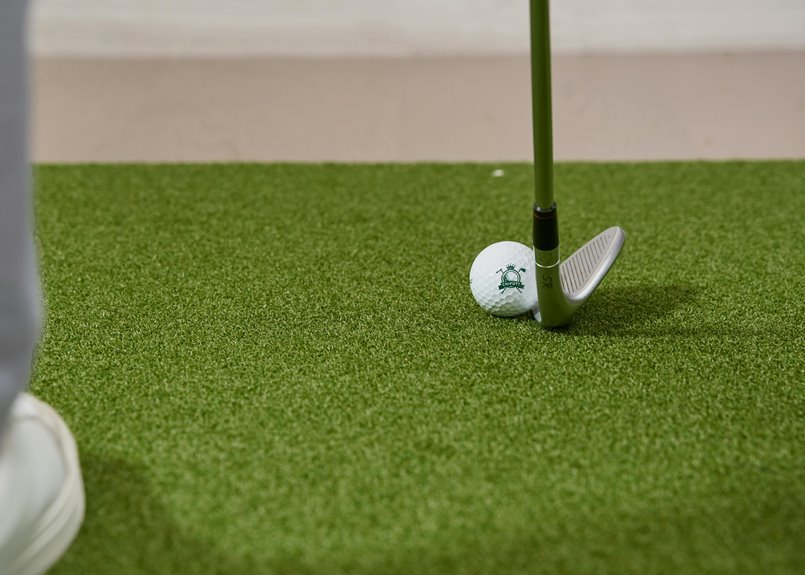

Golf ball spin control helps your shots stop faster on the greens. A little extra bite can keep a chip from rolling past the cup. The right ball, the right wedge, and solid contact all work together. Small setup changes and simple drills can help your chips and pitches check up more cleanly.
How Golf Ball Spin Control Works
You create that friction through Spin Mechanics and Impact Interactions, and both depend on clean contact. Whenever you strike the ball in the center, the grooves grab the cover and start the ball rotating. That rotation sets the spin rate, which you feel as control and shape.
Should your face be open or your contact get messy, the spin changes fast, and your shot can drift.
Why Spin Matters Around the Greens
Around the greens, spin gives your ball the stopping power you need, so it can land soft and stay close to the flag.
As you choose the right wedge or loft, you can add or reduce spin to fit the shot you face. That control makes touch shots feel a lot less like guesswork and a lot more like a plan.
Spin Creates Stopping Power
As you get close to the green, spin matters because it gives your ball the stopping power you need to attack pins with more confidence.
At the moment you create backspin, the ball can check, settle, and stay near your target instead of racing past it. That’s one of the biggest backspin benefits because it helps you feel in control, even under pressure.
Spin also adds touch at times you need to aim away from trouble, and sidespin applications can help the ball move toward safer space.
- Spin slows the ball after landing.
- Backspin helps you hold tighter targets.
- Sidespin can guide risky shots.
With better spin, you join the group of golfers who trust their short game and enjoy more chances to save pars.
Club Choice Affects Spin
Whenever you choose the right club, you give yourself a real chance to control the ball around the green instead of just hoping for the best. You can feel the club selection impact right away. A wedge gives you more spin, while a less lofted club asks for more roll and less check. That’s why your choice changes the shot before you even swing.
Then the loft adjustment effects kick in. Open the face a little, and you add height and spin. Keep it square, and you get a lower, softer release. As soon as you match the club to the lie, distance, and green speed, you join the players who trust their touch.
That small choice can calm nerves and make your short game feel like home.
Choose the Right Golf Ball
The golf ball you choose changes how much spin you can create, so you’ll want to pay attention to cover material initially.
Urethane-covered balls usually give you more bite on approach shots, while distance balls often trade spin for extra roll.
Your swing speed and feel matter too, because the right compression can help you control the ball without fighting it.
Cover Material Matters
Whenever you want more spin and better control, the golf ball’s cover matters a lot, because that outer layer helps decide how much the grooves can grab.
You’ll notice that cover materials shape how the ball checks on the green, so picking the right one helps you feel like you belong in the group of players who trust their short game.
Urethane covers usually give you more bite, while firmer covers trade some grab for extra distance.
- Choose urethane whenever you want sharper stopping power.
- Pick a softer cover whenever you want more greenside touch.
- Look for spin technology that matches your wedge game.
Whenever you match the cover to your swing, you give yourself a cleaner chance to control rollout and land shots with confidence.
Compression And Feel
A golf ball’s compression can change how the shot feels in your hands, and that feel often tells you more than the box ever will. Whenever you match compression to your swing, you get better compression benefits and steadier feedback on every strike. That matters because you want to trust your ball, not guess at it.
| Compression | Feel differences |
|---|---|
| Low | Softer, easy to sense on short shots |
| Mid | Balanced, with clear feedback and control |
| High | Firm, fast, and sharp at impact |
Should a ball feel too hard, you could tense up. Should it feel too soft, you might lose touch. So listen to the strike, notice the rhythm, and pick the ball that lets you belong in your own game.
Tour vs. Distance Ball
Choosing between a tour ball and a distance ball can feel tricky, but it gets much easier once one matches the ball to the kind of shots they want to hit.
- A tour ball gives one more spin, softer feel, and better check on the green. It helps one shape shots and stop faster.
- A distance ball flies long and straight, so it suits one who wants easy carry and less spin.
- Should one desire more control on wedges and chips, lean toward a tour ball. Should one want extra yardage and simple launch, a distance ball fits better.
When one knows their game, they’ll feel at home with the right ball. That choice can make rounds calmer, sharper, and a lot more fun.
Match Your Wedges to Spin Goals
Should you desire more spin, your wedge setup has to match the shot you’re trying to hit. Smart wedge selection gives you control, and the right loft helps you ask for the exact checkup you want.
Should you want a higher, softer landing, reach for more loft. Should you want a lower flight with less grab, choose less loft.
Next, consider spin techniques that fit your goal, not your ego. A clean face, good grooves, and a wedge that suits your swing speed all work together. That combo helps you feel confident over the ball, as though you belong there.
How to Create More Spin on Chips
Now that your wedges match the spin you want, the real trick is making that spin show up on little chips around the green. You can do it with calm chip technique and light grip pressure, because tight hands kill touch.
- Pick a short target and swing with a small, confident motion.
- Keep the face steady so the ball can grab the grooves.
- Finish low and balanced, like you belong in this moment.
Stay smooth, not snatchy. A quick jab makes the ball skid, but a patient strike helps it check sooner. Use a lofted wedge at times you need extra bite, and trust your feel.
The more you practice these small shots, the more your short game starts to feel like home.
Set Up for Cleaner Contact
Upon setting up with cleaner contact in mind, you give yourself a much better chance to strike the ball initially and let the club do its job.
Keep your ball position just a touch back of center, so you can meet the ball before the turf. Then set your hands slightly ahead, which helps you preserve loft and guide a sharper strike angle through impact.
Stand balanced, with your weight steady on your lead side, so your body stays quiet and your club can stay crisp. You don’t need to force anything here; you’re joining the right feel with the right setup.
As your stance looks simple and calm, you’ll feel more in control, and that comfort can make your contact tighter, cleaner, and far more dependable.
How Lies and Conditions Change Spin
Even a solid setup won’t guarantee the same spin every time, because the lie under the ball can change everything. You feel that right away as wet grass grabs the club or tight fairway turf lets it slide.
Those lie angle effects matter, because the sole and grooves meet the ball differently on each swing. On fluffy rough, turf interaction can slow the club and add grab. On hardpan, you might clip it thin and lose bite.
- Fresh, soft turf usually gives you more spin.
- Tight lies often reduce friction, so the ball releases more.
- Damp or muddy ground can mute spin and change your feel.
Once you notice these differences, you start reading the course like a teammate, and that builds trust fast.
Fix Common Spin Control Mistakes
Should your spin isn’t doing what you want, don’t worry, because most golfers are fighting the same small mistakes. You’re probably missing clean contact, setting the ball too far forward, or rushing the swing and killing friction. Those common errors steal backspin fast.
Instead, focus on simple adjustment techniques: move the ball a touch back, keep your hands steady, and let the club brush the turf after impact. You’ll also get better results whenever you choose a higher-lofted wedge and keep the face square through contact.
In case the ball still won’t check, check your grooves and strike point before chasing harder swings. Small fixes like these help you fit in with the players who make the ball stop when it matters.
Practice Golf Ball Spin Control Drills
Now that you know how to fix the common spin mistakes, it’s time to build those skills on purpose with drills that teach your hands, face, and tempo to work together. You’re not chasing perfection; you’re building feel with your crew of shots.
- Clean contact drill: Place a towel one inch behind the ball. Hit short wedges and keep the towel untouched.
- Spin control ladder: Hit three balls to short, medium, and longer targets. Try drill variations with the same swing and different loft.
- One-handed wedge swings: Use your trail hand, then lead hand, to feel a smooth release and better face control.
For practice consistency, keep records on strike, flight, and stop.
Whenever you repeat the same setup, your spin gets easier to trust, and that trust shows up on greens.
Frequently Asked Questions
What Spin Rate Is Ideal for Different Wedge Distances?
For 50 yards, aim for about 7,000 to 9,000 RPM. At 30 to 40 yards, target 8,000 to 10,000 RPM. For 20 yards, 10,000 RPM or more is ideal. The wedge you choose and how you create spin both affect control.
How Does Compression Affect Spin With Slower Swing Speeds?
At slower swing speeds, the ball usually spins less unless you use a softer compression. Cleaner swing mechanics help you compress it properly, and the right ball can improve feel, control, and consistency.
Which Ball Covers Produce the Most Greenside Spin?
Urethane covers typically generate the most greenside spin. Their soft outer layer and responsive construction let wedge grooves grab the ball more effectively, helping you control shots around the green.
Can Spin Be Increased From Rough or Wet Turf?
Yes, spin can increase from rough lies when the clubhead cuts through the grass cleanly and the face contacts the ball first. A steeper attack, added loft, and a urethane cover help create more backspin. Wet turf lowers friction, so spin is usually reduced rather than maximized.
How Do Grooves Wear Down Spin Performance Over Time?
Grooves lose bite as wear rounds their edges, reducing spin and control. Regular groove cleaning helps preserve performance, since wedges do not stay sharp forever, and that keeps you more consistent on the course.