
Mastering golf distance control is crucial for enhancing your overall performance on the course. Improved distance control directly impacts your ability to score better. For example, golfers with lower handicaps often score more birdies and fewer bogies. This correlation shows that mastering distance control can lead to lower handicap levels.
Focusing on specific techniques and drills for each club can significantly boost your accuracy. By doing so, you can develop a more consistent swing and make smarter shot selections.
Remember, practicing distance control not only improves your game but also builds your confidence as you approach each hole.
Key Takeaways
Mastering distance control can lower your golf scores and improve your overall performance.
Practice specific drills for each club to enhance your accuracy and develop a consistent swing.
Understand environmental factors like wind and slope to make informed decisions on the course.
Establish a pre-shot routine to improve focus and reinforce muscle memory during your swings.
Regular practice, at least three times a week, is essential for building confidence and skill in distance control.
Distance Control Basics
The Science of Distance
Understanding the science behind distance control in golf helps you improve your game. Several factors determine how far a golf ball travels when struck with different clubs. Here’s a quick overview of these factors:
Factor | Description |
|---|---|
Initial Velocity | The speed of the ball as it leaves the clubhead, influenced by head speed and club materials. |
Initial Angle of Flight | The angle at which the ball departs, determined by club loft and other factors. |
Golf Ball Spin | The revolutions of the ball, affected by club characteristics and swing path, impacting trajectory. |
Factors Influencing Distance Control
Many variables influence your distance control on the course. Here are some key factors to consider:
Variable | Description |
|---|---|
Clubhead Speed | For every mile per hour of clubhead speed, you can gain 1 to 3 yards with an iron, depending on other factors. |
Club Loft | The loft of the club at impact affects the distance; higher loft can lead to excessive spin and loss of distance. |
Horizontal Friction | The relationship between club path and face angle at impact affects distance; minimal friction is ideal for maximizing distance. |
Spin Loft | The difference between dynamic loft and angle of attack is crucial for maximizing distance and playability. |
Environmental conditions also play a significant role in distance control. Wind can impact your shots dramatically. Headwinds decrease carry distance and increase landing angles, making it harder to control distance on the green. Conversely, tailwinds can lower the apex of the ball, causing it to roll further upon landing. You must consider these conditions to maintain effective distance control.
By understanding these scientific principles and factors, you can make informed decisions on the course. This knowledge will help you adjust your swing and club selection for better distance control.
Techniques for Golf Distance Control

Woods and Distance Control
When using woods, you must develop a deep understanding of distance control. This knowledge helps you gauge the power needed for each swing. Here are some effective techniques to enhance your distance control with woods:
Understand Club Selection: Choose the right wood for the distance you want to achieve. Different woods have varying lofts and designs that affect distance.
Adjust Swing Speed: Modify your swing speed based on the distance you need. A slower swing may help you maintain control, while a faster swing can add distance.
Practice Drills: Implement practical exercises to sharpen your judgment. For example, practice hitting to specific targets at varying distances.
Manage Environmental Variables: Wind and elevation changes can impact your shots. Learn to adjust your aim and swing based on these conditions.
Irons and Distance Control
Irons require precise control to ensure accurate approach shots. Here are some techniques to improve your distance control with irons:
Grip Adjustments: Gripping closer to the butt end of the club increases leverage, enhancing clubhead speed and distance. Alternatively, gripping slightly down the shaft improves control and accuracy, especially in windy conditions.
Focus on Hip Rotation: Maintain balance during your swing by focusing on hip rotation. Avoid sliding over during the backswing; keep your left hip in position to ensure a proper strike.
Embrace Turf Contact: Good turf contact improves strike quality and distance. Ensure your hip moves out of the way to allow for a clean hit.
Wedges and Short Game Control
Wedges play a crucial role in your short game. Here are some techniques to enhance distance control with wedges:
Keep Those Hands Soft: Relaxing your grip prevents tension that can lead to inconsistency in distance control.
Develop Your Tempo: A smooth, steady tempo is essential for achieving consistent yardages.
Get to Know Your Distances: Practice to understand how far your wedges travel with different swing lengths.
The Clock Drill: Visualizing your swing as a clock helps you adjust your swing length for varying distances.
Understanding how spin rate influences your wedge distance control is also vital. Excessive spin can reduce potential distance and complicate control. Higher spin rates from tight lies can lead to more variability in distance. Therefore, focus on maintaining a consistent swing to manage these factors effectively.
By applying these techniques, you can significantly improve your distance control with every club in your bag. This improvement will lead to better approach shots and ultimately lower scores.
Drills to Improve Distance Control
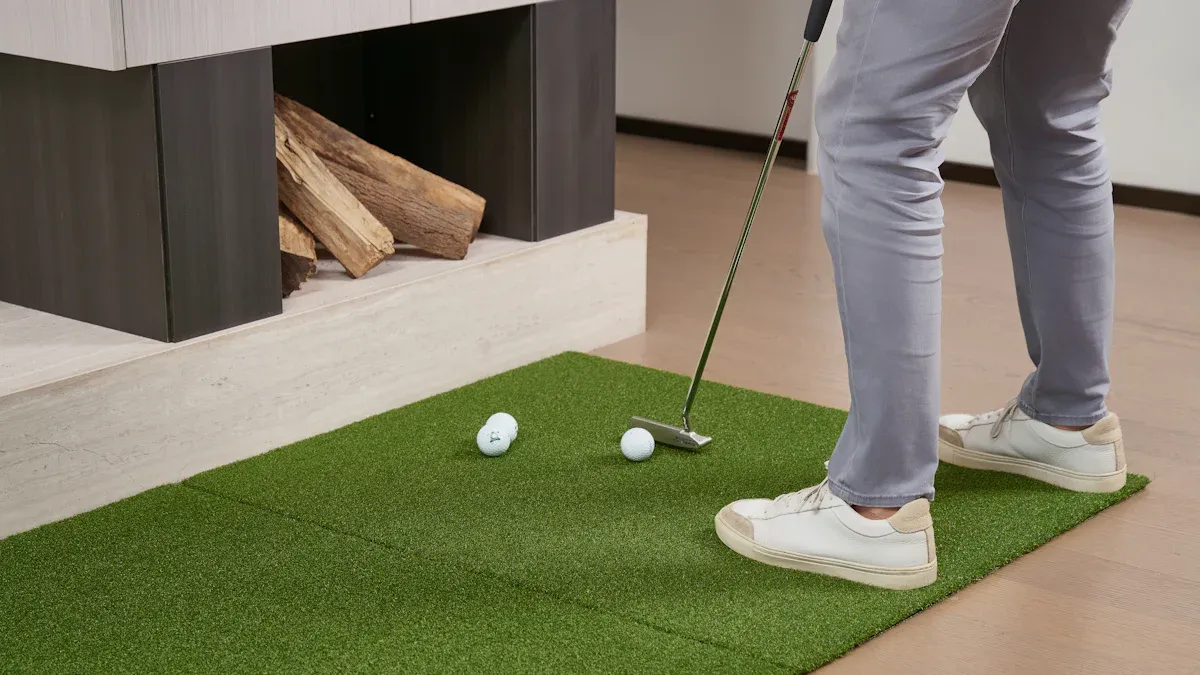
Target Practice Drills
Target practice drills help you refine your distance control. Here are some effective drills to consider:
Swing Speed Focus: Practice swings from hip to chest height. This emphasizes leg extension and proper follow-through. You will notice improvements in your swing speed and distance control.
Load, Squat, Jump Sequence: Incorporate this sequence into your practice. It utilizes leg motion effectively, enhancing your power and distance. This drill helps you develop a strong foundation for your swings.
To see measurable improvement in distance control, aim to practice these drills at least three times per week. Here’s a quick overview of what to include in your practice sessions:
Practice Frequency | Activities Included |
|---|---|
3 times per week | Putting, chipping, driving range exercises, supplementary drills |
Swing Tempo Drills
Swing tempo plays a crucial role in achieving consistent distance control. Here are some drills to help you develop a steady rhythm:
Tempo Awareness: Focus on the rhythm of your swing. A consistent tempo is vital for distance control.
Backswing to Downswing Ratio: Aim for a three-to-one ratio for your backswing to downswing. Studies show that maintaining this ratio improves your swing tempo and consistency.
Rhythm Swinging Drill: This drill helps you maintain the three-to-one ratio. It encourages a smooth transition between your backswing and downswing, leading to more predictable shots.
Many amateur golfers struggle with swing tempo. They often swing too fast, which negatively impacts their distance control. Slowing down your swing can lead to better results, especially under pressure. Developing a consistent swing tempo is essential for maintaining distance control when it matters most.
Consistency Drills
Consistency is key to reducing distance variability across different clubs. Here are some effective drills to enhance your consistency:
Effective Feedback: Use video analysis or a coach to get feedback on your swings. This helps you identify areas for improvement.
Differential Practice Drills: Vary your practice conditions. Change targets, distances, and club selections to challenge yourself.
Variability Practice Drills: Incorporate drills that require you to hit different shots with the same club. This builds adaptability and helps you achieve consistent contact.
By focusing on these drills, you will enhance your distance control and improve your overall performance on the course. Consistent practice will lead to better greens in regulation and lower scores.
Common Mistakes in Distance Control
Over-Swinging Issues
Many golfers struggle with distance control due to over-swinging. You might think that hitting the ball harder will send it farther. However, this approach often leads to inconsistency. Instead of relying on brute force, focus on technique. Here are some common over-swinging mistakes:
Trying to control distance through force instead of technique.
Inconsistent tempo based on putt length.
Poor practice habits that don’t replicate on-course conditions.
Setup Inconsistencies
Your setup plays a crucial role in achieving accurate distance control. Many golfers overlook this aspect, leading to mistakes. Here are some setup inconsistencies you might encounter:
Equipment inconsistencies: Using different putters for practice and play can hinder your development of reliable distance references.
Poor practice habits: Hitting multiple balls to the same target does not reflect the variability of actual play. This can lead to false confidence in your distance control.
Mental approach errors: Focusing on the hole instead of the optimal landing area can lead to poor pace judgment.
Ignoring Impact Conditions
Ignoring the conditions at impact can severely affect your distance control. You must consider factors like wind, slope, and grass type. Here are some common mistakes related to impact conditions:
Misreading greens can lead to misdiagnosed distance control issues.
Failing to adjust for wind can result in shots that fall short or overshoot the target.
Neglecting the effect of slope can cause you to miscalculate your distance.
By recognizing these common mistakes, you can work on improving your distance control. Focus on technique, ensure a consistent setup, and always consider the conditions at impact. This awareness will help you make better decisions on the course.
Tips for Consistent Distance Control
Pre-Shot Routine Importance
Establishing a pre-shot routine is essential for improving your distance control. A consistent routine helps you focus and blocks out distractions. Here are some key elements to include in your routine:
Visualization: Picture the shot you want to make.
Deep Breaths: Take a moment to relax and calm your mind.
Alignment Checks: Ensure your body and club are aligned with your target.
Engaging in your routine every time you hit the ball reinforces muscle memory. This practice builds familiarity and confidence on the course.
Mental Focus Techniques
Maintaining mental focus is crucial for achieving accuracy under pressure. Elite golfers use various techniques to enhance their concentration. Here’s a table of effective methods:
Technique | Description |
|---|---|
Box Breathing | Inhale for four seconds, hold, exhale, and repeat. This method helps manage anxiety and enhances focus. |
1-2-3-4-5 Method | Count audibly during your shot to interrupt negative thoughts and maintain focus. |
Ya-la-bam Sound | Use a sound pattern to block distractions and promote subconscious execution of your swing. |
Incorporating these techniques into your practice can help you stay calm and focused during your rounds.
Regular Practice Habits
Developing a systematic practice routine builds your skills progressively. Here are some recommended practices:
Start with Tempo Work: Begin sessions focusing on rhythm to establish a solid foundation for distance control.
Stroke Length Calibration: Practice different swing lengths to create reliable references for various distances.
Lag Putting: Work on lag putting to develop a strategic mindset for distance management.
Pressure Practice: Simulate on-course conditions to build mental toughness.
By incorporating these habits into your routine, you will enhance your distance control and overall performance on the course.
Mastering distance control in golf requires consistent practice and the application of effective techniques for each club. You should focus on drills that replicate on-course conditions. This approach builds confidence and enhances your performance. Remember, structured practice leads to better distance control. Techniques like pre-shot routines and pressure practice help you manage stress during your rounds. By implementing these strategies, you can improve your accuracy and lower your scores.
Start today, and watch your game transform!
FAQ
What is distance control in golf?
Distance control in golf refers to your ability to accurately judge how far your shots will travel. It involves understanding your clubs, swing mechanics, and environmental factors to hit the ball the desired distance.
How can I improve my distance control?
You can improve distance control by practicing specific drills, focusing on swing tempo, and developing a consistent pre-shot routine. Regular practice helps you understand your clubs and enhances your overall accuracy.
Why is swing tempo important for distance control?
Swing tempo affects the consistency of your shots. A steady rhythm allows for better timing and contact with the ball, leading to improved distance control. Focus on maintaining a smooth tempo during your swings.
What common mistakes hinder distance control?
Common mistakes include over-swinging, inconsistent setups, and ignoring impact conditions like wind and slope. Addressing these issues can significantly enhance your distance control and overall performance on the course.
How often should I practice distance control?
Aim to practice distance control drills at least three times a week. Consistent practice helps reinforce your skills and builds confidence, leading to better performance during actual rounds of golf.