

Bulk golf balls make the most sense when your game needs volume more than ceremony. You might be stocking a practice bucket, replacing lost balls for weekend rounds, or filling a shag bag for the backyard net. The right pack saves you from constantly hunting for singles, but the wrong one can leave you with scuffed finishes, odd flight patterns, or more wear than you wanted. This roundup keeps the focus on value, play style, and the kind of round you actually play.
Quick Look At The Best Bulk Golf Balls

Callaway Golf Supersoft Golf Balls

TaylorMade Recycled Golf Balls Mix

50 Mixed Brands Yellow Golf Balls Near Mint

WILSON 2024 Chaos Golf Balls 24 Balls

Nitro Crossfire 45 Golf Balls Yellow

LostGolfBalls Titleist Pro V1 392 Used Golf Balls 72 Pack

72 Kirkland Signature Performance Plus Near Mint White
Bastex 100 Hit-Away Used Golf Balls Bulk

NITRO Crossfire 45 Golf Balls Orange

Amazon Basics Core Soft Golf Balls
Callaway’s Supersoft line suits you well for relaxed rounds, practice sessions, and players who prefer a gentler feel at impact. Compared with the recycled options later in this list, this one leans toward a cleaner all-around course ball rather than a mixed-condition pack.
The standard-ball format keeps things straightforward, which matters when you want a familiar setup in the bag and fewer surprises off the tee. The trade-off is simple, though, you are paying for a more polished new-ball experience instead of the volume focus you get from the used-ball picks.
Strong Points
- Soft-feel profile suits relaxed swings and casual course play.
- New standard balls are easier to sort and rotate in play.
- Works nicely for golfers who want one dependable everyday pack.
- Cleaner condition expectations than recycled mixes with marks or logos.
Things To Consider
- It gives you less sheer volume than the 50-, 72-, or 100-ball options.
- Standard balls are less forgiving for budget-heavy range habits than used packs.
Feature Snapshot
Who It Suits Best
You get the most from this pick when you want a familiar all-purpose ball for league nights, weekend play, or repeat practice rounds.
Where A Sibling Pick Shines
TaylorMade Recycled Golf Balls Mix fits better for range-heavy golfers who want a bigger bundle and are comfortable with scuffs, pen marks, and mixed cosmetics.
This is the kind of pack that makes sense for golfers who burn through balls on the range or lose a few during casual rounds. Compared with Callaway’s cleaner new-ball setup, this TaylorMade mix leans into volume and accepts cosmetic wear as part of the deal.
The listing says the balls are free of cuts, yet light scuffs, blemishes, small color changes, smudged print, and player markings can show up. That trade-off is easy to live with for practice, and a little less appealing for anyone who wants every ball to look matched at address.
What We Like
- Pack of 50 gives you useful depth for practice sessions.
- Free of cuts, so the balls stay usable for routine range work.
- Good fit for golfers who value quantity over cosmetic polish.
- Mixed logos and pen marks can help you separate practice balls fast.
Worth Noting
- Scuffs and discoloration are part of the package.
- Packaging may vary, so the box presentation can differ.
- Used-ball condition is less predictable than a new standard ball.
At A Glance
Made For
You should look here for range sessions, backyard net work, and golfers who treat balls as consumables rather than keepsakes.
Another Choice May Suit
Callaway Golf Supersoft Golf Balls fits better for golfers who want a fresh, single-condition pack with a cleaner look and a more polished feel.
Yellow golf balls make a lot of sense on tree-lined fairways, in low light, or on practice ranges where tracking flight matters. Compared with the TaylorMade mix, this pack adds the visibility advantage of a bright color while staying in the recycled category.
The packaging details are more retail-logistics than performance, but they still matter because a 5-pound box in a 7.5 by 6.5 by 10.5 inch form is easier to picture on a shelf or in a trunk. The honest read is that you are buying color and quantity first, so cosmetic uniformity depends on the mixed-ball supply.
Highlights
- Yellow finish stands out more easily on grass and in rough.
- Near-mint sorting should suit players who want cleaner used balls.
- Mixed-brand setup can add variety for casual practice work.
- Handy for golfers who like bright balls they can spot quickly.
Areas To Watch
- Brand mix means consistency can vary from ball to ball.
- Used-ball condition is less controlled than a single-model pack.
- The package weight is substantial, so storage space matters.
Feature Rundown
The Right Fit
You fit this pack best when visible balls and practice quantity matter more than exact brand matching.
Swap It Out When
WILSON 2024 Chaos Golf Balls works better for golfers who want new balls instead of mixed recycled stock.
WILSON keeps this one straightforward, which suits golfers who want a clean new-ball pack without overthinking it. Compared with the recycled mixes above, you get a simpler route into course-ready balls, and that usually feels calmer in the bag.
The 24-ball count lands in a useful middle zone for players who want enough extras for a few rounds but not a giant storage burden. For most casual golfers, that size is easier to manage than a 50- or 100-ball pile, especially in a garage corner or cart tote.
Upsides
- New standard balls offer a more uniform starting point.
- Pack size is manageable for storage and transport.
- Good for golfers who want a simple backup stash.
- Pairs well with practice and casual weekend rounds.
Softer Spots
- You get fewer balls than the larger bulk packs here.
- Standard balls do not stretch practice dollars as far as used sets.
Core Details
Who Will Love This
You suit this pack best when you want a neat, no-fuss supply for regular recreational golf.
Look Elsewhere When
Bastex 100 Hit-Away Used Golf Balls Bulk is the better fit for range grinders who want much higher volume in one bag.
This Nitro pack sits neatly between the smaller 24-ball Wilson set and the larger recycled bundles. That makes it a sensible middle-ground for golfers who want a practice stash without committing to a huge box.
The yellow finish also helps with ball tracking during flight and on darker turf, which is a small comfort on busy ranges. The catch is that you are still in a standard-ball format, so you should expect the usual balance of course use and practice use rather than a specialized feel.
Best Bits
- 45-ball count gives you useful depth without a massive footprint.
- Yellow color makes individual balls easier to follow.
- Good fit for range sessions and general practice rotation.
- Works as a flexible stash for home nets or travel bags.
Small Caveats
- The standard-ball format is less tailored than premium tour-style options.
- Color helps visibility, but it does not replace better ball selection for skilled short-game work.
Details At A Glance
Best Suited To
You fit this pack best when you want a mid-size supply that travels well and stays easy to spot.
Reach For A Different Pick When
Callaway Golf Supersoft Golf Balls makes more sense for golfers who want a softer-feel fresh pack for regular rounds.
This pack is for golfers who want a familiar tour-style model in a bulk format and are comfortable with used-ball grading. Compared with the simpler mixed recycled sets earlier in the list, this one focuses more tightly on model consistency and performance traits.
The listing notes a high-gradient core, low long-game spin, responsive short-game spin, and a spherically tiled dimple pattern, which are the kinds of details serious practice golfers tend to care about. The honest read is that the condition is only graded as good, so cosmetic wear can show up even though the original construction stays intact.
Reasons To Buy
- 72-ball count is excellent for frequent practice and long sessions.
- Titleist Pro V1 model consistency helps you study familiar ball behavior.
- Low long-game spin can support a more penetrating flight shape.
- Short-game responsiveness suits players working on wedge control.
- Used-ball grading keeps the pack in a practical bulk category.
Room For Improvement
- Condition is used, so cosmetic wear is part of the expectation.
- Player markings or logos may be present, which some golfers dislike.
- It takes a bigger storage spot than the 45- or 24-ball options.
Technical Sheet
Built With In Mind
You fit this pack best when practice matters more than presentation and you want a recognized ball model in quantity.
Skip It When
TaylorMade Recycled Golf Balls Mix makes more sense for golfers who want a lower-commitment mixed pack with less emphasis on tour-style specs.
Kirkland’s Performance Plus used pack sits in a sweet spot for golfers who want soft-cover feel without paying for a fresh premium box. Compared with the Titleist Pro V1 bundle, this one leans more toward value and still keeps the feel-oriented construction that many casual and intermediate players like.
The listed build mentions a large soft core, a speed-boosting outer core, a fast mantle, and a soft urethane cover. That sounds technical, but the practical meaning is simple, you get a ball aimed at distance support and greenside control, with the trade-off of recycled condition instead of fresh packaging.
Positives
- 72-ball count is well suited to frequent play and practice.
- Near-mint grading keeps the cosmetics cleaner than rougher used packs.
- Urethane cover is a strong fit for golfers who care about short-game touch.
- Balanced construction makes it appealing across several skill levels.
Points To Note
- Used condition still means you should expect mixed cosmetics.
- White finish can show dirt more quickly than brighter practice colors.
Feature Card
Whose Shelf It Belongs On
You fit this pack best when you want a bulk used-ball option that still feels close to a more performance-minded model.
Where Another Pick Suits Better
Callaway Golf Supersoft Golf Balls is the cleaner match for golfers who prefer new balls and a simpler fresh-pack experience.
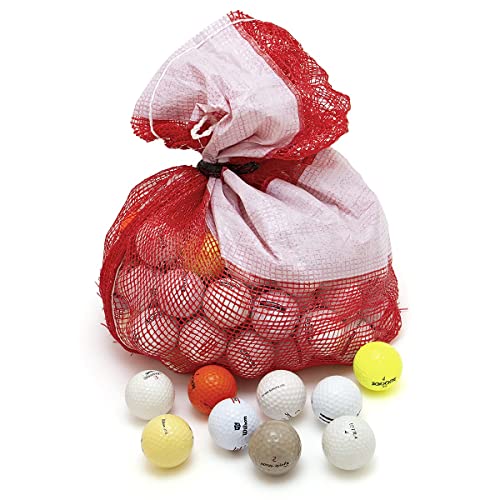
This is the kind of pack that belongs beside a practice net, a garage bucket, or a shag bag by the range stall. Compared with the 72-ball used sets above, Bastex pushes volume even harder, so it suits golfers who care more about repeated swings than about model consistency.
The mesh shag bag is the practical detail here, because a hundred balls can become messy fast without a sensible way to haul and store them. The trade-off is obvious, you are buying a training stash, not a polished course box, so the mixed condition is part of the story.
Bright Spots
- 100-ball count gives you serious practice volume.
- Mesh shag bag helps with transport and quick pickup.
- Good fit for buckets, drills, and backyard chipping work.
- Recycled format keeps the focus on utility over presentation.
Minor Gripes
- Used-ball mix means cosmetic consistency can vary a lot.
- Storage and carrying are easier with the bag, but still bulky.
- Not suited to golfers who want one matched model in the box.
Quick Facts
Perfect Match For
You fit this pack best when your main goal is repeated practice and you want a huge supply in one purchase.
Not Your Match When
WILSON 2024 Chaos Golf Balls works better for golfers who want a smaller fresh pack with a simpler course-ready feel.
The orange version stands out for golfers who want to spot balls fast in rough grass, dusk light, or a crowded practice bay. Compared with the yellow Nitro pack earlier in the list, this one delivers the same mid-size format with a different visibility profile.
That makes it useful for casual players, juniors, or anyone who simply likes bright gear that is easier to follow in flight. The trade-off is still the same standard-ball story, so it serves best as a straightforward practice and backup option rather than a specialized premium ball.
Reasons To Buy
- Orange color is easy to pick out on grass and dirt.
- 45-ball count suits regular practice without becoming unwieldy.
- Helpful for players who lose sight of white balls easily.
- Works well as a visible backup stash in the trunk or garage.
Areas To Watch
- Standard-ball build means it is not aimed at premium ball behavior.
- Bright color can show wear more clearly over time.
Core Details
The Right Fit
You fit this pack best when visibility matters as much as volume and you want a color that stands out fast.
Where A Sibling Pick Shines
Nitro Crossfire 45 Golf Balls Yellow is the better fit for golfers who prefer a softer-looking bright finish instead of orange.
This is the straightforward shelf-stable choice for golfers who want soft-feel balls without chasing a lot of extras. Compared with the brighter Nitro packs and the recycled bulk options, it aims for a simple, familiar role that works well for practice and ordinary rounds.
The plain branding may actually help here, because nothing about the ball tries to do too much. The trade-off is just as plain, you are getting a basic soft ball rather than the deeper performance features or model-specific sorting found in the higher-tier used picks.
Positives
- Soft-core positioning suits relaxed contact and casual play.
- Simple naming and format make it easy to understand at a glance.
- Good for starter sets, extra bags, and general practice use.
- Plain styling keeps the pack easy to mix into everyday gear.
Points To Note
- It does not bring the higher-end used-ball grading detail you get with premium recycled packs.
- You are getting a simpler option, so performance nuance is limited.
Feature Snapshot
Who Should Grab It
You fit this pack best when you want an uncomplicated soft ball for spare bags, practice buckets, or fresh stock on hand.
A Better Fit Elsewhere
LostGolfBalls Titleist Pro V1 392 Used Golf Balls 72 Pack suits golfers who want a more performance-specific used-ball route and do not mind visible wear.
How To Choose The Right Bulk Golf Balls
Match The Ball Type To Your Round
Start by separating standard balls from recycled balls, because that choice affects everything from consistency to cosmetics. Standard balls are cleaner and simpler for course play, while recycled balls make more sense for range work and high-volume practice. That split matters more than the color or the packaging.
Used packs also come with condition labels such as near mint or good, which tell you how much wear to expect. Near mint usually suits golfers who want cleaner looks, while good-condition packs are easier to accept for drills and casual swings. That small detail can save you from ordering the wrong kind of bulk stash.
Count Matters More Than It Seems
A 24-ball box, a 45-ball bag, a 72-ball bundle, and a 100-ball shag bag all serve different habits. Smaller counts are easier to store and move, while larger counts reduce how often you need to restock. For a garage net or a family practice setup, that difference is obvious very quickly.
The honest read is that more balls help most when you actually use them. A big pack looks efficient on paper, but a compact set can be the smarter fit for golfers who play less often or store gear in tight spaces.
Pay Attention To Color And Visibility
Yellow and orange balls make ball tracking easier in rough grass, dim light, or crowded practice areas. White balls stay classic and familiar, which many golfers prefer for course play. You will feel the difference most when you are hunting for a shot in a tree line or trying to follow a drive from the tee.
Color does not replace construction quality, but it can make a practical difference in how often you lose sight of the ball. That is especially useful for beginners, high-handicap golfers, and anyone who practices outdoors after work.
Think About Storage And Handling
A 100-ball set with a mesh shag bag is a different animal from a tidy 24-ball box. Bulk counts need a place to live, and the package shape affects whether you keep them in a trunk, closet, or garage shelf. A heavier recycled box can also be more annoying to move around than a smaller fresh pack.
For home practice, ease of pickup matters just as much as the ball itself. A bag or box that opens cleanly and stores without clutter makes the whole routine less annoying, and that alone can decide which option fits your space.
A Quick Reality Check
Wrong Turns To Avoid
Many shoppers focus only on count and forget condition. A large used-ball pack sounds efficient, but scuffs, markings, and mixed logos can matter more than expected once you start sorting them for play.
Another common miss is choosing a big box for a small storage area. A range bag, garage shelf, or trunk cubby needs a practical fit, not just a high number on the label.
Where The Extra Money Goes
Higher-tier bulk balls usually cost more because you are paying for cleaner sorting, stronger model consistency, and in some cases a more performance-minded construction. That includes things like urethane covers, graded used condition, and better attention to spin or flight traits.
The upgrade makes the most sense for golfers who care about short-game feel or want a familiar model across a larger practice supply. For casual range sessions, simpler packs often cover the need just fine.
Frequently Asked Questions
Are bulk golf balls only for practice?
No, you can use them for practice and for regular rounds. Fresh standard packs also work well as everyday course balls.
What does used-ball grading mean?
It describes visible condition, such as near mint or good. Lower wear usually means cleaner cosmetics, not a new ball.
Is a bigger pack always better?
Not really, because storage and usage habits matter. A smaller pack can be smarter for casual golfers with limited space.
Why do some bulk balls come in bright colors?
Bright yellow or orange balls are easier to track on grass and in dim light. That helps on ranges and in rough areas.
Which bulk ball type suits beginners best?
Standard balls or cleaner recycled packs are usually the easiest starting point. You get simple use without chasing specialty features.
Closing Thoughts
Bulk golf balls work best when you match the pack to your actual routine instead of chasing the biggest number on the box. For casual rounds, a fresh standard set feels simple and tidy. For range work, used packs and shag-bag bundles make more practical sense. The right choice is the one that fits your storage, your swing habits, and how often you really practice.

