

Golf practice gets a lot easier when you have the right mat under your feet. You get a cleaner strike zone, less wear on your lawn or garage floor, and a setup that makes short sessions feel worthwhile instead of random.
This roundup focuses on mats and practice setups that fit backyard reps, indoor corners, and mixed-space routines. You’ll see thicker turf options, compact putting styles, and a few integrated setups that suit golfers who want more than a flat patch of turf.
Quick Look At Our Top Picks

Bltend Golf Mat 36mm 5x4ft/6x4ft

GimYaa Golf Putting Mat Green with Auto Ball Return

Golf Net 10x7FT with Practice Mat
SAPLIZE Foldable Heavy-Duty Golf Hitting Mat 10mm EVA Backing

Golf Mat 5x4FT/5x5FT Dense Turf Hitting Mat

Premium Dual-Turf Golf Mat 5x4ft, 6x4ft

Integrated Golf Hitting Mat with Ball Tray

Golf Mat Practice Outdoor Indoor with Rubber Backing
More Details On Our Top Picks
The thicker 36mm build gives this Bltend mat a more anchored feel than slimmer practice pads, and that matters in a backyard where the surface can shift under repeated swings. The 5x4ft or 6x4ft sizing also gives you room to move through chips and full swings without feeling boxed in.
The dense artificial turf and EVA backing point to a setup made for routine use, though the larger footprint asks for a little more storage space than compact mats like the SAPLIZE foldable option. Golfers who want a single mat for driving, chipping, and simulator work will like that balance, especially in a garage or patio corner.
Strong Points
- 36mm thickness helps the mat feel more substantial under repeated swings.
- Available in 5x4ft and 6x4ft sizes, so you can match the space you actually have.
- Dense artificial turf supports both driver work and shorter chip shots.
- EVA backing adds a more cushioned base, which can help the mat sit more calmly on hard ground.
Things To Consider
- The larger size takes more room to store between sessions.
- Heavier-duty construction usually means less casual portability.
- The mat setup leans toward full practice stations, not tiny corners.
Feature Snapshot
Who It Suits Best
Backyard golfers who want a thicker, steadier practice surface will get the most from this one.
A Better Fit Elsewhere
SAPLIZE Foldable Heavy-Duty Golf Hitting Mat 10mm EVA Backing fits better for golfers who need a mat that stores more easily after practice.
Putting practice gets easier to repeat when the ball comes back to you, and that is the main appeal here. The crystal velvet surface gives this GimYaa mat a cleaner, more controlled putting feel than the heavier hitting mats in this list.
It suits a home office, a hallway edge, or a backyard strip where you want short reps without setting up a full hitting station. The honest trade-off is obvious: this is about putting rhythm, not full-swing impact, so it lives in a narrower lane than the Bltend or golfguru mats.
Highlights
- Auto ball return keeps practice moving without you chasing each putt.
- Crystal velvet surface gives a smoother putting lane than coarse hitting turf.
- Small footprint works well in tighter rooms and office corners.
- Indoor and outdoor use makes it easy to move between spaces.
Worth Noting
- It focuses on putting, so it does not replace a full hitting mat.
- The lighter setup may move around more on slick floors.
- Longer practice sessions still need enough floor space for the return path.
Core Details
Who Will Love This
Golfers who want a compact putting lane for daily touch work will appreciate this setup most.
Where A Sibling Pick Shines
Golf Mat 5x4FT/5x5FT Dense Turf Hitting Mat fits better for golfers who want to practice chips and fuller swings, not just putts.
This set stretches beyond a plain mat, since you also get a 10x7ft net and target-oriented practice space. That combination makes it useful for backyard swing work where you want a clear landing zone instead of aiming into open grass or a garage wall.
The assembly note matters because this kind of setup usually suits golfers who are comfortable with a little setup and takedown time. Compared with the standalone mats above, it brings more training structure, which is helpful for home practice but not as easy to stash in a tiny apartment closet.
Positives
- The included net gives you a protected target zone for driving practice.
- Target features help make each session feel more focused.
- It works for both indoor and outdoor use, depending on your space.
- The included practice mat helps you start training without extra pieces.
- It suits families or shared spaces where one setup serves several golfers.
Points To Note
- Assembly takes more effort than a simple drop-down mat.
- The larger footprint asks for real storage space.
- Net systems need more careful packing between sessions.
Details At A Glance
Built With In Mind
Home golfers who want a more complete hitting station will get the most from this set.
Look Elsewhere When
GimYaa Golf Putting Mat Green with Auto Ball Return suits golfers who only need short putting reps and want a smaller footprint.
Foldability is the detail that changes how this mat fits into everyday practice. You can use it for swing and chipping work, then tuck it away without committing a permanent patch of floor space to golf.
The 10mm EVA backing offers a more padded base than ultra-thin pads, though it still keeps the profile more compact than the thickest mats in this list. For garages, patios, and shared rooms, that middle-ground approach makes a lot of sense.
Best Bits
- Foldable design makes storage simpler after practice.
- 10mm EVA backing adds a cushioned feel underfoot.
- The size is roomy enough for driving, chipping, and putting work.
- It suits golfers who want one mat for several short sessions.
Small Caveats
- Foldable construction can feel less planted than a thicker fixed mat.
- The smaller profile may suit controlled practice more than heavy daily pounding.
- Storing it flat helps keep the shape tidy over time.
Quick Facts
Perfect Match For
Golfers who want a portable mat for short indoor or outdoor practice sessions will fit this design well.
Where Shoppers Go Wrong
Bltend Golf Mat 36mm 5x4ft/6x4ft fits better for golfers who want a thicker, more anchored surface and have the room for it.
This golfguru mat leans into the stuff many home setups actually need, a dense turf surface and a bundle of practice accessories. The 5x4ft or 5x5ft footprint leaves enough room for backyard swings without asking for the scale of a full net system.
The 10 balls and 9 tees matter because they reduce the odds of your practice ending early due to missing little pieces. Compared with the SAPLIZE foldable mat, this one feels more like a ready-to-use training base and less like a travel-friendly pad.
Reasons To Buy
- Dense turf supports repeated contact for driving and chipping practice.
- The included balls and tees make the setup more complete from day one.
- 5x4ft and 5x5ft size choices help match the space you have.
- It works well in a garage, patio, or indoor practice zone.
- The accessory bundle can help keep your session organized.
Areas To Watch
- The accessory bundle adds pieces you’ll need to store together.
- Dense turf can hold debris, so routine brushing helps.
- It still needs enough room around it for safe swing movement.
Feature Card
Whose Shelf It Belongs On
Golfers who want a more complete practice kit rather than just a bare mat will like this one.
Reach For A Different Pick When
Golf Net 10x7FT with Practice Mat is the better fit for golfers who want a net-based training station alongside the hitting surface.
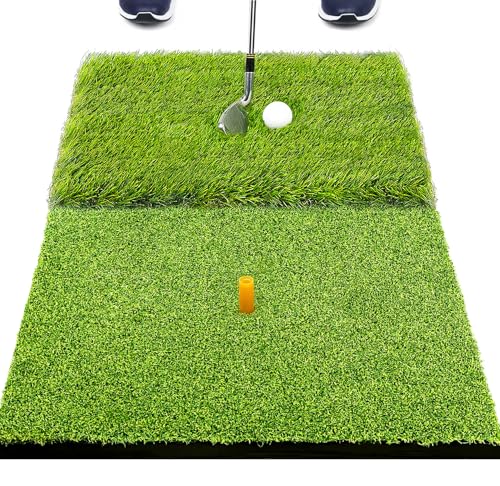
Dual-turf mats tend to appeal to golfers who want a little more variety from one surface, and that’s the pitch here. With 5x4ft and 6x4ft options, this Ywitio mat also gives you size flexibility that matters in a backyard or garage bay.
The thickness range is broad enough to suggest a more substantial base than basic entry mats, though that can also mean more weight and less casual portability. For golfers who split time between indoor and outdoor practice, it reads like a serious all-round setup.
Upsides
- Dual-turf construction gives you more than one practice texture.
- 5x4ft and 6x4ft options help with space planning.
- The thicker base should feel more planted on hard surfaces.
- It works for swing, chipping, and backyard range-style drills.
Softer Spots
- A more substantial mat usually takes more storage room.
- Heavier builds are less convenient for quick carry-outs.
- Dual turf is useful, but only if you plan to use both surfaces.
Technical Sheet
Who Should Grab It
Golfers who want a more complete mat for mixed practice sessions and have room to store it will appreciate this option.
Not Your Match When
Jspotib Golf Mat Practice Outdoor Indoor fits better for golfers who want a simpler, lower-profile mat with less bulk.
The ball tray changes the feel of this mat right away, because it keeps tees and balls closer to the hitting area. That kind of small convenience matters in a backyard session where you want less bending, less searching, and more actual swings.
At 5 ft x 4 ft and with thickness options listed at 1.02 in and 1.22 in, it sits in the practical middle ground for home practice. Compared with the thicker Bltend and Ywitio picks, this one looks more streamlined, which helps when you want a tidy setup rather than a heavy station.
Bright Spots
- The integrated ball tray keeps accessories grouped in one place.
- Three tees are included, which helps the mat feel ready for use.
- 5 ft by 4 ft offers a workable practice area for home setups.
- Two thickness options give you a little room to match your preference.
Room For Improvement
- The tray feature adds convenience, but it also adds another part to store.
- A medium-size mat can still feel tight for wide stance drills.
- Keeping the tray area clean will help the setup stay neat.
Feature Rundown
The Right Fit
Home golfers who want a tidy, organized practice mat with built-in convenience will get the most from this one.
Skip It When
SAPLIZE Foldable Heavy-Duty Golf Hitting Mat 10mm EVA Backing makes more sense for golfers who want a foldable mat that stores with less fuss.
This Jspotib mat keeps the setup simple, which is often what daily practice needs most. The rubber backing helps it feel more settled than a loose pad, and the listed use case covers chipping, swing path work, and indoor or outdoor sessions.
It’s the kind of mat that suits a garage corner, a patio slab, or a living room edge where you want to keep the routine easy. The trade-off is straightforward, there’s less of the thick, premium feel found on the Bltend or Ywitio options, but that also keeps the setup lighter and more approachable.
What We Like
- Rubber backing helps the mat sit more securely on flat surfaces.
- It works for both indoor and outdoor practice.
- The design suits chipping and swing path drills well.
- The simple layout makes it easy to bring out for short sessions.
Honest Caveats
- The lighter build may feel less substantial than thicker premium mats.
- Simple mats like this can show wear sooner in rough outdoor spots.
- You may want a larger setup for full-power drives.
Core Details
Who Should Grab It
Golfers who want a straightforward, easy-to-place mat for regular short practice will like this pick most.
Another Choice May Suit
Golf Mat 5x4FT/5x5FT Dense Turf Hitting Mat is the better fit for golfers who want more accessory support and a denser practice surface.
How To Choose The Right Golf Mats For Outdoor Use
Surface Feel And Thickness
Thickness matters because it changes how the mat sits under a swing and how much give you feel at impact. Thicker turf, such as the 36mm Bltend or the broader 21mm to 50mm Ywitio range, usually feels steadier for repeated sessions, while thinner mats work better for lighter, shorter practice. The trade-off is storage and weight, since more cushion usually means a bigger footprint and less grab-and-go convenience.
Size, Space, And Setup Style
Measure the spot where you plan to practice, then leave room for your stance and follow-through. A 5x4ft mat suits many home garages and patios, while a 10x7ft net setup needs much more breathing room. Compact putting lanes are useful for apartments or offices, but they do not replace a fuller hitting surface.
Backing, Grip, And Durability
Backing affects how the mat behaves on concrete, deck boards, or turf. EVA backing and rubber backing both help create a calmer base, though rubber often feels more planted on smooth hard ground. Outdoor use also means debris, dampness, and sun exposure, so easy brushing and dry storage matter more than they do with indoor-only gear.
Practice Goals And Accessory Value
Your practice goal should decide whether you want a bare mat, a putting lane, or a full net system. Golfers focused on swing mechanics tend to benefit from larger hitting mats, while short-game work pairs better with a putting mat and ball return. Bundled tees, balls, and trays can save time between reps, but they also add parts to keep organized.
What To Weigh Before You Choose
Wrong Turns To Avoid
A common mistake is buying a mat that fits the shot type but not the space around it. Another is choosing a compact putter’s lane for someone who wants chip work in the backyard, since the use case is narrower than it looks. Storage gets overlooked too, and a larger mat or net can become annoying quickly in a garage that already holds tools, bikes, or bins.
Matching the surface to the ground matters as well. A thicker mat usually handles concrete or pavers more comfortably, while a lighter pad makes more sense for a softer or temporary setup.
The Case For Spending Up
Higher-tier mats often cost more because they use thicker turf, denser backing, or dual-surface construction. That extra material can help the mat feel steadier, last longer, and handle repeated practice with less movement underfoot. In this category, the upgrade is worth it for frequent practice, heavier swings, or any setup that stays outside for long stretches.
The added cost also often shows up in convenience. Ball trays, full net systems, and bundled accessories can simplify your routine, especially when you want a practice area that feels ready every time you step outside.
Frequently Asked Questions
Can you use these mats on concrete?
Yes, many golf mats for outdoor use are built for hard surfaces like concrete, pavers, or garage floors. A backed mat usually feels steadier and kinder to the surface below.
Do thicker mats always work better?
Thicker mats usually feel more substantial and can be easier on repeated practice sessions. The trade-off is size, weight, and storage space.
Is a putting mat enough for full practice?
A putting mat helps with stroke rhythm and short-distance control. It does not replace a hitting mat for chips, drivers, or swing-path work.
What matters most for backyard use?
Size, backing, and storage come first for most backyards. You want a mat that stays put, fits the space, and is easy to bring out and put away.
Are bundled tees and balls worth having?
They are useful when you want less setup each time you practice. Bundles make the session feel more complete, but they also add pieces to store.
Final Thoughts
The right golf mat depends on how you practice, not just how much turf you get. A thick backyard mat suits fuller swings, a compact putting lane suits small spaces, and a net package works best when you want a more structured routine at home. You’ll save yourself a lot of frustration by matching the mat to your space, your shot type, and how often you plan to bring it out. Pick the setup that makes practice easy to repeat, and it’ll earn its place fast.

