


Upgrading a golf cart battery is usually about smoother starts, steadier power, and fewer mid-round headaches. The right 48v Golf Cart Battery also matters for commuters on gated communities, property owners moving gear, and anyone who wants a cleaner swap than piecing together aging lead-acid packs. This roundup focuses on lithium kits with useful app or display features, plus a few stronger-output options for carts that carry more weight or see longer routes.
Quick Look At The Shortlist
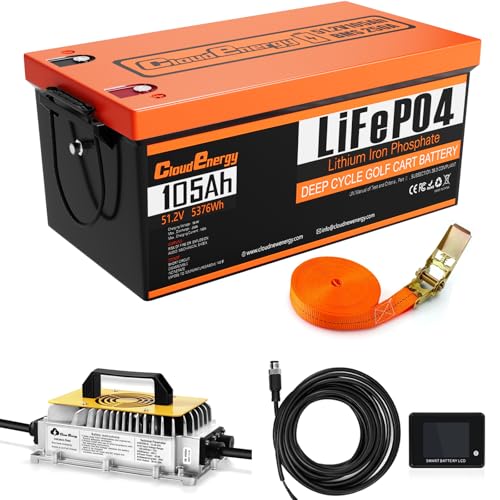
Cloudenergy 48V(51.2V) 105Ah LiFePO4 Battery Built-in 250A BMS

48V Lithium Golf Cart Battery Conversion Kit with Touch Monitor and Charger, 200A BMS

VATRER POWER 48V 105Ah Lithium Golf Cart Battery, UL2271 Listed

LOSSIGY 48V Lithium Golf Cart Battery Conversion Kit, Built in 200A Bluetooth BMS

48V 100Ah Golf Cart Battery, Metal Casing LiFePO4 Battery with 200A BMS

ELEFAST 105AH 48V Lithium Battery Golf Cart Kit with 200A BMS & Bluetooth

DC HOUSE Metal Case 48V 100Ah Lithium Golf Cart Battery Kit w/ 18A Charger

TEMGO 48V (51.2V) 100Ah LiFePO4 Lithium Golf Cart Battery

Cloudenergy 48V(51.2V) 105AH LiFePO4 Battery Built-in 250A BMS,3C Discharge
More Details On Our Top Picks
Cloudenergy gives you a large 105Ah pack, which matters most on longer rides or carts that spend the day moving through a neighborhood course. The built-in 250A BMS, a battery management system that helps handle power flow and protection, makes this feel like a serious replacement rather than a simple swap.
The mobile app and touch monitor help you keep an eye on charge status without opening anything up, and the retention strap is a practical touch for installation security. The trade-off is size and cost of commitment, since a higher-capacity pack makes the most sense for carts that truly use the range.
Strong Points
- 105Ah capacity suits longer daily routes and fewer recharge stops.
- 250A BMS supports demanding cart use with cleaner power management.
- App and touch display make charge checks less guesswork-heavy.
- Retention strap helps keep the install tidy and secure.
- Lithium chemistry avoids the upkeep routine common with older lead-acid packs.
Things To Consider
- The larger capacity can be more than you need for short neighborhood trips.
- App-based monitoring is handy, though some owners still prefer a simple physical readout.
- The larger pack rewards careful planning around mounting space.
Feature Snapshot
Who It Suits Best
Long-range cart owners and people who want app-based monitoring will get the most from this pack.
Where A Sibling Pick Shines
VATRER POWER 48V 105Ah Lithium Golf Cart Battery, UL2271 Listed makes more sense for you if you want a similarly sized option with a different control and listing profile.
OGRPHY leans into output, and that shows in the stated 200A BMS with 1000A peak current plus a 10.24kW output figure. For carts that haul passengers, tackle steeper terrain, or need a little more punch leaving a stop, that extra ceiling can matter more than a plain capacity number.
The touch monitor and charger round out the kit, so you’re not piecing together as many parts on your own. The honest read is that the power-first setup is better for drivers who value acceleration and reserve strength over a minimalist install.
What We Like
- High peak current suits carts that see heavier load demands.
- 10.24kW output gives you a clear power-oriented profile.
- Touch monitor helps make day-to-day charge checks easier.
- Charger included, so the package feels more complete.
- 4000-plus cycle claim points to long service potential for regular use.
Small Caveats
- The power focus may be more than casual, short-hop cart use requires.
- Larger performance headroom can come with a heavier setup to manage.
- Monitor-driven ownership works best for users who like data on hand.
Core Details
Whose Shelf It Belongs On
You’ll appreciate this most in a cart that carries people, cargo, or hilly-route demands.
Another Choice May Suit
DC HOUSE Metal Case 48V 100Ah Lithium Golf Cart Battery Kit w/ 18A Charger fits better for you if you want a more straightforward bundle with a metal-case build and charger pairing.
VATRER POWER takes a familiar 105Ah format and pairs it with a smart BMS, app access, and a touch monitor. That combination works well for owners who want capacity on paper and a little more visibility in daily use, especially on carts that stay in regular rotation.
UL2271 listed is the standout note in the source data, and it gives this pick a more formal safety-label story than some of the less detailed options here. The trade-off is that the listing leans technical, so you’ll want to value control and documentation over a stripped-down, plug-in-only experience.
Highlights
- 105Ah capacity suits routine golfing or community travel.
- Smart BMS helps support cleaner battery oversight.
- App and touch monitor give you two ways to check status.
- UL2271 listed status stands out for more cautious shoppers.
Worth Noting
- The more technical profile may feel like extra detail for simple swaps.
- App and monitor features help most when you plan to use them regularly.
- Installation still deserves careful checking around fit and spacing.
At A Glance
Best Suited To
You’re a strong match for this model if you want capacity plus clearer battery status tracking.
Skip It When
Cloudenergy 48V(51.2V) 105Ah LiFePO4 Battery Built-in 250A BMS is the cleaner fit for you if you want a simpler route to a high-capacity pack with a bigger current rating.
LOSSIGY gives you Bluetooth monitoring in a conversion kit shape, and that can be handy when you split use between a golf cart, solar setup, or RV-style power planning. The built-in 200A Bluetooth BMS makes the battery feel more connected without pushing the listing into unnecessary complexity.
The peak current figure is aimed at short bursts, which helps explain why this model shows up as a flexible utility pick rather than a pure cart specialist. Compared with VATRER POWER’s more formal listing story, this one reads as a broader-use option for people who like app access and a multi-role battery plan.
Positives
- Bluetooth BMS keeps monitoring close at hand.
- Conversion-kit format works for more than one setup.
- 200A BMS gives the pack a serious current-management ceiling.
- Short-burst peak support suits quick load demands.
Areas To Watch
- The broader-use angle may be more than pure golf-cart owners need.
- App-based monitoring still depends on your comfort with connected tools.
- Conversion kits usually reward careful fit planning before installation.
Details At A Glance
Right Fit For
You’re likely to like this most if your battery needs stretch across more than one kind of install.
Look Elsewhere When
TEMGO 48V (51.2V) 100Ah LiFePO4 Lithium Golf Cart Battery suits you better if you want a more cart-centered package with a charger and LCD screen included.
HumsiENK stands out because the metal casing gives the battery a sturdier, more enclosure-heavy feel than the lighter-looking kits above it. That matters in carts that see rougher storage, more vibration, or a utility role where the battery lives a busier life than a weekend machine.
The Bluetooth and LCD monitor combo gives you a couple of ways to keep tabs on the pack, and the 5.12kWh figure helps frame runtime in a more practical way. The trade-off is that a tougher shell can add bulk, so this fits best where durability matters as much as electronics.
Bright Spots
- Metal casing adds a more rugged housing style.
- 5.12kWh capacity gives you a helpful energy reference.
- Bluetooth and LCD monitoring cover two user preferences.
- 200A BMS supports stronger power management.
Points To Note
- The tougher enclosure can be less compact than simpler designs.
- Metal housing makes sense most in carts that face regular wear.
- Monitoring features help, though not every owner will use both every day.
Technical Sheet
The Right Fit
You’ll appreciate this most in a cart that needs a tougher housing style and easy monitoring.
Swap It Out When
Cloudenergy 48V(51.2V) 105Ah LiFePO4 Battery Built-in 250A BMS works better for you if you want more capacity and a stronger BMS rating.
ELEFAST pushes the bundle angle harder than most of the other picks here, because you get the charger, touch monitor, Bluetooth, and low-temperature protection in one package. For owners who want fewer separate parts to source, that can make the upgrade path feel cleaner right from the start.
The 105Ah capacity and 200A BMS place it in the same general lane as Cloudenergy and VATRER POWER, but the included 58.4V 18A charger changes the ownership equation. That matters most for a garage setup where you want the battery and charging plan to arrive together.
Reasons To Buy
- 105Ah capacity supports longer cart sessions.
- Charger included, which simplifies the whole kit approach.
- Low-temperature protection adds a helpful cold-weather layer.
- Bluetooth and touch monitor make status tracking easier.
- 200A BMS gives you a solid current-management baseline.
Minor Gripes
- The full-kit approach may be more than a replacement-only project needs.
- More bundled parts can mean more to store during setup.
- Owners with simple charging habits may not use every feature.
Feature Rundown
Made With In Mind
You’re the best match here if you want a bundled setup and plan to keep the cart in regular use.
Reach For A Different Pick When
DC HOUSE Metal Case 48V 100Ah Lithium Golf Cart Battery Kit w/ 18A Charger fits better if you want a simpler charger bundle with a metal-case design.
DC HOUSE keeps the formula focused: a 100Ah lithium battery, metal case, 18A charger, Bluetooth app, and LCD monitor. That gives you a tidy setup for carts that need a dependable replacement without drifting into the more specialized territory of some of the larger-capacity picks above.
The 670A peak current is the detail that helps this one stand apart from simpler 100Ah packs, especially for carts that need a little burst reserve. The build is still straightforward enough for owners who want useful monitoring without a maze of extras.
Best Bits
- Metal case adds a more protective outer shell.
- Charger bundle keeps the setup more complete.
- Bluetooth app and LCD monitor cover routine checking.
- 670A peak current offers useful short-burst headroom.
Trade Offs
- The 100Ah size is solid, though not as large as the 105Ah options here.
- Metal housing can add some bulk during install.
- Owners who prefer a very plain battery may not need both app and screen.
Core Details
Who Should Grab It
You’re a sensible match for this kit if you want a middle-ground battery with bundled charging and monitoring.
Where Shoppers Go Wrong
TEMGO 48V (51.2V) 100Ah LiFePO4 Lithium Golf Cart Battery may fit you better if you want a similarly sized pack with a different monitor style and a 58.4V 18A charger.
TEMGO sits in the useful middle ground, with 100Ah capacity, a 200A smart BMS, Bluetooth app access, and an LCD screen. For everyday cart use, that mix usually makes more sense than chasing the largest pack in the list, especially in a garage where clarity and consistency matter more than bragging rights.
The included 58.4V 18A charger rounds out the setup, so you get a fairly clean path from install to regular use. The honest read is that this one suits practical owners who want the basics done well and don’t need every extra feature under the sun.
Positives
- 100Ah size fits a wide range of routine cart use.
- Smart BMS helps manage the battery’s power flow.
- Bluetooth app and LCD screen give you flexible monitoring.
- Charger included, which simplifies the setup.
Softer Spots
- The 100Ah size is practical, though some users will want the larger 105Ah class.
- App and LCD features help most when you like monitoring details.
- Like any bundled kit, careful space planning makes installation smoother.
Quick Facts
Built With In Mind
You’re a good fit for this pack if you want a straightforward lithium upgrade with no overcomplication.
Swap It Out When
ELEFAST 105AH 48V Lithium Battery Golf Cart Kit with 200A BMS & Bluetooth suits you better if you want a larger-capacity bundle with low-temperature protection.
This Cloudenergy version looks like the more support-focused sibling to Item 1, because it adds a 20A charger and the source data highlights fast customer response. That makes it appealing for owners who want a more complete purchase path and appreciate a quick line to help when setup questions come up.
The 3C discharge note also matters, since discharge rate describes how quickly a battery can deliver its stored energy. Compared with the first Cloudenergy model, this one feels tailored to hands-on owners who want charger inclusion and direct support more than extra monitoring flourishes.
Upsides
- 105Ah capacity gives you the same strong range class as the sibling Cloudenergy model.
- 250A BMS supports strong power handling.
- 20A charger is included in the package.
- 3C discharge rating helps show stronger delivery capability.
- Source data points to responsive customer support.
Areas To Watch
- The monitoring story feels lighter than the app-and-screen setups above it.
- Non-returnable shipping handling in the source data calls for careful purchase planning.
- Owners who want the most polished display suite may prefer another pick.
Technical Sheet
Perfect Match For
You’ll like this most if you want a high-capacity battery with included charging support and direct help from the brand.
Not Your Match When
VATRER POWER 48V 105Ah Lithium Golf Cart Battery, UL2271 Listed is the better fit for you if app control and touch monitoring matter more than the bundled charger.
How To Choose The Right 48v Golf Cart Battery
Capacity, Range, And Real Use
Capacity, measured in amp-hours or Ah, tells you how much energy the battery can store. For short neighborhood loops, a 100Ah pack is often enough, while 105Ah gives a little more breathing room for hills, passengers, and longer errands.
The useful part is matching the pack to your actual week, not a wish list. A cart that mostly handles golf course laps can live happily with a smaller load than one used around a large property or retirement community.
BMS Ratings And Power Delivery
The BMS, or battery management system, is the control layer that helps handle charge and discharge behavior. Higher current ratings matter when your cart needs stronger acceleration, climbs steeper grades, or carries extra weight.
That’s where 200A and 250A numbers become relevant in this roundup. A modest cart may never stress them, while a busier setup benefits from that reserve without feeling strained.
Monitoring Features That Actually Help
Bluetooth apps, LCD screens, and touch monitors are not just decoration. They help you keep track of state of charge, spot usage patterns, and make charging routines less guesswork-heavy.
The catch is that more screens and apps only earn their keep when you’ll use them. Straightforward owners may prefer a battery with a clean display and fewer layers, while tinkerers usually enjoy having more data at hand.
Bundle Fit, Space, And Installation
Charger-included kits can save hassle, especially during a full conversion. Metal cases and retention straps add practical peace of mind, but they can also mean a bulkier install and a little more planning around compartment space.
That trade-off shows up fast in smaller cart bays. Measure first, then match the battery shape and accessory bundle to the room you actually have.
Things Worth Knowing First
Mistakes Worth Dodging
A common slip-up is focusing only on voltage and ignoring current rating, capacity, and physical fit. Another is assuming every lithium kit needs the same charging setup, which can lead to extra parts or awkward installation work.
Take a slow look at the monitoring tools too. A touch screen or app sounds nice, but a simpler setup often suits owners who just want to install the battery and drive.
What The Higher Tier Buys
Higher-end packs usually cost more because they bundle larger capacity, stronger BMS ratings, better monitoring, and a charger in the box. Some also add extras like low-temperature protection or a more protective housing.
That upgrade pays off for regular cart use, heavier routes, or owners who want fewer separate purchases. For light weekend driving, the extra features can be more than you really need.
Frequently Asked Questions
What size 48v battery works for a typical golf cart?
For many carts, 100Ah or 105Ah lands in a practical range. Your route length, terrain, and passenger load matter more than chasing a single number.
What does LiFePO4 mean?
LiFePO4 stands for lithium iron phosphate, a battery chemistry often chosen for steady ownership and lower maintenance habits. It’s common in this category because it pairs well with cart use and frequent cycling.
Do app and Bluetooth features matter?
They help most when you like checking battery status without opening the compartment. Owners who prefer a simple drive-and-charge routine may not use them every day.
Why does the BMS rating matter so much?
The BMS helps manage how the battery delivers power and handles charging behavior. A stronger BMS rating can matter more in carts that climb hills or carry more weight.
Should you choose a kit with a charger included?
That bundled approach usually makes the swap easier because the main pieces arrive together. It also reduces the chance of mismatching the battery and charger.
Closing Thoughts
The best 48v Golf Cart Battery for you depends on how far you drive, how hard your cart works, and how much detail you want in daily monitoring. A large-capacity pack like Cloudenergy’s 105Ah options makes sense for longer routes, while the OGRPHY and ELEFAST kits serve owners who care more about output headroom and complete bundle convenience. For a simpler middle ground, TEMGO and DC HOUSE stay easy to live with. Match the pack to your cart’s real routine, and the upgrade will feel much more natural.


