Choosing kids golf clubs is mostly about fit, not flash. The right set matches height, hand side, and skill level, so the child can swing without fighting the gear every step of the way. That matters in a backyard, at a lesson, or on a family trip where a club that’s too long becomes awkward fast.
This roundup keeps the focus on age ranges, club makeup, and practical setup details. You’ll see everything from tiny toddler toys with mats and carts to junior sets with drivers, hybrids, putters, and stand bags. The goal is simple, help you match the set to the child’s size, stage, and patience level.
Quick Look at the Shortlist

Confidence Junior Golf Clubs Set Age 4-7
Confidence Junior Golf Clubs Set Age 8-12

Liberry Toddler Golf Club Set Retractable Clubs

Liberry Toddler Golf Clubs Set With Mat, Blue

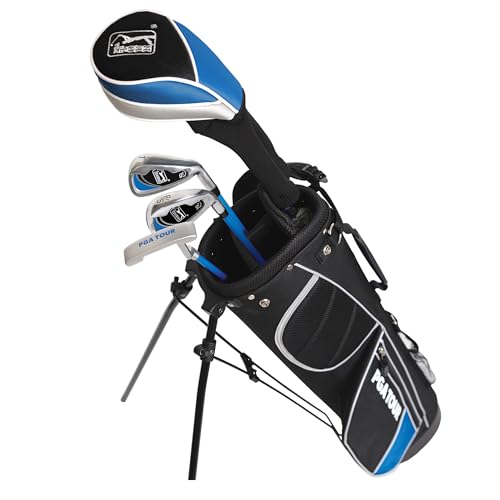
PGA Tour Youth Golf Club Set, Right and Left Hand
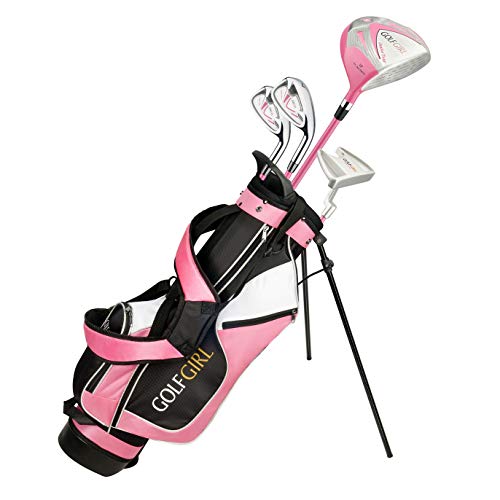
Golf Girl Junior Girls Golf Set V3, Pink


1GoTo-G Kids Golf Clubs Set With Stand Bag

Go For It Golf Adjustable Clubs, Right Hand
More Details On Our Top Picks
The 4 to 7 age range makes this Confidence set an easy starting point for smaller golfers who need clubs sized around early swings. The listing ties it to children up to 4’6″, so the fit is aimed at the stage where control matters more than power.
That narrower range helps in a backyard lesson or a family outing, since a club that matches the child’s body tends to feel less clumsy. The trade-off is obvious, you outgrow it sooner than a broader junior set, but that’s also the point for first-time starters.
What We Like
- Age targeting is clear, which makes sizing easier to judge.
- The junior format suits short practice sessions and casual family play.
- Smaller sizing can reduce the awkward overreach that frustrates new golfers.
Things To Consider
- The narrow height window leaves less room for growth.
- You’ll want to double-check fit against the child’s actual height, not age alone.
Feature Snapshot
Who It Suits Best
Young beginners who are just getting used to holding a club will get the most out of this size range.
A Better Fit Elsewhere
Confidence Junior Golf Clubs Set Age 8-12 suits taller kids who are already moving beyond the smallest starter size.
This Confidence set stretches to kids 4’6″ to 5’1″, so it gives growing juniors more breathing room than the smaller 4 to 7 version. That extra span matters for school-age players who need something they can keep using past the first season.
It fits the child who’s outgrown toy-style gear and needs a more serious junior setup without jumping straight into adult-sized clubs. The honest read is that the wider fit range makes it more flexible, though you still need to check handedness and total height carefully.
What We Like
- The height range covers a useful middle stage for growing kids.
- A complete set keeps the learning setup straightforward.
- The size makes more sense for backyard practice and lesson use than very small starter clubs.
Worth Noting
- It still depends on a pretty specific height window.
- Kids near the top end may be ready to move up sooner than you expect.
Core Details
Who Will Love This
School-age juniors who are still building comfort with the game will benefit most from this in-between sizing.
Where A Sibling Pick Shines
Go For It Golf Adjustable Clubs for Kids suits children who are still growing quickly and need more room for length changes.
Retractable toddler clubs are a smart answer for small hands that need less reach and less bulk. This Liberry set also includes a storage bag, which makes cleanup easier in a playroom or on a quick trip to grandma’s house.
The three-club layout, driver, iron, and putter, gives a child a simple way to mimic real golf without too much gear in the way. Since the rod body is stainless steel and the handles are meant for little hands, the set feels more purposeful than a basic plastic toy, though it still sits firmly in the play category.
Highlights
- Retractable clubs make the set easier to size for different toddlers.
- A storage bag helps keep the pieces together between uses.
- Three club types give kids a more varied pretend-play experience.
- Stainless steel in the rod body adds a sturdier feel than all-plastic toys.
Small Caveats
- The toy-style build suits play more than real course practice.
- Retractable parts deserve a little care during storage.
- The set makes the most sense for very young children, not older juniors.
At A Glance
Built With In Mind
Preschool kids who want a playful, golf-themed set will get the most out of this one.
Look Elsewhere When
PJG 23 Pcs Golf Clubs Set, Blue Cart suits homes that want a larger toy bundle with more balls and cart play.
The built-in mat and shoulder-strap cart make this Liberry set feel more like a little play station than a loose bundle of parts. For indoor afternoons, that matters, because you can set up a spot faster and keep the pieces moving together.
It’s aimed at the youngest children in the group, so the appeal is mostly ease of play and easy transport. The trade-off is that this kind of set is about repetition, coordination, and pretend golf, not the longer reach a school-age junior will need.
Bright Spots
- The mat gives you a ready place to practice putting indoors.
- The shoulder strap cart helps with carrying and storage.
- The blue colorway keeps the look clean and simple.
- The setup is friendly for short attention spans and quick play sessions.
Areas To Watch
- The toy format is better for pretend golf than course prep.
- Indoor mat use can take up a little floor space.
- Young children may need help resetting the cart and clubs after play.
Quick Facts
Right Fit For
Families with toddlers who want a neat indoor-outdoor toy set will probably get the most use from this one.
Another Choice May Suit
Liberry Toddler Golf Club Set Retractable Clubs fits preschool kids who want a more compact bagged setup instead.
The pink version keeps the same toddler-friendly cart idea but gives you a colorway that may land better for a child who likes brighter gear. That matters more than it sounds, because a set a child enjoys looking at tends to get pulled out more often.
Like the blue Liberry option, this one leans into easy carrying and simple indoor-outdoor play. The catch is that you’re still buying for very young children, so it’s a toy first and a junior golf bridge second.
Plus Points
- The pink finish gives the set a distinct look without changing the layout.
- The cart format helps keep the pieces together.
- It suits short, low-pressure play sessions.
Softer Spots
- The age range stays very young, so the set has a short usable window.
- It’s still more of a play item than a skill-building junior kit.
Details At A Glance
The Right Fit
Families shopping for a toddler gift with a softer style and easy carry setup will find this version appealing.
Swap It Out When
Confidence Junior Golf Clubs Set Age 4-7 is the better pick once the child is ready for true junior club sizing.
This PGA Tour set is built for older juniors, with sizing that reaches 4’8″ to 5’10” and hand orientation support for both sides. That range makes it feel more serious than the toddler sets above, and it’s a better match for a child who’s starting to practice with real intent.
The lightweight stand bag, mallet putter, hybrid, and driver cover a more complete practice setup than a toy-style bundle. You may find the broader age span useful for siblings or a child who’s growing fast, though the step up in gear also makes fit checks more important.
Reasons To Buy
- The wider height range gives more room for a growing junior.
- Right and left-handed use support adds flexibility.
- The stand bag is handy for lessons, storage, and travel to practice.
- A mallet putter, hybrid, and driver cover the basic shot types a junior needs.
Points To Note
- The more complete setup can feel like more gear to manage at first.
- Height and handedness matter here, so fit needs a careful look.
Core Details
Best Suited To
Older beginners and young golfers who are ready for a more complete setup will get the strongest fit here.
Where Shoppers Go Wrong
Golf Girl Junior Girls Golf Set V3 is the better fit for a right-handed child who wants a pink-themed junior set instead.
The Golf Girl V3 keeps things focused on a right-handed junior who wants a pink club-and-bag setup. That simpler identity can be helpful, because it narrows the choice without burying you in extras the child may never use.
Compared with the broader PGA Tour set, this one feels more style-led and more specific to a right-handed girl starting out. The honest trade-off is that it’s less flexible than an adjustable or dual-handed option, but for the right profile, that’s not really a downside.
Upsides
- The pink clubs and bag give the set a clear, kid-friendly look.
- The junior format helps bridge the move from toy gear to real practice.
- A matched bag keeps storage and transport simpler.
Areas To Watch
- Right-hand orientation narrows the fit to a specific swing side.
- The style choice is strong, but it won’t suit every child’s preference.
Feature Rundown
Whose Shelf It Belongs On
Right-handed girls who want a junior set with a playful pink finish are the clearest match for this one.
Skip It When
Go For It Golf Adjustable Clubs for Kids is the smarter call for a child whose height is still changing fast.
With 23 pieces, this PJG set is built more like a toy bundle than a junior training kit. That larger count can be appealing for a birthday gift or shared play space, where extra balls and a cart add to the fun.
The blue cart gives the whole set a more organized feel, and the four plastic clubs help keep the layout simple enough for indoor or patio use. The trade-off is obvious, the plastic-heavy approach works better for play than for a child who is already moving into serious practice.
Best Bits
- The 23-piece count gives you plenty in one package.
- Four clubs and ten balls offer lots of play variation.
- The cart helps organize a larger toy set.
Honest Caveats
- This is still a toy set, not a junior course kit.
- More pieces means more to store after play.
- Plastic clubs feel best suited to casual indoor or backyard use.
Spec Overview
Who Should Grab It
Families wanting a larger toy bundle for casual play or gifting will likely find this the most appealing.
Another Choice May Suit
Liberry Toddler Golf Club Set Retractable Clubs is a better fit for a smaller, more compact preschool setup.
Coverage from ages 3 to 14 makes this 1GoTo-G set unusually broad for a junior package. That range can suit families with more than one child, or a single child who needs room to grow before the clubs feel too small.
The lineup includes a stand bag, driver, hybrid, irons, and a putter, so the set covers more of the usual shot types a young golfer will meet. The upside is depth, while the downside is that a wide age span can make the sizing decision feel more important than with a narrow toddler set.
Standout Traits
- The age span covers both early juniors and older kids.
- Driver, hybrid, irons, and putter offer a more complete practice mix.
- The stand bag is useful for storage and range days.
- Right and left-hand support broadens the fit options.
Minor Gripes
- The wider range makes careful fit checking more important.
- More club types can mean more to carry around.
Key Specs
Made For
Households that want one junior set to cover a wide age span will get the strongest use from this option.
Reach For A Different Pick When
Confidence Junior Golf Clubs Set Age 8-12 is the easier call for a tighter, more predictable fit range.
Adjustable clubs make a lot of sense for children who grow fast, because the set can stay useful through more than one stage. In a home where the same child keeps coming back to the game, that kind of flexibility can be easier to live with than replacing a fixed-size set too quickly.
This Go For It Golf option is right-hand only and aimed at ages 5 to 12, so the fit is more focused than the wider family-style sets above. The upside is a cleaner match for a right-handed junior, while the trade-off is that left-handed children need another route.
Strong Points
- Adjustable sizing helps the set stay relevant as a child grows.
- The age range fits a useful junior window.
- Multiple club options give you room to tailor the setup.
Room For Improvement
- Right-hand only design narrows the fit.
- Adjustable gear usually asks for a little more setup attention.
Feature Card
Perfect Match For
Right-handed kids who are growing quickly and need a more adaptable junior setup are the clearest fit here.
Not Your Match When
PGA Tour Youth Golf Club Set is the better route for families who want a broader handedness setup and a more complete bagged kit.
How To Choose The Right Kids Golf Clubs
Match The Clubs To The Child’s Body
Height matters more than age alone. A child who is tall for their age can outgrow a labeled age band quickly, while a shorter child may struggle with a set that sounds right on paper but feels long in hand.
Look for height guidance first, then use age as a rough cross-check. The goal is a swing that feels smooth enough to repeat, not one that forces the child to reach or stand too upright.
Choose Between Toy Play And True Junior Use
Toddler sets with mats, carts, and plastic clubs suit playrooms, patios, and short attention spans. Junior sets with drivers, hybrids, putters, and stand bags make more sense once the child wants to copy a real golf motion.
The difference shows up in daily use. Toy sets are easier to carry and store, while junior sets usually bring better long-term value for a child who plans to keep learning.
Check Hand Side And Club Mix
Right-hand and left-hand versions are not interchangeable, so handedness should be settled before anything else. A mismatch can make the whole set feel awkward, even when the size is close.
After that, look at club variety. A driver, hybrid, irons, and putter cover more shot types than a single club or two, which helps once lessons become more structured.
Think About Storage And Portability
A stand bag or cart helps keep everything together between range time and home storage. That matters in a car trunk, a garage corner, or a shared closet where loose clubs are easy to misplace.
Retractable parts, shoulder straps, and lighter builds can be a real help for younger children. The trade-off is usually less heft and sometimes less staying power, so the best choice depends on how often the set will be moved around.
What To Weigh Before You Click Through
Common Shopping Slip Ups
Age labels can be tempting, but height and handedness carry more weight in this category. A set that misses either one tends to sit unused, which is a shame when the child would have loved golf with the right fit.
Another common miss is choosing a toy bundle for a child who already wants a real junior setup. The fix is simple, compare the club mix and bag style against the child’s actual stage, not just the headline age range.
The Upgrade Payoff
Higher-tier junior clubs usually bring better sizing detail, more complete club mixes, and better carrying systems. That extra refinement costs more because you’re moving from a play pattern to a more serious practice pattern.
The upgrade is worth it for kids who practice often, join lessons, or keep asking for clubs that feel less toy-like. For occasional backyard use, a simpler set often makes more sense and keeps things easier to manage.
Frequently Asked Questions
What age is a kids golf club set usually for?
That depends on the specific model, because some sets target toddlers while others fit school-age juniors. Height guidance is often the cleaner way to judge fit.
Do you need left-handed clubs for left-handed kids?
Yes, handedness should match the child’s swing side. A right-hand set can feel awkward fast for a left-handed golfer.
Are toddler golf sets the same as junior golf sets?
No, toddler sets are usually toy-oriented and easier for play at home. Junior sets are shaped more like real golf gear and suit practice better.
What club types help most in a starter set?
A driver, hybrid, and putter give a useful spread for basic practice. A stand bag also helps with carrying and storage.
What should you check before choosing a set?
Start with the child’s height, handedness, and how serious the golf interest really is. Those three details narrow the list fast.
Closing Thoughts
The right kids golf clubs should feel easy in the hands and sensible for the child’s current size, not aspirational on a shelf. Tiny toddlers do better with playful carts and mats, while older juniors need real club mixes and clearer fit ranges. The good news is that there’s a strong option for nearly every stage here. Match the set to the child’s body and interest level, and the game tends to feel a lot more natural from the start.