Golf swing tools help you work on face control, grip, tempo, and alignment without turning every practice session into guesswork. That matters whether you hit balls at a range, swing in a backyard net, or run quick drills before a round. The eight picks below cover simple alignment aids, connection trainers, grip guides, and feedback mats, so you can match the tool to the part of your motion that needs attention.
Quick Look At The Shortlist

Divot Board Patented Low Point and Swing Path Trainer

Tour Striker Smart Ball Golf Swing Training Aid

Amazon Basics Golf Swing Trainer Aid and Warm-Up Practice Stick

Seticek 2 Pack 48″ Golf Alignment Sticks

Birdie Golf Birdie Mat Pro Swing Training Aid
HRUIYL Golf Grip Trainer (Blue)

LANJAO Golf Swing Trainer Aid Arm Band
More Details On Our Top Picks
Divot Board makes sense for range sessions where ball flight alone does not tell the whole story. The board gives you a clear low-point and path reference, so you can see where the club met the ground and how the swing traveled through impact, which is useful for golfers working on contact patterns.
The honest read is that it rewards deliberate practice more than casual swings. Compared with alignment sticks like the Seticek pair, this one focuses on impact rather than aim, so it suits you better when divot shape and strike location are the issue.
What We Like
- Shows swing path and low point in one session, which helps you connect setup to contact.
- Portable design fits a driving range bag or a backyard hitting area without much fuss.
- Useful for repeated reps because you can reset quickly between swings.
- Clear feedback supports course practice, not just indoor drills.
Things To Consider
- It works best when you pay attention to the marks it leaves, so casual use can miss the point.
- The feedback is specific to contact pattern, so it does not replace grip or tempo aids.
Feature Snapshot
Who It Suits Best
Golfers focused on contact quality and swing path get the most from this style of trainer.
Where A Sibling Pick Shines
HRUIYL Golf Grip Trainer (Blue) makes more sense for a new golfer who needs hand placement help before path work starts.
The Smart Ball puts the arms, chest, and tempo conversation front and center. That makes it a strong practice aid for range work or slow rehearsal swings at home, especially when your arms tend to drift away from the body during the motion.
Compared with Divot Board, this one works higher in the chain of movement, while the board is all about impact and turf interaction. You may find it especially useful for wedge practice and short-iron reps, where connected motion matters more than raw speed.
Highlights
- Focuses on arm connection, which helps shape a more unified swing motion.
- Tempo feedback supports smoother practice rhythms instead of rushed transitions.
- Works well for short-iron and wedge sessions where control matters.
- Compact setup suits home drills and range buckets alike.
- Patented design language signals a purpose-built training shape, not a generic accessory.
Worth Noting
- It asks for consistent attention, so it is less useful as a casual warm-up toy.
- The connection cue can feel restrictive at first, especially for golfers with a wide arm action.
- Storage and inflation-style upkeep are part of owning this kind of trainer, so you want a routine.
Technical Sheet
Whose Shelf It Belongs On
Golfers who want a more connected move and smoother timing will get the most from this pick.
A Better Fit Elsewhere
Birdie Golf Birdie Mat Pro suits you better when visual strike feedback matters more than body-position training.
This training stick is built around warm-up use, so it fits neatly into pre-round routines or loose backyard practice. It also speaks to grip, balance, distance, and power work, which gives you a broad target set without the clutter of a more specialized trainer.
Compared with the Tour Striker Smart Ball, this option is less about locking the arms into one motion and more about general swing prep. That wider use case makes sense for newer golfers, or for anyone who wants a simple piece of kit before heading to the first tee.
Positives
- Broad training focus helps one stick cover several parts of your warm-up.
- Simple format is easy to bring to the range or keep beside the bag.
- Useful for loosening up speed and mobility before a round.
- Works as a straightforward drill tool for newer golfers.
Softer Spots
- Because it covers several goals at once, it does not dig as deeply into one swing fault.
- Range of use is broad enough that some advanced golfers may want a more targeted aid.
Core Details
Made For
Beginners and casual golfers who want a plain, useful warm-up aid will find this one easy to fit into a routine.
Swap It Out When
Callaway is a better match for golfers who want shorter, more focused short-game assistance.
Alignment sticks are plain-looking, and that is the point. Seticek gives you a pair of 48-inch guides for aiming, putting, and swing setup, plus a collapsible format with a clear tube case, so storage stays tidy in a trunk or locker.
Compared with the more feedback-driven Divot Board, this option is about body lines and target direction rather than what the club did at impact. For golfers who want a visual reference on the ground, that simplicity is hard to argue with.
Standout Traits
- Two sticks give you flexible setup options for full swings and putting work.
- Collapsible design makes transport easier than fixed-length rods.
- Clear tube case helps keep the pair together in your gear.
- Useful for aim, stance, and club-path drills across practice sessions.
Points To Note
- Alignment sticks need disciplined use, since they only help when you set them correctly.
- The value is visual and positional, so they do not replace impact or grip trainers.
- Like most long training aids, they need careful storage to avoid wear in transit.
At A Glance
Right Fit For
Golfers who want a low-complexity setup tool for range sessions and putting work will appreciate this pair.
Look Elsewhere When
Birdie Golf Birdie Mat Pro makes more sense for golfers who want strike-path feedback instead of line-only guidance.
This Callaway training aid is built around wedges and short irons, so it belongs in the part of practice where touch matters more than speed. That narrow focus is useful for golfers who want cleaner setup and a more reliable path on shorter clubs.
It sits closer to the Tour Striker Smart Ball in purpose than to the alignment sticks, but the emphasis here is short-game grooving rather than whole-motion shape. In a busy practice routine, that focus can be a strength because it keeps the drill simple.
Best Bits
- Focused short-game use keeps practice specific and repeatable.
- Works well for wedge and short-iron sessions where face control matters.
- Simple training concept is easy to slot into a range bucket routine.
Small Caveats
- The narrow scope makes it less useful as an all-around training aid.
- Golfers chasing full-swing changes will likely need a second tool alongside it.
Details At A Glance
Best Suited To
Golfers sharpening their short game will get the most value from this focused aid.
Another Choice May Suit
Amazon Basics Golf Swing Trainer Aid and Warm-Up Practice Stick is better for golfers who want broader warm-up work before a round.
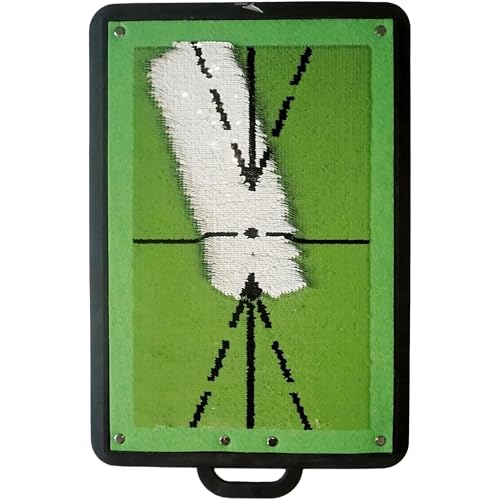
Birdie Mat Pro takes a more visual approach than most of the other picks here, thanks to its sequin tech surface. That surface is meant to show swing path and ball impact, which gives you immediate clues during practice instead of relying on guesswork later.
The 19.25-inch footprint helps it fit into portable practice setups, indoor or outdoor. Compared with Divot Board, this one leans into impact visualization on a mat surface, so it suits golfers who want a repeatable strike station in a tighter practice space.
Upsides
- Sequin-style surface gives clear visual feedback after contact.
- Portable size works for indoor drills and outdoor practice spots.
- Useful for golfers who want to study path and impact together.
- Mat format creates a more defined training zone than loose accessories.
Areas To Watch
- The visual feedback depends on how carefully you reset and inspect the surface.
- Mat-based aids take a bit more storage space than alignment sticks or grip tools.
- It focuses on strike information, so it does not address grip or arm structure on its own.
Feature Rundown
The Right Fit
Golfers who like visual, repeatable strike feedback in a compact practice setup should look here first.
Skip It When
HRUIYL Golf Grip Trainer (Blue) makes more sense for golfers who need help at the hands before they worry about path feedback.
Grip work is where many swing changes start, and this blue trainer keeps the focus on hand placement and repeatable setup. That makes it a sensible choice for beginners and intermediate golfers who need a clearer sense of where the hands belong on the club.
Compared with LANJAO’s arm band, this one stays at the grip end of the swing rather than the body-connection end. You may find that useful at home or on a practice tee, especially because the compact shape is easy to store and bring along.
Bright Spots
- Targets proper hand position, which is foundational for many swing drills.
- Supports muscle memory through repeated grip setup.
- Small size is easy to keep in a bag pocket or practice kit.
- Well suited to newer golfers who want simple physical guidance.
Room For Improvement
- Grip aids solve one piece of the motion, so you may need another trainer for path or tempo.
- The benefit depends on repeated use, which means consistency matters more than novelty.
Quick Facts
Who Should Grab It
Beginners and early intermediates who need grip guidance before tackling bigger swing changes will appreciate this tool.
Reach For A Different Pick When
Tour Striker Smart Ball Golf Swing Training Aid suits you better if your main issue is arm connection and tempo.
This arm band keeps the arms and body moving together, which is the whole point of a one-piece takeaway drill. For golfers whose hands race ahead of the torso, that kind of reminder can be more useful than a general-purpose trainer.
Compared with HRUIYL’s grip-focused aid, LANJAO works farther up the chain and pushes toward a synchronized motion. The trade-off is that it does not teach grip mechanics, so it fits best as part of a larger practice routine rather than the only thing in the bag.
Reasons To Buy
- Encourages a unified takeaway, which can simplify early swing rehearsals.
- Useful for body and arm timing during slow-motion practice.
- Black finish keeps the look plain and unobtrusive.
Minor Gripes
- It addresses connection rather than grip or impact, so its scope stays narrow.
- Band-style trainers depend on proper placement, which adds a small setup step before each drill.
Feature Card
Built With In Mind
Golfers who want a clearer body-and-arm connection during takeaway drills will get the most from this band.
Where A Sibling Pick Shines
Divot Board Patented Low Point and Swing Path Trainer is the better fit when you care more about impact marks and path feedback than takeaway sync.
How To Choose The Right Golf Swing Tools
Match The Tool To The Fault
The best starting point is the swing problem you want to address. Grip trainers, like the HRUIYL model, help with hand placement, while path and impact tools, like Divot Board or Birdie Mat Pro, focus on what happens later in the motion. That difference matters because a tool that is too broad can hide the exact issue you’re trying to fix.
Think About Where You Practise
Range sessions, backyard nets, and indoor carpet drills all reward different formats. Alignment sticks travel easily and set up fast, while a mat or board gives you more feedback but asks for more space and a bit more care in storage. Golfers who move around a lot usually do better with compact, low-friction gear.
Choose Feedback Style Carefully
Some tools give visual feedback, while others shape the body into a position. The Divot Board and Birdie Mat Pro help you see where the club traveled, but the Tour Striker Smart Ball and LANJAO arm band are more about movement pattern. That’s the trade-off, simple feedback is easier to read, but body-position trainers can be more demanding and more specific.
Keep Skill Level In View
Beginners usually benefit from tools that make one concept obvious at a time, such as grip or alignment. Intermediate golfers often want more targeted correction, especially for tempo or arm connection, because broad warm-up aids stop being enough. For practice that has to happen quickly before a round, a stick or grip trainer tends to fit the routine better than a larger feedback mat.
A Quick Reality Check
Hidden Buying Traps
A common mistake is matching the tool to the brand name instead of the swing issue. Another is expecting a single accessory to handle grip, tempo, path, and contact at once, because these training aids usually focus on one or two jobs. Keep your choice narrow and you avoid ending up with gear that looks useful but never earns bag space.
The Case For Spending Up
Higher-tier swing tools usually cost more because they do more than mark a line or shape a grip. Material quality, clearer feedback surfaces, better portability features, and more specialized design all add up, especially in products like Birdie Mat Pro or Divot Board. Spending more makes sense when you practice regularly and want a tool that stays part of your routine instead of sitting in a closet.
Frequently Asked Questions
What golf swing tool helps most with alignment?
Seticek 2 Pack 48″ Golf Alignment Sticks gives you the clearest visual guide for stance, aim, and swing direction. They are simple, but that simplicity is exactly why many golfers keep them in the bag.
Which option suits a beginner best?
HRUIYL Golf Grip Trainer (Blue) is the cleanest starting point for hand placement and grip habits. Amazon Basics Golf Swing Trainer Aid and Warm-Up Practice Stick is also sensible when you want a broader warm-up tool.
Do these tools replace lessons?
No, they do not replace coaching or full swing instruction. They work best as practice aids that reinforce one point at a time between lessons or range sessions.
Which tool is better for short game work?
Callaway is the strongest fit for wedges and short irons. It keeps your attention on the tighter motions that matter most around the greens.
Which pick works well in a small practice space?
Birdie Golf Birdie Mat Pro fits compact indoor or outdoor setups nicely. The mat format gives you a defined station without needing much room.
Final Thoughts
The right golf swing tool depends on the part of the motion you want to clean up, not on how flashy the accessory looks. Alignment sticks handle aim, grip trainers handle the hands, and impact tools tell you more about contact and path. That mix gives you a practical way to build a practice setup that actually fits your space, skill level, and routine. Start with the fault you notice most often, and the rest tends to fall into place.