
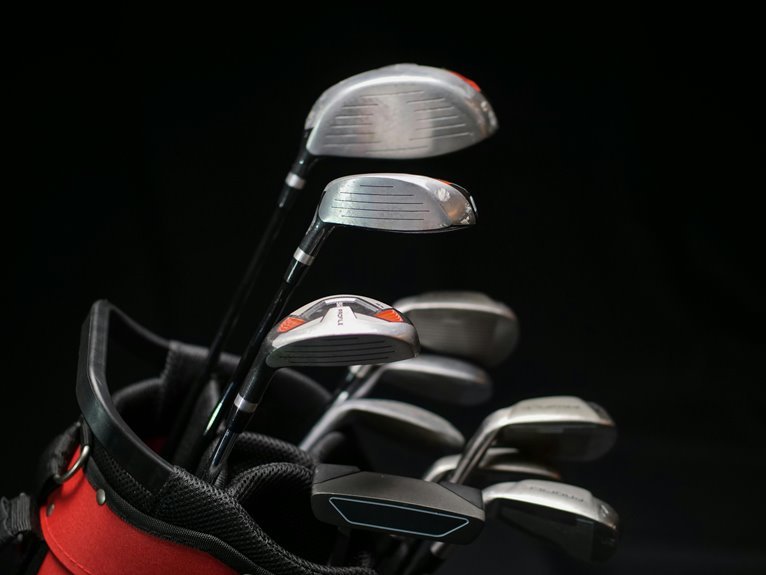

Beginner golfers do best with clubs that are easy to launch and forgiving on off-center hits. Bigger club heads, extra loft, and a stable face can make a real difference right away. A starter set with the right mix of clubs helps new players feel more comfortable on the course. That setup keeps the game simpler and the early rounds a lot more enjoyable.
What Makes a Golf Club Beginner-Friendly?
A golf club feels beginner-friendly whenever it helps you get the ball airborne, keeps off-center hits from turning ugly, and gives you enough confidence to swing without fear.
You’ll notice that feeling in a club with club flexibility that suits your tempo, because a softer bend can help slower swings launch the ball easier.
Next, look at shaft material. Graphite often feels lighter and friendlier in your hands, while steel can feel firmer and a bit heavier.
Then check the head shape and sweet spot, since larger faces forgive mishits and keep you in the game.
At the moment the club fits your body and your swing, you don’t feel like an outsider. You feel ready, welcome, and part of the fairway crowd.
Which Golf Clubs Do Beginners Need First?
Your initial golf clubs should cover the shots you’ll use most often, not every club the game can offer. Start with driver selection, then add a fairway wood or hybrid, a few matching iron types, a wedge, and a putter.
That mix helps you step onto the course feeling ready, not overloaded. You don’t need a full bag to belong out there; you need clubs that fit your current swing and keep the game simple.
Choose a driver you can launch with confidence, then pick irons that feel easy to control. After that, one or two hybrids can bridge the gap between long shots and shorter approaches.
Finally, a reliable putter keeps you steady on the greens, where every beginner wants a small win.
Best Golf Clubs for Straighter, Easier Shots
For straighter, easier shots, you should look for clubs with forgiving heads that help you recover whenever you don’t catch the ball perfectly.
Higher lofted irons can also get the ball airborne faster, so you don’t need to force your swing.
Game-improvement hybrids make long shots feel simpler by adding launch and stability, which can make your round feel a lot less stressful.
Forgiving Club Heads
As you’re just starting out, forgiving club heads can make the game feel far less frustrating and a lot more fun.
Whenever you choose clubs with oversized heads, you give yourself a bigger target at impact, so mishits still fly better. That extra help matters while your swing isn’t steady yet.
Perimeter weighting pushes more mass around the edges of the clubhead, which steadies the face and helps the ball start straighter. Because of that, you can feel more relaxed over the shot and trust your clubs a little more.
You don’t need to be perfect to play well, and that’s a good feeling. So, should you want to fit in on the course faster, pick clubs that forgive small mistakes and support your learning.
Higher Lofted Irons
Once you choose higher lofted clubs, you give yourself more iron benefits, like better control, more forgiveness, and fewer frustrating low bullets. That matters because you’re not trying to impress anyone on the initial tee; you’re building trust in your swing.
Start with irons that launch well on small mishits, and you’ll feel more at home on the course. Then you can focus on making smooth contact, not chasing the perfect swing.
As a result, your round feels calmer, and your confidence grows fast.
Game Improvement Hybrids
Whenever you desire straighter, easier shots, game improvement hybrids can feel like a real lifesaver. You get more hybrid advantages because the wider sole glides through turf, and the bigger head helps you launch the ball higher without forcing extra speed. That matters at the time you’re building trust in your swing and want to feel like you belong out there with the group.
For game improvement, hybrids replace long irons that often punish small mistakes. You can use them from the fairway, rough, or even light trouble, and they still give you control.
Because they’re easier to strike, you’ll save energy and keep your round moving. In case you’re new, choose one that matches your 5- or 6-iron distance. Then you’ll start hitting cleaner shots and smiling more often.
How to Choose the Right Golf Club Set
You’ll want to start with the club types in the set, because each one has a job that can make your initial rounds feel a lot easier.
A good beginner set usually gives you a driver, a few woods or hybrids, a simple iron group, and a putter, so you’re not carrying clubs you won’t use.
When you match the club mix to your swing and budget, you give yourself a much smoother start on the course.
Club Types Matter
Three club types matter most during your selection of a beginner golf set: woods, hybrids, and irons. You want club types that help you feel welcome on the course, not lost. Woods give you easy distance, hybrids blend help and control, and irons let you aim with more trust. Shaft flexibility matters too, because a softer flex can match a slower swing and make contact feel smoother.
| Club Type | Best For | Feel |
|---|---|---|
| Woods | Tee shots | Easy launch |
| Hybrids | Long fairway shots | Friendly |
| Irons | Shorter approach shots | Steady |
| Flexible shafts | Slower swings | Smooth |
| Standard shafts | Faster swings | Firm |
When you pick the right mix, you’ll swing with more confidence and join the game with less stress.
Set Composition Basics
A smart beginner set usually provides you 10 to 12 clubs, because that range keeps things simple without leaving you short on the course. You can start with a driver, one fairway wood, a hybrid, a few irons, wedges, and a putter. That mix helps you cover tee shots, fairways, and greens without feeling lost.
Whenever you look at set configuration options, pick the one that matches your swing and your goals, not the one with the most clubs.
Also, club material choices matter. Graphite shafts feel lighter and easier to swing, while steel gives you more weight and control. Should you want to fit in fast, choose a set that feels forgiving, balanced, and easy to trust.
Beginner Golf Club Features That Matter Most
As you’re choosing beginner golf clubs, the features that matter most are the ones that make the game feel easier immediately. You want club design that helps you launch the ball, not fight it. Look for larger heads, wider soles, and sweet spots that forgive off-center contact.
Next, pay attention to shaft flexibility, because a regular or graphite shaft can help your swing feel smoother and less rushed.
- Bigger clubheads help you feel part of the game faster.
- Forgiving irons make bad contact sting less.
- Light shafts can enhance confidence on slower swings.
When those pieces work together, you don’t feel lost in the crowd. You feel ready to step up, take your swing, and belong on the course with a smile.
New vs. Used Golf Clubs for Beginners
New clubs can provide you that clean, confident start, but used clubs can accomplish the same task for less money, and that matters during the period you’re just learning the game.
Once you buy new clubs, you get fresh grips, modern forgiveness, and the comfort of being the initial owner. That can help you feel like you belong on the course right away.
On the other hand, used clubs can still launch well and forgive mishits should you pick a respected model in good shape. You should check the shaft, face, and grip for wear, then make sure the clubs fit your height and swing.
In case you want reassurance and a full fresh feel, new clubs work. In case you want value without losing confidence, used clubs can fit you well.
How to Build a Budget Starter Set
You can build a solid budget starter set without buying every club at once, and that makes the game feel a lot less overwhelming. Start with one driver, one fairway wood, one hybrid, a few forgiving irons, a putter, and a simple bag.
Then add clubs only whenever you notice a real gap in your game. That way, you stay with the group and spend smarter.
- Choose budget options with high-launch heads and graphite shafts.
- Pick used clubs only provided the grips and grooves still feel good.
- Buy essential accessories like balls, tees, and a glove initially.
Whenever you shop with friends or at a local shop, you’ll often find helpful advice and better fits.
Slow progress still counts, and it keeps golf fun.
Frequently Asked Questions
Which Beginner Set Is Best for Left-Handed Golfers?
Callaway Strata offers left-handed sets that are well suited to new golfers, with some versions allowing club customization. The set includes forgiving clubs, a full bag, and an easy way to start playing with more confidence.
Are Women’s Golf Club Sets Different From Men’s Sets?
Yes, women’s golf club sets are typically built with shorter club lengths, lighter overall weight, and more flexible shafts, while men’s sets are usually longer and stiffer. The best choice is the set that matches your height, swing, and comfort so you can play with confidence.
How Many Clubs Should a Beginner Carry Initially?
Start with 10 to 12 clubs in your bag. Fewer options can make it easier to choose the right shot, and paying attention to club selection and weight can help you feel more comfortable and learn faster.
Can Beginners Mix Individual Clubs With a Complete Set?
Yes, you can combine individual clubs with a complete set. Many beginners do this to fill gaps, match clubs to their swing, and improve confidence on the course.
Do Beginner Sets Include Headcovers and a Stand Bag?
Yes, beginner sets often include headcovers and a stand bag. Headcovers help protect clubs from scratches and bumps, while a stand bag with padded straps and built in legs keeps your gear easy to carry and neatly arranged.
