
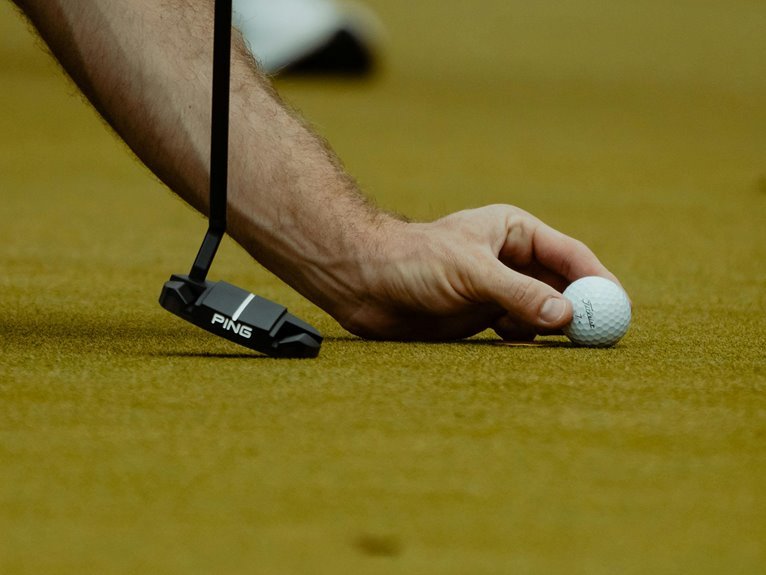

A putter’s head shape affects aim, feel, and how steady the club looks at address. Blade putters give a classic feel and more feedback on each stroke. Mallet putters offer extra stability and a forgiving look for many golfers. The best choice comes down to your stroke and the kind of control you want.
What Makes One Putter Different From Another?
A putter might look simple initially, but the differences between one model and another can change how your stroke feels right away. You’ll notice putter materials, head shape, and balance working together to shape stroke mechanics, so a club can feel calm or twitchy in your hands.
Then alignment aids, like lines or dots, help you aim with more trust, especially as your eyes want a different image. During the fitting process, length, lie, and loft also matter, because small changes can help the face return square and the ball roll clean.
Even grip texture can matter, since it changes how steady you feel. At the time you choose a putter that matches you, you’re not copying anyone else. You’re finding your own comfort zone.
Blade Putters vs. Mallet Putters
At the time you compare blade putters and mallet putters, you’re really choosing between control and stability.
A blade putter can give you a clean, precise feel, while a mallet putter can help steady your stroke and keep the face more consistent.
Should you match the head shape to your stroke, you’ll give yourself a much better chance to roll the ball where you want it.
Blade Putter Control
Blade putters give golfers more direct control, and that’s why many golfers trust them for an arced stroke. You can feel the blade feel right away, and that touch helps you guide the face with confidence.
Because the head stays compact, your hands stay connected to the putt, which supports stronger accuracy control whenever you want the ball to start on your chosen line. Should you like a simple look at address, a blade can help you settle in and aim with less distraction.
It suits golfers who enjoy shaping the stroke and want honest feedback on every roll. Once you match that feel to your rhythm, you often swing with more trust, and trust matters on the green.
Mallet Stability Benefits
Mallet putters bring a calm kind of confidence to your stroke, especially at times you want more stability than a blade usually gives. You feel that support because the head is bigger, the weight sits farther from the center, and the face stays steadier through impact.
- Mallet advantages help you keep the putter square.
- Stability factors reduce twisting on mishits.
- Alignment lines can make aiming feel easier.
How Head Shape Changes Aim and Forgiveness
A putter’s head shape does more than change how it looks at address, because it also changes how you aim and how much assistance you get on mishits.
Whenever you choose a shape, you’re really choosing how your eyes match the target line. A wider head can give you stronger aim alignment, while a compact one might feel easier should you like a cleaner view.
Head shape also affects forgiveness factors, since larger heads usually spread weight to keep the face steadier on off-center hits. That extra assistance can calm a shaky roll and enhance confidence.
Still, stroke compatibility matters, because the shape should feel natural to your motion. Whenever the look fits your eye, you stand taller, aim easier, and trust the putter more.
Face-Balanced vs. Toe-Hang Putters
Face-balanced putters keep the face steady, so they work well as you make a straight-back, straight-through stroke.
Toe-hang putters rotate a bit more during the stroke, which fits a natural arc in your motion.
As you match the putter’s balance to your stroke type, you give yourself a better chance to start the ball on line.
Face-Balanced Design
The right balance can make your putter feel like it finally listens to you. With a face-balanced design, you get face balanced benefits because the head resists twisting and stays calmer through impact.
That gives you face balanced stability, and it can help you feel at home over short, tense putts.
- You set up easier with a square-looking face.
- You match best with a straight back, straight through motion.
- You build trust as your hands stay quiet.
Toe-Hang Rotation
While face-balanced putters stay steady through the stroke, toe-hang putters invite the head to rotate as you swing. That rotation can fit your natural stroke path and help the face open and close with less fight.
Whenever you feel the putter move with you, your hands often relax, and the motion can feel more connected and calm. Toe balance shifts weight toward the toe, so the head doesn’t resist your arc as much. That can give you a smoother release and a cleaner roll.
In case you’ve ever felt a putter was “working with” you instead of against you, that’s the appeal here. You get a friendly match between motion and club, and that trust can steady your nerves on the green.
Matching Stroke Type
Should your stroke move straight back and straight through, a face-balanced putter usually fits best because it stays square and resists twisting. You’ll feel more in sync as the head matches your stroke mechanics, not fights them.
In case your path has a gentle or strong arc, a toe-hang model gives you more natural release and better timing. Your grip influence matters too, since a thicker grip can calm wrist action and help you keep the face steady.
- Face-balanced: best for straight strokes
- Moderate toe hang: fits a slight arc
- Extreme toe hang: suits a bigger arc
Whenever you test putters, notice how the head returns at impact. That small match can make you feel settled, confident, and right at home on the green.
How to Match a Putter to Your Stroke
Matching a putter to your stroke starts with one simple goal: help the face return square to the ball without extra effort. In putter fitting, you look at stroke mechanics, then match balance factors to that motion.
Should you swing straight, a face-balanced model usually feels easier to control. Should you use more arc, a toe-hang design often fits better and keeps timing steady.
Next, check grip selection, because a thicker grip can quiet your hands, while a slimmer one might give you more feel.
Then use alignment techniques that match how you see the target.
Finally, notice putter materials and head shape, since they change feedback and stability.
Once all these pieces fit, you feel more settled, more confident, and more in sync.
Putter Length, Lie, and Loft Basics
A well-fit putter starts with the numbers that guide your setup, and length, lie, and loft do a lot of that quiet work for you.
As your putter length fits your posture, you stand calmer and aim more freely. A good lie angle keeps the sole flat, so the face points where you expect. Small loft adjustment matters too, because it helps the ball start rolling instead of skidding.
- Initially, check your wrist-to-floor measure.
- Then, test the lie angle during the fitting process.
- Finally, fine-tune loft so contact feels smooth.
You don’t need perfect guesses. You need a fit that feels like your own.
With the right numbers, you join the club of golfers who trust every setup.
Which Putter Grip Feels Best?
The best putter grip is the one that allows a golfer to hold the club with steady pressure and no strain in their hands.
You can choose from slim, midsize, or thicker grip styles, and each one changes how much your wrists help the stroke.
Should your hands feel relaxed and your fingers stay comfortable, you’re more likely to square the face and roll the ball cleanly.
Grip Pressure Control
Should your hands feel tense on the greens, grip pressure is usually the initial thing to fix, because it changes how the putter face moves through impact. You want enough hold to stay steady, but not so much that your wrists lock up. Consider it as quiet control, not a death grip.
Once you find the right grip pressure, you’ll feel more connected and less rushed.
- Keep your thumbs calm and centered.
- Let your fingers rest, not squeeze.
- Notice whether the putter feels secure and natural.
Good grip comfort helps you stay relaxed, and that calm feel makes you feel like you belong over the ball.
As your hands soften, your stroke can flow better, and your confidence grows without forcing anything.
Grip Style Options
Should your grip still feel awkward even after you relax your hands, the grip style itself could be the missing piece. You want a grip that helps you feel steady, not one that fights you. A thicker grip can quiet extra wrist action, while a slimmer one might give you more touch.
Next, pay attention to grip texture. A soft, tacky finish can feel secure in damp weather, and a firmer surface can feel clean and familiar in dry rounds. You could also notice that some shapes fit your palms better right away.
Hand Position Comfort
A good putter grip can feel like a small relief in your hands, because comfort starts where your palms meet the club. You want hand placement comfort that lets you settle in, not squeeze.
Whenever your grip fits you, your wrists stay calm and your stroke feels shared, not forced.
- Try a thicker grip should your hands tense up.
- Use a slimmer grip should you want more touch.
- Check wrist alignment adjustment so the face stays square.
In case the grip feels right, you’ll notice less strain in your forearms and more trust over the ball.
That trust matters, because you deserve a setup that feels like it belongs to you. Small changes in shape or texture can make your hands relax fast, and relaxed hands usually roll the ball better.
Common Putter Materials and Their Feel
Three common putter materials shape how the club feels in your hands and how the ball comes off the face: steel, aluminum, and multi-material builds.
With putter materials, you get a clear feel comparison across metal types. Steel often gives a solid, familiar touch, while aluminum can feel lighter and more lively. Multi-material heads mix composite options for softer contact and better weight distribution.
You might notice vibration dampening on mishits, which can calm your hands and help you stay relaxed. Surface textures also matter, since they change the sound and response at impact.
As grip integration feels smooth, the whole putter works with you, not against you. That matters because confidence grows as your club feels like part of your routine.
How Putter Design Affects Consistency
Whenever your putter design matches your stroke, consistency starts to feel a lot easier. You’ll notice that weight distribution shapes how steady the head feels through impact, and that can calm your hands as pressure rises.
A design that fits your stroke mechanics helps you repeat the same motion with less effort and fewer surprises.
- Face-balanced heads support a straight path.
- Toe-hang designs suit an arcing motion.
- Mallets add stability, while blades give a lighter, more precise feel.
Once the balance fits your natural move, you stay in sync with the putter instead of fighting it. That’s where your roll starts to feel familiar, and your confidence grows with every smooth stroke. You belong in that rhythm.
How to Test Putters on the Green
Now that your putter design matches your stroke better, you can see what it really does on real grass instead of just in your hands.
Start with short putts and watch how the ball starts, rolls, and holds its line. Then try a few longer ones to notice distance control.
Use testing techniques like placing a coin as a target, rolling three balls from each spot, and changing your pace a little.
Pay attention to putter feel, because a head that feels calm and stable can enhance your confidence fast.
Also check how the face sits at impact and whether your eyes like the top line.
As you repeat the same drill, you’ll spot what feels natural, and that’s where your game starts to fit in.
How to Choose the Right Putter
How do you select a putter that truly fits your stroke and provides you confidence? Begin with putter fitting, because the right head, length, and lie assist you in repeating better stroke mechanics.
Should you swing straight back and through, a face-balanced mallet can keep the face square. Should you utilize more arc, a toe-hang blade could feel natural and friendly.
- Check your posture and wrist height initially.
- Match the putter balance to your stroke path.
- Choose grip size and alignment aids that calm your eyes.
Then roll a few putts and notice what feels steady, not forced.
Once the club seems to “belong” in your hands, you’ll trust it faster. That trust matters, because confidence often transforms a shaky stroke into a smooth one.
Frequently Asked Questions
How Do I Know if I Need a Putter Fitting?
If your putts feel inconsistent or uncomfortable, a fitting may help. It can match the putter type, length, lie, grip, and balance to your stroke, which may improve control and confidence on the greens.
Does Eye Dominance Affect Putter Alignment?
Yes, eye dominance can influence putter alignment. When your setup matches your dominant eye, it can be easier to read the target line accurately and aim with more confidence on each putt.
What Putter Length Suits My Wrist-To-Floor Measurement?
Start with a putter about 2 inches shorter than your wrist to floor measurement, then adjust in half inch steps. Putter style and shaft material can affect how it feels, so pick the length that lets you stand relaxed and keep the face square.
How Much Toe Hang Matches a Slight Arc Stroke?
A slight arc stroke works best with moderate toe hang, about 10 to 20 degrees, so the putter can follow the natural arc of your motion without fighting it. This helps the face return more consistently at impact.
Should Grip Thickness Change My Putting Feel?
Yes. A thicker grip can steady your wrists, while a slimmer one can sharpen feel. Grip material and grip shape also affect comfort and confidence, so pick the option that feels natural in your stroke.
