
You want one wrist companion that can handle a morning run, then stay useful on the course without feeling clumsy or underpowered. That means paying attention to GPS quality, screen readability, battery behavior, and how much coaching or golf data you actually use. The right pick keeps your pace, distance, and course view close at hand without turning your wrist into a dashboard.
The Shortlist At A Glance

Tiwain Military Smart Watch with GPS and AMOLED

Amazfit Active Max Smart Watch 1.5″ AMOLED

Garmin Forerunner 970 47mm Titanium

COROS PACE 4 Ultralight Sport GPS Watch
Garmin Instinct E Rugged GPS Smartwatch 45mm
HUAKUA Smart Watch 1.69-inch Touch Screen

Gogogo Sport Vpro Magnetic Golf Rangefinder Red OLED

Bushnell Golf iON Elite GPS Smartwatch White

Blue Tees Golf Playmaker+ GPS Golf Watch AMOLED
More Details On Our Top Picks
Clubs, trails, and commuting often ask for the same thing, a watch that stays readable and useful without needing constant charging. Tiwain goes after that use case with built-in GPS, a 1.43-inch AMOLED display, compass support, and an altimeter, which helps when your route mixes roads, hills, and rough ground.
The tactical flashlight is the odd little extra here, but it makes sense for early starts or low-light walks after a round. Compared with the lighter COROS PACE 4, this feels more gear-like, so it suits you best when utility matters more than a slim profile.
Strong Points
- Built-in GPS reduces phone dependence on runs and walks.
- AMOLED screen should be easier to read in bright outdoor light.
- Compass and altimeter add context on hilly routes.
- Bluetooth calling keeps quick replies close at hand.
- 170-plus sport modes make it useful beyond running and golf.
Things To Consider
- The tactical styling feels more rugged than refined.
- The larger feature set may take a little setup time.
- Extra functions can be more than you need for simple round tracking.
Feature Snapshot
Who It Suits Best
You’ll get the most from this watch if your week mixes outdoor exercise, casual golf, and general daily wear, especially when you want extra tools in one place.
Where A Sibling Pick Shines
Garmin Forerunner 970 suits dedicated runners better, especially when training detail matters more than tactical extras.
Long battery life changes how often you think about charging, and this Amazfit leans hard into that convenience. The 1.5-inch AMOLED display, GPS, water resistance, 4GB storage, offline maps, and 170-plus sport modes make it feel ready for long workdays that roll into workouts.
The 48mm case size gives it more presence than the slimmer COROS PACE 4, so it may suit you better if you like a larger watch face. That extra size helps with visibility, though it also makes the watch less discreet on a smaller wrist.
Highlights
- 25-day battery claim is appealing for low-maintenance wear.
- Offline maps support route awareness without relying on a live phone connection.
- 4GB storage makes room for more on-device utility.
- Water resistance adds peace of mind for sweaty sessions and light weather.
- Works with both major mobile platforms, which simplifies pairing.
Softer Spots
- The 48mm case can feel large on smaller wrists.
- Golf-specific tools are not the main focus here.
- More features usually mean more menu time at first.
Core Details
Who Should Grab It
You’ll appreciate this most if you want a large, long-wearing smartwatch that can handle daily fitness, commuting, and light navigation without fuss.
Another Choice May Suit
Blue Tees Golf Playmaker+ GPS Golf Watch fits better for golfers who want course detail ahead of general smartwatch features.
This is the watch for runners who care about training detail first and everything else second. The 47mm case uses carbon gray DLC titanium, which points to a premium build, and the AMOLED display, built-in flashlight, and enhanced navigation make it feel purpose-built for serious route work.
Compared with the Tiwain model, the Forerunner 970 looks less tactical and more training-focused, which matters on long runs, triathlon days, and structured workouts. The trade-off is simple, you get a more specialized watch that makes less sense for casual use or mixed golf-first days.
What We Like
- Titanium construction gives it a premium, lighter-feeling build.
- AMOLED display should keep pacing data legible outdoors.
- Built-in flashlight helps in early or late training windows.
- Enhanced navigation is useful on unfamiliar routes and race courses.
- 47mm size gives room for a clearer interface.
- The training-first design suits disciplined runners more than casual wearers.
Minor Gripes
- The advanced focus can feel excessive for simple step and distance tracking.
- Larger watches may feel bulky during all-day wear.
- Premium materials usually ask for a higher comfort threshold from your wrist.
Technical Sheet
Built With In Mind
You’ll get the most from this watch if structured running or triathlon training already has a place in your week.
Skip It When
COROS PACE 4 makes more sense for you when you want lighter wear and less bulk on the wrist.
Light weight matters more than most people expect on longer runs, and this COROS leans into that idea with a slim sport-first design. The 1.2-inch AMOLED touchscreen, voice control, advanced training tools, accurate GPS, and heart rate monitor make it a clean fit for runners who want less bulk and more focus.
Compared with the Garmin Forerunner 970, this one sounds easier to live with on ordinary training days, especially for wrist comfort and simpler wear. The honest read is that it looks best for disciplined runners who want a lean tool, not a watch trying to do everything.
Upsides
- Ultralight build helps reduce wrist distraction on long sessions.
- Touchscreen keeps everyday interaction simple.
- Voice control can help when your hands are occupied.
- Accurate GPS and heart rate monitoring cover core training needs.
- 19 days of daily use is a strong practical target for regular wear.
Points To Note
- The smaller display leaves less room for dense data screens.
- Voice control may not suit every quiet gym or course setting.
- Golf-specific features are not the focus here.
Details At A Glance
Perfect Match For
You’ll like this most if you want a feather-light training watch for running plans that stay fairly focused.
Look Elsewhere When
Amazfit Active Max fits better for you when battery longevity and broader everyday smart features matter more.
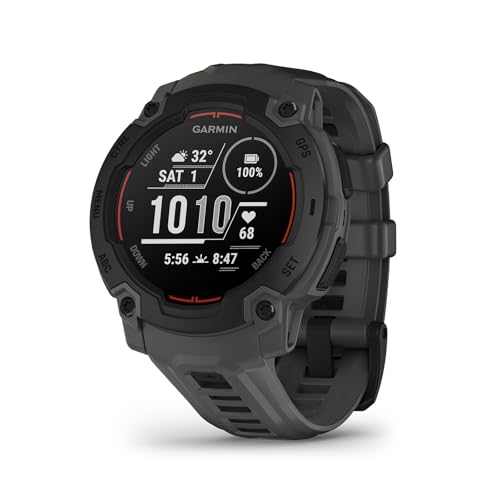
Some watches try to feel polished first, but this Garmin clearly leans into toughness. The 45mm charcoal case, rugged build, essential health and wellness functions, built-in sports apps, and navigation features make it a practical fit for muddy walks, weekend golf, and everyday outdoor wear.
It sits closer to the Tiwain in spirit than the slim COROS, though the Garmin tone is more restrained and less tactical. You may find it especially appealing when you want durability and straightforward use instead of a feature-packed screen parade.
Positives
- Rugged styling suits rougher daily use.
- Sports apps add variety without making the watch feel overdone.
- Navigation tools help on unfamiliar routes and outdoor paths.
- 45mm size gives the watch a solid wrist presence.
Room For Improvement
- The rugged look may feel too plain for dressier settings.
- It seems aimed more at durability than deep golf analytics.
- Owners who prefer slim watches may notice the 45mm footprint.
Feature Rundown
Whose Shelf It Belongs On
You’ll get the most out of this watch if your days include outdoor work, trail time, or casual golf and you prefer sturdy gear.
Reach For A Different Pick When
Bushnell Golf iON Elite GPS Smartwatch suits you better when golf course features matter more than rugged general use.
For simpler fitness tracking, this HUAKUA keeps the focus on the basics that most people actually use. The 1.69-inch full-touch screen, IP68 water resistance, heart rate monitoring, sleep tracking, and 100-plus sport modes give it a broad enough feature set for walking, gym work, and everyday wear.
It sits far below the Garmin and COROS models in training ambition, and that’s the point. You may find the trade-off welcome because the watch is easier to understand and easier to justify for casual use, especially when you do not need deep running metrics or golf mapping.
Best Bits
- Simple interface helps keep setup and daily use approachable.
- 100-plus sport modes cover a wide spread of casual activity.
- Heart rate and sleep tracking give you useful daily context.
- IP68 water resistance adds confidence for sweat and splashes.
Small Caveats
- The product leans more toward general fitness than sport-specific depth.
- Golf and running specialists will want more focused tools.
- Full-touch controls can feel less precise than physical buttons in motion.
Core Details
The Right Fit
You’ll like this most if you want a straightforward fitness watch without paying for advanced outdoor tooling.
Swap It Out When
Amazfit Active Max makes more sense for you when stronger battery life and offline maps move higher on your list.
This one shifts the category a bit, because it’s a golf rangefinder rather than a full smartwatch. The magnetic mount, slope switch, red OLED display, dual power sources, flag-lock, vibration feedback, and long-distance range all point toward golfers who want quick yardage without fuss.
It pairs nicely with the Blue Tees watch below, but on its own it’s a cleaner choice for cart users who like a handheld tool that sticks where you place it. The trade-off is obvious, it helps you read the course, not your run.
Reasons To Buy
- Magnetic mount makes cart storage and reach easier.
- Red OLED display should stay readable in bright conditions.
- Slope switch helps you keep practice and play modes separate.
- Flag-lock and vibration feedback support quick target confirmation.
- Dual power sources add practical flexibility.
Areas To Watch
- It does not serve as a running watch.
- Handheld use adds one more item to manage on the course.
- Rangefinder owners often prefer a protective case for storage and transport.
Quick Facts
Who Will Love This
You’ll appreciate this most if your golf bag already carries a watch or phone and you want clearer distance reading from a dedicated tool.
A Better Fit Elsewhere
Bushnell Golf iON Elite GPS Smartwatch suits golfers who want course data on the wrist instead of a separate handheld device.
Bushnell takes the golf-only path seriously, and this smartwatch shows it. The white finish, color touchscreen, magnet mount, scorekeeping, distance calculator, slope compensation, hazard information, and access to 38,000 courses make it a strong fit for frequent rounds.
Compared with the Gogogo rangefinder, this model puts more course information on your wrist, which is handy when you want less back-and-forth between shots. The honest trade-off is that golf focus comes before running versatility, so it fits best when your week leans heavily toward the fairway.
Plus Points
- 38,000-course coverage gives it broad golf relevance.
- Slope compensation and hazard info support smarter on-course decisions.
- Color touchscreen makes the interface easier to scan.
- Magnet mount adds a useful storage option.
- Scorekeeping keeps round notes together in one place.
Honest Caveats
- It’s built for golf first, not general sports training.
- The white finish may show dirt sooner than darker cases.
- Golfers who want simpler gear may not need every feature.
Feature Card
Best Suited To
You’ll get the best fit here if your main goal is golf course information on the wrist during regular play.
Consider Something Else When
Garmin Forerunner 970 makes more sense if your training life centers on running metrics rather than golf rounds.
Blue Tees is the most golf-specific watch in this group, and that focus shows up in the spec list. The AMOLED touch screen, 42,000-plus preloaded courses, shot tracking, dynamic GPS distances, real-time weather, course view, and IP67 water resistance make it a strong fit for golfers who like data close at hand.
Compared with Bushnell’s iON Elite, this one leans a little harder into shot tracking and weather awareness, which matters during changing conditions on the course. You may find it less useful for general fitness, but that’s the trade-off for a watch built around golf detail.
Standout Traits
- AMOLED screen supports clear viewing in a compact wrist format.
- 42,000-plus preloaded courses create broad golf coverage.
- Shot tracking and dynamic distances offer richer round feedback.
- Real-time weather helps you plan around changing conditions.
- IP67 water resistance adds practical everyday protection.
Worth Noting
- Its golf focus leaves less room for running-first use.
- Feature depth can take more time to learn.
- Golf-oriented screens may feel like overkill for casual walkers.
Spec Overview
Who Will Love This
You’ll like this most if golf is the main event and you want the wrist display to carry more of the course story.
Another Choice May Suit
Amazfit Active Max is the easier all-round pick for you when running, travel, and daily wear matter as much as golf.
How To Choose The Right Watches For Running And Golf
Match The Watch To Your Main Habit
Running-heavy use calls for a clear display, reliable GPS, and a comfortable case that disappears on the wrist. Golf-heavy use asks for course data, slope support, hazard info, and quick yardage checks that won’t slow down play.
Mixed-sport wear sits in the middle, so battery life and interface clarity matter just as much as sport modes. A watch can carry a huge feature list and still feel wrong for you if the main activity is buried under extras.
Pay Attention To Screen And Size
AMOLED screens usually help pace, yardage, and map data stand out faster than dimmer panels. That matters on bright fairways and during fast workouts, because squinting at a watch wastes time.
Case size changes comfort more than many people expect. A 45mm or 47mm watch gives room for data, while a smaller or ultralight model can feel better on long runs or all-day wear.
Look Beyond The Sport Mode Count
Sport mode totals sound impressive, but the better question is whether the watch handles the activities you actually repeat. A small set of reliable tools can be more useful than a giant menu you rarely open.
For runners, training tools, GPS behavior, and heart rate consistency deserve more attention than flashy extras. For golfers, course coverage, slope, and shot or score features usually matter more than general wellness add-ons.
Battery, Storage, And Daily Convenience
Long battery claims help, but the real value comes from how often you want to charge and sync. Storage matters too, especially on watches that support offline maps or more on-device features.
Touch controls, voice input, and Bluetooth calling add convenience, though each one can add setup time or menu complexity. A watch that fits your routine cleanly is usually the one you keep wearing.
What To Weigh Before You Decide
Mistakes Worth Dodging
One common slip is choosing a golf watch for running training and then wondering why it feels narrow in use. Another is chasing the biggest feature list even though you only need distance, time, and basic health tracking.
Battery claims also need context. A long standby number can still feel short in a week of heavy GPS use, so the use pattern matters more than the headline figure.
What The Higher Tier Buys
Higher-tier models usually spend more on screen quality, case materials, navigation depth, and sport-specific tools. That’s why watches like the Garmin Forerunner 970 or Blue Tees Playmaker+ feel more refined than simpler multi-sport picks.
The upgrade makes sense when you use those extra tools often. For casual laps, casual golf, or occasional workouts, a simpler watch can be the smarter fit.
Frequently Asked Questions
Can one watch really cover both running and golf?
Yes, but the fit depends on which activity matters most in your week. A true hybrid usually handles running basics well and gives you enough golf data for casual rounds.
Do golfers need AMOLED screens?
No, but a bright display makes yardage, hazards, and menus easier to scan outdoors. That helps during sunny rounds and quick cart stops.
Is a larger watch always better?
Not always, because larger cases can feel heavier during long runs or all-day wear. They do help when you want a bigger screen for maps and course details.
Should you choose GPS over other features?
Yes, GPS is central for both running distance and golf yardage. Extra tools only matter after that core location function feels reliable for your use.
Are golf rangefinders still useful beside a smartwatch?
Yes, because a rangefinder gives you a dedicated distance tool for the course. A golf smartwatch adds convenience, but a handheld unit can feel more direct for some rounds.
Final Thoughts
The right watch depends on how much your week belongs to running, golf, or both. For training-first use, the Garmin Forerunner 970 and COROS PACE 4 keep the focus tight. For golf-heavy routines, the Bushnell iON Elite and Blue Tees Playmaker+ bring more course detail to the wrist. Pick the one that fits your habits now, not the longest feature list, and your wrist will feel less crowded on every round and run.