You want a rangefinder that feels helpful on the first tee and still makes sense after months of use. That usually means clear yardage, quick flag locking, a slope option you can switch off, and a body that does not feel fragile in a cart bag or pocket.
This roundup keeps the focus on value, not hype. You’ll see straightforward laser options, a GPS-style hybrid, and a few compact picks that fit casual rounds, regular practice, and travel golf without demanding a lot of fuss.
The Shortlist At A Glance

MOESAPU Golf Rangefinder with Slope, Flag Lock Vibration, USB-C Charging

Bushnell Golf Tour V6 Shift Laser Rangefinder
MiLESEEY GeneSonic Pro Golf GPS Speaker

REVASRI Range Finder for Golf with Slope

Kaidrus Upgraded 0.5 Second Golf Rangefinder

Acer Pro Golf Rangefinder with Slope Switch
BIRDIEPULSE Golf Rangefinder with Slope and Magnet
Bushnell Golf A1-Slope Laser Rangefinder

MiLESEEY GeneSonic Pro Golf GPS Speaker, Squad Camo

MiLESEEY GeneSonic Pro Golf GPS Speaker, Zesty Red
MOESAPU keeps the setup simple, which suits golfers who want slope readouts and flag lock without carrying extra bulk. USB-C charging makes it easier to live with during weekly rounds, and the lightweight build should feel friendlier in a pocket than a heavier, boxier unit.
The trade-off is straightforward: you are getting a practical feature mix rather than the most loaded sheet in the group. That makes it a sensible everyday call for casual golfers, especially compared with the more advanced Bushnell Tour V6 Shift and the GPS-heavy MiLESEEY options.
Strong Points
- Slope mode adds useful distance context on hilly holes.
- Flag lock vibration helps confirm the target without guesswork.
- USB-C charging fits modern gear bags and travel kits.
- Lightweight form keeps it easy to carry across 18 holes.
Small Caveats
- The feature list looks more basic than the premium tier above it.
- Golfers who want extra cart or course tech may want more.
- The lighter build can feel less substantial in hand.
Feature Snapshot
Who It Suits Best
Casual golfers who want a clean, uncomplicated laser rangefinder with modern charging will get the most from this one.
A Better Fit Elsewhere
Bushnell Golf Tour V6 Shift Laser Rangefinder suits golfers who want a more tour-leaning build, while MiLESEEY GeneSonic Pro Golf GPS Speaker fits anyone who wants mapped-course guidance instead of a plain laser readout.
Tour-style golfers often want a rangefinder that feels more deliberate in the hand, and the Tour V6 Shift leans into that idea with 6X magnification, slope compensation, and a magnetic cart mount. It also carries a waterproof build, which is handy for damp mornings, cart rides, and the occasional rough weather round.
Compared with the MOESAPU pick, this one reads like the more polished step up. The magnetic cart mount and tournament-legal slope shift give it a stronger fit for serious play, though the more serious package may be more than many casual weekend golfers really need.
What We Like
- 6X magnification gives a tighter look at the target area.
- Magnetic cart mount keeps it easy to park between shots.
- Waterproof construction suits damp rounds and changing weather.
- Shiftable slope mode helps the same unit serve practice and competition.
- 1300-yard range gives plenty of headroom for long holes.
Worth Noting
- The feature depth pushes it closer to a premium purchase.
- The cart-mount angle matters most for cart users, not walkers.
- Golfers who only need basic yardage may not use every feature.
Details At A Glance
Who Will Love This
Golfers who spend a lot of time on a cart and want a more polished rangefinder will get the best fit here.
Where A Sibling Pick Shines
MOESAPU Golf Rangefinder with Slope, Flag Lock Vibration, USB-C Charging suits golfers who want a simpler, lighter carry, while Acer Pro Golf Rangefinder with Slope Switch fits players who want a lower-friction all-around option.
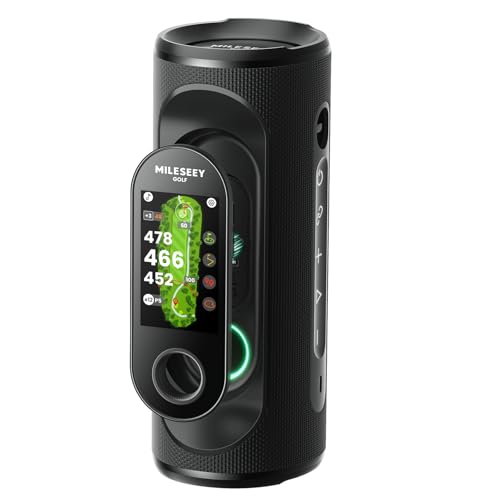
This MiLESEEY pick takes a different route from the laser-only models above, because it blends GPS course data with a detachable handheld rangefinder. The color touchscreen, visual and audible yardage, and no-subscription course access suit golfers who want more guidance on unfamiliar layouts or want fewer stops to second-guess yardages.
Its IP67 rating means it’s built to stand up to dust and water exposure, which is reassuring for bag storage and unpredictable weather. The honest read is that this much functionality makes it more involved than the simpler laser picks, so it fits best for golfers who like course data at a glance rather than a bare-bones tool.
Reasons To Buy
- 43,000-plus courses give you broad course coverage without subscription fees.
- Color touchscreen makes navigation feel more direct than button-only units.
- Visual and audible yardage suits quick checks on busy tees.
- Layup, front-center-back, and hazard cues help with smarter club selection.
- 15-hour battery life supports long practice days and full rounds.
- IP67 build adds confidence for rough weather and bag wear.
Areas To Watch
- The feature set is broader than many golfers need for casual rounds.
- The extra functions bring a slightly steeper learning curve.
- Golfers who prefer a pure laser shape may find it more complex.
Core Details
Built With In Mind
Golfers who play unfamiliar courses, like GPS guidance, and want a screen-first layout will get the most value here.
Swap It Out When
Bushnell Golf Tour V6 Shift Laser Rangefinder suits golfers who want a more traditional laser feel, while Bushnell Golf A1-Slope Laser Rangefinder fits anyone who wants a much smaller carry.
REVASRI lands in that useful middle ground where the feature set feels familiar but not stripped down. Slope support, magnetic mounting, and pin lock vibration cover the basics that matter during a regular round, especially for golfers who want something that slots into a cart bag without much fuss.
Its 1000-yard range is enough for typical play, though golfers who like a little more headroom may prefer the longer-reach models above it. The USB-C rechargeable setup is convenient, and the simpler body makes sense for golfers who do not need the more elaborate GPS layer from MiLESEEY.
Positives
- Slope mode helps you make smarter club choices on uneven holes.
- Magnetic mounting is handy on carts and range bags.
- Pin lock vibration gives a clearer target confirmation.
- USB-C charging keeps daily upkeep easy.
Softer Spots
- The 1000-yard ceiling leaves less distance headroom than some rivals.
- Golfers who want richer course data may want a GPS model instead.
- The magnetic mount is most useful for cart-based routines.
Quick Facts
Right Fit For
Weekend golfers who want a clean, no-fuss laser with a few practical extras will feel at home here.
Not Your Match When
MiLESEEY GeneSonic Pro Golf GPS Speaker suits golfers who want course maps and audible guidance, while Kaidrus Upgraded 0.5 Second Golf Rangefinder fits players who want faster locking and more reach.
Kaidrus pushes harder on speed and reach than the simpler midrange picks, and that shows in the 0.5-second lock claim, the 1500-yard range, and the 7X magnification. Golfers who play fast or spend a lot of time hunting distant targets should appreciate that extra pace, especially on busy days when you want a read and move on.
The 2X HD bright LCD should help with visibility in changing light, though the bigger, more performance-focused feature list makes it less casual than the REVASRI model. Compared with Bushnell’s more polished feel, this one looks built for shoppers who care more about speed and reach than brand familiarity.
Upsides
- Fast locking suits players who want quick readings between shots.
- 1500-yard range gives strong long-distance headroom.
- 7X magnification can make distant flags easier to center.
- Bright LCD helps visibility during early or late rounds.
Trade Offs
- The stronger emphasis on speed may not matter for relaxed rounds.
- The extra range is useful, but many golfers won’t tap all of it.
- More aggressive feature claims can make the sheet feel busy.
At A Glance
Perfect Match For
Golfers who like quick target acquisition and a long reach will get the strongest value from this model.
Look Elsewhere When
REVASRI Range Finder for Golf with Slope fits golfers who want a simpler midrange setup, while Bushnell Golf Tour V6 Shift Laser Rangefinder suits those who want a more refined cart-friendly build.
Acer aims for the useful middle, which is often where value lives. You get slope switching, pin lock vibration, 7X magnification, and a 1200-yard reach, all wrapped around a rechargeable battery and a magnetic stripe that helps the unit stay put on metal surfaces.
That mix makes it a comfortable fit for golfers who want something practical for everyday rounds, not a feature parade. The IP54 rating helps here too, since it points to everyday dust and splash resistance, though you still want to store it properly instead of tossing it loose in a wet trunk.
Highlights
- Slope switch keeps the same unit useful across practice and play.
- 7X magnification gives you a firmer look at the target.
- Rechargeable battery trims down routine upkeep.
- Magnetic stripe adds easy cart-side storage.
- IP54 protection helps with routine outdoor use.
Minor Gripes
- The magnetic stripe is handy, though cart placement still matters.
- Golfers who want GPS guidance will need a different category.
- IP54 is practical, but it’s not a reason to be careless with storage.
Feature Card
Whose Shelf It Belongs On
Golfers who want a balanced laser with practical storage help and no overcomplication will feel comfortable here.
Another Choice May Suit
Bushnell Golf Tour V6 Shift Laser Rangefinder suits golfers who want a more polished premium feel, while MOESAPU Golf Rangefinder with Slope, Flag Lock Vibration, USB-C Charging fits anyone who wants the lighter, simpler route.
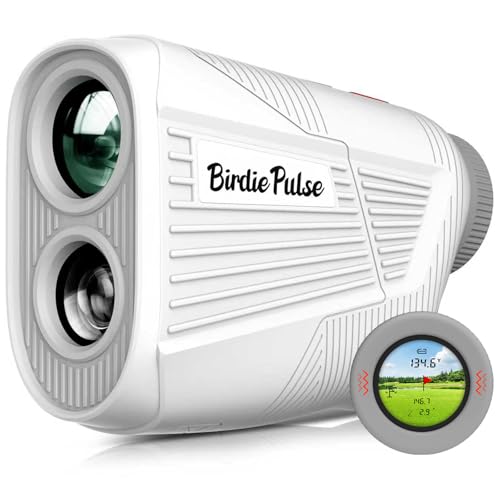
BIRDIEPULSE sits close to the middle of the pack, but the 1300-yard range and 6 to 6.5X magnification give it enough headroom for most rounds. The magnet and flag-lock vibration are the kinds of features that make daily use easier, especially for golfers who park a cart nearby and want quick access between shots.
Its HD LCD should help with reading yardage clearly, though the 6 to 6.5X figure is less exact than some of the fixed-magnification rivals. That small ambiguity is worth noticing, but the overall package still makes sense for golfers who want a workable blend of reach, visibility, and convenience.
Best Bits
- 1300-yard range gives it useful distance flexibility.
- Magnetic support makes cart storage more convenient.
- Flag locking vibration helps confirm the pin quickly.
- HD LCD improves day-to-day readability.
Room For Improvement
- The 6 to 6.5X magnification wording is less precise than fixed numbers.
- Golfers who want the cleanest premium feel may want to spend up.
- The feature set is practical, but not especially elaborate.
Technical Sheet
The Right Fit
Weekend golfers who want a useful, uncomplicated laser with cart-friendly storage will get good value here.
Where Shoppers Go Wrong
Acer Pro Golf Rangefinder with Slope Switch fits golfers who want a more even all-around package, while Bushnell Golf A1-Slope Laser Rangefinder suits anyone who wants a slimmer body for pocket carry.
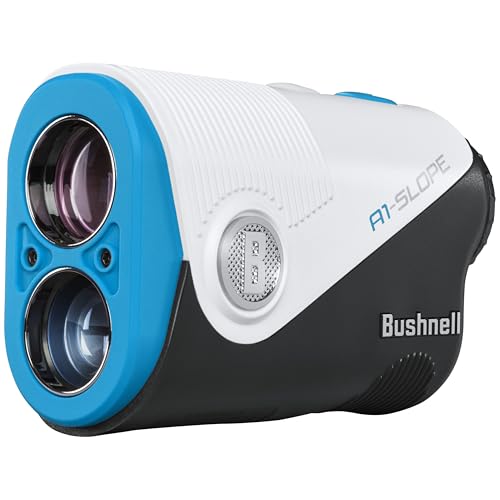
The A1-Slope takes the compact route, and that matters for golfers who hate bulky gear in a pocket or small bag pocket. You still get 6X magnification, slope on and off, Pinseeker JOLT feedback, and USB-C charging, so the size reduction does not come at the cost of the core features most golfers actually use.
Compared with the Tour V6 Shift, this one is far more portable and less cart-centric. The trade-off is that its smaller body is all about convenience, so golfers who want more premium extras or a more anchored feel may prefer the larger Bushnell above it.
Positives
- Ultra-compact sizing makes it easy to carry all round.
- Pinseeker JOLT gives feedback that helps confirm the target.
- Slope toggle keeps it useful in practice and casual play.
- USB-C charging matches modern gear habits.
Things To Consider
- The smaller shell may feel less substantial than larger units.
- Golfers who want a cart mount will need a different model.
- The feature set is streamlined rather than expansive.
Core Details
Who Should Grab It
Golfers who want a small, easy-carry rangefinder with the core tools already built in will appreciate this one most.
Reach For A Different Pick When
Bushnell Golf Tour V6 Shift Laser Rangefinder suits golfers who want a more cart-friendly premium setup, while MOESAPU Golf Rangefinder with Slope, Flag Lock Vibration, USB-C Charging fits anyone who wants a value-first alternative with a lighter price profile.
This squad-camo version carries the same core MiLESEEY layout as the earlier GPS pick, but the finish gives it a more personal, less traditional look. It still brings the detachable handheld design, MagLock, color touchscreen, and visual plus audible yardage, so the styling change does not touch the underlying function.
Golfers who want their gear to feel a little less plain may enjoy that visual twist, especially if the unit lives in a shared bag or rides along in a golf cart. The honest read is that you are choosing style on top of substance, which works best when you already want the GPS-first feature set.
Bright Spots
- Squad camo finish gives it a distinct look in the category.
- The same GPS tool set remains available under the hood.
- MagLock helps the detachable design feel more secure.
- Color touchscreen makes navigation easier than a plain display.
Points To Note
- The styling matters most to golfers who care about appearance.
- Golfers who want a quieter, simpler look may prefer the red version.
- The broader feature set still asks for more attention than a basic laser.
Details At A Glance
Who It Suits Best
Golfers who want GPS guidance and also want their gear to stand out a little will get the most from this finish.
Where Another Pick Suits Better
MiLESEEY GeneSonic Pro Golf GPS Speaker, Zesty Red suits golfers who want the same core functions with a brighter finish, while Bushnell Golf A1-Slope Laser Rangefinder fits anyone who wants a much smaller laser-only unit.
The zesty red version keeps the same GPS-first setup as the camo model, but the brighter finish makes it easier to spot in a mixed bag or shared cart. That small visual edge matters more than it sounds, especially for golfers who want their gear to be easy to find between holes.
As with the rest of the GeneSonic line, the strength comes from the combo of detachable handheld use, 43K-plus course access, visual and audible yardage, and the color touchscreen. It feels like the better fit for golfers who want a lively-looking tool that still handles practical course guidance with very little drama.
What We Like
- Bright red finish is easy to spot in a bag.
- GPS-based layout helps on unfamiliar courses.
- Color touchscreen keeps the interface approachable.
- Audible and visual yardage support quick decisions.
- Detachable handheld form adds flexibility across setups.
Honest Caveats
- The bright finish helps visibility more than function.
- Golfers who prefer a classic black body may want the camo model instead.
- GPS-driven tools still ask for a bit more attention than a simple laser.
Feature Rundown
The Right Fit
Golfers who like a brighter finish and want their rangefinder to stand out in a practical way should feel right at home here.
Skip It When
Bushnell Golf A1-Slope Laser Rangefinder suits golfers who want a tiny laser-first tool, while MOESAPU Golf Rangefinder with Slope, Flag Lock Vibration, USB-C Charging fits players who want a simpler value route.
How To Choose The Right Value Golf Rangefinders
Laser, GPS, Or A Hybrid Setup
Laser rangefinders are the simplest path, because you point at the flag, get a reading, and move on. GPS units like the MiLESEEY GeneSonic Pro line add course context, which helps on unfamiliar holes and makes hazards easier to think through before you swing.
Hybrid designs sit in the middle and can feel like a good compromise for golfers who want some mapping without losing the fast point-and-shoot routine. That balance matters most for players who split time between their home course and unfamiliar tracks.
Range, Magnification, And Locking Feedback
Range tells you how far the unit can measure, but it’s the whole system that shapes real usefulness. Magnification, like 6X or 7X, helps you see the pin more clearly, while flag lock or Pinseeker feedback gives reassurance that the device has grabbed the target instead of the trees behind it.
Faster lock times matter on busy tee boxes and during casual rounds with friends. Longer range numbers help more on large courses or when you also want a unit that doubles for hunting or field use.
Charging, Mounting, And Carry Comfort
USB-C charging is a quiet win because it cuts down on cable clutter and makes packing simpler. Magnetic mounts matter most for golfers who ride in carts, while compact bodies like the Bushnell A1-Slope suit pocket carry and smaller bags.
Weight and shape are easy to overlook, yet they shape how often you actually bring the unit. A tool that feels clumsy usually stays in the trunk, and that defeats the point.
Build Quality And Course Conditions
Waterproof or water-resistant construction helps in damp grass, light rain, and misty morning rounds. Ratings like IP54, IP67, or waterproof construction also give a clue about how much confidence you can have when the weather turns messy.
The higher you move up the list, the more you tend to pay for added durability, clearer screens, stronger lock feedback, and more layered features. For a golfer who plays often, that extra polish can feel justified in day-to-day use.
What To Weigh Before You Click Through
Mistakes Worth Dodging
Many shoppers chase the biggest range number and ignore how the unit feels in hand. That can leave you with a feature-heavy model you do not enjoy carrying, especially during walking rounds.
Another common miss is overlooking target feedback. A clear vibration or visible lock cue saves a lot of uncertainty, while a bare display can leave you guessing at the pin.
The Upgrade Payoff
Higher-tier models usually cost more because they add stronger displays, more refined optics, better mounting options, or GPS course guidance. The Bushnell Tour V6 Shift and the MiLESEEY GeneSonic Pro units show that difference well, since both add layers beyond a basic yardage read.
Spending up makes sense for golfers who play often, travel with their gear, or want one device to handle practice and competition. For occasional rounds, a simpler model like the MOESAPU or REVASRI can be the calmer, smarter fit.
Frequently Asked Questions
Do Value Golf Rangefinders Need Slope?
Slope helps adjust distance for uphill and downhill shots. Many golfers like it for practice rounds, while tournament play often needs the slope function switched off.
Is GPS Better Than Laser For Golf?
GPS is useful for course layout, hazards, and front-center-back yardages. Laser rangefinders are faster for a direct pin reading.
How Much Magnification Makes Sense?
6X is common and plenty for most golf use. 7X gives a tighter look at distant flags, though it can feel a little less relaxed to hold steady.
Why Does USB-C Matter?
USB-C makes charging easier because the cable is familiar and widely used. It also reduces the chance that you end up carrying a separate charger just for one device.
What Features Matter Most For Walking Rounds?
Compact size, light weight, and a clear lock cue matter a lot. A magnetic cart mount matters less unless you also ride in carts sometimes.
Closing Thoughts
You’ve got a healthy spread here, from simple laser tools to GPS-heavy options that bring more course context into the round. The best match depends on how often you play, whether you walk or ride, and how much extra information you actually use before each shot. For most golfers chasing value, the sweet spot is a model that feels quick, clear, and easy to live with every week. That’s the kind of gear that earns its place in your bag.