
Backyard practice works best when your gear matches the space, not the fantasy. You need balls that suit net sessions, short-range chips, indoor putting, and the sort of swing work that won’t send shots sailing into a fence or window.
This roundup focuses on practice golf balls, foam options, hollow plastic styles, and a couple of bigger practice setups for people who want more than a bucket of loose balls. You’ll see clear trade-offs, because the right choice depends on whether your priority is realism, low flight, easy storage, or a fuller home practice station.
The Shortlist At A Glance

AlmostGolf Practice Golf Balls 10 Pack Yellow

Adwikoso 100 Pack Plastic Golf Training Balls with 2 Golf Ball Tees

Zensouds Golf Net 10x7FT with Golf Practice Mat

FUNZON Practice Golf Balls 25 Pack Plastic Airflow Hollow Golf Balls

Crestgolf 50pcs Plastic Golf Training Balls 40mm

Guirnd 20 Pack Practice Golf Balls 41mm Foam Golf Balls
Bastex Recycled Hit-Away Used Golf Balls Mesh Bag

Junkin 80 Pcs Foam Golf Practice Training Balls

Golf Ball Planet 100 Shag Practice Hit Away Range Used Golf Ball Mix
KOFULL Plastic Golf Balls Practice 24/50/100 Pack Hollow Plastic Training Balls
More Details On Our Top Picks
AlmostGolf’s 10-pack is the kind of backyard option that makes sense for short, repeatable swings. The limited-flight design matters most in tighter spaces, where a full ball can be too lively for comfort, and the yellow color is easy to keep track of during quick sessions.
You may find it especially handy for family practice or casual wedge work, since the softer construction is built around feedback rather than distance. The trade-off is simple, it won’t feel like a premium range ball, so golfers chasing maximum realism may want something denser.
Strong Points
- Limited flight helps keep backyard practice manageable.
- Soft feel supports more relaxed contact work.
- Yellow finish is easier to spot in grass.
- Good fit for indoor or sheltered use.
Small Caveats
- It gives up distance realism for control.
- Very firm hitters may prefer a denser training ball.
- Storage is easy, but the soft build can show wear sooner with rough surfaces.
Feature Snapshot
Who It Suits Best
This fits casual golfers who want manageable backyard swings and simple short-game reps. It also suits households that need a softer training ball for shared practice space.
Where A Sibling Pick Shines
Guirnd 20 Pack Practice Golf Balls 41mm Foam Golf Balls suits you better when you want a foam build with a slightly larger pack for frequent indoor-outdoor drills.
This set is built for repetition, plain and simple. A 100-ball count plus two tees gives you enough pieces for steady backyard work, putting drills, or a long practice session without constantly gathering balls.
The hollow plastic style keeps the feel light, which is useful around nets and on indoor putting greens, though it won’t mimic the strike of a real course ball. For busy practice routines, that trade-off makes sense, and the larger quantity helps reduce how often you restock.
What We Like
- Large count supports frequent practice sessions.
- Included tees add a little setup value.
- Light build works well in confined spaces.
- Useful for putting, chips, and swing rehearsal.
Trade Offs
- The plastic feel sits far from real-ball feedback.
- Loose pieces can clutter a garage unless you keep a bin handy.
- Very strong outdoor winds can move them around more easily.
Core Details
Made For
This suits golfers who want a large, simple supply for putting greens, garage sessions, or backyard drills with frequent resets. It also works well for beginners building routine without a lot of setup friction.
Another Choice May Suit
Bastex Recycled Hit-Away Used Golf Balls is a better fit for golfers who want more realistic ball flight and do not mind a used-ball mix.
The net changes the whole practice setup, because you’re not just choosing balls anymore, you’re building a hitting station. The 10 by 7 foot frame gives you a roomy target area for drives and chips, and the included mat adds a proper landing and stance surface for backyard reps.
It’s also the most involved option in the group, so the payoff shows up most for golfers who want a dedicated practice corner at home. Installation is meant to be straightforward with cross poles and ground spikes, though storage and setup still ask for a bit more space than a pouch of practice balls.
Reasons To Buy
- Larger net area supports more relaxed swing work.
- Practice mat helps turn a yard into a training zone.
- Works for driving, chipping, and swing path work.
- Can be broken down for storage after use.
Areas To Watch
- Takes more room than ball-only picks.
- Setup is simpler than many nets, yet still more involved than a loose-ball session.
- Best kept where you can leave it assembled or near-stored between uses.
Details At A Glance
Built With In Mind
This is a strong fit for golfers who want a backyard practice station instead of just a box of balls. It also suits households where one setup needs to serve several practice types.
Swap It Out When
AlmostGolf Practice Golf Balls 10 Pack Yellow makes more sense for small yards or indoor spaces where a full net would feel too large.
FUNZON keeps things simple with a 25-ball set that fits neatly into everyday practice. The hollow plastic build is a natural match for nets, garage bays, and indoor putting spots where you want easy cleanup and low carry.
Compared with Adwikoso’s larger bundle, this set is more modest, which helps when you only need enough balls for a focused session. The lighter count also means less clutter, though serious high-volume practice will push you toward a bigger pack.
Upsides
- Easy to store in a small bag or bin.
- Works well for quick pre-round tune-ups.
- Lightweight build suits indoor or net practice.
- Good quantity for solo training sessions.
Points To Note
- Twenty-five balls go faster than you may expect during long drills.
- Plastic feel keeps feedback from feeling very course-like.
- Very rough outdoor surfaces can show wear more quickly.
Quick Facts
Perfect Match For
This fits golfers who want a neat, low-fuss practice pile for home drills and net work. It also suits people who prefer a smaller set they can put away fast.
A Better Fit Elsewhere
Crestgolf 50pcs Plastic Golf Training Balls 40mm suits golfers who want more pieces in the same lightweight plastic category.
Crestgolf lands in the middle of the pack in a useful way, since 50 balls is enough for regular practice without becoming a storage headache. The 40 mm size gives you a clear training ball format, and that makes it friendly for home range sessions, swing drills, and casual repetition.
It stands a little closer to FUNZON than to the foam options, so you get the same lightweight convenience with a larger count. The trade-off is again realism, because hollow plastic balls are built for convenience and containment more than full strike feedback.
Bright Spots
- Fifty-ball count strikes a practical middle ground.
- 40 mm format is easy to handle and track.
- Useful for home drills without much setup.
- Good fit for routine practice over occasional sessions.
Worth Noting
- Plastic construction gives up course-like sensation.
- Bulk count still needs a container or basket for tidy storage.
- The lightweight profile is less suited to realism-focused practice.
Feature Rundown
Who Should Grab It
This suits golfers who want a middle-ground pack for steady drills and easier storage than a giant bundle. It also works for households that want a simple practice supply for shared use.
Look Elsewhere When
Guirnd 20 Pack Practice Golf Balls 41mm Foam Golf Balls is the better match for you when a softer foam construction matters more than quantity.
Foam changes the feel in a useful way, especially for backyard or indoor practice where you want a softer, calmer ball flight. Guirnd’s 41 mm balls are sized for easy handling, and the limited-flight behavior helps make small spaces less stressful.
The smaller 20-ball count is a fair trade for portability, since you can keep the set in a golf bag or practice bin without much effort. Compared with the plastic picks above, this one leans more toward soft-contact drills and less toward the firmer feel many golfers expect from range-style balls.
Standout Traits
- Foam build helps reduce how far shots travel.
- Easy to carry between home and travel practice spots.
- Works indoors, outdoors, and around nets.
- 41 mm size is easy to grip and sort.
Softer Spots
- Twenty balls may feel light for longer drills.
- Foam feedback is gentler than plastic or used balls.
- Can be a little less realistic for full swing feel.
Feature Card
Whose Shelf It Belongs On
This suits golfers who want a softer ball for garage work, travel practice, or calm backyard reps. It also makes sense for anyone who values storage ease over volume.
A Better Fit Elsewhere
Junkin 80 Pcs Foam Golf Practice Training Balls is the better pick for golfers who want the same foam style in a much larger count.
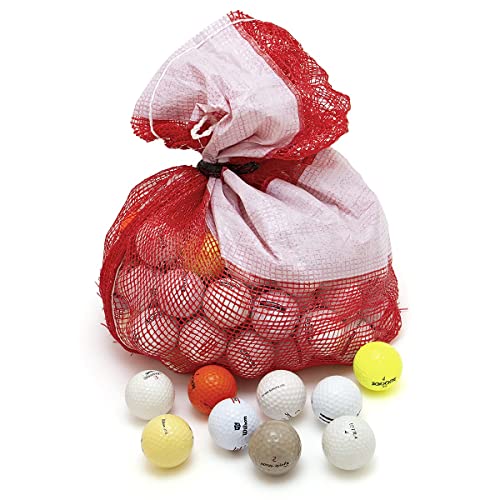
This is the most range-like option in the mix, because used balls bring you closer to the feel many golfers want for shot rehearsal. The mesh bag is handy too, since it keeps the collection together and makes it easier to carry to a net, a garage station, or a practice tee.
The trade-off is obvious: recycled balls are a mixed lot, so appearance and condition are less uniform than with new training balls. That matters less for repetitive hitting than for exact feedback, and it’s a smart fit for golfers who care more about volume and realism than pristine looks.
Best Bits
- Used-ball mix gives a more course-like practice feel.
- Mesh bag helps with storage and transport.
- Works well for range drills and backyard hitting.
- Good option for golfers who cycle through many balls.
Honest Caveats
- Condition can vary because the balls are recycled.
- Some cosmetic wear is part of the package.
- Not as tidy or uniform as new practice balls.
Feature Overview
The Right Fit
This suits golfers who want a budget-conscious supply of practice balls with a more realistic hitting feel. It also fits range regulars who go through balls quickly.
Reach For A Different Pick When
AlmostGolf Practice Golf Balls 10 Pack Yellow is the calmer choice for small backyards where lower flight matters more than realism.
Junkin’s big foam count is useful for golfers who run through a lot of repetitions in one session. The low-flight foam format keeps things friendlier around the house, and 80 balls gives you room for drills, family practice, or a backyard setup that stays out for a while.
It sits close to Guirnd in use, but the larger quantity makes it easier to spread balls across a yard or practice zone. The honest read is that it’s more about convenience and volume than exact ball realism, which is fine for many home routines.
Highlights
- Large count supports long practice blocks.
- Foam build is kinder to tighter spaces.
- Useful for warmups, chipping, and casual swing work.
- Easy to keep in one container or basket.
Room For Improvement
- Foam won’t match the response of a real ball.
- Sorting 80 pieces takes a bit more storage discipline.
- Less useful for golfers who want firm strike feedback.
Spec Overview
Who Will Love This
This suits golfers who want a large foam stash for frequent practice without carrying a bulky setup. It also works well for homes where a lower-flying ball makes sense.
Skip It When
Bastex Recycled Hit-Away Used Golf Balls is the better move if you care more about range-like feedback than foam softness.
Golf Ball Planet leans into volume and mix, which is useful for golfers who care about keeping practice moving. A 100-ball mesh bag means you can keep a good supply near the garage, range, or backyard net without sorting every ball into a pristine set.
Compared with the Bastex bundle, this one still speaks the language of used-ball practice, but the listing is centered on a broad practice mix. You may prefer it for sustained repetition, while golfers chasing a clean foam or hollow-plastic setup will probably be happier elsewhere.
Positives
- Large count supports high-volume practice.
- Mesh bag makes transport and storage easier.
- Suitable for range-style drills and backyard hitting.
- Useful for golfers who burn through balls quickly.
Minor Gripes
- Used-ball condition can vary from piece to piece.
- Not the cleanest choice for display or neat shelving.
- Less suited to indoor softness-focused drills.
Feature Card
Best Suited To
This suits golfers who want a large, no-frills practice mix for repeated ball striking. It also fits anyone who likes to keep a bulk stash close at hand.
Another Choice May Suit
Junkin 80 Pcs Foam Golf Practice Training Balls is the easier fit for softer indoor sessions and lighter impact around the house.
KOFULL stands out for its flexible pack sizing, which lets you choose a smaller or larger stash depending on how much practice you really need. The hollow plastic build keeps the balls light for indoor-outdoor drills, and that makes the set easy to live with in a garage, basement, or backyard net zone.
It’s the least fussy style in the lineup, and that’s the appeal. For golfers who want a simple practice basket without paying for extra realism, the trade-off is acceptable, though players chasing stronger feel may want one of the foam or used-ball choices above.
Best Bits
- Pack-size options help you match the set to your practice habits.
- Lightweight balls are easy to collect after drills.
- Works for indoor, outdoor, and party-style use.
- Simple construction keeps storage straightforward.
Areas To Watch
- Plastic training feel stays far from a course ball.
- Very light build can move around in breezy yards.
- More useful for drill work than for exact shot realism.
Core Details
Built With In Mind
This suits golfers who want a simple, flexible practice ball set with easy storage and little setup fuss. It also works for mixed-use homes where the balls may pull double duty.
Where Another Pick Suits Better
Adwikoso 100 Pack Plastic Golf Training Balls with 2 Golf Ball Tees suits you better when a larger bundle with tees matters more than pack-size flexibility.
How To Choose The Right Practice Golf Balls For Backyard
Match The Ball To Your Space
Your yard size matters more than most product pages admit. Limited-flight foam and softer practice balls suit tighter lawns, while hollow plastic works well for garages, nets, and small indoor setups because cleanup is fast and the shots stay manageable.
A fuller backyard can handle a more realistic used-ball mix, especially when you want feedback that feels closer to range work. The key is simple, the more open your space, the more freedom you have to choose realism over containment.
Think About Feedback, Not Just Count
Ball quantity looks impressive, but the real question is what you want your hands to learn. Foam gives gentler feedback and lower flight, hollow plastic keeps practice easy and tidy, and used balls bring a firmer, more course-like strike.
That difference matters for wedge work and short swings, where contact quality shows up fast. For long sessions, a larger count saves you from constant ball retrieval, which is why 80 or 100-piece sets make sense for people who hit often.
Choose By Storage And Cleanup
Storage gets overlooked until the bag is open and balls are rolling under shelves. Mesh bags, smaller 10 to 25-ball packs, and foam sets all keep the mess under control better than a huge loose pile.
For a garage bay or basement corner, that convenience is worth more than flashy features. A compact practice setup tends to get used more because it’s easy to put away and just as easy to bring back out.
Look At The Whole Practice Setup
Balls are only part of the picture. A net, mat, or tee can matter just as much, because those pieces decide whether your practice feels like a quick warmup or a real home station.
Golfers who want short, controlled reps can stay with balls alone. Golfers building a dedicated backyard corner usually get more value from a net-and-mat bundle, since it gives the session structure instead of leaving you to improvise.
Things Worth Knowing First
Mistakes Worth Dodging
Many shoppers focus on quantity and skip the feel profile. A big pack of hollow balls looks useful, but it can disappoint you if you really want firmer feedback for swing work.
Another common slip is ignoring where the practice will happen. Foam and low-flight designs suit close quarters better, while used-ball mixes are a cleaner fit for open yards and range-style sessions.
What The Higher Tier Buys
Higher-tier choices in this category usually spend more on realism, volume, or a fuller practice system. Used-ball bundles feel closer to the range, while a net-and-mat setup gives you a complete backyard station instead of a loose basket of balls.
You usually pay for convenience too, especially with bigger counts, better carry bags, or training pieces that make setup simpler. That extra spend makes the most sense for golfers who practice often enough to notice friction every week.
Frequently Asked Questions
Are foam practice balls good for backyard use?
Yes, foam balls suit backyard practice well because they keep flight lower and are easier to manage in tighter spaces. They work especially well for short swings and indoor-adjacent practice zones.
How many practice balls do you really need?
For short sessions, 10 to 25 balls can be enough. For longer drills, 50 to 100 balls saves time and keeps the rhythm going.
Are used golf balls better than plastic practice balls?
Used balls usually feel more like standard golf balls at impact. Plastic practice balls are easier to manage and store, but they trade away realism.
Can you use practice golf balls indoors?
Foam and some hollow plastic balls are better suited to indoor use than full-weight balls. A net or clear space still matters, because the ball type only solves part of the setup.
What works best for a small backyard?
Low-flight foam or limited-flight practice balls are usually the safest fit for smaller spaces. A compact set is easier to store, too, which helps keep practice routine instead of a chore.
Closing Thoughts
The right backyard practice ball depends on the space you have and the kind of swing work you want to repeat. Foam keeps things calm, hollow plastic keeps things simple, and used balls bring more realism when your yard has room for it. A net-and-mat setup changes the whole experience again, especially for golfers building a real practice corner at home. Choose the option that makes practice easy to start, and you’ll use it more often.