
Outdoor practice gets easier when your mat matches the way you actually swing, chip, and repeat drills in a backyard, garage, or spare corner of the patio. The wrong surface can feel too thin, slide around, or wear out fast, while the right setup gives you a steadier base and a more realistic strike. You’ll see compact foldable options, thick dual-turf models, and mats with extras like trays, tees, or swing-path feedback. This roundup helps you narrow the field without wasting time on vague spec sheets.
Quick Look At The Strongest Options

Bltend Golf Mat 36mm, 5x4ft/6x4ft
SAPLIZE Foldable Heavy-Duty Golf Hitting Mat

Premium Dual-Turf Golf Mat, 5x4ft, 6x4ft

Integrated Golf Hitting Mat with Ball Tray

Golf Mat, Practice Outdoor Indoor

Golf Hitting Mats Training Equipment

Premium Golf Hitting Mat, 10mm Foam Padding

High-Precision Golf Hitting Mat

Premium Dual-Turf 5x4ft Golf Mat
The Bltend mat is the kind of setup that suits a backyard station where you want a firmer, thicker base under repeated swings. The 36 mm build and EVA backing point to a cushioned feel that can help the mat sit more calmly on harder surfaces, which matters more than flashy extras on long practice days.
You also get a large footprint choice, with 5×4 ft or 6×4 ft versions, so your stance and follow-through have room to breathe. Compared with the smaller SAPLIZE mat later in this list, this one is a better fit for golfers who dislike crowding at impact and want more body rotation space.
Strong Points
- 36 mm thickness gives a dense, grounded feel for repeated hitting sessions.
- EVA backing helps the mat sit more steadily on patios or garage floors.
- The larger size options suit fuller swings and wider stance work.
- Artificial turf surface fits both driving and chipping practice.
- Ball and tee extras make setup feel more complete right away.
Things To Consider
- The thicker build will take up more storage space than foldable compact mats.
- Transport is less convenient than with lighter, smaller training pads.
- The denser feel may be more than a casual putter-only setup needs.
Feature Snapshot
Who It Suits Best
Backyard golfers who want a thicker, steadier mat for regular swing and chip work will get the most from this setup.
Where A Sibling Pick Shines
SAPLIZE Foldable Heavy-Duty Golf Hitting Mat suits small-space users who need easier storage after each session.
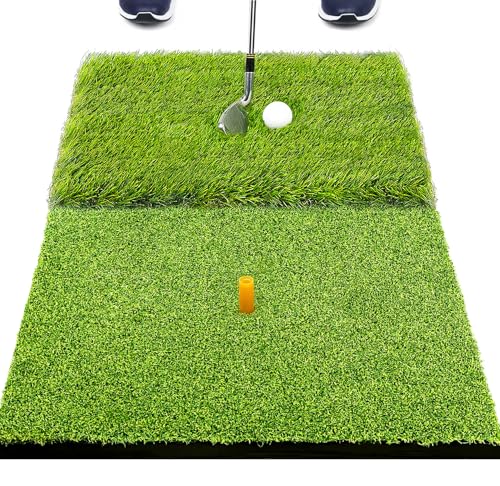
Space-saving design is the main reason this SAPLIZE mat stands out, especially for apartments, garages, or a practice corner that has to disappear after use. The foldable format and 10 mm EVA backing create a practical middle ground between portability and some cushioning, though it won’t feel as planted as the thicker Bltend or Ywitio options.
The listed size is 1 ft 11 in by 1 ft 4 in, which keeps it easy to stash but also narrows the room for big-footed stances and broader drills. That trade-off makes sense for golfers who want a simple chipping and swing mat without claiming much floor space.
Upsides
- Foldable build makes storage far easier than full-size mats.
- 10 mm EVA backing adds a bit of cushion under contact.
- Compact size works well in tight indoor practice zones.
- Large-size positioning in the listing signals roomier turf than a tiny travel pad.
Small Caveats
- The smaller footprint limits full-stance comfort for some golfers.
- Less surface area can mean more repositioning during longer sessions.
- It suits light, regular practice better than all-day range-style repetition.
Core Details
Who Should Grab It
Golfers with limited floor space, or anyone setting up a temporary indoor practice area, will find this format easy to live with.
Another Choice May Suit
Bltend Golf Mat 36mm, 5x4ft/6x4ft is a better fit for golfers who want a bigger, thicker base for more aggressive practice.
Ywitio goes a step more flexible than the previous picks by offering a dual-turf surface and a thickened base range from 21 mm to 50 mm. Dual-turf means two different turf textures on one mat, which usually helps you practice more than one shot style without switching gear, and that matters in a busy backyard routine.
The 5×4 ft and 6×4 ft size choices make it easier to match your setup to the space you have, not the space you wish you had. Compared with the SAPLIZE mat, this one is better for golfers who want a fuller hitting area and a more grounded practice station.
Bright Spots
- Dual-turf layout supports varied practice drills on one surface.
- Thickened base range gives you room to choose the feel you prefer.
- Two size options help the mat fit different backyard layouts.
- Works for indoor and outdoor use, which broadens placement options.
Points To Note
- The broader build asks for more storage and setup space.
- Dual-turf construction may feel more involved than a plain practice pad.
- Heavier mats can be less convenient to shift often.
At A Glance
Made For
Golfers who want a roomier mat with more shot variety and a thicker base profile will get the most from this choice.
A Better Fit Elsewhere
Jspotib Golf Mat, Practice Outdoor Indoor is the simpler route for golfers who want a lighter, less complex practice surface.
Built-in accessories change the rhythm of practice, and this Ponsonbay mat leans into that idea with a ball tray and three tees. A tray is simply a holding channel for balls, which keeps sessions cleaner and more organized, especially in a garage or side yard where you don’t want gear rolling everywhere.
The listed 5 ft by 4 ft footprint gives you enough room for a fuller stance than a compact mat, while the thicker profile options should appeal to golfers who want a more anchored feel. Compared with the Ywitio mat, this one is less about surface variety and more about keeping your practice station tidy and ready.
Reasons To Buy
- Ball tray keeps balls and tees organized between swings.
- Three tees add convenience for varied practice drills.
- Large 5×4 ft layout gives you useful hitting room.
- Two thickness options help you choose the feel you prefer.
Room For Improvement
- Added accessories can mean more pieces to store after use.
- The larger format needs a more settled practice area.
- It suits organized drill work more than travel-style portability.
Feature Card
Built With In Mind
Home golfers who like a tidy practice station with tees and ball storage built in will appreciate the setup most.
Look Elsewhere When
BIRDIEBLAST Premium Golf Hitting Mat works better for you if a simpler dual-turf surface matters more than extra accessories.
Jspotib keeps things straightforward, which is useful for golfers who want a no-fuss mat for the backyard or living room. The rubber backing should help it stay steadier than very thin travel pads, and the training focus on chipping and swing path makes it more than a throwaway surface for occasional use.
The honest read is that this pick makes the most sense for casual drills and simple daily repetition. Compared with the more feature-heavy Ponsonbay mat, it gives you a cleaner, simpler entry point without extra attachments to manage.
Highlights
- Rubber backing adds practical grip on common surfaces.
- Indoor and outdoor use broadens where you can place it.
- Useful for chipping drills and swing-path practice.
- Simple design keeps setup easy for everyday routines.
Areas To Watch
- Plain construction means fewer built-in extras than some rivals.
- Lightweight mats can shift more on slick floors.
- Best for casual repetition, not highly technical drill stations.
Details At A Glance
The Right Fit
Casual golfers who want a simple mat for chipping, swing-path drills, and general backyard use should feel comfortable here.
Skip It When
LYDARZ Golf Hitting Mats Training Equipment suits you better if instant swing-path feedback matters more than a plain practice surface.
This LYDARZ mat is built for people who want the mat to say something back after each swing. Instant swing-path feedback and three replaceable training mats point toward a more guided practice session, which can be helpful for home drills where you want to notice patterns without setting up extra gear.
The no-slip heavy-duty rubber base also gives it a sturdier footing than lighter practice pads, especially on smooth garage or basement floors. Compared with Jspotib’s simpler mat, this one suits golfers who care more about feedback and drill variety than about plain, basic coverage.
Best Bits
- Instant feedback helps you notice swing-path tendencies sooner.
- Three replaceable training mats add drill variety.
- Rubber base supports better grip on indoor flooring.
- Useful for golfers working on repeatable technique at home.
- Replaceable surfaces can help the setup stay useful longer.
Worth Noting
- More moving parts mean a little more storage and setup care.
- Feedback-driven designs suit focused drills more than casual hitting.
- The extra features may feel unnecessary for very simple practice.
Quick Facts
Whose Shelf It Belongs On
Technique-minded golfers who want more feedback from a home practice mat will get the most out of this setup.
Reach For A Different Pick When
SAPLIZE Foldable Heavy-Duty Golf Hitting Mat is the easier choice for a golfer who values storage simplicity over feedback features.
BIRDIEBLAST keeps the formula simple, and that can be a good thing for routine practice in a garage, driveway, or spare room. The 10 mm foam padding gives a softer underfoot feel than a bare-rubber mat, while the rubber backing helps the surface stay more settled during repeated swings.
That balance makes it a solid everyday setup for golfers who want comfort without a bulky footprint. Compared with the LYDARZ model, this one is less about feedback and replaceable parts, and more about steady, repeatable practice.
Positives
- 10 mm foam padding softens the contact experience a bit.
- Rubber backing supports steadier placement during drills.
- Indoor and outdoor use gives you more placement flexibility.
- Simple construction keeps daily practice from feeling fussy.
Areas To Watch
- It lacks the built-in training aids found on some rivals.
- Padding depth is moderate, not especially thick.
- The straightforward format may feel plain for gadget-heavy setups.
Key Specs
Perfect Match For
Golfers who want a comfortable, uncomplicated mat for regular home use will likely feel at home with this one.
Where Another Pick Suits Better
FODESAN High-Precision Golf Hitting Mat is a smarter fit for golfers who want more direct swing feedback.
FODESAN leans hard into teaching, with swing-path feedback and impact detection aimed at home practice that feels more instructive than casual. Impact detection means the mat is built to register where the club meets the surface, which can help you notice contact patterns during repeated swings without guessing.
The 3-in-1 design and golf turf mat format suggest more drill flexibility than a single-surface pad, and that matters for golfers working on precision at home. Compared with BIRDIEBLAST, this one is the better match for anyone who values feedback more than a softer, simpler feel.
What We Like
- Swing-path feedback gives your practice more guidance.
- Impact detection helps highlight contact consistency.
- 3-in-1 setup supports more than one drill style.
- Indoor and outdoor use keeps placement flexible.
- Works well for beginner practice and advanced tune-ups alike.
Honest Caveats
- Feedback features can feel like more than casual users need.
- More function usually means more setup attention.
- The feature set may be overkill for simple chipping only.
Spec Overview
Best Suited To
Home golfers who want a more instructive mat for swing work and contact awareness will get the strongest fit here.
Swap It Out When
Bltend Golf Mat 36mm, 5x4ft/6x4ft is the calmer choice for golfers who want thickness and room more than feedback tools.
KBBAM aims this mat at golfers who care about alignment and angle of approach, two details that can shape a more repeatable strike. The 5×4 ft size gives you enough room for a real stance, while the listed 21 mm to 50 mm high-elasticity base suggests a more responsive feel than very flat practice pads.
That combination makes sense for home sessions where you want visual guidance and a bit more spring underfoot. Compared with the Ywitio dual-turf mat, this one leans more toward alignment aid and swing-path discipline than toward broader turf variety.
Plus Points
- Alignment and approach-angle aid support more deliberate practice.
- 5×4 ft footprint gives decent room for stance work.
- High-elasticity base range points to a livelier feel.
- Dual-turf construction adds variety to drill sessions.
Softer Spots
- Alignment features matter most to golfers who pay close attention to setup.
- Larger mats need a more stable spot for daily use.
- The upgraded feel may be more than a casual practice station requires.
Technical Sheet
Right Fit
Golfers who want a larger mat with alignment help and a more premium training feel will get the most from this choice.
Not Your Match When
SAPLIZE Foldable Heavy-Duty Golf Hitting Mat fits better for golfers who need storage-friendly convenience first.
How To Choose The Right Outdoor Golf Hitting Mats
Size And Surface Feel
Size matters more than people expect. A 5×4 ft mat gives you room for stance work and a fuller swing, while a compact foldable pad works better in a tight garage or apartment corner.
Surface feel matters just as much. Thicker EVA, foam, or elastic bases tend to give a softer landing and a steadier stance, while thinner mats are easier to move and store.
Match The Mat To Your Practice Style
Chipping practice, full swings, and feedback drills all ask for different things. A golfer focused on swing-path work should look for feedback or impact cues, while someone practicing short game touches may prefer a simpler turf surface.
Dual-turf layouts make sense for mixed drills because they give you more than one texture in one place. That extra flexibility costs more space and usually more money, so the real question is how often you’ll use the added function.
Think About Storage And Placement
Outdoor use sounds broad, but your actual setup space decides a lot. Mats with rubber or EVA backing usually stay more settled on concrete, turf, or garage flooring, though heavier builds are less convenient to move after each session.
Foldable options suit people who need the mat to vanish after practice. Larger anchored mats suit more permanent backyard stations, especially when you want the hitting area to feel like part of the space rather than a temporary add-on.
Things Worth Knowing First
Mistakes Worth Dodging
One common misstep is chasing the biggest mat without checking where it will live. A large base sounds reassuring, but a cramped storage area turns that advantage into a nuisance.
Another easy miss is overbuying features you will barely use. Swing feedback and alignment aids are useful for focused drills, yet a casual chipper may be happier with a simpler surface.
What The Higher Tier Buys
Higher-tier mats usually spend more on thickness, layered turf, and extra training cues. That can mean better stability, more realistic contact, and a setup that feels less flimsy after repeated use.
The upgrade makes the most sense for golfers who practice often and want their station to hold up to regular swings. For occasional use, a simpler mat can be easier to live with and easier to store.
Frequently Asked Questions
What size works best for home practice?
A 5×4 ft mat suits most fixed backyard or garage stations because it gives room for stance and follow-through. Smaller mats fit tighter spaces but ask for more precision with foot placement.
Does a thicker mat always feel better?
Thicker mats usually feel more cushioned and stable. The trade-off is more bulk, more weight, and less convenience when you need to store it.
Are dual-turf mats worth it?
Dual-turf mats make sense when you want more than one hitting feel in a single setup. They are less useful for very simple practice where one surface is enough.
What does rubber backing do?
Rubber backing helps the mat stay put on smoother surfaces. That matters in garages, patios, and indoor spaces where lighter mats can wander.
Can a compact mat still help with swing drills?
A compact mat can still be useful for chipping, contact work, and short swing sessions. Full-stance practice feels more comfortable on a larger surface.
Closing Thoughts
The right Outdoor Golf Hitting Mats for your setup come down to space, practice style, and how much structure you want from each session. A thick backyard mat feels very different from a foldable pad tucked beside the washer, and both can make sense. Pick the one that matches the way you actually practice, not the one that simply looks busiest on the product page. That’s the cleanest route to a setup you’ll keep using.