Building a home golf space gets easier once you separate the simple training pieces from the full enclosure setups. Some picks are made for tight garages and spare rooms, while others give you a more complete practice lane for swings, chips, and launch feedback.
The eight options below cover that spread, from mats and nets to launch monitors and full-screen enclosures. You’ll see where each one fits, what it asks of your space, and where a different style makes more sense.
Quick Look At Our Top Picks

Bltend Golf Mat 36mm 5x4ft/6x4ft

Golf Net 10x7FT with Practice Mat

Rapsodo MLM2PRO Mobile Launch Monitor Golf Simulator

Integrated Golf Hitting Mat with Ball Tray
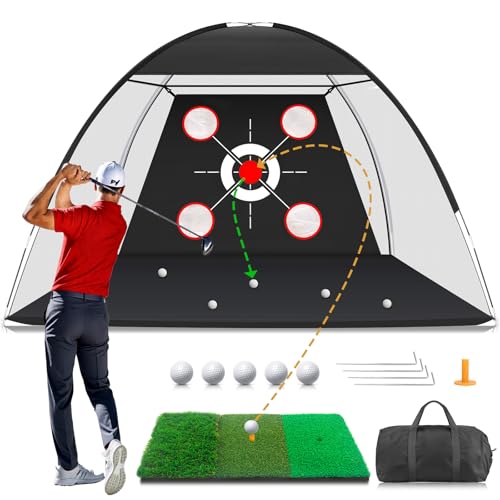
Golf Net with Practice Mat 10x7FT

Complete Golf Simulator Enclosure Package

GoSports Golf Simulator Enclosure Nets Complete Set

GoSports Golf Simulator Enclosure Nets Complete Set
More Details On Our Top Picks
The thicker 36 mm build gives this mat a more planted feel than thinner turf pads, which matters when your garage floor or patio concrete is doing most of the work underneath. The 5 x 4 ft and 6 x 4 ft sizes also make it easier to match the space you actually have, not the space you wish you had.
Dense artificial turf and EVA backing are a practical pair for repeated swings, especially for home stations that see regular use. You also get balls and tees in the box, so the setup feels more complete right away, although the mat’s footprint still asks for a clear hitting zone and some room to move through the shot.
Strong Points
- 36 mm thickness helps soften the feel under the club.
- Dense turf holds up well for repeat practice sessions.
- EVA backing adds steadiness on indoor floors.
- Two size choices help you match your room layout.
- Balls and tees make the setup more ready-to-use.
Things To Consider
- Thicker mats take up more storage space than slim pads.
- You still need enough room for a full swing path.
- Surface cleaning matters, especially after outdoor sessions.
Feature Snapshot
Who It Suits Best
Golfers building a home hitting station in a garage, basement, or patio corner will get the most from this mat.
Where A Sibling Pick Shines
Ponsonbay Integrated Golf Hitting Mat with Ball Tray fits better for someone who wants built-in organization, since the tray keeps tees and balls in one place.
A 10 x 7 ft net gives you a clear practice target without turning the room into a build project. That size works well in a backyard, basement, or spare room, and the included mat keeps you from mixing separate purchases before you’ve even started swinging.
The easier assembly stands out here, because the two cross-pole layout and ground spikes make it less fussy than heavier enclosure kits such as the GoSports models farther down the list. You’ll still want enough depth behind the net for comfortable swing clearance, and the lightweight setup makes storage simpler once practice is over.
What We Like
- Net and mat together create a straightforward practice lane.
- 10 x 7 ft size suits many home spaces.
- Simple pole-and-spike setup keeps assembly approachable.
- Works indoors or outdoors, depending on your layout.
Softer Spots
- Anchor points matter more on softer ground outdoors.
- Lightweight gear is easier to move, but it can feel less anchored than a full frame.
- Targets help aiming, yet they do not replace launch data.
Details At A Glance
Made For
Casual golfers who want a quick swing station in a backyard, basement, or shared living space will find the format easy to live with.
A Better Fit Elsewhere
Rapsodo MLM2PRO Mobile Launch Monitor Golf Simulator suits practice-minded golfers who care more about numbers and shot feedback than a basic net target.
Launch monitors change the feel of home practice because they turn a swing into measurable feedback instead of guesswork. This one leans hard into that role with dual cameras and 15 metrics, so it suits golfers who want shot tracking in a garage bay or at the range rather than a plain impact target.
The three included Pro V1 balls are a nice starter touch, although the real value sits in the tracking tools and the mobile-first format. That also means the setup feels less like a physical cage system and more like a data layer you build around, which is a very different job from the mat-first picks above.
Highlights
- Dual-camera design supports more detailed shot tracking.
- 15 metrics give you a fuller view of ball flight and contact.
- Works for indoor or outdoor practice spaces.
- Fits golfers who care about feedback more than hardware size.
- Included balls help you get started without extra sourcing.
Room For Improvement
- Needs a practice setup built around data, not just netting.
- App-centered use can feel busy for very casual sessions.
- Some golfers will want a larger physical enclosure around it.
Core Details
The Right Fit
Golfers who want shot data, swing feedback, and a mobile-friendly practice routine will get the most from this monitor.
Swap It Out When
Bltend Golf Mat 36mm 5x4ft/6x4ft makes more sense for someone who just wants a sturdier hitting surface without adding electronics.
Ball trays sound minor until you’ve spent a few weeks chasing tees, balls, and alignment clutter around a practice corner. This mat keeps that part of the routine tidier, and the 5 x 4 ft footprint gives you a sensible base for a home station without taking over the room.
The thickness choice matters too, since the product comes in 1.02 in and 1.22 in versions, which lets you pick between a lower-profile layout and a deeper platform feel. That flexibility makes it a smart middle ground for indoor setups where order matters, though it still needs enough open floor around it for a clean swing path.
Upsides
- Ball tray keeps practice supplies closer at hand.
- Three included tees add convenience for repeated sessions.
- 5 x 4 ft footprint fits many home training corners.
- Two thickness options help you match your setup style.
Points To Note
- Ball-tray layouts need a little extra floor organization.
- The deeper version may take up more visual space indoors.
- Surface upkeep still matters after dusty garage use.
Quick Facts
Best Suited To
Home golfers who like tidy gear and a clearly organized practice corner will appreciate this mat most.
Where A Sibling Pick Shines
Bltend Golf Mat 36mm 5x4ft/6x4ft suits you better when thicker turf and a more rugged backing matter more than built-in storage.
Some home golfers just want a straightforward net-and-mat station that covers driving, chipping, and swing work without extra ceremony. This setup does that in one package, and the 10 x 7 ft target area gives you a decent landing zone for repetitive practice in a backyard or garage.
It’s broader than a single mat and simpler than a full enclosure, which makes it a useful middle step for someone building out a home training corner. The trade-off is predictable, since a net setup gives you contact feedback but not the visual containment or projection surface you get from the enclosure kits later in the list.
Bright Spots
- Net and mat arrive as a paired practice setup.
- 10 x 7 ft size gives you a broad target area.
- Supports driving, chipping, and swing repetition.
- Works well as a stepping stone into fuller home practice.
Minor Gripes
- Still needs enough open space behind and around the net.
- Net practice is simpler than a projected simulator bay.
- Outdoor use can mean more cleanup after dusty sessions.
Feature Rundown
Whose Shelf It Belongs On
Golfers who want a simple, all-in-one net station for repeat swings will get the most value from this setup.
Look Elsewhere When
GoSports Golf Simulator Enclosure Nets Complete Set fits better for someone who wants a framed enclosure and a more structured indoor bay.
This is the kind of setup you reach for once a simple net no longer feels like enough. The 8’4 x 8’4 x 5 footprint, blackout cage, projector mount, and side shank nets point toward a full practice bay, so it makes sense in a garage or dedicated golf room where structure matters.
The package also suits golfers who want a cleaner visual environment around the screen, because the enclosure keeps the hitting area defined instead of open-ended. The honest read is that it asks for more planning than the mat-and-net picks, yet the payoff is a more complete home build rather than a loose collection of parts.
Reasons To Buy
- Blackout cage helps create a focused hitting area.
- Projector mount supports a more complete simulator layout.
- Side shank nets add useful perimeter coverage.
- All-in-one package saves you from piecing together a bay.
- 8’4 x 8’4 x 5 size gives a defined footprint.
Worth Noting
- Full enclosures need more room planning than a basic net.
- Assembly can take longer than mat-only practice gear.
- Storage is less convenient once the frame is in place.
At A Glance
Who Will Love This
Dedicated home-golf setups and garage bays benefit most from this enclosure package.
Another Choice May Suit
GoSports Golf Simulator Enclosure Nets Complete Set fits better for someone who wants a familiar enclosure brand with multiple size choices.
The GoSports enclosure kit feels aimed at golfers who want a more polished indoor bay without moving into a custom build. A frame and HD impact screen give it a more complete simulator look than a plain net, and the size choices make it easier to match a garage or spare room.
That flexibility matters in real homes, where ceiling height and wall width often decide the whole project. Delivery to your room of choice is a nice convenience, too, though the trade-off is the same one you see with most framed setups, since storage and assembly demand more commitment than a standalone mat.
Positives
- Frame and screen create a finished indoor bay.
- Multiple size choices help with room planning.
- HD impact screen supports projected practice setups.
- Fits golfers who want a cleaner visual enclosure.
- Room delivery reduces hauling trouble for larger parts.
Areas To Watch
- Framed gear needs more assembly time than nets.
- Larger sizes ask for careful ceiling and wall checks.
- Stored parts take more room than a mat or monitor.
Feature Card
Built With In Mind
Home golfers planning a structured indoor bay with a screen and frame will get the most from this set.
Where A Sibling Pick Shines
GoSports Golf Simulator Enclosure Nets Complete Set can be a better fit for someone who likes the same brand family but wants the alternate size option in the line.
This second GoSports enclosure listing lands in the same product family, but it earns a spot by giving you another size route for a tight room or a cleaner garage fit. For homes where every inch matters, that flexibility can be the difference between a workable simulator corner and a layout that feels cramped.
The frame-and-screen format still gives you the same indoor-bay advantage as the larger entry above, only the smaller footprint is easier to place around doors, storage shelves, or low ceilings. The honest trade-off is that compact sizing usually asks you to be more precise about your spacing, so this one rewards careful room planning.
Best Bits
- Compact-minded sizing helps in tighter practice rooms.
- Frame and HD screen keep the setup complete.
- Works well for a garage, den, or spare room.
- Offers the same structured feel as the larger version.
Small Caveats
- Tighter rooms leave less margin for setup errors.
- Framed systems still need more time than simple nets.
- Stored components occupy more space than a mat-only choice.
Core Details
Perfect Match For
Golfers fitting a simulator into a smaller room or a tighter garage bay will appreciate this size flexibility.
A Better Fit Elsewhere
GoSports Golf Simulator Enclosure Nets Complete Set in the larger size range suits a more open room where extra width and height are easier to manage.
How To Choose The Right Indoor Golf Simulators
Start With Your Space, Not The Brochure
Room size decides more than most people expect. A thick mat like the Bltend or Ponsonbay options works well in a garage bay, but a framed enclosure needs ceiling height, wall width, and enough depth for a comfortable swing path.
Measure the space with the club in hand, not just a tape on the floor. That small step keeps you from ending up with a setup that fits on paper and feels cramped in practice.
Match The Gear To Your Practice Style
Net-and-mat kits suit golfers who want repetition, convenience, and a clear target. Launch monitors suit golfers who want feedback on contact, ball flight, and consistency, especially when practice sessions get more serious.
Full enclosure systems make sense once you want a screen-based bay that feels closer to a dedicated training room. They ask for more planning, but they also give you a more complete setup around the swing.
Think About Storage And Setup Time
Standalone mats are easiest to move and store, which matters in shared spaces or multi-use garages. Nets and enclosure frames need more assembly, and that usually means you’ll leave them in place for longer stretches.
That trade-off is normal. Simpler gear is friendlier for quick sessions, while larger kits reward the golfer who wants a semi-permanent home station.
Choose Around Feedback, Not Just Size
A larger frame does not automatically improve practice. The real question is whether you want visual containment, shot data, or just a stable hitting surface for swings and chips.
Golfers who care about numbers will lean toward the Rapsodo monitor, while golfers who mainly want a repeatable strike zone will get more mileage from the mats and nets. That choice keeps the budget tied to the kind of practice that actually gets used.
What To Weigh Before You Click
Common Shopping Slip Ups
One common miss is buying a full enclosure for a room that only comfortably fits a mat. Another is ignoring ceiling height, which becomes obvious fast once the club starts moving through a real swing path.
It also helps to separate net practice from simulator practice. A net gives you a target and a catch zone, while a screen bay gives you a much more enclosed home setup.
The Upgrade Payoff
Higher-tier kits usually cost more because they add structure, screen material, frame parts, and more complete coverage around the hitting area. That extra hardware takes more materials, more packing, and more space to manage.
The upgrade makes sense once your practice area becomes a regular part of home life. For occasional weekend swings, a mat or net often feels easier to live with.
Frequently Asked Questions
What space do you need for a home golf simulator?
You need enough width, depth, and ceiling height for a full swing and a safe follow-through. Mat-only setups are more forgiving, while framed enclosures ask for more exact room planning.
Do you need a launch monitor for indoor practice?
You don’t need one for basic swing repetition. You do need one if you want numbers and shot feedback instead of just a target and a net.
Are golf nets enough for a home setup?
Yes, for many golfers they are enough. A net works well for driving and chipping work, especially in a garage, basement, or backyard.
What is the easiest setup for small spaces?
A standalone hitting mat is usually the easiest place to start. A compact net with a mat comes next, especially when storage space matters.
What makes a full enclosure worth it?
A full enclosure makes sense when you want a dedicated bay with a screen and frame around the hitting area. It suits golfers who plan to practice often and want a more complete home station.
Final Thoughts
The right choice depends on how much room you have and how serious your practice routine has become. A thick mat, a net-and-mat combo, a launch monitor, or a framed enclosure each solves a different problem, and the best match is the one you’ll actually use without rearranging your life around it. For most homes, the smart move is to start with the simplest setup that fits your space, then build up only when the routine calls for more.