Indoor practice needs the right surface, not just a patch of turf. The picks below cover home bays, garage setups, small office putting lanes, and fuller swing stations, so you can match the mat to your space and your routine.
Some options lean thick and spacious for full swings, while others stay compact for putting or chipping work. You’ll also see a few hybrid setups with trays, tees, or nets, which can make a tight practice corner feel much more useful.
Quick Look At The Shortlist

Bltend Golf Mat 36mm 5x4ft/6x4ft Golf Hitting Mat

Golf Net 10x7FT with Golf Practice Mat
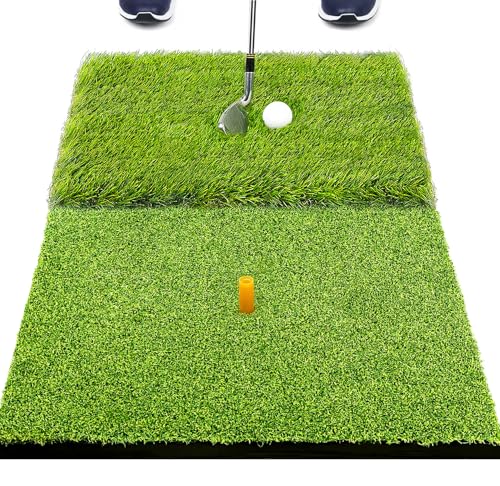
SAPLIZE Foldable Heavy-Duty Golf Hitting Mat

golfguru Golf Mat 5x4FT/5x5FT Dense Turf Hitting Mat

golfguru Golf Mat 5x4FT/5x5FT Dense Turf Hitting Mat

Ywitio Premium Dual-Turf Golf Mat 5x4ft, 6x4ft

Dachenus Putting Green Indoor Mat Outdoor Golf Putting Mat

Ponsonbay Integrated Golf Hitting Mat with Ball Tray
Ponsonbay Integrated Golf Hitting Mat with Ball Tray

Jspotib Golf Mat Practice Outdoor Indoor
More Details On Our Top Picks
The 36mm build gives this Bltend mat a thicker, more cushioned feel than the slimmer training pads in this list. That matters in a garage bay or basement setup, where a little extra underfoot comfort can make longer practice sessions easier to stick with.
You also get a broad 5x4ft or 6x4ft footprint, so your stance feels less cramped during full swings. The trade-off is simple, it asks for more floor space and storage room than the compact SAPLIZE option later in the roundup.
What We Like
- 36mm thickness brings a more padded hitting feel.
- Two size choices make space planning easier.
- Dense artificial turf should stand up well to repeat contact.
- EVA backing adds a stable base on indoor floors.
- Included balls and tees help you start practicing sooner.
Points To Note
- The larger footprint asks for a committed practice area.
- Thicker construction usually means a bit more bulk to store.
- You may want a cleaner floor under it for the steadiest feel.
Core Details
Who It Suits Best
Golfers building a semi-permanent home practice area will get the most from this one, especially in a garage, basement, or spare room.
A Better Fit Elsewhere
SAPLIZE Foldable Heavy-Duty Golf Hitting Mat suits you better when storage space is tight and a foldable layout matters more than sheer footprint.
This Zensouds setup matters because it bundles the net and the mat, which cuts down on piecing together a practice station from separate parts. In a living room, basement, or backyard corner, that simplicity can save you a lot of setup friction.
The 10x7ft net gives your swing a more forgiving target area than a mat alone, so it fits golfers who want ball control plus swing repetition in one place. The trade-off is that the system takes more room than a plain hitting mat, and the frame-style setup asks for a little more assembly effort.
Bright Spots
- Mat and net together make the station more complete.
- 10x7ft target area gives you room for everyday swing work.
- Simple assembly notes make the setup easier to picture.
- Works in several spaces, including garden, living room, or basement.
Small Caveats
- Needs more floor and ceiling clearance than a mat alone.
- Assembly and takedown are still part of the routine.
- The net focus makes it less compact than a standalone mat.
Feature Snapshot
Who Should Grab It
Home golfers who want a bundled practice area for driving and chipping will get the most out of this one.
Another Choice May Suit
Bltend Golf Mat 36mm 5x4ft/6x4ft Golf Hitting Mat works better for you when the goal is a thicker standalone mat rather than a full net system.
Space-conscious practice setups benefit from this SAPLIZE mat because it folds instead of demanding a permanent footprint. That makes it easier to move between a spare room, a garage, or a closet shelf after you finish a session.
The listed 1′11″ by 1′4″ size is compact, but the brand says the turf area is nearly 40 percent larger than a 3-in-1 collapsible mat. In plain terms, you get a bit more practice room without giving up easy storage, though serious full-swing work will still feel tight here.
Upsides
- Foldable format is handy for apartments and shared spaces.
- 10mm EVA backing adds a cushioned base under the turf.
- Compact shape makes everyday storage less awkward.
- Works for driving, chipping, and putting drills.
Areas To Watch
- Small size suits shorter drills more than long swings.
- Compact mats can shift more easily on slick floors.
- You’ll want enough surface space for a clean stance.
At A Glance
The Right Fit
Apartment golfers and anyone storing gear in tight quarters will appreciate this more than the larger Bltend mat.
Look Elsewhere When
golfguru Golf Mat 5x4FT/5x5FT Dense Turf Hitting Mat suits you better when you want a larger standing area for fuller practice sessions.
This golfguru mat stands out because the package includes 10 balls and 9 tees, which gives you a practical starting point without sourcing extras right away. For beginners setting up a basement lane or garage corner, that can make the first practice session feel much more straightforward.
The 5x4ft or 5x5ft layout gives you room to address the ball comfortably, and the 31mm or 36mm thickness options let you choose between a firmer or plusher feel. The honest read is that the bundle helps more than a bare mat would, but the bigger version also asks for a bit more storage space.
Reasons To Buy
- Included balls and tees reduce the extra shopping list.
- Two size choices make it easier to fit a room.
- Thicker turf helps the setup feel more substantial.
- Useful for driving, chipping, and indoor practice corners.
Honest Caveats
- The larger footprint takes more space than a compact mat.
- Accessory bundles can add clutter if you already own gear.
Details At A Glance
Best Suited To
New home golfers and casual practice spaces benefit most from this bundled setup.
Swap It Out When
Ywitio Premium Dual-Turf Golf Mat 5x4ft, 6x4ft makes more sense for you when you want two turf textures rather than a gear bundle.
This version sits in a familiar spot, but the size and accessory package make it feel a little more complete for regular home use. For golfers who keep a practice corner ready day after day, having tees and balls included means less setup friction and fewer missing pieces.
Compared with the SAPLIZE foldable mat, this one is less concerned with easy packing and more concerned with a stable, fuller hitting zone. The trade-off is that it stays bulkier in a closet, though that’s usually a fair exchange for the extra practice surface.
Highlights
- Dense turf gives the mat a more substantial feel.
- Accessory pack makes routine drills easier to start.
- Two size paths help you match room width.
- Good fit for repeat sessions in one fixed spot.
Trade Offs
- Not as compact as a foldable training mat.
- Accessory extras may go unused for some setups.
- Larger versions need more cleanup and storage room.
Quick Facts
Whose Shelf It Belongs On
Golfers who practice several times a week and want a straightforward all-around mat will like this one.
Where Shoppers Go Wrong
Bltend Golf Mat 36mm 5x4ft/6x4ft Golf Hitting Mat fits better for you if thicker padding and a larger footprint matter more than bundled accessories.
Dual-turf mats usually appeal to golfers who want a little more variety in their drills, and that’s the case here too. In a backyard station or indoor bay, having two surface styles can make chipping and swing work feel less repetitive.
The thickness range listed from 21mm to 50mm signals a product aimed at sturdier practice use, not a flimsy roll-out pad. The catch is that a more layered build often asks for more room and a bit more handling effort, so it suits a committed setup better than a quick stash-and-go routine.
Standout Traits
- Two turf styles support different practice feels.
- Multiple size choices help with room planning.
- Thicker base range suggests a more grounded setup.
- Works in backyard and indoor practice zones.
Room For Improvement
- Dual surfaces can be overkill for simple putter work.
- Heavier constructions usually need more storage thought.
- Larger versions are less friendly to tiny rooms.
Spec Overview
Built With In Mind
Home golfers who like switching between swing work and chipping drills will get the most from this mat.
Reach For A Different Pick When
Dachenus Putting Green Indoor Mat Outdoor Golf Putting Mat suits you better when your focus is putting rather than mixed turf practice.
Putting practice gets much easier to repeat when the ball comes back to you, and that is the main appeal of this Dachenus mat. In a home office or spare room, the automatic return keeps your rhythm steady, so you spend less time walking after balls and more time on stroke control.
That convenience makes it a sharper fit for putting work than for full-swing drills, which is the same sort of specialization you see with the Ponsonbay tray setups below. The honest trade-off is obvious: it solves one job neatly, but it’s not the broadest practice surface in the list.
Best Bits
- Automatic ball return makes repeated putting simpler.
- Works well in home, office, and outdoor spots.
- Good for short practice bursts during the day.
- Keeps the routine focused on putting rhythm.
Softer Spots
- Specialized for putting more than full-swing work.
- Return features can add a little setup attention.
Feature Card
Made For
Golfers who want a compact putting lane for deskside or living-room drills will appreciate this most.
Where Shoppers Go Wrong
Ponsonbay Integrated Golf Hitting Mat with Ball Tray is the better match when you want a broader hitting surface with tee support.
Tray-style mats like this one work well for golfers who like order in their setup, because the ball tray and three tees keep the session organized. In a garage or patio practice area, that kind of built-in structure can feel like having a tidy workbench for your swing.
The 5x4ft, 1.02 in version gives you a compact station, while the 1.22 in version adds a little more depth and presence underfoot. Compared with the Dachenus putting lane, this is the more versatile pick for full contact practice, though it still stays more compact than the big Bltend mat.
Positives
- Ball tray keeps practice balls in one place.
- Three tees add convenience for repeat drills.
- Two thickness choices help tailor the feel.
- Compact footprint suits smaller training corners.
Minor Gripes
- Tray parts add a little more setup to manage.
- Smaller size may feel tight for broader stances.
- Organized layouts can take more shelf space than plain mats.
Key Specs
Who Will Love This
Golfers who want a compact but orderly hitting station will get strong value from this tray setup.
A Better Fit Elsewhere
golfguru Golf Mat 5x4FT/5x5FT Dense Turf Hitting Mat suits you better if accessory bundles matter more than a built-in tray.
This larger Ponsonbay version keeps the same tray-and-tee idea, but the 6 ft x 4 ft size gives your stance more breathing room. That extra width matters in a home bay or indoor garage setup, especially when you want a little less crowding around the hitting zone.
It still comes in the 1.22 in thickness choice, with the 5 ft x 4 ft, 1.02 in version listed as the smaller counterpart. The catch is that a roomier mat takes more floor real estate, so it suits you best when the practice zone is already well defined.
Standout Traits
- 6 ft x 4 ft size gives a more open hitting area.
- Ball tray keeps the station tidy between swings.
- Three tees support a simple drill routine.
- Also available in a smaller size option.
Things To Consider
- Large footprint needs a more dedicated practice area.
- Tray styling adds a bit of handling and storage.
- Roomier layout is less suited to tiny rooms.
Technical Sheet
The Right Fit
Golfers with a dedicated indoor station who want more stance room will appreciate this larger version.
Where A Sibling Pick Shines
Ponsonbay Integrated Golf Hitting Mat with Ball Tray in the 5 ft x 4 ft size suits you better when storage room is tighter.
Jspotib keeps things simple, and that can be exactly what you want for quick chipping work or swing-path drills in a garage, patio, or living room. The rubber backing is the main practical detail here, since it helps the mat stay planted better than a bare, lightweight pad.
Compared with the tray-equipped Ponsonbay mats, this one strips the setup down and focuses on basic practice utility. That makes it easier to move and store, though you give up the built-in organization that some home stations need.
Best Bits
- Simple layout keeps the setup easy to understand.
- Rubber backing helps with surface stability.
- Good fit for daily chip-and-swing drills.
- Compact enough for casual indoor or outdoor use.
Worth Noting
- Less structured than tray-based practice mats.
- Basic design offers fewer organizational extras.
- Lightweight mats can need a flatter floor underneath.
Feature Rundown
Who It Suits Best
Casual golfers who want a straightforward, low-fuss mat for everyday drills will find this easy to work with.
Skip It When
Bltend Golf Mat 36mm 5x4ft/6x4ft Golf Hitting Mat is the better fit for you if a thicker, more spacious hitting area matters more.
How To Choose The Right Indoor Golf Mats
Start With Space And Stroke Type
The first thing to weigh is where the mat will live, because floor space shapes the whole setup. A 5x4ft or 6x4ft hitting mat suits a garage bay or basement corner, while a compact putting lane fits better beside a desk or in a spare room.
Stroke type matters just as much. Full swings need more surface area and a steadier base, while putting and short chipping work can get by with a smaller, more portable layout.
Look Closely At Thickness And Backing
Thickness changes the feel underfoot and the way the surface absorbs repeated contact. Thicker turf often feels closer to a dedicated practice station, while thinner builds are easier to move and store.
Backing is the piece that helps a mat stay planted, and EVA or rubber backings usually matter most on smooth indoor floors. A mat that shifts around turns simple drills into a chore, so stability deserves real attention.
Match The Surface To Your Practice Routine
Dense artificial turf works well for frequent contact and a more substantial strike zone. Dual-turf designs add variety, which helps when your drills move between swing work and chipping practice.
Accessories change the experience too. Tees, ball trays, and included balls reduce the number of loose pieces you need to track, which helps in a shared room or a busy garage.
Think About Storage And Daily Convenience
Foldable mats and smaller trays are easier to tuck away after a session, especially in apartments or multipurpose spaces. Larger systems can be more satisfying to use, but they usually ask for a more permanent home.
That trade-off is worth accepting only when the practice routine is regular enough to justify it. For occasional sessions, a lighter and simpler mat usually makes life easier.
Things Worth Knowing Before You Choose
Wrong Turns To Avoid
A common mistake is buying too much mat for the room. A wide hitting surface looks great online, but it can crowd a narrow garage or leave you nowhere to stand comfortably.
Another slip is overlooking backing and floor grip. A mat that slides on tile or polished concrete can interrupt your rhythm every time you set up.
The Upgrade Payoff
Higher-tier mats usually cost more because they bring thicker turf, larger footprints, stronger backing, or more organized layouts. Those details matter most when you practice often and want the setup to feel steady from session to session.
The upgrade pays off most for golfers who train at home several days a week. For occasional use, a simpler mat usually does the job without adding clutter.
Frequently Asked Questions
What size works best for indoor practice?
A 5x4ft mat fits many home setups without taking over the room. A 6x4ft layout makes more sense for fuller stances and more room around the ball.
Is a thicker mat always better?
Not always, because thicker mats usually take up more room and can be harder to store. They do help when you want a more planted, cushioned practice feel.
Do you need a mat with tees or a tray?
You do not need them, but they help keep your setup organized. Trays and tees are handy for repeat drills and tidy storage in a small practice area.
What works better for putting only?
A putting green with an automatic ball return suits putting practice better than a full hitting mat. It keeps the drill simple and cuts down on ball chasing.
Can one mat handle indoor and outdoor use?
Many can, especially the ones with sturdy backing and dense turf. Smooth, level ground matters more than the label on the box.
Closing Thoughts
The right Indoor Golf Mats setup depends on how you practice, not just how much room you wish you had. A thick hitting mat suits repeat swings, a tray system helps keep things organized, and a putting lane fits smaller spaces with less fuss. Pick the style that matches your routine, and your practice corner will feel much easier to use week after week.