You want practice tools that fit real range sessions, garage drills, and home setups without turning every swing into guesswork. The right golf swing trainer can help you work on tempo, hand position, impact path, or basic warm-up reps, depending on where your game needs the most structure.
Some picks lean mechanical and simple, others add tracking or full-body conditioning. That spread matters, because your best match depends on whether you need rhythm, contact feedback, grip control, or a more complete training setup.
Quick Look at the Shortlist

Orange Whip Golf Swing Trainer Aid 43.5″

Tour Striker Smart Ball Golf Swing Training Aid

Amazon Basics Golf Swing Trainer Aid and Warm-Up Practice Stick

Rapsodo MLM2PRO Mobile Launch Monitor Golf Simulator

Real Swing 300 Golf Swing & Hitting Trainer

Swing Trainer, Golf Fitness & Training System
HRUIYL Golf Grip Trainer (Blue)
Golf Net with Practice Mat 10x7FT
More Details On Our Top Picks
The longer 43.5-inch format gives this trainer a clear rhythm focus, and that matters for golfers who need a smoother transition from takeaway to finish. Compared with the smaller grip tools later in this list, it asks for more motion and more space, so garage practice and open range work suit it well.
The trade-off is straightforward, it’s less about compact convenience and more about body sequencing, balance, and tempo feedback. For golfers coming back after time away, or anyone who wants a warm-up tool that feels closer to a full swing motion, that’s a useful combination.
Strong Points
- 43.5-inch length supports a fuller swing path.
- Built to emphasize rhythm, which helps smooth out rushed transitions.
- Useful for warm-up reps before a range session.
- Longer profile gives your hands and body more movement feedback.
Things To Consider
- The length takes more storage space than compact grip trainers.
- It’s less suited to cramped indoor corners.
- Some shoppers will want a separate ball-contact aid for strike feedback.
Feature Snapshot
Whose Shelf It Belongs On
Golfers who want a full-motion warm-up tool and have enough room for a longer trainer will get the most from it.
Where A Sibling Pick Shines
Tour Striker Smart Ball Golf Swing Training Aid suits golfers who want tighter arm connection work instead of a longer tempo-focused motion.
This one narrows the focus to arm connection, which means it speaks directly to golfers whose swings get loose between setup and impact. Compared with the Orange Whip, it’s less about body rhythm over a long arc and more about keeping the arms working together through the motion.
That makes it a sharp practice aid for range sessions and mirror work, especially for players chasing cleaner ball striking. The honest read is that it won’t replace a full training routine, but it gives you a very specific task to solve.
Highlights
- Targets proper arm connection during the swing.
- Helpful for tempo drills that need a clear physical cue.
- Compact enough to fit into regular practice bags.
- Good match for repetition-based work at home or on the range.
- Clear focus makes it easy to understand what you’re training.
Worth Noting
- Its narrow purpose means it’s not a broad all-purpose trainer.
- Some golfers will want supplemental work for grip or body rotation.
- It leans on feel, so results depend on consistent use.
Core Details
Right Fit For
Golfers who need tighter arm coordination and a simple physical cue will get the clearest payoff here.
Skip It When
Orange Whip Golf Swing Trainer Aid 43.5″ suits golfers who need a longer, full-motion rhythm tool instead.
This is the stripped-back option in the group, aimed at grip, balance, distance, and power work without extra complication. After the more specialized Orange Whip and Tour Striker entries, this one reads like the simplest warm-up companion for a normal range bucket.
You may find it most useful when you want a low-friction practice stick that fits into a routine without adding setup time. That simplicity is the point, though it also means you should not expect the same level of swing-specific feedback as the more purpose-built trainers above.
Upsides
- Simple format makes it easy to bring into regular warm-ups.
- Covers multiple basics, including grip, balance, and power work.
- Works well for casual range sessions and pre-round loosening up.
- Less complicated than the data-heavy or mechanics-specific picks.
Softer Spots
- Broad focus means it is less specialized than the top two trainers.
- You may want more feedback if your goal is path correction.
- Storage is easy, but the simple design also keeps it basic.
Technical Sheet
Made For
Casual golfers and routine-minded range visitors who want one uncomplicated warm-up tool fit this best.
Another Choice May Suit
Rapsodo MLM2PRO Mobile Launch Monitor Golf Simulator fits golfers who want shot data and dual-camera feedback rather than a simple practice stick.
This shifts from simple mechanics into measurement, which is a different lane entirely from the Orange Whip and the Amazon Basics stick. A mobile launch monitor helps you read shot behavior with more structure, and the dual-camera setup suggests a training workflow that suits home bays and driving ranges.
The included support and damage coverage notes matter because electronics get handled, packed, and moved more than a basic stick. For golfers who already know they want feedback, the extra complexity can be worth it, though the setup and learning curve will feel heavier than the simpler trainers in this roundup.
Reasons To Buy
- Dual-camera design supports swing and shot review.
- Useful for golfers who want more than feel-based training.
- Works in both indoor and outdoor practice settings.
- Tracking data can make practice sessions more structured.
- Coverage notes add a layer of practical ownership support.
Areas To Watch
- More complex than the mechanical trainers in this list.
- Electronics need more careful packing and handling.
- Setup time is naturally higher than with a simple swing aid.
Feature Rundown
Who Should Grab It
Golfers who want shot-tracking data and more serious home practice infrastructure are the natural match here.
Swap It Out When
Tour Striker Smart Ball Golf Swing Training Aid makes more sense for golfers who want a simpler connection drill instead of a monitor.
Path feedback is the whole point here, and that makes this trainer feel more targeted than the general warm-up stick above. The height-adjustable layout and practice-mat groover function give you a more defined strike environment, which helps when you want to see how the club moves through impact.
In a garage bay or backyard net setup, that kind of repeatable contact feedback is useful for players who want more than a loose swing feel. The trade-off is that it asks for more deliberate setup than a handheld trainer, so it fits committed practice blocks better than quick pre-round swings.
Best Bits
- Focuses on true impact and path checking.
- Height adjustment helps match different practice setups.
- Groover-style mat work supports repeatable strike drills.
- Good fit for backyard or garage training spaces.
Room For Improvement
- Needs more setup than a compact practice stick.
- Works best in a dedicated training area.
- Less portable than the smaller trainers in this list.
Details At A Glance
Best Suited To
Golfers building a repeatable impact routine in a fixed practice space are the strongest match for this trainer.
Look Elsewhere When
Amazon Basics Golf Swing Trainer Aid and Warm-Up Practice Stick is the easier choice for golfers who want a simpler, lighter warm-up tool.
This one changes the conversation from swing mechanics to fitness support, which is a useful split for golfers who feel their body is the limiting factor. Unlike the handheld trainers earlier in the list, it’s built around strength, flexibility, and swing power work, so it fits a more structured training plan.
The included membership and premium training bar point toward guided workouts rather than one-off drills. That adds depth, though you’ll want to be ready for a more involved routine than the quick-use tools in this roundup.
What We Like
- Focuses on golf-specific strength and mobility.
- Includes a premium training bar for structured work.
- Membership access adds more guided workout support.
- Useful for golfers building consistency through physical prep.
Small Caveats
- Less immediate than a simple grip or tempo tool.
- Works best for golfers willing to follow a training plan.
- Not the right choice for quick pre-round swings.
Feature Card
The Right Fit
Golfers who want a fitness-driven approach to swing work, not just a motion cue, are the natural match here.
Reach For A Different Pick When
Orange Whip Golf Swing Trainer Aid 43.5″ fits golfers who want a simpler tempo aid with less workout structure.
The grip-first approach keeps this trainer focused on fundamentals, which is often where inconsistency starts. Compared with the larger Orange Whip and the fitness-oriented GolfForever setup, it’s much more about hand placement, muscle memory, and repeatable setup.
That narrow focus makes it a sensible starting point for beginners and intermediate golfers who need a clean, easy-to-understand cue. One thing worth considering is that grip tools can feel repetitive fast, but that repetition is also what makes them useful.
Bright Spots
- Designed to teach proper hand placement on the club.
- Builds muscle memory through repeated setup practice.
- Compact shape makes it easy to store.
- Helpful for beginners learning grip basics from scratch.
Minor Gripes
- Very specific focus, so it won’t solve every swing issue.
- Grip practice alone won’t address body rotation or tempo.
- Small trainers can be easy to misplace in a busy bag.
Key Specs
Built With In Mind
Golfers learning the grip, or returning players rebuilding the basics, are the clearest match here.
A Better Fit Elsewhere
Tour Striker Smart Ball Golf Swing Training Aid suits golfers who already have grip basics covered and want arm connection work.
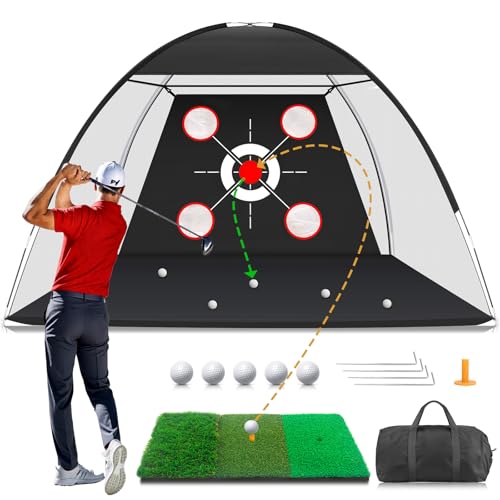
This is the most space-oriented option in the roundup, and it suits backyard practice better than a compact swing aid ever could. The 10x7FT net and included practice mat create a full home station, so you can work on driving, chipping, and swing reps without packing up after each set.
Compared with the smaller trainers, it’s less about a single motion cue and more about giving you a place to hit real balls. That makes it useful for homeowners with a bit of yard space, though setup and storage are naturally a bigger consideration than with the grip trainer or practice stick.
Positives
- 10x7FT size gives you a defined home practice area.
- Combines a net and mat in one setup.
- Supports drives, chips, and swing repetition.
- Good for golfers who practice in the backyard.
Points To Note
- Takes more space than any handheld trainer here.
- Home setup needs a place to leave it assembled or stored.
- It’s a training station, not a swing-mechanics aid.
Feature Rundown
Who Will Love This
Golfers with yard space who want a stay-at-home practice station will get the most out of this setup.
Consider Something Else When
HRUIYL Golf Grip Trainer (Blue) is the smarter choice for golfers who want a smaller tool with a narrow fundamental focus.
How To Choose The Right Golf Swing Trainers
Match The Trainer To The Problem
Start with the swing issue you actually want to address. A tempo-focused tool like the Orange Whip suits rhythm work, while the Tour Striker Smart Ball is built for arm connection, and a grip trainer such as the HRUIYL model focuses on setup fundamentals.
That distinction matters because a broad tool rarely solves a narrow problem quickly. The right match keeps practice honest, and it prevents you from buying a larger setup when a small cue would do the job.
Think About Space And Setup Time
Handheld trainers work well in apartments, garages, and range bags. The golf net with practice mat needs a permanent or semi-permanent spot, while the Rapsodo unit fits a more involved home bay or driving-range routine.
Space changes how often you’ll use the tool. A trainer that stays packed away tends to gather dust, while a simple stick or grip aid is easier to grab for ten minutes of repetition.
Balance Feedback With Simplicity
Some golf swing trainers give feel-based feedback, and others give measured data. Rapsodo gives you more structured shot information, but it also asks for more setup and attention than a practice stick or a grip aid.
Players who already know their practice habits usually benefit from the richer tools. Beginners often get more value from something that clearly shows one movement and leaves less room for confusion.
Choose For Your Practice Style
Pre-round warm-ups call for light, fast tools that do not need assembly. Dedicated practice sessions can justify the Real Swing 300 or the GolfForever system, especially when you want path feedback or fitness work that stretches beyond a few swings.
There’s no single correct answer here, only a better fit for your routine. A trainer that matches your habits will see far more use than a complicated setup that stays in the case.
Things Worth Knowing First
Common Shopping Slip Ups
Many golfers buy a tool that repeats what they already do well instead of fixing the real issue. A grip trainer won’t help much with path problems, and a launch monitor won’t teach a rushed transition by itself.
Another common miss is underestimating storage and setup. Backyard nets and multi-piece systems are useful, but they need room and a bit of commitment.
The Upgrade Payoff
Higher-tier options usually cost more because they add structure, data, or guided training. The Rapsodo unit brings camera-based feedback, and the GolfForever system adds a membership plus a premium training bar for more involved work.
That extra spend makes sense for golfers who train often and want a more complete routine. For casual use, a simple trainer is usually the smarter purchase.
Frequently Asked Questions
What is the most useful type of golf swing trainer for a beginner?
A grip trainer or simple warm-up stick is usually the easiest place to start. Those tools keep the focus narrow, so you can learn one movement at a time.
Do golf swing trainers replace range practice?
No, they support range practice rather than replace it. The best ones help you repeat a motion or build a setup habit before you move to full shots.
Which trainer fits the smallest space?
The HRUIYL Golf Grip Trainer (Blue) and the Amazon Basics warm-up stick are the most space-friendly picks here. They store easily and don’t need a dedicated practice zone.
What works better for feedback, a monitor or a swing aid?
A monitor gives data, while a swing aid gives feel. Your choice depends on whether you want numbers, motion cues, or both.
Is a backyard net useful without other gear?
Yes, a net with a practice mat gives you a workable home station on its own. It’s most useful when you want to hit real balls without leaving the house.
Closing Thoughts
Your best golf swing trainer depends on what you want to fix, how much space you have, and how much setup you’re willing to handle. For rhythm, the Orange Whip stands apart, while the Tour Striker Smart Ball and HRUIYL grip tool stay focused on more specific mechanics. If you want shot data, the Rapsodo monitor brings the most depth, and the Golf net setup gives you the largest practice footprint. Pick the tool that fits your routine, and practice gets a lot more useful.