You want better clubhead speed without turning practice into guesswork. These eight picks cover arm connection aids, weighted sticks, swing analyzers, and launch monitors, so you can match the tool to your space, skill level, and the kind of feedback you actually use.
Some options are simple and portable, others lean into data and shot tracking. That mix matters, because a daily warm-up tool for the range solves a different problem than a sensor you’ll check between home sessions and course days.
Quick Look At The Shortlist

Tour Striker Smart Ball Golf Swing Training Aid

Amazon Basics Golf Swing Trainer Aid and Warm-Up Practice Stick

Voice Caddie Portable Golf Launch Monitor and Swing Analyzer

Rapsodo MLM2PRO Mobile Launch Monitor Golf Simulator
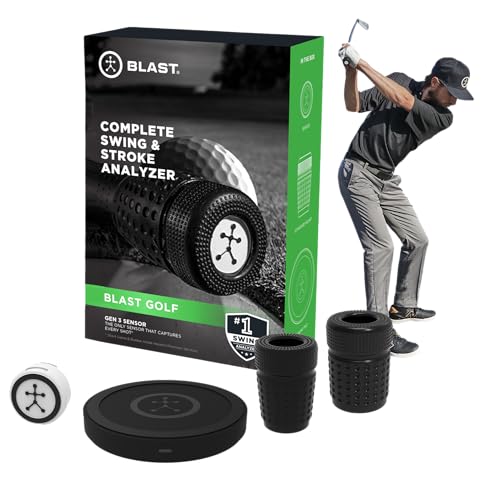
Blast Motion Golf Swing & Stroke Analyzer GEN3

Golf Swing Speed Trainer Golf Training Aid and Correction


Swing Caddy Golf Swing Trainer
More Details On Our Top Picks
The Smart Ball keeps the training focus narrow, which is useful when your swing gets loose under pressure. It pushes arm connection and tempo work, so it fits practice sessions where cleaner sequencing matters more than chasing flashy numbers.
Compared with the launch monitors farther down the list, this one asks less from your setup and more from your mechanics. That makes it a strong fit for home drills, range buckets, and any golfer who wants a simple feedback tool without extra screens.
Strong Points
- Places direct attention on arm connection, a key piece of a compact swing shape.
- Supports tempo work without needing batteries, pairing, or app setup.
- Stays simple in a garage bay, spare room, or practice mat station.
- Works as a repeatable drill aid for golfers who want fewer moving parts.
Points To Note
- It does not give swing numbers, so you’ll need another tool for measured speed tracking.
- Practice relies on your own feel, which can be slower for data-driven golfers.
- Soft training aids need basic care after use, especially in dusty garage storage.
Core Details
Who It Suits Best
Golfers rebuilding timing at home or on the range should get the most from it.
A Better Fit Elsewhere
Voice Caddie Portable Golf Launch Monitor and Swing Analyzer suits you better when swing speed numbers and shot data matter more than a feel-based drill.
This practice stick makes the warm-up phase feel less formal, which helps before a range session or a quick round. Its stated focus on grip, balance, distance, power, and flexibility means you can use it for a broad pre-swing routine instead of a single drill.
Compared with Tour Striker’s narrower feel work, this one is the looser, more general option. That breadth is useful for beginners and casual golfers, though the trade-off is that it won’t steer you toward one exact movement pattern.
What We Like
- Supports warm-up routines without needing a complicated setup.
- Touches several basics at once, which suits a short practice window.
- Useful for building a pre-round rhythm before heading to the first tee.
Small Caveats
- Its broad training role means it is less focused than a dedicated speed trainer.
- Without measurement features, progress tracking stays mostly subjective.
- Single-piece trainers can be easy to misplace in a packed garage or trunk.
Feature Snapshot
Who Will Love This
You get the most value from it as a straightforward warm-up tool for practice days.
Where A Sibling Pick Shines
HH-GOLF Golf Swing Speed Trainer Golf Training Aid and Correction fits you better when weighted progression matters more than a general warm-up stick.
Voice Caddie shifts the category from basic aid to measurement, and that changes how you practice. It adds a swing speed mode plus real-time shot data, so your practice net or living-room net session can feel more structured without needing a full simulator bay.
That data-first approach sits on the other side of the line from the Smart Ball and Amazon Basics stick. You may find it especially useful in a garage setup or at the range, where fast feedback matters more than a simple feel cue.
Upsides
- Delivers live shot data, which helps you connect motion to numbers.
- Includes a dedicated swing speed mode for speed-focused sessions.
- Battery life is listed up to 20 hours, a practical fit for longer practice blocks.
- Portable format suits indoor net work as well as outdoor range use.
Areas To Watch
- Data tools add setup time, so it is less casual than a simple stick trainer.
- Space and lighting can matter more once shot tracking enters the picture.
- Electronics need charging and careful storage, especially in travel bags.
Details At A Glance
Built With In Mind
You get the most from it as a practice monitor for golfers who want numbers beside every session.
Another Choice May Suit
Tour Striker Smart Ball Golf Swing Training Aid suits you better when your priority is feel, arm connection, and a simpler drill path.
Rapsodo sits at the more advanced end of the shortlist, with dual-camera tracking and 15 metrics shaping a fuller picture of each swing. That gives you more than a basic speed read, which matters in a home simulator room or a covered range bay where feedback drives the session.
The inclusion of three Pro V1 balls points to a setup built for serious practice, not casual handling. Compared with Voice Caddie, this one leans harder into simulator-style detail, so it suits golfers who want depth and do not mind a more involved routine.
Standout Traits
- Dual-camera tracking helps create a fuller view of swing and shot behavior.
- Fifteen metrics give you more to study than a simple speed figure.
- Works for home and driving range use, which helps keep one setup relevant in more places.
- Included balls are a useful touch for golfers setting up a practice area.
Worth Noting
- The depth of data adds setup complexity and more things to monitor.
- It suits committed practice spaces better than a grab-and-go warm-up routine.
- Tech-heavy gear usually rewards careful storage and periodic updates.
Quick Facts
The Right Fit
You should land here when your practice space already supports a data-heavy setup and you want more detail from every session.
Swap It Out When
Blast Motion Golf Swing & Stroke Analyzer GEN3 is the easier step down when you want feedback in a lighter app-led format.
Blast Motion blends swing metrics with video capture highlights, so you can connect what you feel to what shows up on the phone screen. That matters for range sessions, especially when a little recorded context makes a miss easier to understand.
It sits between the basic trainers and the full-featured monitors, which gives you a cleaner middle ground. The honest read is that it suits golfers who want app feedback without stepping all the way into a simulator-style investment.
Best Bits
- Real-time feedback keeps practice more immediate.
- Video capture adds context to swing metrics, which helps with self-correction.
- Works across tee-to-green practice, so it is not limited to one part of the game.
- App-based tracking is handy for golfers who like reviewing sessions later.
Softer Spots
- App-centric gear depends on your phone staying charged and close at hand.
- It asks for more setup than a plain mechanical trainer.
- Video use can be awkward in tight indoor corners with limited room.
Feature Rundown
Whose Shelf It Belongs On
You should choose it for regular app-driven practice where feedback matters more than simplicity.
Look Elsewhere When
Amazon Basics Golf Swing Trainer Aid and Warm-Up Practice Stick is a better fit when you want a lighter, non-digital warm-up tool.
The three-weight setup gives this trainer a clear identity, because you can change the total weight by adjusting the club head. That matters for golfers who want to move from lighter speed work to heavier strength-focused swings without buying separate sticks.
Compared with Amazon Basics, this is the more training-specific option, and it feels closer to a progression tool than a casual warm-up aid. In most garage or backyard routines, that structure makes it easier to keep the session organized.
Highlights
- Three weight settings let you vary the feel from light to heavy.
- Useful for speed, strength, tempo, and flexibility drills in one tool.
- One adjustable trainer takes less storage space than several separate clubs.
- Better suited to progressive practice than a simple one-speed stick.
Room For Improvement
- Adjustable parts need regular attention so the setup stays consistent.
- The training feel may be more demanding than some casual golfers want.
- Heavier practice tools can feel awkward in tight indoor rooms.
Technical Sheet
Who Should Grab It
You fit this pick well when you want a speed trainer that can also do heavier strength work.
Where A Sibling Pick Shines
Voice Caddie Portable Golf Launch Monitor and Swing Analyzer is the better route when you want measurable swing feedback instead of weighted progression.
This Callaway training aid is aimed at the short game, where swing path gets exposed quickly on wedges and short irons. That keeps it useful for golfers who want cleaner contact around the green rather than a broad speed-training routine.
It’s a very different tool from the heavier trainers earlier in the list, and that difference matters. The compact profile should suit small practice areas, though you’ll want to pair it with a broader speed device elsewhere in the lineup.
Positives
- Designed to help groove a more repeatable swing path on shorter clubs.
- Compact format is easier to store than longer speed trainers.
- Useful for golfers who spend real time on wedge and short-iron work.
Minor Gripes
- Its short-game focus leaves out the broader speed-building work some golfers want.
- Practice benefits depend on repetition, so it is not a quick fix.
- Small training aids can disappear into a crowded golf bag pretty easily.
Core Details
Made For
You should choose it for short-game reps in a tight practice space or a garage corner.
A Better Fit Elsewhere
HH-GOLF Golf Swing Speed Trainer Golf Training Aid and Correction suits you better if your main goal is speed and strength progression.
Swing Caddy leans into rhythm, tempo, accuracy, warm-up, and distance, so it covers more of the swing’s moving parts than a narrow drill aid. That breadth makes sense for golfers who want one trainer to pull double duty before a round and during practice blocks.
Compared with the Smart Ball, it aims for a wider training lane rather than one specific connection drill. The trade-off is that broader tools can feel less focused, but for most routines that mix speed and timing work, that flexibility is useful.
Best Bits
- Covers several swing goals without forcing you to switch tools constantly.
- Useful for warm-ups, tempo drills, and longer practice sessions.
- Can fit golfers who want one training aid to do several jobs.
Areas To Watch
- Broad focus means it may feel less targeted than a purpose-built speed stick.
- General training tools depend on how consistently you use them.
- Storing another long practice aid can take space in smaller bags or closets.
Feature Card
Perfect Match For
You fit this pick well if your sessions mix pre-round warm-up with broader swing work.
Reach For A Different Pick When
Tour Striker Smart Ball Golf Swing Training Aid is the sharper choice when arm connection and compact strike work matter more.
How To Choose The Right Golf Swing Speed Training Devices
Match The Tool To The Job
The first split is simple, feel training or measurement. A Smart Ball or weighted speed stick helps you work on body positions, tempo, and sequencing, while a launch monitor or analyzer gives you numbers to review after the swing.
That matters because a golfer chasing better contact needs a different tool than someone chasing faster clubhead speed. For home practice, the right pick usually depends on whether your biggest gap is mechanics, feedback, or both.
Look At Space, Setup, And Storage
Garage bays, nets, and simulator rooms can handle bigger devices better than a corner of the basement. Compact aids like Callaway or the Amazon Basics practice stick are easier to keep handy, while monitors ask for charging, alignment, and a bit more room to work properly.
Storage also affects whether you actually use the tool. A trainer that disappears into a drawer or trunk tends to get more reps than a heavier setup that feels like a project every time you pull it out.
Decide How Much Feedback You Want
Some golfers improve fastest with clear visual or numerical feedback, especially after range sessions. Voice Caddie, Rapsodo, and Blast Motion fit that pattern because they turn practice into something you can review instead of just remember.
Others do better with one repeatable motion cue. Tour Striker and HH-GOLF are more direct in that sense, and that simplicity can be easier to stick with during busy weeks.
Think About Progression, Not Just Speed
Speed work gets better when the tool matches the stage of training. A weighted trainer such as HH-GOLF makes more sense once you want to vary load, while a simpler aid makes more sense during rebuild phases or seasonal warm-ups.
That’s the cleanest way to avoid buying the wrong thing: choose the device that fits your current practice habit, not the one with the longest feature list. A tool you use twice a week beats a more advanced one that stays in the closet.
What To Weigh Before You Choose
Mistakes Worth Dodging
One common miss is treating every training aid as a speed device. Some picks are built for tempo, short-game path, or warm-up use, so the label should match the result you want.
Another slip is ignoring setup friction. Electronic monitors reward organized spaces, while simple aids suit quick sessions before work or after dinner.
Where The Extra Money Goes
Higher-tier models usually cost more because they add sensors, cameras, app support, or deeper data tracking. That raises the amount you can learn from one session, but it also means more setup and more to keep track of.
That upgrade makes sense for golfers who practice often and want a fuller picture of ball flight or swing path. For casual warm-ups, simpler tools often deliver the better day-to-day fit.
Frequently Asked Questions
What makes a golf swing speed trainer different from a normal warm-up aid?
A speed trainer is built to influence how fast and how efficiently you move the club. A warm-up aid often focuses more on rhythm, balance, or motion prep.
Do launch monitors help with speed training?
Yes, because they show you whether a speed change actually shows up in the numbers. They work best for golfers who want feedback instead of just a feel cue.
Is a weighted trainer better than a light stick?
Neither is automatically better, because the right choice depends on your goal. Weighted tools suit strength and progression work, while lighter sticks are easier for rhythm and warm-up routines.
Can you use these tools indoors?
Several of the picks work indoors, especially the compact trainers and portable monitors. Space, ceiling height, and nearby breakables still matter.
Which type suits a beginner most?
A simple trainer such as the Amazon Basics stick or Tour Striker Smart Ball is a sensible starting point. They keep the focus on motion without forcing you to manage a lot of setup.
Final Thoughts
You have eight very different paths here, and that’s the useful part. Some tools help you feel a better swing, some help you measure it, and some give you a clean warm-up before the first ball. The best fit depends on whether your practice time is short, data-driven, or built around rebuilding movement one rep at a time. Choose the tool that matches your routine, and it’ll earn its spot fast.