You want a swing aid that fits your practice style, not just your garage shelf. Some options focus on tempo and body connection, while others give you a fuller setup for home practice or shot tracking. The right choice depends on how much space you have, how often you warm up, and how technical you want your feedback to be.
Quick Look At Our Shortlist

Orange Whip Golf Swing Trainer Aid

Tour Striker Smart Ball Golf Swing Training Aid

Amazon Basics Golf Swing Trainer Aid and Warm-Up Practice Stick

Rapsodo MLM2PRO Mobile Launch Monitor Golf Simulator


Golf Swing Trainer Aid, Swing Correcting Arm Band, Swing Easy Black
Golf Net with Practice Mat, Golf Hitting Aid Nets 10x7FT

Callaway Golf Swing Stick Lag Trainer
More Details On Our Top Picks
Orange Whip leans into motion control rather than raw speed, and that matters for golfers who want a smoother warm-up before a round. The 43.5-inch midsize build gives you a fuller swing path to work with, which fits range sessions, garage drills, and pre-round loosening.
Compared with the simpler stick-style options later in this list, this one feels more like a rhythm tool than a basic form cue. The trade-off is obvious, it takes more room and more commitment, so it suits golfers who actually want a dedicated practice piece.
Strong Points
- The midsize 43.5-inch length supports a fuller swing motion.
- It fits rhythm, balance, and tempo work in one tool.
- That longer profile helps your warm-up feel less cramped.
- Made in the USA is a useful build note for shoppers who care about origin.
Things To Consider
- It needs more clearance than a compact arm band or ball-style aid.
- Storage is less convenient in small apartments or tight trunks.
- The focused design suits drill work more than casual novelty use.
Feature Snapshot
Who It Suits Best
Golfers who want tempo work before a round, or regular practice sessions that reinforce balance and body control, get the most from this format.
A Better Fit Elsewhere
Tour Striker Smart Ball Golf Swing Training Aid suits golfers who want a tighter arm-connection cue and less room taken up indoors.
This one is built around arm connection, which means it speaks to golfers who lose structure on the way back or through impact. In a home practice space, that tighter focus can be easier to repeat than a full-length trainer, especially for short sessions between rounds.
Compared with Orange Whip, it gives you a more compact training cue and less sweeping movement. The honest read is that the narrower training target helps with repetition, but it also asks you to pair it with other drills if you want a broader warm-up.
What We Like
- Its main cue is clear, arm connection stays front and center.
- Compact training usually fits busy practice sessions well.
- Tempo feedback can help your swing stay organized under pressure.
- The smaller format is easier to keep in a range bag.
Worth Noting
- The narrow focus means it does one job, not several.
- You may want a second aid for grip or body motion work.
- Small training tools can be easy to misplace during travel.
Core Details
Who Should Grab It
Golfers who want a compact drill aid for sequencing work, especially in a spare room or beside a range bucket, get the cleanest fit here.
Where A Sibling Pick Shines
Callaway Golf Swing Stick Lag Trainer suits golfers who want a different tempo-focused tool with a more traditional stick-style setup.
Amazon Basics keeps things plain, and that helps if your main goal is a warm-up stick that stays out of the way. The listed focus on grip, balance, distance, and power makes it a broad training companion for casual range work and pre-round loosening.
Compared with the Orange Whip, it sounds less specialized and more entry-friendly, which is often what makes a warm-up stick useful. The trade-off is that a broad brief can feel less precise for golfers who want a very specific tempo or connection cue.
Upsides
- It covers several basics, so it can fill a general warm-up role.
- The straightforward format usually feels approachable for newer golfers.
- Grip and balance work translate well to pre-round preparation.
Softer Spots
- It is less specialized than a dedicated arm-connection trainer.
- Golfers seeking exact feedback may want a more focused aid.
- A simple stick can blend into a crowded practice setup.
Details At A Glance
Built With In Mind
Newer golfers and casual range-goers who want one uncomplicated tool for multiple basics will get the most out of this shape.
A Better Fit Elsewhere
Tour Striker Smart Ball Golf Swing Training Aid is the sharper choice for golfers who want more direct arm-connection feedback.
Rapsodo sits in a different lane from the simpler trainers above, because it combines shot tracking with simulator-style practice. The dual-camera design and 15 metrics give you a much more data-heavy setup, which suits golfers who like numbers and repeatable feedback at home or on the range.
That extra depth is useful, but it also means you are signing up for a more involved training routine than you’d get from a basic stick or arm band. The trade-off is cost and setup complexity, yet for golfers who want to study ball flight and swing behavior, the payoff is real.
Highlights
- Dual-camera tracking gives the setup a more advanced feel.
- Fifteen metrics create a detailed practice picture.
- It works for indoor and outdoor sessions, which helps year-round use.
- The shot-tracker role makes it useful beyond simple warmups.
- Three included balls add convenience at setup time.
Areas To Watch
- It is far more involved than a basic swing aid.
- Space and setup matter more than they do with stick-style tools.
- The richer feature set can be more than casual practice needs.
Spec Overview
Right Fit For
Golfers who want data-rich practice, simulator-style drills, and a more analytical home setup will appreciate this most.
Consider Something Else When
Orange Whip Golf Swing Trainer Aid is the better match for golfers who want a simpler rhythm tool without camera tracking or metric-heavy feedback.
Callaway’s brief listing leaves you with less detail than the other items here, but the provided function is clear enough, it is aimed at grooving a proper swing path for wedges and short irons. That makes it a focused short-game aid, the sort of tool you’d keep handy for quick technical reps before a round.
Compared with the broader warm-up sticks, this one sounds narrower and more purpose-built. The catch is that its strongest use case lives in the short game, so golfers looking for all-purpose tempo work will probably want a different item from this list.
Positives
- It targets wedge and short-iron path work directly.
- The focused role can keep practice sessions efficient.
- Short-game training often benefits from a dedicated cue like this.
Small Caveats
- The source data gives little detail, so fit depends on your practice style.
- It appears narrower in scope than multi-use trainers.
- Short-game aids do not replace full-swing work on their own.
Quick Facts
Whose Shelf It Belongs On
Golfers who spend real time on wedge control and short-iron path work will get the cleanest benefit from this compact, focused aid.
Where Another Pick Suits Better
Amazon Basics Golf Swing Trainer Aid and Warm-Up Practice Stick suits golfers who want a broader warm-up tool instead of a short-game-specific aid.
The arm-band format is aimed at keeping your arms and body in sync, and that makes it a neat fit for golfers who lose structure early in the takeaway. In a crowded practice area, it is easier to store and put on than a longer trainer, which is part of its appeal.
Compared with the Tour Striker Smart Ball, this one reads more like a wearable cue than a ball-position trainer. The honest read is that wearable aids can feel a little restrictive at first, but that same restraint is what helps some golfers repeat a one-piece motion.
Best Bits
- The one-piece takeaway focus keeps the drill simple.
- Arm and body syncing can help clean up early motion.
- The wearable format is easy to pack and store.
- It suits quick practice blocks between other errands.
Room For Improvement
- Wearable trainers can feel limiting during longer sessions.
- It works best as a cue, not a full practice system.
- Some golfers will want more feedback than a band can provide.
Feature Card
The Right Fit
Golfers who want a simple wearable reminder for takeaway structure and arm-body sync will get the best match here.
Swap It Out When
Callaway Golf Swing Stick Lag Trainer suits golfers who want a more traditional stick-style tempo tool instead of a wearable aid.
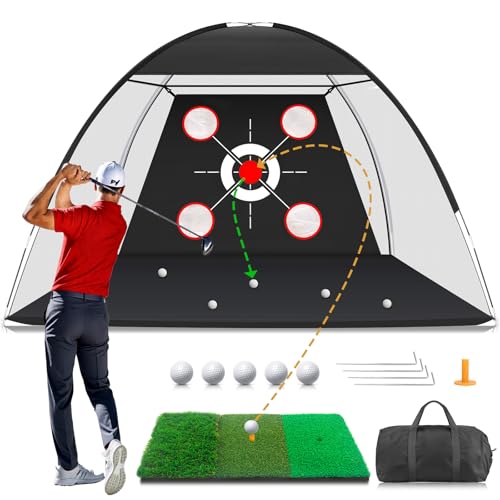
This setup goes beyond a swing aid and turns part of your backyard into a practice lane. The 10×7-foot net and included mat give you room for driving, chipping, and swinging, so it fits golfers who want an at-home station instead of a portable drill tool.
Compared with every trainer before it, this is the closest thing here to a full practice zone. That broader scope is the payoff, though you do need the space to set it up and enough discipline to keep it useful rather than let it sit in the corner.
Reason To Buy
- The large net supports more than one type of shot.
- The practice mat helps you build a more complete home setup.
- Backyard use is the clear strength, especially for repeated reps.
- It gives you a dedicated target area without going to the range.
- Driver, chip, and swing work all fit into the same space.
Points To Note
- It asks for more space than handheld trainers.
- Setup and storage matter more with a net-and-mat system.
- It makes sense for committed practice, not occasional fiddling.
Feature Rundown
Made For
Golfers with a backyard and a real practice habit will get the most from this larger training setup.
Look Elsewhere When
Golf Swing Trainer Aid, Swing Correcting Arm Band, Swing Easy Black is the better fit for golfers who want a compact drill aid they can use almost anywhere.
This lag trainer is aimed at tempo work, which makes it a strong pre-round companion for golfers who want a more deliberate swing feel. Compared with the Amazon Basics stick, it sounds more focused on rhythm and lag, so it suits golfers who already know the basic warm-up routine and want a sharper cue.
The trade-off is specialization, plain and simple. You get a cleaner tempo tool, but you do not get the broader all-around training scope of the Orange Whip or the data depth of the Rapsodo.
Best Bits
- Tempo training is the clear purpose of the design.
- It works well as a pre-round warm-up tool.
- The stick format feels familiar to many golfers.
- Lag-focused practice can help sharpen swing pacing.
Honest Caveats
- It is more specialized than an all-purpose trainer.
- Golfers wanting body-shape feedback will need another aid.
- The simple format does not add much technical depth.
Core Details
Perfect Match For
Golfers who want a dedicated tempo tool for warmups and swing rhythm work will find the cleanest fit here.
Reach For A Different Pick When
Rapsodo MLM2PRO Mobile Launch Monitor Golf Simulator is the smarter move for golfers who want detailed tracking and indoor or outdoor shot feedback.
How To Choose The Right Golf Swing Aids
Match The Aid To Your Practice Goal
Tempo, arm connection, short-game path, and data tracking are different jobs, so the right aid starts with your actual miss pattern. A golfer who loses structure early often benefits from an arm-band or smart-ball style tool, while someone who wants smoother rhythm usually gets more from a longer trainer like Orange Whip.
Keep your goal specific. General “better swing” language leads to cluttered practice, while one clear target keeps the session useful.
Check Space, Storage, And Setup Time
Handheld trainers and wearable aids fit apartments, spare rooms, and quick range stops. A 10×7-foot net and mat setup belongs in a backyard or dedicated practice corner, because that kind of gear needs room to live somewhere.
The trade-off is simple: larger systems give you more practice variety, but they ask for more commitment. Smaller aids are easier to keep close at hand, which often means they get used more often.
Think About Feedback Style
Some golfers want a physical cue, such as a band, ball, or lag stick. Others want numbers, camera tracking, and shot data, which is where a launch monitor like Rapsodo changes the conversation.
Neither path is wrong. The better choice is the one that matches how you learn, because visual learners and feel-based golfers rarely want the same training tool.
Choose Durability For Your Routine
A simple warm-up stick usually asks less from you than a larger simulation setup. Wearable tools need easy storage, while net systems need more care with setup, folding, and placement.
Think about how often you’ll pull the item in and out. The most useful aid is often the one that fits your routine without turning practice into a project.
What To Weigh Before You Add One To Cart
Common Shopping Slip Ups
Many golfers grab a trainer that looks useful but does not match the part of the swing they actually need to clean up. A short-game path aid won’t solve tempo issues, and a tempo stick won’t give you the same arm-connection feedback as a wearable cue.
Another common miss is ignoring storage. Backyard gear needs space, and compact tools are easier to keep in play during busy weeks.
What The Higher Tier Buys
Higher-priced golf swing aids usually add better materials, more precise feedback, or a bigger training system. In the case of Rapsodo, the extra spend goes into dual cameras and a wider data set, while a simpler stick keeps the cost down by staying focused.
That upgrade makes sense when you practice often and want clearer feedback. For casual warmups, a basic trainer usually covers the job without extra complexity.
Frequently Asked Questions
What kind of golf swing aid helps tempo most?
Longer motion trainers and lag sticks usually give the clearest tempo cue. Orange Whip Golf Swing Trainer Aid and Callaway Golf Swing Stick Lag Trainer both fit that role well.
Are wearable golf swing aids hard to use?
Wearable aids are usually straightforward, though they can feel restrictive at first. Golf Swing Trainer Aid, Swing Correcting Arm Band, Swing Easy Black is a good example of that style.
Do golf swing aids help with short-game work?
Some do, but not all of them. Callaway is the clearest short-game-focused option in this list because it targets wedges and short irons.
Is a launch monitor still a swing aid?
Yes, when it supports practice, feedback, and shot tracking. Rapsodo MLM2PRO Mobile Launch Monitor Golf Simulator goes well beyond a basic trainer, so it suits golfers who want numbers along with motion work.
What should you choose for backyard practice?
A net-and-mat setup makes the most sense for a real home practice zone. Golf Net with Practice Mat, Golf Hitting Aid Nets 10x7FT gives you that broader station.
Final Thoughts
Your best golf swing aid depends on the kind of practice you actually do, not the longest feature list. For tempo and rhythm, Orange Whip and Callaway’s lag trainer make strong sense, while Tour Striker and LANJAO focus more tightly on body connection. Amazon Basics keeps things simple, and Rapsodo serves golfers who want more data and a bigger training setup. Choose the tool that fits your space, your routine, and the part of the swing you want to clean up first.