Home golf setups span simple nets, launch monitors, and full cage-style practice areas, so the right choice depends on your space and how seriously you want to track the ball. For a garage bay, basement corner, or backyard strip, you need gear that matches ceiling height, swing speed, and how often you plan to leave it assembled.
Some of these picks are built for straightforward ball-striking practice, while others bring shot tracking, dual-camera feedback, or software-driven simulation into the picture. The mix here gives you a clear path whether you want a compact practice zone or a more immersive indoor setup.
Quick Shortlist For Home Golf Setups

Golf Net 10x7ft Heavy Duty Golf Practice Nets with Mat

Golf Net 10x7FT with Golf Practice Mat

Rapsodo MLM2PRO Mobile Launch Monitor Golf Simulator

Rapsodo MLM2Pro Mobile Launch Monitor Golf Simulator

Golf Net 10x7ft Golf Practice Net for Backyard Chipping Driving
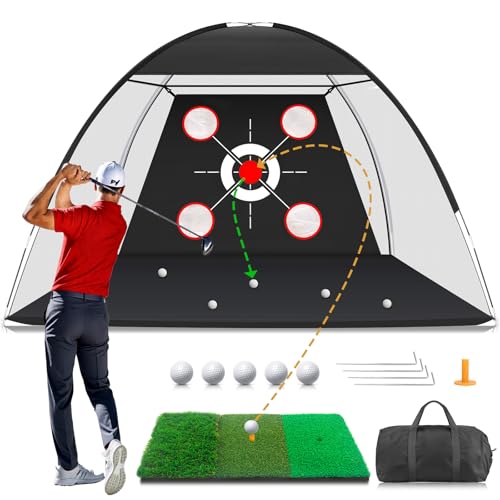
Golf Net with Practice Mat

GoSports Range Cage 10 ft x 8 ft Golf Net Cage

SLX MicroSim Indoor Mobile Golf Simulator
More Details On Our Top Picks
Bearwill’s 10×7-foot net leans into simple practice first, with a target cloth, six balls, seven tees, and a mat already bundled in. That makes it a straightforward fit for a backyard lane or a garage bay where you want fewer separate pieces to sort out.
The 10-by-7 layout gives you enough face area for routine full swings without making the setup feel oversized. The trade-off is obvious, though, since this kind of net setup gives you hitting practice rather than true simulator feedback, so it suits repetition more than shot analytics.
Strong Points
- Includes the basic practice pieces you need in one package.
- Target cloth helps you focus on start line and strike pattern.
- Works for driving and chipping drills in a home space.
- Useful for regular practice without a complicated setup routine.
Things To Consider
- It stays in the practice-net category, so you do not get launch data.
- The bundled accessories add convenience, but they also mean more parts to store.
- Backyard use calls for a clear area and enough depth behind the net.
Core Details
Who It Suits Best
Casual golfers who want a packaged hitting setup for recurring practice sessions get the most from this net.
A Better Fit Elsewhere
GoSports Range Cage 10 ft x 8 ft Golf Net Cage suits you better when you want a more enclosed full-swing practice zone with a larger framed feel.
Zensouds keeps the formula familiar, but the assembly note matters because the frame uses two cross poles, a dome-like shape, and ground spikes. That makes it a solid fit for a living room, garden, or basement where you want a setup that can be broken down without much fuss.
The lack of detailed specs leaves you judging it by structure and use case rather than by a long feature list, and that is fine for a lot of home practice needs. Compared with Bearwill’s more accessory-heavy bundle, this one looks cleaner on paper and easier to move around.
What We Like
- Simple pole-based assembly keeps the setup process approachable.
- Ground spikes help anchor the frame outdoors.
- Easy breakdown helps with storage after practice sessions.
- Works in mixed spaces, from basement corners to garden areas.
Small Caveats
- The listing gives you less detail than some of the other picks.
- Spikes and a dome frame make outdoor setup more location dependent.
- You may want extra room around the net for safer swing clearance.
Feature Snapshot
Built With In Mind
Home golfers who want a movable practice net for shared indoor and outdoor use are the best fit for this one.
Where Another Pick Shines
MUVPOH Golf Net 10x7ft Golf Practice Net suits you better when portability matters most and you want a carry bag in the mix.
Rapsodo’s MLM2PRO moves you out of basic net practice and into launch-monitor territory, with dual cameras and fifteen tracked metrics. For home golfers who want more than ball flight to look at, that kind of feedback turns each session into a more detailed practice block.
The included three Pro V1 balls are a nice touch, but the real value sits in the tracking stack and the way it pairs with indoor or outdoor sessions. The honest read is that this is a much bigger step up in complexity than a net-only setup like the first two picks, so it suits committed practice more than casual swings.
Highlights
- Dual-camera setup adds depth to shot feedback.
- Fifteen metrics support a more analytical practice session.
- Works at home and at the driving range.
- Indoor and outdoor use broadens where you can train.
- Included premium balls make the package feel more complete.
Room For Improvement
- It asks for more setup attention than a simple hitting net.
- The learning curve is higher for golfers new to launch data.
- More advanced features make it a stronger fit for committed practice routines.
Details At A Glance
Right Fit For
Dedicated home golfers who want shot data, camera support, and a more serious practice workflow will get the most from this monitor.
Another Choice May Suit
SLX MicroSim Indoor Mobile Golf Simulator suits you better when app-based play and motion-sensor interaction matter more than raw practice metrics.
This version of the MLM2Pro keeps the same core simulator platform but swaps in three Chrome Tour balls, so the package choice comes down to the accessories you value. For a home setup that already includes the rest of your practice gear, that may be the cleaner way to go.
Just like the Pro V1 bundle above, you still get dual-camera tracking and fifteen metrics, so the core appeal is consistency across the Rapsodo line. Compared with GoSports or any of the nets here, this is the pick for a golfer who wants the practice bay to feel more like a performance workspace than a backyard target.
Upsides
- Same dual-camera and metric package as the other MLM2Pro variant.
- Chrome Tour balls suit golfers who prefer that ball profile.
- Strong match for indoor practice spaces with a data focus.
- Useful for anyone building a more complete home hitting station.
Worth Noting
- The value here rests heavily on whether you want the included balls.
- It still demands more attention and space than a basic net.
- New users may need time to get comfortable with all the data points.
Technical Sheet
Whose Shelf It Belongs On
Serious home golfers who already know they want Rapsodo’s simulator workflow and prefer Chrome Tour balls will fit this version best.
Swap It Out When
Rapsodo MLM2PRO Mobile Launch Monitor Golf Simulator with 3 ProV1 Balls suits you better when that specific ball pack is the one you want.
MUVPOH takes the standard 10×7-foot format and pairs it with a dual-turf hitting mat, so you can work on different turf feels without building a larger setup. For a garage or backyard lane, the included carrying bag and quick assembly make it easier to keep practice routine rather than a weekend project.
The listing points to a two-to-five-minute setup window, which is exactly the kind of detail that matters when you want to squeeze in a short session after work. Compared with the more data-heavy Rapsodo options, this one is all about fast access and a more flexible practice area.
Best Bits
- Dual-turf mat adds variety to short-game and full-swing drills.
- Carrying bag makes it easier to move and store.
- Quick setup suits frequent practice sessions.
- Multiple targets help keep drills organized.
Areas To Watch
- The compact parts make storage simple, but also create more pieces to keep track of.
- Fast assembly still depends on having enough clear space to work in.
- It stays focused on practice, so it does not add simulator-style shot data.
Quick Facts
Made For
Golfers who want a portable practice net with a more varied mat setup will find this one easy to live with.
Look Elsewhere When
Bearwill Golf Net 10x7ft Heavy Duty Golf Practice Nets with Mat fits you better when you want bundled balls, tees, and a target cloth alongside the net.
MFNMFN keeps things direct, with a 10×7-foot net and practice mat aimed at backyard driving, chipping, and swing repetition. That clean setup works well for home golfers who want one defined practice area without a lot of extra gear to coordinate.
The appeal here is breadth, because the listing frames it as an all-in-one solution rather than a stripped-down net. Compared with the MUVPOH option, this one leans less on portability language and more on being a dependable practice station you can leave in place.
Positives
- Net and mat together create a simple home training zone.
- Supports driving, chipping, and general swing work.
- Good fit for a backyard practice corner.
- Keeps the purchase focused on function rather than extras.
Softer Spots
- The listing gives limited detail on construction and accessories.
- It looks better suited to steady practice than frequent packing away.
- Owners who want shot data will need a different kind of setup.
Feature Rundown
The Right Fit
Home golfers who want a straightforward practice net with a mat and do not need simulator features are the best match here.
Reach For A Different Pick When
Rapsodo MLM2PRO Mobile Launch Monitor Golf Simulator suits you better when swing data and dual-camera feedback matter more than a basic hitting station.
GoSports goes bigger in the directions that matter for serious home practice, with a 10-by-8-foot cage layout rather than a simpler open net. That extra enclosure is useful in garages, basements, and dedicated practice rooms where you want a more defined hitting lane.
Compared with the 10-by-7 nets above, the taller profile gives you a bit more room to work with on full swings. The trade-off is that a cage setup usually asks for more space and a little more planning, but the payoff shows up in the way it frames the practice area.
Reasons To Buy
- Cage format feels more contained than an open net.
- 10 x 8 foot size suits fuller swing practice.
- Works for indoor and outdoor home setups.
- Good match for golfers building a semi-permanent training zone.
Points To Note
- The larger footprint asks for more room than the smaller nets.
- It suits a more dedicated setup, not a quick grab-and-go routine.
- Storage can be less convenient than with lighter practice systems.
Feature Card
Who Should Grab It
Golfers with a dedicated practice room or a larger garage bay will get the most out of this cage-style setup.
Consider Something Else When
Bearwill Golf Net 10x7ft Heavy Duty Golf Practice Nets with Mat suits you better when you want a simpler, smaller practice footprint with included accessories.
SwingLogic takes the most software-forward route in this lineup, with motion sensing, a swing stick, and compatibility for Android, iOS, and PC through E6 Connect, GSPro, and CreativeGolf. That makes it a natural fit for home users who want interactive play rather than a simple net or a data-only monitor.
The bundled six-month software license adds a defined starting point, and the listing’s mention of seated use broadens the situations it can serve. Compared with the Rapsodo options, this pick is more about game-like engagement and easier indoor fun than deeper shot analytics.
Bright Spots
- Motion sensor and swing stick create a more interactive home setup.
- App and platform compatibility widen the software options.
- Works indoors and outdoors, which helps in changing weather.
- Seated use support opens the door for more flexible practice positions.
- Fast response helps the experience feel more immediate.
Trade Offs
- Software-based play can feel less direct than hitting into a physical net.
- You need to stay comfortable with app setup and device pairing.
- The included license period is defined, so ongoing access deserves attention.
Feature Rundown
Who Will Love This
Home golfers who want simulator-style play, app support, and a more interactive experience will fit this model best.
Where A Sibling Pick Shines
Rapsodo MLM2PRO Mobile Launch Monitor Golf Simulator suits you better when your priority is deeper swing data and dual-camera shot tracking.
How To Choose The Right Golf Simulators For Home
Match The Setup To Your Space
Your ceiling height, swing arc, and spare floor space matter more than flashy feature lists. A 10×7 net can fit a modest garage bay, while a 10×8 cage feels better in a dedicated room or a larger basement corner.
Measure the hitting zone, the ball-flight zone, and the safety space behind the net before you commit. A compact practice frame is easier to live with in a tight home, but a larger cage reduces the sense that you are swinging into a postage stamp.
Choose Between Practice And Data
Basic nets help you groove contact, start line, and routine, which is plenty for many home golfers. Launch monitors like the Rapsodo picks go deeper with metrics and camera support, so they make more sense when you want feedback between swings instead of just a target to hit into.
Simulator-style systems such as SLX MicroSim add software and game-like interaction. That route suits you best when the goal is a more immersive indoor session, not just ball-striking drills.
Think About Setup Time And Storage
Portable nets with carry bags or simpler pole frames work well for shared spaces and occasional practice. More enclosed cages and sensor-based systems ask for a steadier home location, plus a little more patience during assembly and breakdown.
That trade-off matters most in busy homes, because a setup that takes too long tends to stay boxed up. The easier a product is to move, store, and reset, the more likely you are to use it often.
Match Accessories To Your Routine
Some packages include mats, balls, tees, target cloths, or premium balls, and those extras save you from chasing parts one by one. They also shape how the setup feels, since a dual-turf mat or target panel can make a short practice block more organized.
Think about whether you want a complete hitting station or just the core frame. The cleaner your goal, the better your home setup will fit your routine.
What To Weigh Before You Decide
Hidden Buying Traps
Many shoppers focus on net size and miss the depth behind the setup. A 10-foot-wide frame still needs safe room for the swing, the follow-through, and the space behind the cage or net.
Another common mistake is treating a basic net like a full simulator. A hitting net helps with repetition, but it does not give you shot tracking unless the listing clearly says so.
Where The Extra Money Goes
Higher-tier models usually cost more because they add cameras, software, sensors, or richer data capture. You are paying for more than hardware, since app compatibility and analysis features often sit behind that higher ask.
The upgrade makes sense when you practice regularly and want feedback you can use to adjust your swing. For casual weekend swings, a well-built net is often the more sensible route.
Frequently Asked Questions
Do You Need A Large Room For Home Golf Setups?
No, a basic net can fit in a garage or basement corner with enough swing room. Cage-style setups ask for more depth and overhead clearance.
Is A Launch Monitor Better Than A Net?
A launch monitor gives you data, which helps when you want to study ball flight and swing patterns. A net is simpler and better for routine striking work.
Can You Use These Setups Outdoors?
Several of the nets here are built for both indoor and outdoor use. Outdoor placement still depends on level ground and enough open space around the hitting area.
What Helps A Home Golf Setup Feel More Complete?
A mat, target cloth, balls, and tees can make practice smoother from the start. The closer the bundle comes to a ready-to-use station, the less extra gear you need to gather.
Which Option Works Best For Smaller Homes?
A 10×7 practice net is usually easier to fit than a cage or a software-heavy simulator. That smaller footprint makes it a better match for multipurpose rooms and tighter garages.
Closing Thoughts
The best setup for your home depends on whether you want a simple strike zone, a data-rich monitor, or a more immersive simulator experience. Nets like Bearwill, Zensouds, and MFNMFN keep the focus on practice, while Rapsodo and SLX push further into feedback and software. GoSports lands in the middle with a larger cage that suits a more dedicated space. Choose the format that fits your room and your routine, and the rest becomes easier to live with.