You need a mat that holds up under repeated swings, fits the space you actually have, and feels stable enough for indoor reps or backyard sessions. The strongest options here split into dense turf mats, dual-turf builds, and a few compact training aids, so you can match the surface to your swing work instead of forcing your setup to adapt.
That difference matters in garages, spare rooms, and covered patios, where thickness, base support, and included accessories shape the day-to-day experience. A mat that stays planted and cleans up easily can make practice feel as orderly as a well-kept workshop bench.
Quick Look At The Shortlist

Bltend Golf Mat 36mm 5x4ft/6x4ft Golf Hitting Mat Practice Outdoor Indoor

Bltend Golf Mat 36mm 5x4ft/6x4ft Golf Hitting Mat Practice Outdoor Indoor
SAPLIZE Foldable Heavy-Duty Golf Hitting Mat with 10mm EVA Backing

Golf Mat 5x4FT/5x5FT Dense Turf Hitting Mat

Premium Dual-Turf Golf Mat 5x4ft 6x4ft Thickened Base

Integrated Golf Hitting Mat with Ball Tray Thickening Golf Mats Practice
Birdie Golf Birdie Mat Pro Swing Training Aid

Premium Dual-Turf 5x4ft Golf Mat 21MM to 50MM High-Elasticity Base
More Details On Our Top Picks
The 36mm build puts this Bltend mat in firmer territory than the thinner training pads in this list, and that thicker base matters in a garage or backyard bay where uneven flooring can be annoying. Dense artificial turf paired with EVA backing gives it a more anchored feel, which suits golfers who want repeated driver and wedge work without chasing the mat around.
The 5x4ft and 6x4ft size choices help you pick for the room you actually have, not the room you wish you had. The trade-off is simple, a heavier mat takes more effort to move and store, so it fits best in a setup that stays put.
Strong Points
- 36mm thickness supports a firmer stance under repeated swings.
- EVA backing helps the mat sit steadier on common surfaces.
- Dense turf gives a more realistic hitting feel for practice sessions.
- Two size choices make placement easier in different rooms.
- Works for driving, chipping, and simulator bay use.
Things To Consider
- Heavier construction is less convenient for frequent storage.
- The firmer build may feel less forgiving on rough flooring.
- Cleaning turf fibers and backing takes a little upkeep after outdoor use.
Feature Snapshot
Who It Suits Best
Golfers building a fixed indoor bay or backyard station will get the most from this mat.
Where A Sibling Pick Shines
SAPLIZE Foldable Heavy-Duty Golf Hitting Mat with 10mm EVA Backing suits you better when storage space is tight and portability matters more than bulk.
This Bltend version lands in the same dense-turf family as Item 1, so the real decision point is how you plan to use the space. For a shared garage or multipurpose room, a mat with this sort of thickened base tends to feel steadier under repeated contact, which helps your setup stay orderly.
The downside is that the format still favors a dedicated practice zone, not a setup you want to move around every day. That’s a fair trade for golfers who value consistency over portability, especially for routine wedge work and simulator practice.
What We Like
- Thick construction supports regular hitting practice.
- Dense turf suits both indoor and outdoor use.
- Size options help you fit the available floor area.
- Good match for a semi-permanent practice corner.
Small Caveats
- Moving a thicker mat takes effort.
- It is better suited to steady placement than quick setup changes.
Details At A Glance
Built With In Mind
Home golfers who want a steady practice surface without a complex install will find this a sensible fit.
Swap It Out When
Ywitio Premium Dual-Turf Golf Mat fits better for golfers who want a wider surface feel and more variation underfoot.
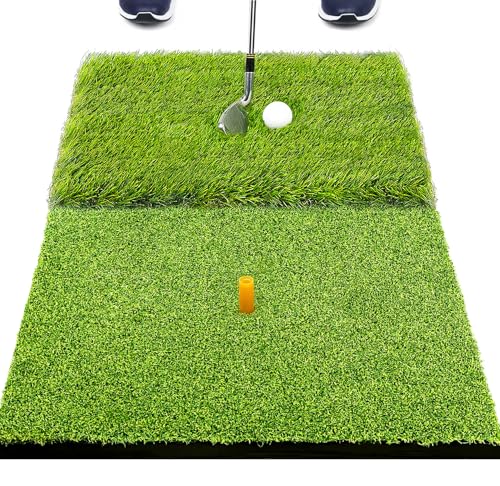
Foldability changes the whole story here. Compared with the bigger Bltend mats, this SAPLIZE option is built for golfers who need something easier to store, carry, or slide out of the way after practice, and that matters in apartments, spare rooms, and shared garages.
The 10mm EVA backing gives it a cushion layer that helps the mat sit more comfortably on the floor, though it will not feel as mass-heavy as the thicker 36mm picks. The honest read is that you trade some planted stability for convenience, which is a smart exchange for space-conscious setups.
Highlights
- Foldable construction makes storage easier.
- 10mm EVA backing adds a useful base layer.
- Compact size suits smaller indoor practice areas.
- Large enough for driving, chipping, and putting drills.
Worth Noting
- Smaller footprint can feel tight for longer swings.
- Less bulky than the 36mm mats, so it may shift more on slick floors.
- Fold lines can take up visual space, even when they do not affect use much.
Quick Facts
Whose Shelf It Belongs On
You’ll like this most in a small room, a studio apartment, or any practice spot that needs to disappear after use.
Another Choice May Suit
Bltend Golf Mat 36mm 5x4ft/6x4ft Golf Hitting Mat Practice Outdoor Indoor suits golfers who want a larger, heavier practice surface for a fixed bay.
Golfguru keeps the formula straightforward here, dense turf, two footprint choices, and a bundle of practice accessories. For a home golfer setting up in a basement or spare room, that combination can cover a lot of routine work without adding extra pieces to source separately.
Compared with the thicker 36mm mats, this one is more about practicality than sheer mass. The included balls and tees make it ready for a simple range-style corner, although the mat itself still matters more than the extras when you’re thinking about long-term wear.
Upsides
- Dense turf supports common hitting drills.
- 5x4ft and 5x5ft sizing helps with placement.
- Included balls and tees reduce setup friction.
- Useful for indoor and backyard practice spaces.
Areas To Watch
- Accessory bundles do not replace a solid mat base.
- The denser build may still need a flat floor under it.
- More accessories also mean more pieces to store.
Technical Sheet
Right Fit For
Budget-conscious golfers who want a functional starter setup will get solid mileage from this pick.
Look Elsewhere When
Ponsonbay Integrated Golf Hitting Mat with Ball Tray suits you better if a more organized tee-and-ball station matters most.
Dual-turf mats are useful because they give you a little more variety under the club, and Ywitio leans hard into that idea with a thickened base and multiple size choices. For golfers who split time between a driving range corner, a backyard setup, and indoor repetition work, that flexibility is worth paying attention to.
The broad thickness range suggests a build that can be tuned to different needs, though the trade-off is that you have to choose carefully so the size and feel match your space. In plain terms, this is the sort of mat that makes sense for a longer-term setup rather than a casual, occasional swing station.
Reasons To Buy
- Dual-turf design gives more practice variety.
- Multiple size and base options support different setups.
- Thickened foundation suits repeated use in a fixed area.
- Works indoors and outdoors without forcing a single use case.
Points To Note
- Selection takes a little more attention because of the size and thickness spread.
- Heavier builds are not as easy to shift around.
- Best results come from a flat, stable surface.
Feature Rundown
The Right Fit
This belongs with golfers who want one mat to cover several practice styles across the week.
Reach For A Different Pick When
SAPLIZE Foldable Heavy-Duty Golf Hitting Mat with 10mm EVA Backing makes more sense for compact rooms and quick cleanup.
The ball tray changes the workflow here more than the mat itself, because it keeps tees and balls organized in one practice lane. That setup is useful in a garage bay or basement corner where stray accessories quickly become clutter, and it helps the space feel more intentional.
Ponsonbay also gives you two thickness choices at 5 ft x 4 ft, so you can lean toward a firmer or deeper-feeling base depending on the surface underneath. The main compromise is obvious, a built-in station adds convenience but also makes the mat feel less minimal than the simpler picks above.
Bright Spots
- Integrated ball tray keeps practice organized.
- Three tees are included for quick setup.
- Two thickness options help match feel to floor type.
- 5x4ft footprint works in many home bays.
Minor Gripes
- The tray adds bulk compared with simpler mats.
- More parts in one setup means a bit more cleaning.
- Best suited to a planned practice station, not rapid storage.
Core Details
Who Will Love This
Golfers who like a tidy, all-in-one station will appreciate this setup most.
Consider Something Else When
Golfguru Golf Mat 5x4FT/5x5FT Dense Turf Hitting Mat suits you better if you prefer a simpler bundle with loose accessories.
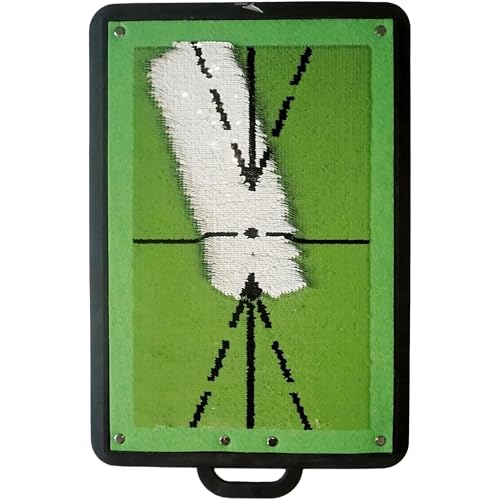
This Birdie Bath piece is less of a classic hitting mat and more of a swing-feedback tool, and that distinction matters. Its sequin-tech surface is aimed at showing swing path and ball impact, which makes it a sharper fit for golfers focused on mechanics rather than general hitting volume.
At 19.25 inches, it is far more portable than the larger turf mats in this roundup, so you can move it between an indoor corner and an outdoor practice spot with little fuss. The trade-off is reach, since a compact training aid cannot replace a full-size mat for broad stance work or repeated full-length sessions.
Best Bits
- Sequin-tech surface gives visual swing feedback.
- Compact size makes transport and storage easy.
- Useful for path checks and impact awareness.
- Works well as a focused drill aid.
Room For Improvement
- Not a full replacement for a wide hitting mat.
- Smaller format limits stance width and repetition variety.
- Best suited to feedback work, not full practice bays.
Feature Card
Perfect Match For
Mechanics-focused golfers who want a portable feedback aid will get the most from this one.
Look Elsewhere When
Bltend Golf Mat 36mm 5x4ft/6x4ft Golf Hitting Mat Practice Outdoor Indoor suits you better for full swings and a more traditional turf feel.
KBBAM leans into the technical side of practice with dual turf, alignment help, and an angle-of-approach aid. That makes it a stronger fit for golfers who want more than a simple strike surface, especially in an indoor setup where visual cues can help keep repetition disciplined.
The 60 x 48 inch footprint gives you a substantial working area, and the 1.8 inch and 2 inch height options suggest a mat that can be matched to different underfoot needs. The honest trade-off is complexity, since feature-heavy mats reward golfers who want structured drills more than casual swing sessions.
Positives
- Dual-turf layout supports varied practice feel.
- Alignment and angle aids help organize drills.
- Large footprint suits more deliberate practice spaces.
- Two height options help you match the base to the room.
Softer Spots
- Feature-rich construction can be more than a casual setup needs.
- Larger footprint asks for clear floor space.
- Heavier, more layered builds can be less convenient to store.
At A Glance
Made For
You’ll get the most from this if your practice space already feels organized and you want drill aids built into the mat.
Skip It When
SAPLIZE Foldable Heavy-Duty Golf Hitting Mat with 10mm EVA Backing makes more sense for a simple, stowable setup.
How To Choose The Right Golf Simulator Mats
Match Thickness To The Room
Thickness changes the way a mat sits on the floor and how much structure you feel under the club. Thicker builds, such as the 36mm mats in this list, generally suit fixed indoor bays or backyard setups where the surface underneath may be uneven.
Thinner or foldable options are easier to move and store, which fits apartments, multipurpose rooms, and garages that do double duty. The trade-off is usually less planted stability, so the space around the mat matters almost as much as the mat itself.
Choose The Surface For Your Practice Style
Dense artificial turf is a good all-around surface for repeated hitting, especially for golfers who want a familiar range-like feel. Dual-turf designs add variety, which helps when you work on different shot types and want more than a single contact texture.
Training aids with visual feedback, like the sequin-tech Birdie Mat Pro, serve a different purpose. They are better for swing-path awareness and impact cues than for standing on a wide practice platform.
Size Matters More Than Most Shoppers Think
A 5x4ft mat can work well in many home spaces, but the real measure is stance room and clearance around the swing arc. Wider or larger mats help when you practice driver swings or want a more comfortable setup for repeated reps.
Compact products are easier to live with, yet they ask you to be more precise about where you place them. In a tight garage bay, that can be the difference between a setup you use often and one that stays tucked away.
Look Past The Mat And Think About The Setup
Accessories change the experience. Ball trays, tees, and included practice balls cut down on setup time and keep the area tidy, which is useful when your practice window is short.
The catch is that extra pieces need storage and occasional cleanup. A simpler mat can be the better call for golfers who want less clutter and faster resets between sessions.
Things Worth Knowing First
Common Shopping Slip Ups
Many people focus on surface texture and ignore floor contact, which leads to mats that wander on slick concrete or uneven decking. Size gets missed too, and a mat that looks generous online can feel cramped once you stand over the ball.
Measure the space, then match the mat to the swing you actually make. That order keeps you from ending up with a surface that looks right but works poorly in the room.
The Upgrade Payoff
Higher-tier mats usually cost more because they use thicker bases, layered turf, or built-in alignment aids. Those details add structure and can make practice feel more organized, especially for golfers who work on drills often.
You get the most from that upgrade when practice is part of your weekly routine. Casual hitters can do fine with a simpler mat, but frequent users often value the sturdier feel and cleaner workflow.
Frequently Asked Questions
What thickness works best for home practice?
Thicker mats usually feel steadier on garage floors, concrete, and uneven outdoor spots. A thinner mat can still work well, but it benefits more from a flat surface underneath.
Do larger mats always work better?
Not always, because a larger footprint only helps when your room has the clearance to support it. In a tight space, a compact mat can be easier to place and live with.
Are foldable mats a good choice?
Foldable mats suit golfers who need storage flexibility or a setup that moves often. They give up some planted weight, so they work best where convenience matters more than mass.
Why pick dual-turf over single-surface turf?
Dual-turf designs add variety under the club, which can help when you practice different shot types. Single-surface turf is simpler and can feel more straightforward for everyday repetitions.
Do built-in trays and tees matter?
They help keep practice organized and reduce the number of loose items around the mat. That makes them useful in tidy home stations, though they also add a little bulk.
Closing Thoughts
The right golf simulator mat comes down to three things, space, stability, and how serious your practice routine is. Thick mats fit steady home bays, foldable picks suit smaller rooms, and feature-rich designs help when your sessions are more drill-heavy than casual. Match the mat to your floor, your swing volume, and how often you want to move it, and the choice gets much easier. From there, the best setup is the one you can use without thinking about it.