Building a home practice corner gets easier once you separate nets, mats, trainers, and small accessories into the roles they actually play. That matters because a garage setup, a backyard station, and a living-room chip area all ask for different gear. You want pieces that fit your space, your repetition habits, and how much cleanup you’re willing to handle after a session. The picks below focus on practical gear that can make daily practice feel less improvised and more usable.
The Shortlist At A Glance

Zensouds Golf Net 10x7FT with Practice Mat

Ywitio Premium Dual-Turf Golf Mat 5x4ft, 6x4ft

WINNER SPIRIT Real Swing 300 Golf Swing & Hitting Trainer

Ponsonbay Integrated Golf Hitting Mat with Ball Tray

Jspotib Golf Mat with Rubber Backing

MUVPOH Golf Net 10x7ft with Dual-Turf Hitting Mat

THE GOLFER STORE Rubber Golf Tees for Mats, 32 Pcs
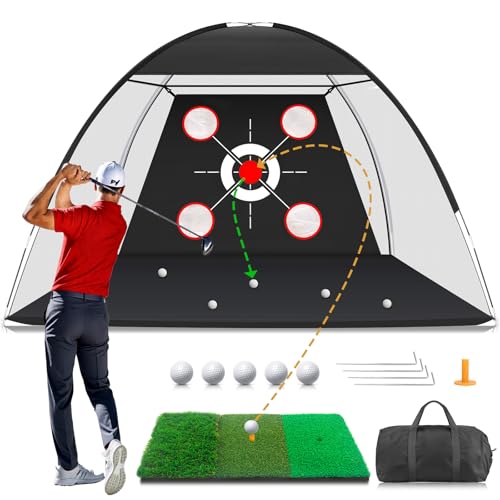
MFNMFN Golf Net with Practice Mat 10x7FT
More Details On Our Top Picks
The appeal here is the full backyard station feel, since the net and practice mat arrive as one training setup. The assembly notes point to a straightforward frame with cross poles and ground spikes, so you’re not dealing with a fussy weekend project. That makes sense for a garage bay, basement corner, or yard where you want to hit balls without rearranging the whole space.
The trade-off is plain: a larger net like this asks for more room than a simple mat, and storage will take a little planning. Compared with the Jspotib mat, you get a more complete driving and chipping area, while the MFNMFN set below leans the same direction but with a different all-in-one layout. For families or casual golfers who want an easy repeat-practice spot, this is a sensible starting point.
Strong Points
- Combines net and mat, so you can build a basic practice lane without piecing accessories together.
- Ground spikes help steady the setup outdoors, which matters on uneven yard surfaces.
- Fits common home spaces such as a living room corner, basement, or backyard area.
- Useful for mixed drills, from full swings to shorter chip work.
Things To Consider
- The larger footprint asks for enough ceiling height and side clearance.
- Disassembly is simple, but you still need a storage spot for the frame pieces.
- Frequent outdoor use usually means more care with dirt and damp ground.
Feature Rundown
Who It Suits Best
Backyard golfers who want a net-and-mat setup in one package will get the most out of it.
Where A Sibling Pick Shines
MUVPOH Golf Net 10x7ft with Dual-Turf Hitting Mat suits you better if you want a similar home station with a portable carry bag.
Dual-turf mats tend to matter more than they sound like they should, because the surface change gives you more realistic options for different drills. This Ywitio mat also comes in two sizes and with a thickened base range, so it’s built for people who want a sturdier practice pad than the thinnest entry-level options. On a patio or in a garage, that extra base thickness can help the mat sit with less bounce.
Compared with the Zensouds net set, this one is much more about the hitting surface than the whole practice lane. That narrower focus is useful for golfers who already have a net or simulator area and just need a reliable mat underfoot. The honest read is that you’re paying for a more substantial platform, and that usually suits regular practice more than occasional use.
What We Like
- Dual turf surfaces give you different contact feels for varied drills.
- Two size options make it easier to match a garage bay, patio, or indoor corner.
- Thicker base construction helps the mat feel more planted during repeated swings.
- Works well as a stand-alone practice surface beside a separate net.
Room For Improvement
- A thicker mat usually takes more storage room than a slim pad.
- Heavier builds can be less convenient to move in and out often.
- Surface upkeep matters, especially after outdoor sessions with grass clippings or dust.
Details At A Glance
Who Will Love This
Golfers who want a dedicated hitting surface for consistent home practice will appreciate this most.
Another Choice May Suit
Jspotib Golf Mat with Rubber Backing suits you better if you want a simpler mat for casual daily work.
This one focuses less on general hitting space and more on what your swing path is doing through impact. Because it’s a trainer rather than a broad mat, it suits golfers who already have a basic practice area and want sharper feedback from each rep. The height-adjustable design gives it a useful range for different stance setups.
Compared with the mat-heavy Ywitio and Ponsonbay picks, the Real Swing 300 is a more focused tool, almost like a checkpoint for your swing line. That focus helps in a garage or indoor practice zone where you want repetition with a clear purpose, not just more turf under your feet. You may find it less versatile than a full net-and-mat set, but it’s stronger in its lane.
Highlights
- Built around swing-path and impact feedback rather than general hitting only.
- Height adjustment helps it suit different practice stances and drills.
- Pairs well with an existing mat or net setup.
- Useful for focused repetition in a smaller home practice area.
Small Caveats
- Less of an all-around station than a full net-and-mat package.
- Best value shows up when you already practice often.
- Focused trainers usually ask a little more attention to setup position.
Core Details
Best Suited To
Golfers working on swing-path awareness and impact feedback will get the clearest use from it.
Skip It When
MFNMFN Golf Net with Practice Mat suits you better if you want a more complete backyard hitting station.
The built-in ball tray changes the feel of this mat from a simple turf patch to a more organized practice station. That matters in a busy garage or patio, because keeping balls and tees in one place cuts down on the little interruptions that break rhythm. The listed sizes, 5 by 4 feet with two thickness options, also give you some room to match the mat to your available floor space.
Compared with the Ywitio mat, this Ponsonbay version leans more into convenience features than into a broader surface story. The three tees help round out the setup, though the trade-off is that more integrated pieces usually mean you’ll want to keep an eye on cleaning and storage. For golfers who value a tidy, self-contained station, it’s a strong fit.
Positives
- Ball tray keeps practice materials close at hand.
- Three tees make the mat more ready for varied drills.
- Two listed thickness options offer a choice between mat feels.
- Works well where you want a more orderly practice corner.
Points To Note
- Integrated pieces can take a little more space to store than a plain mat.
- Ball tray use usually means a bit more cleanup after sessions.
- The added features matter most for golfers who practice often.
Technical Sheet
Who Should Grab It
Golfers who want a tidy, all-in-one hitting pad with tray storage will benefit most.
A Better Fit Elsewhere
Ywitio Premium Dual-Turf Golf Mat 5x4ft, 6x4ft suits you better if surface variation matters more than tray storage.
This is the kind of mat that makes sense for steady, low-fuss practice in a spare room, garage, or backyard patch. The rubber backing is the main practical point here, since it helps the mat stay put more confidently than a thin pad on a slick floor. Compared with the more feature-heavy Ponsonbay and Ywitio choices, this one keeps the setup simpler and easier to live with.
The trade-off is straightforward, you’re looking at a more basic build rather than a system packed with extras. That said, basic can be a strength when you just want to chip, swing, and keep moving without much maintenance. For golfers who care about a manageable home setup, it lands in a very usable middle ground.
Upsides
- Rubber backing helps improve floor grip during practice.
- Simple format keeps setup and cleanup uncomplicated.
- Works indoors or outdoors for routine drills.
- Good choice for golfers who want a mat that stays out of the way.
Areas To Watch
- More basic mats usually offer fewer built-in practice extras.
- Outdoor use can mean more routine brushing and surface cleaning.
- Very frequent practice may push some people toward thicker mats.
Feature Snapshot
The Right Fit
Casual golfers who want a dependable mat without extra complexity should feel at home with this one.
Look Elsewhere When
Ponsonbay Integrated Golf Hitting Mat with Ball Tray suits you better if you want built-in organization for balls and tees.
This MUVPOH set reads like a more complete version of a home hitting station, especially with the dual-turf mat included. The compact carrying bag and the claimed 2 to 5 minute setup window make it better suited to people who move gear in and out often, rather than leaving it fixed in one place. In a backyard or driveway, that portability can matter more than fancy extras.
Compared with the Zensouds net package, it keeps the same large-net idea but leans harder into carry-and-store convenience. The catch is that all-in-one kits still ask for enough room to actually swing, so a cramped patio may feel tight. For regular practice, though, this is the sort of kit that can feel ready without much fuss.
Reasons To Buy
- Includes both a net and a dual-turf mat, so the practice station feels complete.
- Compact carry bag helps with transport and storage.
- Quick setup suits people who practice in short windows.
- Multiple targets give you a clearer aiming focus during drills.
Honest Caveats
- The full setup still needs enough open space for safe swings.
- Portable gear usually benefits from being packed away carefully after use.
- All-in-one kits are more useful when you practice often enough to justify them.
Feature Card
Made For
Frequent home golfers who want a portable, quick-to-set-up practice station will get the most from it.
Consider Something Else When
Zensouds Golf Net 10x7FT with Practice Mat suits you better if you want a simpler, more basic backyard net package.
Small accessories can carry more weight than they look like they should, and tees are a good example. This set gives you several height choices, including 2 1/2, 3, and 3 1/4 inches for driver work, plus shorter holder-style options for woods and hybrids. That spread makes sense in a simulator or on a practice mat where changing tee height quickly is part of the routine.
Compared with the larger Zensouds and MUVPOH net stations, this is a support piece rather than the main event. The upside is that it takes almost no room, and storage is easy, while the trade-off is obvious, you still need a mat or simulator to use it well. For golfers who tinker with setup height a lot, it’s a very sensible add-on.
Best Bits
- Multiple tee heights help you match different clubs and practice goals.
- Fits mats and simulator stations without crowding the space.
- Rubber build is suited to repeated indoor and outdoor use.
- Easy to stash in a glove box, basket, or gear drawer.
Worth Noting
- You still need a mat or simulator for the tees to do their job.
- Accessory sets can feel less essential than a net or hitting pad.
- Sorting out the right height takes a little trial and error.
Core Details
Whose Shelf It Belongs On
Golfers using mats or simulators who want flexible tee height options should keep this close by.
Reach For A Different Pick When
Ponsonbay Integrated Golf Hitting Mat with Ball Tray suits you better if you want a full hitting surface instead of a tee accessory set.
This is another full net-and-mat setup, but its real value comes from how straightforward that combination feels for everyday home practice. You get a dedicated target area for drives, chips, and swing work, so the setup supports mixed drills without asking you to piece together separate parts. In a backyard or open garage, that kind of simplicity can make practice happen more often.
Compared with the Zensouds package, it aims at the same broad use case and should feel familiar in how you’d use it. The difference is mostly in package flavor, not category role, so the better fit comes down to which layout you prefer and how you plan to store it. For golfers who want a routine practice station without a lot of extra thought, it makes a steady final option.
Positives
- Net and mat together create a ready practice area.
- Useful for driving, chipping, and swing reps in one spot.
- Works well for backyard use where you want a clear target zone.
- Helps keep practice routine simple and repeatable.
Minor Gripes
- Full stations need enough room to set up safely.
- Large pieces can be less convenient to store than a plain mat.
- Most value comes from regular use rather than occasional sessions.
Details At A Glance
Built With In Mind
Golfers who want a simple all-in-one training corner for regular use will find this the easiest to settle into.
Swap It Out When
MUVPOH Golf Net 10x7ft with Dual-Turf Hitting Mat suits you better if portability and a carry bag matter more to you.
How To Choose The Right Golf Practice Range Equipment
Match The Gear To Your Space
Your room count matters before anything else. A 10 by 7 foot net station belongs in a yard, garage bay, or basement with enough clearance, while a mat-only setup fits tighter corners more easily. Taller ceilings also matter because a swinging club needs vertical room, not just floor space.
Storage is the quiet factor that changes how often you’ll use the gear. Foldable frames, carry bags, and simple mats all lower the friction between practice sessions and real life.
Choose Between Full Stations And Single Pieces
Net-and-mat combos are for people who want to hit, chip, and repeat without building a setup from scratch each time. Single mats, trainers, and tees work better when you already own part of the system or only want one skill focus. The difference is convenience versus flexibility.
The Real Swing 300 shows how focused tools can sharpen a specific movement, while the Ponsonbay and Ywitio mats cover broader daily work. That’s the basic fork in the road: more complete stations for convenience, or smaller parts for targeted practice.
Pay Attention To Surface Feel And Stability
Mat thickness, dual-turf construction, and rubber backing all change how the contact feels under the club. Thicker or denser builds usually feel more planted, which helps during repeated sessions on hard floors or packed ground. Lighter mats can still work well, but they often ask more from the floor underneath.
For most home golfers, stability matters more than flashy extras. A mat that shifts, curls, or bunches up gets irritating fast, especially in a garage or on concrete.
Think About Practice Habits, Not Just Features
Daily golfers benefit from gear that sets up quickly and stores cleanly. Occasional golfers can get by with simpler mats or tee sets, since the priority is easy access rather than a full station. The best match is the one you’ll actually leave in place or unpack without hesitation.
If you like mixed drills, a net with targets and a mat makes sense. If you only want path work or tee-height practice, a smaller training accessory keeps the setup lean.
A Quick Reality Check
Mistakes Worth Dodging
One common misstep is buying a large net without measuring ceiling height and side space first. Another is overlooking how much room a stored frame or thick mat will take once practice ends. Both lead to gear that looks useful online but becomes a hassle in a real garage or basement.
Tees and small trainers also need context. A rubber tee set helps only when you already have a mat or simulator surface to pair it with.
The Upgrade Payoff
Higher-tier sets usually cost more because they combine more parts, use thicker materials, or add convenience touches like ball trays and carry bags. Those details make practice feel smoother and less improvised, which matters for golfers who use the setup several times a week.
For casual use, a basic mat can be enough. Spending up pays off most when you want a routine that feels ready every time you step outside or into the garage.
Frequently Asked Questions
What size net works for home practice?
A 10 by 7 foot net suits many backyard and garage setups because it gives you a broad target area. You still need enough space around it for safe swings.
Do dual-turf mats really matter?
Dual-turf mats give you two surface feels, which helps when you practice different shot types. That matters most for golfers who hit often and want more variety from one pad.
Are rubber tees useful on mats?
Rubber tees help keep height options consistent on practice mats and simulator surfaces. They’re most helpful when you want quick tee changes without extra setup.
What should you clean most often?
Outdoor mats and nets pick up dirt, grass, and dust, so regular brushing helps them stay usable. Ball trays and accessory areas also need basic tidying after practice.
Which option suits limited space?
A mat-only setup or a small accessory like the rubber tees makes the most sense in tighter rooms. Full net stations work better once you have enough open floor and ceiling room.
Closing Thoughts
The best setup depends on how you actually practice, not on how much gear looks impressive on a page. A full net-and-mat station makes sense for repeated backyard sessions, while a thicker mat or a small tee set fits more controlled drills in tighter spaces. Think about storage, cleanup, and how often you’ll use the gear during a normal week. Choose the piece that makes practice easier to start, and the rest usually follows.