Golf practice at home works best when the mat matches your space, your swing, and how often you’ll use it. Some setups are better for a garage bay, others fit a backyard corner, and a few are built to pair with a net for fuller swing work. The right choice keeps your floor protected, your stance stable, and your practice routine easy to repeat.
Quick Look At The Shortlist

Bltend Golf Mat 36mm 5x4ft/6x4ft

Golf Net 10x7FT with Golf Practice Mat
SAPLIZE Foldable Heavy-Duty Golf Hitting Mat

Golf Mat 5x4FT/5x5FT Dense Turf Hitting Mat

Premium Dual-Turf Golf Mat 5x4ft, 6x4ft

Integrated Golf Hitting Mat with Ball Tray
Integrated Golf Hitting Mat with Ball Tray

Golf Mat Practice Outdoor Indoor with Rubber Backing
More Details On Our Top Picks
The 36 mm thickness gives this Bltend mat a more planted feel than thinner starter pads, and that matters when your garage setup gets regular use. The EVA backing, which is a foam-like layer under the turf, should help it sit more steadily on hard floors or a patio slab.
The larger size options suit full-swing practice better than compact folding mats like the SAPLIZE pick, though you’ll give up some storage convenience. Home golfers working on driver contact or repeated chip shots get the most from this kind of denser surface.
Strong Points
- 36 mm build gives a thicker practice surface.
- EVA backing supports a steadier stance on hard floors.
- Size options fit different garage or backyard layouts.
- Dense turf suits repeated contact drills.
Points To Note
- Thicker mats usually take more room to store.
- Bulk makes quick setup less nimble than foldable pads.
- The heavier feel can be less handy for frequent moves.
Feature Rundown
Who It Suits Best
Serious home practice setups in a garage, basement, or backyard fit this mat well.
A Better Fit Elsewhere
SAPLIZE Foldable Heavy-Duty Golf Hitting Mat suits you better when storage space is tight and you want a mat that folds away fast.
Pairing a net with a mat changes home practice from simple contact work to a more complete swing routine, and this Zensouds setup is built around that idea. The 10 by 7 foot frame gives you a dedicated target zone, while the included practice mat keeps the hitting area together.
Setup sounds straightforward because the frame uses two cross poles, ground spikes, and a simple push-apart disassembly. That makes it a sensible fit for a living room, basement, or yard, though you’ll still want enough open space for safe ball flight and a stable floor or lawn surface.
Highlights
- Net and mat arrive as one practice system.
- Large target area supports driving and chipping work.
- Simple frame design should suit casual setup and takedown.
- Works in indoor or outdoor practice spaces.
Softer Spots
- Needs more room than a mat alone.
- Frame parts add storage bulk.
- Open-space practice is better suited to this than a tight hallway.
Core Details
Who Will Love This
Home golfers who want a net-and-mat setup for more complete practice sessions will get the most from it.
Where A Sibling Pick Shines
Bltend Golf Mat 36mm 5x4ft/6x4ft fits better for golfers who want a simpler hitting surface without the larger net frame.
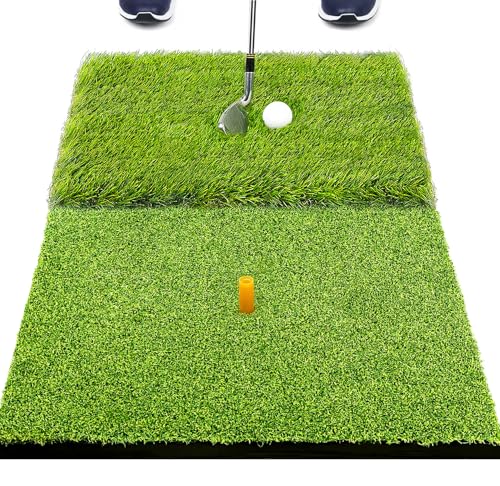
The foldable format gives this SAPLIZE mat a clear edge for apartments, garages with crowded shelves, or anyone who doesn’t want a practice station sitting out all week. Its 10 mm EVA backing is thinner than the Bltend mat above, so the feel is less cushioned, but the payoff is easier storage.
The listed footprint is compact at 1 foot 11 inches by 1 foot 4 inches, which makes it more of a focused hitting surface than a roomy stance platform. For chip work, short swings, and quick indoor sessions, that smaller footprint can be exactly what you need.
Best Bits
- Foldable build is easy to stash away.
- Small footprint suits tight rooms and corners.
- EVA backing gives a bit of underfoot support.
- Simple shape works for quick practice breaks.
Room For Improvement
- Smaller surface leaves less room for stance adjustment.
- Thinner backing feels less substantial than thicker mats.
- Not as roomy for full-swing repetition.
Feature Card
Made For
Golfers who need a stowable mat for indoor chip work or short sessions will find this layout easy to live with.
Look Elsewhere When
golfguru Golf Mat 5x4FT/5x5FT Dense Turf Hitting Mat suits you better when you want a larger practice footprint and a more open stance area.
This golfguru mat leans into the starter-friendly side of the category because it comes with a set of balls and tees, which helps you get going without building a separate accessory pile. The 5 by 4 or 5 by 5 footprint gives more room than the SAPLIZE foldable pick, so stance and drill variety feel less cramped.
The denser turf should suit backyard sessions and indoor bays where you want a more stable striking surface than a very thin pad. The trade-off is that extra accessories are handy, but the mat still takes the usual care that turf surfaces need, like brushing out debris and storing it flat.
Upsides
- Includes balls and tees for a fuller starter kit.
- Size options offer more working room than compact mats.
- Dense turf fits both indoor and backyard drills.
- Good setup for repeated chip and drive practice.
Minor Gripes
- Accessory bundles can clutter storage a little.
- Not as portable as a fold-away mat.
- Flat storage and regular brushing help it stay tidy.
Details At A Glance
Who Should Grab It
New home golfers and casual practice setups will get good mileage from the bundled extras and roomy surface.
Swap It Out When
Ywitio Premium Dual-Turf Golf Mat suits you better if you want more surface variety and a thicker base underfoot.
Dual-turf mats appeal to golfers who want one surface for multiple kinds of practice, and that’s the main reason this Ywitio pick stands apart. A thicker base, listed from 21 mm to 50 mm depending on the version, usually points to a more substantial underfoot feel than slimmer mats.
The 5 by 4 and 6 by 4 size choices also make it easier to match the mat to a garage bay or a backyard lane. You may prefer this kind of setup when you split time between swing work and chipping drills, because the different turf zones can make practice feel less repetitive.
Reasons To Buy
- Dual-turf construction broadens practice variety.
- Size options help fit different home spaces.
- Thicker base options suggest a sturdier feel.
- Good match for mixed swing and chip work.
Small Caveats
- More layered construction usually means more bulk.
- Dual surfaces can need a little more upkeep.
- Storage becomes less simple than with a plain single-surface mat.
Quick Facts
The Right Fit
Home golfers who want a varied practice surface for chips and swings will get the most from this style.
Another Choice May Suit
golfguru Golf Mat 5x4FT/5x5FT Dense Turf Hitting Mat is easier to live with for a simpler, more accessory-friendly starter setup.
A ball tray sounds small, but in a home practice corner it cuts down on constant bending and keeps your station feeling organized. This Ponsonbay mat comes in 5 by 4 foot versions with two thickness choices, so it suits compact garages as well as a more fixed backyard lane.
The three included tees are a useful touch for repeat drills, especially for golfers who want one place to stage the next shot. Compared with the bulkier Ywitio dual-turf option, this one is simpler and easier to keep tidy between sessions.
Positives
- Ball tray keeps practice balls within reach.
- Three tees help you start drills quickly.
- Two thickness options support different feels.
- Good fit for structured repeat sessions at home.
Worth Noting
- The tray adds a little more overall footprint.
- More parts can mean a bit more cleanup.
- Less varied than a dual-turf mat.
At A Glance
Best Suited To
Golfers who like a tidy, repeatable station for drills and warmups will appreciate the tray layout.
Reach For A Different Pick When
Bltend Golf Mat 36mm 5x4ft/6x4ft works better for a thicker, more stripped-back hitting surface.
This version of the Ponsonbay tray mat gives you the same organized layout as the smaller pick above, but the 6 by 4 foot size opens things up a little more. That extra room can matter in a garage bay or basement where a cramped stance starts to feel annoying after a few rounds of drills.
Its listed 1.22 inch thickness lines it up with the thicker option in the smaller model, so the main difference is really space rather than concept. Home golfers who want a little more spread for footwork and ball staging will likely find this the better fit, though it still asks for a tidy practice corner.
Bright Spots
- Larger footprint than the 5 by 4 version.
- Tray design keeps practice organized.
- Good for repeated drills without much setup fuss.
- Thicker build suits a more grounded feel.
Areas To Watch
- Needs more floor space than smaller tray mats.
- Tray layout adds a little bulk.
- Cleanup is easier when you keep the area organized.
Feature Snapshot
Whose Shelf It Belongs On
Golfers with a little more floor space who want an organized practice station will get the most from this larger version.
Skip It When
SAPLIZE Foldable Heavy-Duty Golf Hitting Mat suits you better when compact storage matters more than extra stance room.
This Jspotib mat keeps the pitch plain, and that works for home golfers who want something straightforward for chipping, swing-path drills, or casual indoor practice. The rubber backing should help it stay put better than a loose turf piece, which is useful on a garage floor or a smooth indoor surface.
The listing also makes the outdoor and indoor use case clear, so it fits a backyard station as easily as a spare room. You may find it best for regular, low-friction practice rather than a heavily built setup, and that honest trade-off is part of the appeal.
Best Bits
- Rubber backing adds practical grip.
- Works in both indoor and outdoor spaces.
- Simple shape keeps setup easy.
- Good for chipping and swing-path drills.
Trade Offs
- More basic than thicker or layered mats.
- Less built-in organization than tray designs.
- Simple construction may suit casual use more than heavy repetition.
Core Details
Built With In Mind
Casual golfers who want a simple mat for everyday indoor or backyard drills will find this one easy to work into a routine.
Where Shoppers Go Wrong
golfguru Golf Mat 5x4FT/5x5FT Dense Turf Hitting Mat is the better match when you want more included accessories and a larger practice area.
How To Choose The Right Golf Mats For Home
Match The Mat To Your Space
Space drives the decision more than most people expect. A 5 by 4 foot mat suits many garages and patios, while a compact folding pad makes more sense in an apartment or a crowded basement. Tray-style or net-and-mat setups need extra clearance, so the mat should fit the room, not just the swing.
Storage matters too. A thicker or larger surface often feels better underfoot, but it also asks for more room when practice ends.
Think About How You Practice
Short-game drills favor simpler mats, especially when you mainly want chip work and quick repetitions. Full-swing practice benefits from denser turf, thicker bases, and a wider stance area that keeps you from feeling boxed in.
Golfers who like routine benefit from built-in helpers such as ball trays or included tees. Those small details reduce setup friction, and that’s often what keeps practice going through the week.
Look Closely At Surface Build
Thickness and backing shape the feel more than the marketing language does. EVA backing is a cushioned foam layer, while rubber backing usually helps a mat stay anchored on smoother floors.
Dual-turf designs bring variety, but a single dense turf can be easier to maintain. The trade-off is simple, more variety usually means more bulk and a bit more care.
Choose For Convenience Or Coverage
Tray mats, bundled accessories, and larger footprints make practice feel more complete. Foldable mats and simpler pads make daily use easier to manage.
Your best match depends on whether you want a practice station that stays out, or a setup that tucks away fast after a session.
A Quick Reality Check Before You Choose
Common Shopping Slip Ups
Many home golfers focus on turf look first and space second, then end up with a mat that feels awkward in the room. Measure the practice spot before comparing thickness or accessory bundles.
Another common miss is forgetting storage. A thicker mat can be a better hitting surface, but it can also be a nuisance in a small garage.
The Upgrade Payoff
Higher-tier mats usually cost more because of denser turf, stronger backing, larger footprints, or extra features like trays and dual surfaces. Those additions matter most when you practice often and want a station that feels steady from session to session.
Spending more makes sense for golfers who want less movement underfoot and fewer compromises on stance room. A basic mat still works fine for light use, but a fuller build tends to feel more settled in a dedicated home setup.
Frequently Asked Questions
What size golf mat works best at home?
A 5 by 4 foot mat fits many garages and patios without taking over the space. Smaller mats work better for short-game drills or tight rooms.
Do thicker mats always feel better?
Thicker mats usually feel more substantial underfoot and can be more comfortable for frequent practice. They also take more room to store and move.
Are tray-style mats useful for home practice?
Tray-style mats keep balls and tees close, which helps during repeat drill sessions. They suit golfers who want a tidier practice station.
Should you choose EVA backing or rubber backing?
EVA backing adds a cushioned layer, while rubber backing is often chosen for grip on harder surfaces. Your floor type usually decides which one feels more practical.
Can a golf net and mat replace range practice?
A net-and-mat setup supports a fuller home routine, especially for swing work and contact drills. It still depends on enough space and a safe hitting area.
Closing Thoughts
The right golf mat for home practice comes down to how much space you have, how often you swing, and whether you want a simple hitting surface or a fuller setup. Thick mats suit dedicated practice spots, foldable mats fit tighter homes, and tray or net systems bring more structure. Pick the one that matches your routine, not the one that looks most elaborate. That’s the option you’ll actually use again and again.