Picking disc golf gear gets easier once you match the disc to your throw, your course, and how much control you want in the air. That matters whether you’re just learning a clean release, building a small starter bag, or searching for a driver that fits your arm speed on open fairways.
The nine picks below cover starter sets, control drivers, midranges, and a few bagged bundles for people who want everything in one go. You’ll see where each one fits best, along with the trade-offs that matter once the round starts and the discs get used in real conditions.
Quick Look At The Shortlist

Latitude 64 Retro Burst Disc Golf Starter Set

Innova DX Wraith Disc Golf Driver

PDGA Approved Disc Golf Discs Set

GOOSO Disc Golf Set with Bag 12 PCS
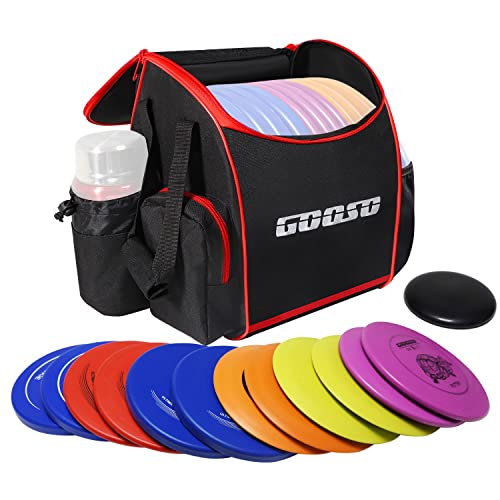
12 PCS Disc Golf Set with Bag Portable Backpack

12 PCS Disc Golf Set with Bag Portable Backpack

Discraft Brian Allen Supercolor Buzzz Astronaut

Innova Halo Star Destroyer Disc Golf Driver

Innova Halo Star Roadrunner Disc Golf Distance Driver
More Details On Our Top Picks
Starter packs can be messy, but this one keeps the focus on easy flight and a grippy base plastic that should calm down a little more with use. For a new player at a local course, that kind of predictable drift matters more than flashy speed.
Compared with the pricier driver-heavy picks later in the list, this set makes more sense for learning release angles and building confidence. The bonus mini marker is a small but useful touch, especially in casual rounds where you want a simple way to mark a lie.
Strong Points
- Base plastic usually feels comfortable in hand and gives a friendlier grip for newer throwers.
- The easier initial flight helps you work on form without fighting a disc that’s too demanding.
- Disc characteristics will season over time, so the set can stay useful as your throws clean up.
- The included mini marker adds convenience for short, everyday rounds.
Things To Consider
- Base plastic tends to show wear sooner than premium blends, so it will change shape and feel faster.
- The lighter learning curve also means advanced throwers may outgrow it quickly.
Feature Snapshot
Who It Suits Best
You’re the right fit for this set if you want a friendly first step into the sport or a low-pressure backup stack for casual rounds.
A Better Fit Elsewhere
Innova DX Wraith Disc Golf Driver suits stronger throwers who already know how they shape distance lines and don’t need a starter-style learning set.
Drivers like the DX Wraith matter once you’re ready for long hyzers and controlled distance in the same throw. The DX plastic gives you a familiar, straight-to-seasoned feel, and that usually suits players who want a disc that changes gradually instead of staying rigid forever.
Unlike the Latitude 64 starter set, this one leans into a single job, so it makes more sense for players with some arm speed already built up. On open fairways, that extra separation from the starter category can mean cleaner shape control and less guesswork on power lines.
What We Like
- Built for long hyzers, which helps on sweeping fairway shapes.
- Handles distance throws with enough control to keep lines from feeling wild.
- DX plastic seasons in a familiar way, so the disc can develop more personality over time.
- Good fit for players who want one driver to cover several open-field looks.
Minor Gripes
- DX plastic usually wears faster than premium blends, so the flight can change sooner.
- Newer throwers may find it demanding until release timing improves.
- Heavy wind can make a fast driver feel less forgiving than a slower fairway option.
Core Details
Built With In Mind
You’ll get the most from this disc once your throws already carry enough speed to let a driver do its job.
Where A Sibling Pick Shines
Latitude 64 Retro Burst Disc Golf Starter Set is the easier starting point for newer players who want a whole mix of learning-friendly discs.
This set speaks to shoppers who want a starter kit that still lines up with tournament rules. PDGA means Professional Disc Golf Association, and that matters because rule-aligned discs remove some of the guesswork when you start playing league rounds or local events.
Compared with the latitude 64 starter set, this option feels more competition-minded and less about pure ease. In practical use, that’s a better lane for beginners who already know they want to move toward organized play instead of only casual weekends.
Upsides
- PDGA alignment gives you a more event-ready starting point.
- The flexible plastic should feel a little more forgiving in the hand.
- Starter-kit format keeps the learning curve manageable for newer players.
- Adults and beginners both get a straightforward path into the game.
Points To Note
- Flexible plastic can wear differently than firmer blends, so feel may change with regular use.
- The kit format helps with variety, but seasoned throwers may still want specialty discs later.
Details At A Glance
Right Fit For
You’re in the sweet spot for this set if you want beginner gear that already points toward local league play.
Look Elsewhere When
Discraft Brian Allen Supercolor Buzzz Astronaut is the smarter move for someone who wants a single midrange with more personality than a full starter bundle.
Bagged sets solve a simple problem, you want discs and a carry system without building the setup piece by piece. This GOOSO package leans into that idea with putter, midrange, and driver coverage, so your first few rounds feel more organized than improvised.
Compared with the PDGA-approved set above, this one puts convenience ahead of rule-linked framing. That trade-off is sensible for casual park rounds, especially for players who want to toss a backpack in the car and head out without extra planning.
Best Bits
- The included bag keeps the set portable from the start.
- Putter, midrange, and driver coverage helps you learn different shot shapes.
- Portable carry design suits casual rounds and practice field sessions.
- The bag format reduces the need for extra gear purchases right away.
Areas To Watch
- Bagged sets can feel bulkier than a simple starter trio.
- General-purpose bundles usually leave room for later upgrades once your throw style settles.
Feature Rundown
Whose Shelf It Belongs On
You’ll appreciate this set most as a first full bag solution or a straightforward car-kit for weekend rounds.
Swap It Out When
Innova Halo Star Roadrunner Disc Golf Distance Driver suits throwers who already want a more specialized distance tool instead of a bundled package.
Some bagged sets feel cramped right away, but this one is built around carrying room and a straightforward mix of discs. The listed 150 to 180 gram weight range helps explain why the set may feel approachable for casual throws, especially for players who still want manageable control.
Compared with the smaller GOOSO bundle above, this version leans harder into storage and everyday carrying. That makes it a better fit for park regulars who want to keep discs, extras, and accessories in one place without juggling separate bags.
Highlights
- The backpack holds 28 plus discs, which gives you room to expand later.
- Disc weights in the 150 to 180 gram range support approachable handling for many casual throws.
- The set covers the main disc types you need for basic round coverage.
- The carry format keeps storage cleaner than tossing loose discs in the trunk.
Small Caveats
- Large-capacity bags take up more space than a basic sling or small tote.
- Expanded storage is useful, but empty space can be overkill for a very minimal setup.
Quick Facts
Built For In Mind
You’re a strong match for this set if you like to keep a larger rotation on hand and want bag space from the start.
Another Choice May Suit
Latitude 64 Retro Burst Disc Golf Starter Set is the cleaner fit for new players who want fewer pieces and a gentler first step.
This version goes after a fuller adult setup, with four putters, four midranges, and four drivers. That split matters because it gives you more room to duplicate favorite molds, which can be useful once you start separating practice discs from round discs.
Compared with the previous GOOSO bag set, the structure here feels a little more like a serious carry plan than a starter bundle. You may find it especially handy on longer practice days, since the backpack format supports a heavier rotation without turning into a pile of loose plastic.
Reasons To Buy
- Four of each core type give you a more even practice mix.
- The backpack stores a large disc load without feeling improvised.
- Useful for adults who want duplicates of their most trusted molds.
- The layout supports a more organized routine for local leagues and field work.
Honest Caveats
- The larger setup is more to carry, so simple casual use may not need this much capacity.
- Extra discs are convenient, but they also mean more sorting and cleaning after muddy rounds.
- New players may not need four of each type right away.
Spec Overview
The Right Fit
You’ll get the most from this set as a fuller carry solution for regular practice and casual competition.
Where A Sibling Pick Shines
GOOSO Disc Golf Set with Bag 12 PCS is the simpler option for someone who wants a more compact starting bundle.
The Buzzz line is a familiar name for a reason, and this Supercolor edition adds visual personality without changing the fact that you still have a midrange at heart. Midranges sit in the sweet spot between putters and drivers, so they reward smooth form more than brute force.
Compared with the bigger starter bundles, this is the more focused choice for someone who wants one dependable control disc instead of a whole kit. In most casual rounds, that makes it a nice companion disc for tee shots, approaches, and any situation where you want cleaner shaping than a driver usually gives.
Positives
- Midrange design helps with controlled throws around the course.
- The Supercolor artwork gives the disc a strong visual identity in a mixed bag.
- Useful as a comfort disc for players who prefer smoother, less aggressive releases.
- Fits naturally into a small bag next to a putter and a driver.
- Good choice for daily practice when you want one disc to repeat the same motion.
Worth Noting
- A single midrange does not replace a full set of disc types.
- Art-forward editions can be a little more about personal taste than pure utility.
Feature Card
Who Will Love This
You’re the right match for this disc if you want a smooth control option and don’t need a whole starter stack.
Reach For A Different Pick When
Innova Halo Star Destroyer Disc Golf Driver is the better route for throwers chasing fast, power-focused distance work.
The Destroyer sits in the fast-driver lane, and the listed flight numbers, speed 12, glide 5, turn -1, fade 3, tell you a lot about how it’s meant to behave. Speed is how quickly a disc wants to move through the air, glide helps it stay aloft, turn describes the early high-speed drift, and fade is the finishing hook at the end of flight.
Compared with the Wraith, this is the more demanding power tool, so it makes the most sense once your tee shots already have enough force behind them. On big open holes, that combination can feel like a wind-up toy snapping straight into action, but the honest read is that newer arms may not get the full benefit yet.
What We Like
- Speed 12 design suits strong throwers who want a faster distance driver.
- Glide 5 helps the disc carry once it gets moving.
- Turn -1 and fade 3 point to a stable, power-friendly flight shape.
- Useful for wide fairways where you need reliable finishing action.
Points To Note
- Fast drivers ask a lot from arm speed and clean release timing.
- Color variation means the look will differ from disc to disc.
- Players who are still learning may find slower discs easier to control.
Technical Sheet
Perfect Match For
You’ll appreciate this disc most if you already throw with enough speed to use a fast stable driver well.
Where Another Pick Suits Better
Latitude 64 Retro Burst Disc Golf Starter Set is a calmer fit for someone still building consistency and release control.
The Roadrunner is the more understable driver in this lineup, and that matters because understable discs tend to drift more easily during the high-speed part of the flight. The listed numbers, speed 9, glide 5, turn -4, fade 1, point to a driver that can help with turnovers, long shaping lines, and straighter-looking flights for the right arm.
Compared with the Destroyer, this one asks for less raw power and more touch, so it can suit players who want distance without fighting a very stubborn finish. For technical fairways or shot-making around corners, that gentler behavior can be a real advantage, though stronger throwers may need to manage it carefully.
Bright Spots
- Speed 9 keeps the driver more manageable than ultra-fast distance molds.
- The understable flight shape helps with turnovers and shaping lines.
- Glide 5 supports carry without demanding maximum arm force.
- Fade 1 suggests a softer finish that can feel easier to place.
Minor Gripes
- Very understable drivers can become touchy for stronger arms.
- Color variation means visual selection won’t be identical from disc to disc.
- Players who prefer a hard finishing hook may want a different profile.
Core Details
Made For
You’re the best fit for this disc if you want a driver that helps shape shots rather than overpower them.
A Better Fit Elsewhere
Innova Halo Star Destroyer Disc Golf Driver suits players who want a firmer, more stable finish on powerful drives.
How To Choose The Right Disc Golf Discs
Start With The Shot Shape You Need
Disc golf discs do different jobs, and that starts with flight pattern rather than brand names. A putter favors control at short range, a midrange sits in the middle for approach work, and a driver is built for longer tee shots and more speed.
You get better results by matching the disc to the shot you throw most often. On tight wooded holes, a midrange or slower driver can feel calmer than a very fast distance disc.
Match Plastic To Your Experience Level
Base plastic usually feels grippier and breaks in faster, which helps newer players learn release timing without fighting a stubborn flight. Premium blends often last longer and keep their shape better, but they can cost more and feel less forgiving at the start.
That trade-off matters in real use. Casual rounds and learning sessions often suit simpler plastics, while players who log frequent rounds or want more consistent long-term shape usually look higher up the material ladder.
Look At Stability Before Speed
Stability tells you how a disc wants to drift and finish. Stable discs aim for a straighter, more controlled path, understable discs turn more easily, and overstable discs resist turn and finish harder.
That difference can save a lot of frustration. Strong throwers often want more stability on open fairways, while developing players usually benefit from a disc that doesn’t demand perfect power every time.
Think About Carrying And Practice Habits
A full bag set is useful for players who like to practice many shot types in one outing. A small starter trio works better for people who want to keep things simple and avoid hauling extra plastic.
The honest read is that your current routine matters as much as your arm speed. Weekend park rounds, field work, and league nights all point toward slightly different setups, so the right choice is the one that fits how you actually play.
Things Worth Knowing First
Mistakes Worth Dodging
Many people start with drivers that are too fast for their current throw, then wonder why the disc keeps diving early or drifting harder than expected. Slower discs often teach cleaner mechanics and make scorekeeping less frustrating.
Another common miss is buying a whole stack before you know your preferred feel. A smaller set or a single reliable disc usually teaches more than a big pile of molds you barely recognize.
The Upgrade Payoff
Higher-tier discs usually bring better plastics, more consistent feel, and more durable shape retention. That matters for frequent players who want the same release hand after hand instead of a disc that changes quickly as it seasons.
You also pay for specialization. A premium driver or a well-made midrange can earn its place by giving you cleaner touch, better finish control, or a more reliable bag role once your game is already settled.
Frequently Asked Questions
How many disc golf discs do you need to start?
Three discs is enough for most beginners, usually a putter, a midrange, and a driver. That small setup keeps learning simple without burying you in choices.
What makes a driver different from a midrange?
A driver is built for speed and longer throws. A midrange flies slower and usually gives you easier control on approaches and shorter tee shots.
Should you choose base plastic or premium plastic?
Base plastic often feels friendlier and seasons faster, which suits learning and casual rounds. Premium plastic usually lasts longer and keeps its shape more steadily.
What does understable mean in disc golf?
Understable discs tend to turn more during the fast part of flight. That can help with shaping lines or getting easier distance for the right throwing style.
Do you need a full bag set right away?
No, a full bag set only makes sense once you know you want to carry a bigger mix of molds. A smaller starter setup is usually easier to manage at first.
Final Thoughts
Your best choice depends on how you throw today, not how you hope to throw six months from now. The starter sets here make learning easier, the Wraith and Destroyer suit stronger distance work, and the Roadrunner gives you a softer, more workable line when finesse matters. That’s the simple way to narrow the field without overthinking it. Pick the disc that matches your arm speed and the kind of round you actually play, and the rest gets a lot easier.