You want practice at home to feel useful, not cluttered. The right setup turns a spare room, garage, or backyard corner into a place where you can work on full swings, short game touch, and shot feedback without leaving the house.
This roundup focuses on gear that fits different spaces and routines, from simple net-and-mat setups to fuller simulator enclosures and sensor-based systems. You’ll see where each one makes sense, plus the trade-offs that matter once it’s in your home.
Quick Look At The Shortlist

Zensouds Golf Net 10x7FT with Practice Mat

Rapsodo MLM2PRO Mobile Launch Monitor Golf Simulator

MUVPOH Golf Net 10x7ft with Dual-Turf Mat
MFNMFN Golf Net with Practice Mat 10x7FT

GoSports Range Cage 10 ft x 8 ft Golf Net Cage

SwingLogic SLX MicroSim Indoor Mobile Golf Simulator

DuraRange Pop-Up Golf Chipping Net

ANYTHING SPORTS Golf Simulator Enclosure Package
More Details On Our Top Picks
The 10×7-foot frame gives you a straightforward practice lane for full swings, chips, and target work without asking for a permanent build. The included mat adds a more complete home setup, which matters for anyone splitting time between the garage, patio, or basement.
The trade-off is simple: this is a net-and-mat solution, not a shot-tracking simulator. For casual practice and repetition, that keeps the setup easier to live with, while golfers chasing data will want something closer to the Rapsodo or SwingLogic options.
Strong Points
- The 10×7-foot footprint supports both swing work and shorter shots.
- The included practice mat makes the setup feel more complete at home.
- It suits living rooms, basements, and yards without demanding a fixed build.
- The target layout gives you a clear visual aim point for repetition drills.
Points To Note
- You still need enough ceiling and rear clearance for comfortable swings.
- Net setups need periodic inspection, since repeated impact gradually wears any hitting surface.
- No shot data or app feedback means your feedback stays visual and manual.
Feature Snapshot
Who It Suits Best
Backyard golfers and casual home practicers who want a simple, all-in-one lane will get the most from this setup.
Where A Sibling Pick Shines
GoSports Range Cage 10 ft x 8 ft Golf Net Cage suits golfers who want a larger, more enclosure-style hitting area for fuller swings.
Dual cameras and 15 metrics make this feel aimed at golfers who care about the numbers behind each strike. That matters in a garage bay or indoor bay where you want more than a ball flight guess, and it puts this in a different lane from the simpler net-and-mat picks above.
The package also includes support coverage tied to accidental damage and breakdowns, which can ease the stress of owning pricier electronic gear. The honest read is that this makes sense for detail-minded golfers, while casual hitters may never use the full feature stack.
Highlights
- Dual cameras help support more detailed swing and shot feedback.
- The 15-metric readout suits golfers who want measurable practice.
- Indoor and outdoor use gives it more flexibility than a fixed simulator bay.
- The included support coverage adds peace of mind for electronic ownership.
- It fits structured practice sessions better than a plain hitting net.
Room For Improvement
- You’ll need the patience for app setup and learning a more technical system.
- The extra features can be more than you need for casual backyard swings.
- Like any camera-based tool, placement and alignment matter to the experience.
Details At A Glance
Who Should Grab It
Golfers who want data, feedback, and a more structured home practice routine will get the most value here.
A Better Fit Elsewhere
GoSports Range Cage 10 ft x 8 ft Golf Net Cage suits you better if you want a simpler physical hitting space without leaning on electronics.
This one leans into convenience, with a compact carry bag and a setup process that’s meant to be quick rather than fussy. For apartments with a garage, shared backyard spaces, or a weekend setup in a basement, that portability can matter more than extra flash.
The dual-turf mat is the practical detail here, because different turf textures help you vary strike feel without changing your whole setup. Compared with the Zensouds net, this model sounds better suited to people who move gear around often and want a tidy pack-away routine.
Upsides
- The dual-turf mat adds more variety to practice sessions.
- The compact carry bag helps with transport and storage.
- Quick assembly suits golfers who practice in short windows.
- Its target-based layout supports driving and chipping drills alike.
Softer Spots
- A portable setup still needs a sensible space for safe swings.
- Frequent packing and unpacking can be a little hard on any net over time.
- The value here is convenience, not electronic feedback or app data.
Core Details
Made For
Golfers who want a portable practice lane and prefer fast setup over electronic extras will appreciate this most.
Another Choice May Suit
SwingLogic SLX MicroSim Indoor Mobile Golf Simulator suits you better if app-driven feedback matters more than a physical net.
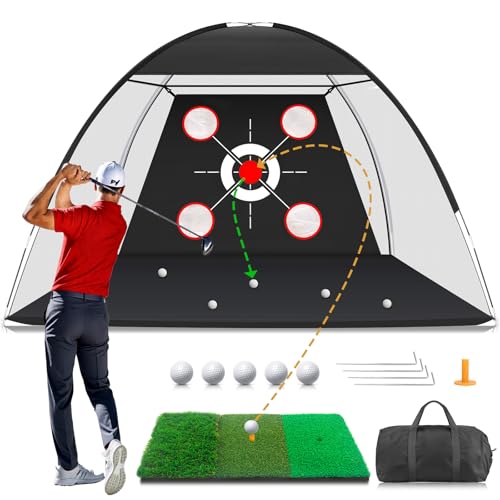
MFNMFN keeps the concept direct, a backyard-ready net with a practice mat for driving, chipping, and swing repetition. That plain approach works well for home golfers who want less setup complexity and more time actually hitting balls.
Because it pairs the net with a mat, the setup feels more complete than a standalone target net, though it still lives in the simpler end of the category. In a busy household, that can be an advantage, since you’re not juggling sensors, software, or extra devices.
Best Bits
- The included practice mat saves you from sourcing a separate hitting surface.
- It supports common home drills, from full swings to shorter chips.
- The 10×7-foot size fits many garages and backyard practice corners.
- The setup stays straightforward, which helps during regular use.
Things To Consider
- You’ll still want to check your ceiling height and rear clearance.
- Basic net systems need routine cleaning and storage care after outdoor use.
- There’s no digital feedback, so progress tracking stays manual.
Feature Card
The Right Fit
This suits home golfers who want an uncomplicated practice station built around repetition and routine.
Swap It Out When
GoSports Range Cage 10 ft x 8 ft Golf Net Cage is the better move for golfers who want more enclosure space and a sturdier bay-style feel.
GoSports takes a more enclosure-like approach, which is useful for home golfers who want a larger, more dedicated practice area. The 10 by 8 footprint gives you a little more room to swing freely than the 10×7 nets above, and that extra breathing space can matter in a garage bay.
The cage style is the point here, because it helps the setup feel more substantial for repeated full-swing work. Compared with the simpler nets in this list, this one is a better fit for people building a semi-permanent practice zone rather than a grab-and-go station.
Reasons To Buy
- The larger cage style gives you a more defined practice bay.
- The 10 x 8 size adds room for fuller swings.
- It fits indoor and outdoor spaces, which helps home flexibility.
- The enclosed feel can make repeated practice feel more contained.
Honest Caveats
- Its larger footprint asks more of your room or garage than a basic net.
- Assembly and storage are naturally less casual than a pop-up chipping net.
- It makes more sense for committed practice than occasional use.
Technical Sheet
Whose Shelf It Belongs On
Dedicated home golfers who want a sturdier practice bay will get the most from this cage-style setup.
Look Elsewhere When
DuraRange Pop-Up Golf Chipping Net works better for golfers who only need compact short-game practice and easier storage.
SLX MicroSim leans into app-based simulator play instead of a physical net, which gives it a very different feel from the rest of this list. Motion sensor input and a swing stick make it a better match for homes where you want interactive practice without building a full cage.
The compatibility list is broad, and the included software path makes this appealing for golfers who want a guided screen experience. One thing worth considering, though, is that this style rewards comfort with setup and app registration more than the simpler net options do.
Standout Traits
- The motion sensor system supports interactive home golf sessions.
- Compatibility with Android, iOS, and PC broadens device options.
- The swing stick makes indoor play possible without a full hitting bay.
- The included software access adds immediate structure to practice.
- It can work for seated use, which broadens the use case.
Minor Gripes
- The app and software setup will take more attention than a simple net.
- Screen-based play depends on the device and software flow feeling smooth.
- Golfers who only want a place to hit real balls may find it too digital.
Feature Rundown
Who Will Love This
Tech-comfortable golfers who want a screen-based training path and app-guided practice will get the most out of it.
Where Shoppers Go Wrong
GoSports Range Cage 10 ft x 8 ft Golf Net Cage makes more sense for anyone who wants to hit actual balls into a physical net instead of using simulated input.
DuraRange is the smallest-feeling option here, and that’s exactly why it belongs in the conversation. The foldable triple-target layout is built for chipping, pitching, and short-game repetition, so it suits home golfers who need focused work instead of a full hitting station.
That narrower purpose makes it easy to store and easier to live with in a small room or backyard corner. Compared with the larger net cages, this is more like a practice aid that slips into daily routine without taking over the space.
Bright Spots
- The triple-target layout gives your short-game work clear aiming zones.
- The pop-up design keeps storage and setup simple.
- It fits indoor practice areas that can’t handle a larger cage.
- The foldable format works well for repeated, quick sessions.
Areas To Watch
- This is built for chipping and pitching, not full-swing training.
- Lightweight practice gear often needs careful folding and dry storage.
- The compact format limits how much of your swing you can work on.
Quick Facts
Built With In Mind
Golfers who want a small, focused short-game station will get the most value from this net.
Reach For A Different Pick When
MFNMFN Golf Net with Practice Mat 10x7FT is the better match if you want a broader hitting setup that covers full swings too.
This is the closest thing in the list to a true enclosure package, with the frame poles, projector mount, blackout cage, and side shank nets bundled together. For a garage build or a room that’s being turned into a golf bay, that integrated approach saves you from piecing together parts one by one.
The 4K-ready impact screen points it toward a more visual simulator setup, and the return window may give you some comfort on arrival. The catch is obvious: this asks for more room, more planning, and a bigger commitment than the net-based options above.
What We Like
- The enclosure bundle covers several major simulator components in one package.
- The side shank nets and blackout cage help define a more complete hitting area.
- The projector mount and screen support a fuller screen-based build.
- It suits garage and indoor practice spaces that are meant to stay dedicated.
Worth Noting
- The footprint is larger than a simple home net, so space planning matters.
- Assembly will feel more involved than a pop-up or quick net system.
- It makes the most sense for golfers already committed to a simulator-style setup.
Core Details
Perfect Match For
Home golfers building a garage simulator bay or a dedicated indoor practice room will get the best fit here.
Skip It When
GoSports Range Cage 10 ft x 8 ft Golf Net Cage is a better fit for you if the room is smaller and you want a simpler practice structure.
How To Choose The Right Golf Home Simulators
Space Shapes The Whole Setup
Your room size should lead the decision, not the other way around. A garage bay can usually handle a larger cage or enclosure, while a basement corner often suits a net or compact chipping target better.
Ceiling height matters just as much as floor space, especially for full swings. A simple net can work in places where a full enclosure would feel cramped and hard to live with.
Match The Gear To Your Practice Habit
Daily range-style reps call for sturdier nets, wider cages, or a sensor system that gives you feedback after each swing. Short, targeted sessions lean toward a pop-up chipping net or a plain hitting lane with a mat.
You’ll save frustration by picking the setup that matches the kind of work you actually do. That keeps the home area useful instead of turning it into storage with a golf theme.
Data, Screens, Or Simple Repetition
Launch monitors and simulator platforms suit golfers who want shot metrics, app guidance, or a screen-based experience. Net-and-mat systems suit golfers who want real-ball repetition and less setup effort.
The right choice often comes down to feedback style. Some golfers want numbers and visuals, while others just want a solid strike zone and a clear target.
Think About Setup And Storage
Portable designs matter in shared spaces, since you may need to take the gear down after each session. Larger cages and enclosures pay you back with a more complete practice zone, but they ask for more planning and more permanent room.
That trade-off is normal. The more complete the setup, the more it behaves like a dedicated corner of the house rather than a quick-use accessory.
Things Worth Knowing First
Wrong Turns To Avoid
Plenty of home golfers choose the largest frame they can find, then realize the room can’t handle the footprint. Another common miss is buying a data-heavy system before deciding whether app setup and device pairing fit your routine.
Start with your space, then your practice style, then your budget comfort. That order keeps you from ending up with gear that looks right on paper but fights your house.
The Case For Spending Up
Higher-tier setups usually cost more because they add structure, screen material, mounts, sensor tech, or more complete enclosure parts. Those extras matter most when you want a dedicated golf bay that stays ready between sessions.
Spending more makes sense for golfers who practice often and want a cleaner, more repeatable experience. For casual use, a simpler net or chipping target often covers the same ground with less room and less fuss.
Frequently Asked Questions
What size room do you need for a home golf setup?
A net-and-mat setup can fit into many garages, basements, or backyard corners. A full enclosure needs more width, depth, and ceiling clearance.
Do launch monitors replace a hitting net?
No, they serve different jobs. A launch monitor gives feedback, while a net gives you a place to hit real balls.
Are pop-up chipping nets only for short game work?
Yes, that’s where they make the most sense. Their compact shape suits chips, pitches, and close-range repetition.
What should you clean after outdoor use?
Wipe down the mat, netting, and any frame parts that pick up dirt or moisture. Dry storage helps the gear stay in better shape between sessions.
Is a simulator enclosure worth it for casual practice?
Only for casual practice with a dedicated room. A simpler net usually makes more sense when you want easy setup and teardown.
Final Thoughts
Your best match depends on how much room you have, how often you practice, and whether you want feedback or just a clean hitting area. The net-and-mat picks suit everyday repetition, the sensor-based systems suit data-minded golfers, and the enclosure package suits a more serious build. Choose the setup that fits your house as neatly as it fits your swing, and the practice time tends to feel a lot more natural.