


Replacing a lead-acid setup with lithium changes the whole rhythm of a golf cart. You get less watering, less mess, and fewer heavy lifts, which matters on a cart that sees neighborhood drives, course laps, or campground errands. The nine picks below focus on capacity, smart monitoring, charger bundles, and case style so you can match the battery to how you actually use the cart.
Some options lean toward long-range owners, while others make more sense for solar setups, towing, or mixed-use vehicles. The right choice depends on how much runtime you want, how much space you have, and whether you care more about monitoring, peak output, or a simple conversion kit. That trade-off shows up fast once you compare the models side by side.
Quick Look At The Shortlist
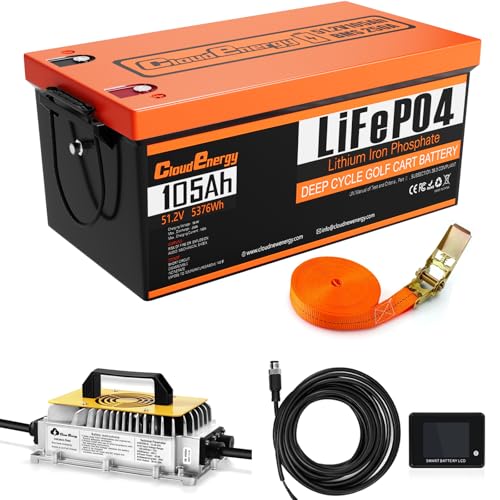
Cloudenergy 48V 105Ah LiFePO4 Golf Cart Battery

48V Lithium Golf Cart Conversion Kit, 100Ah

LOSSIGY 48V Lithium Golf Cart Conversion Kit

DC HOUSE Metal Case 48V 100Ah Golf Cart Battery Kit

TEMGO 48V 100Ah LiFePO4 Golf Cart Battery

Cloudenergy 48V 105Ah LiFePO4 Golf Cart Battery

LOSSIGY 48V Golf Cart Lithium Battery

LOSSIGY 48V Golf Cart Lithium Battery Conversion Kit

CHINS 48V Lithium Battery Golf Cart 100Ah
More Details On Our Top Picks
For cart owners who want long, steady runtime, this Cloudenergy bundle leans into capacity and control. The 105Ah format gives you more cushion for repeated drives around a course community, while the built-in 250A BMS, or battery management system, helps the pack handle current delivery in a controlled way.
The mobile app, touch monitor, and retention strap make it feel aimed at practical ownership rather than a bare battery swap. The honest read is that this suits you best when space is planned out and you want monitoring close at hand, not a minimalist install with no extras.
Strong Points
- 105Ah capacity gives you more runtime for longer cart sessions and fewer charging interruptions.
- Built-in 250A BMS supports controlled power delivery during heavier starts and hillier paths.
- App access and a touch monitor make charge status easier to check at a glance.
- The included retention strap helps keep the pack secured in a moving cart compartment.
- Cloudenergy’s 6000-plus cycle claim points to a pack designed for long service life under normal use.
Things To Consider
- The feature set adds a bit of setup complexity compared with simpler drop-in packs.
- Owners with tight battery bays may need to measure carefully before ordering.
- The monitor and app are useful, though some people will still prefer a plain, no-frills build.
Feature Snapshot
Who It Suits Best
Golf cart owners who want a high-capacity lithium swap with built-in monitoring will get the most from this package.
A Better Fit Elsewhere
TEMGO 48V 100Ah LiFePO4 Golf Cart Battery suits you better when you want a 100Ah setup with an LCD screen and Bluetooth app in a slightly lighter-feeling bundle.
This OGRPHY kit is the hot-rod style choice in the group, at least on paper. The listed 1000A peak current, meaning a short burst of very high amperage, and 10.24kW output are aimed at carts that need stronger acceleration or heavier loads than the gentler packs can supply.
You also get a touch monitor and charger in the bundle, which saves you from piecing together every part separately. That said, the more aggressive power profile makes this more interesting for experienced upgraders than for someone who just wants a quiet, simple weekend cart.
What We Like
- 100Ah capacity gives you a familiar middle-ground size for many cart conversions.
- 200A BMS and 1000A peak current point to strong burst output for starts and hills.
- 10.24kW output makes the pack appealing for carts that need more punch.
- Charger and touch monitor are included, which reduces extra parts hunting.
Worth Noting
- The high-output focus may be more than some neighborhood carts actually need.
- More powerful setups usually reward careful installation and compatible wiring.
- The bundle has a few moving parts, so first-time installers may want a slower weekend to sort it out.
Spec Overview
Who Should Grab It
Cart owners chasing stronger acceleration and a more complete conversion kit will be happiest here.
Swap It Out When
Cloudenergy 48V 105Ah LiFePO4 Golf Cart Battery fits you better when runtime and monitoring matter more than peak burst power.
LOSSIGY takes a broader-use angle than the more golf-cart-only Cloudenergy options. The built-in Bluetooth BMS gives you wireless visibility into battery behavior, which is handy for owners who like to check status from a phone without opening the compartment.
Its stated fit for solar systems and RVs makes it useful for people who split time between a cart, an off-grid setup, or a utility project. In most garages, that kind of flexibility matters more than flashy extras, and the 1000A peak figure gives it some muscle for short bursts.
Positives
- Bluetooth BMS adds convenient monitoring from a phone.
- Broad use cases make it appealing for cart and off-grid owners.
- 200A smart BMS supports controlled power delivery under load.
- 1000A peak current gives the pack strong short-burst capability.
- The conversion-kit approach works well for people rebuilding a mixed-use setup.
Areas To Watch
- Compatibility planning still matters, especially in carts with tight compartments.
- The broader-purpose focus can feel less specialized than a golf-cart-only package.
Core Details
Who Will Love This
You benefit most if your battery needs stretch beyond golf-cart duty and into solar or RV use.
Another Choice May Suit
CHINS 48V Lithium Battery Golf Cart 100Ah fits you better when you want a simpler cart-focused bundle with charger and monitor included.
Metal casing changes the feel of this DC HOUSE kit right away, especially compared with the more standard-pack builds above. That shell makes sense for carts that get bumped around a bit, or for owners who prefer a sturdier outer layer around the battery body.
The bundle also includes a 48V 18A charger, Bluetooth mobile app support, and an LCD monitor, so you get a fairly complete setup in one go. The trade-off is simple: the tougher housing and bundled extras suit practical upgraders, but they do ask for a little more install planning than the most basic swap.
Highlights
- Metal case adds a sturdier feel for rougher use.
- 100Ah capacity fits many standard cart conversion needs.
- Included 18A charger reduces extra accessory shopping.
- Bluetooth app and LCD monitor make charge status easier to follow.
Small Caveats
- The metal enclosure may add weight compared with simpler housings.
- The fuller kit can take a little more time to fit cleanly in the bay.
- Owners focused only on runtime may prefer a higher-capacity option.
Details At A Glance
The Right Fit
Owners who want a sturdier-feeling kit with charger, app access, and an onboard display will get the most out of this one.
Look Elsewhere When
TEMGO 48V 100Ah LiFePO4 Golf Cart Battery fits you better when you want the same size class with a lighter-feeling feature set and a 58.4V charger bundle.
TEMGO sits in the sweet spot for owners who want monitoring without giving up a clean battery package. The Bluetooth app and LCD screen are easy to appreciate in day-to-day use, especially when the cart gets shared by different family members and nobody wants to guess at charge status.
The included 58.4V 18A charger adds to the convenience, while the 200A smart BMS and 10.24kW max output give it enough muscle for most cart duties. Compared with the heavier-feeling DC HOUSE kit, this one is more about a neat, information-forward setup than a rugged enclosure.
Bright Spots
- Bluetooth app and LCD screen make monitoring straightforward.
- 100Ah capacity works well for many cart owners who want a middle-ground size.
- 200A smart BMS supports controlled output for everyday driving.
- The included charger keeps the bundle more complete.
- 10.24kW max output gives you a clear sense of the power ceiling.
Points To Note
- The feature mix is useful, though not everyone needs both app and screen.
- Owners wanting a very rugged shell may prefer a metal-cased option.
- As with most conversion kits, fitment planning still deserves attention.
Feature Card
Best Suited To
This works well for cart owners who like a clear monitor, app-based tracking, and a tidy all-in-one package.
Where A Sibling Pick Shines
Cloudenergy 48V 105Ah LiFePO4 Golf Cart Battery fits you better when longer runtime matters more than a fuller feature dashboard.
This is the Cloudenergy package that feels most complete for a cart swap, because the 20A charger is part of the story from the start. The 105Ah capacity pairs with a built-in 250A BMS and 3C discharge rating, which means the pack is set up for stronger current delivery than a slower, gentler battery.
The mobile app and touch monitor make it similar in spirit to Item 1, though this version puts more emphasis on charging convenience. The caveat is straightforward: you get a fuller bundle, but you also get a larger, more involved setup than a minimal pack.
Upsides
- 105Ah capacity gives you strong runtime for repeat cart use.
- 20A charger is included, which simplifies the purchase.
- 250A BMS and 3C discharge support more demanding power delivery.
- Mobile app and touch monitor make routine checking easier.
- The 6000-plus cycle claim suggests long-term ownership potential.
Room For Improvement
- The bundle is substantial, so installation planning matters.
- Owners who do not care about app monitoring may pay for extras they rarely use.
Quick Facts
Perfect Match For
You get the most from this if you want a full-featured battery bundle and plan to keep the cart in regular use.
Skip It When
TEMGO 48V 100Ah LiFePO4 Golf Cart Battery fits you better when a slightly simpler monitor-first package feels easier to live with.
Some cart owners want a battery that keeps the setup simple while still offering serious burst capacity, and that’s the lane this LOSSIGY pack occupies. The 200A smart BMS and 1000A peak current are the headline numbers, so it makes sense for carts that need brief surges more than endless dashboard extras.
Its passenger-car and trolling-motor wording hints at broader utility, which can help you if your battery life crosses a few different machines. Compared with Item 3, this version sounds a touch more cart-centered, so it fits best when you want strong output without moving into a full conversion-kit bundle.
Best Bits
- 200A smart BMS supports high current handling.
- 1000A peak current gives the pack strong short-burst capability.
- Broad use wording makes it flexible for more than one vehicle type.
- The straightforward battery format may feel easier to slot into an existing setup.
Softer Spots
- You do not get the charger-and-monitor bundle that some other picks include.
- Owners focused on runtime rather than punch may want a larger-capacity model.
- Like any battery swap, exact fit should be measured before the install begins.
Core Details
Whose Shelf It Belongs On
You should look here if you want a direct battery upgrade with strong current handling and minimal extra bundle clutter.
Reach For A Different Pick When
CHINS 48V Lithium Battery Golf Cart 100Ah fits better for you if a charger and monitor in the box matter more than peak output.
This LOSSIGY conversion kit looks especially useful for people juggling a cart, solar setup, or RV project. The broad-use framing matters because it gives you one battery path for more than one kind of equipment, which is handy for garages that do not stay neatly specialized.
The 200A smart BMS and 1000A peak current make it a capable high-burst option, yet the real appeal is flexibility rather than flash. The trade-off is that you will want to plan the installation carefully, since a multi-use battery often asks a little more from the layout than a single-purpose cart pack.
Positives
- Works across golf cart, solar system, and RV use cases.
- 200A smart BMS adds controlled power handling.
- 1000A peak current supports short bursts of heavy demand.
- Conversion-kit format is useful for mixed utility projects.
Trade Offs
- Broader versatility can mean a less specialized fit for pure cart use.
- Installation planning matters, especially in compact battery bays.
- No charger or monitor is called out in the source details.
Technical Sheet
Built With In Mind
This suits you best if your battery needs stretch across different machines and you want one pack to cover more than one job.
Where Shoppers Go Wrong
Cloudenergy 48V 105Ah LiFePO4 Golf Cart Battery is the better fit when you want a more cart-specific bundle with app and monitor support.
CHINS closes the list with a familiar, useful formula, 100Ah capacity, a 200A BMS, and a charger plus monitor in the bundle. That combination makes it easy to picture in a weekend cart that needs a cleaner setup without a long parts hunt afterward.
The 5000-plus cycle figure also gives it a long-service angle, though the real advantage here is practical convenience rather than dramatic specs. Compared with the more feature-heavy TEMGO or Cloudenergy packs, CHINS feels a little more straightforward, and that can be exactly what you want.
Reasons To Buy
- 100Ah capacity suits many common cart upgrades.
- Charger and monitor are included, which reduces extra shopping.
- 200A BMS supports controlled current delivery.
- 5000-plus cycle claim points to strong long-term use potential.
Minor Gripes
- The bundle is practical, though it does not lean as hard into app-based extras.
- Owners chasing the longest runtime may want a higher-capacity pick.
Feature Rundown
Made For
You’ll like this most if you want a simple, well-rounded cart battery package with the basics already included.
Another Choice May Suit
DC HOUSE Metal Case 48V 100Ah Golf Cart Battery Kit is a better fit when you want a tougher outer shell and app-based monitoring in the same bundle.
How To Choose The Right 48 Volt Lithium Battery For Golf Cart
Capacity And Range Matter First
Capacity, usually shown in amp-hours, tells you how much stored energy the pack can hold. In plain terms, a higher amp-hour number usually means more time between charges, which matters for course days, campground loops, or long neighborhood runs.
You also want to think about your cart’s typical load. Two adults on flat pavement ask less from a battery than a full cart on hills with gear, so a 100Ah pack can feel very different depending on the route.
Battery Management And Output Shape Real Use
A battery management system, or BMS, controls charging and discharging behavior. That matters because the BMS helps the pack handle current demand more smoothly, especially during starts, climbs, and stops.
Peak current and continuous output deserve attention too. Peak numbers describe short bursts, while continuous ratings speak more to everyday delivery, so carts used for towing or steep terrain benefit from stronger current handling.
Monitoring Features Add Everyday Ease
App support, LCD screens, and touch monitors are not just gadgets. They let you check charge status without guessing, which helps when multiple people use the cart or the battery sits in a harder-to-see compartment.
The trade-off is extra setup and extra parts. Some owners love that visibility, while others would rather keep the install simple and skip features they will rarely open.
Bundle Fit And Installation Practicality
Charger-included kits save you from matching accessories one by one. That convenience helps a lot for first-time lithium upgrades, especially when you want a cleaner path from box to cart.
Case style also matters. Metal housings, retention straps, and clear dimension planning can make daily ownership easier, while a slimmer pack may suit tighter battery bays better.
A Quick Reality Check Before You Order
Traps First Timers Fall Into
Many shoppers focus only on amp-hours and miss the physical fit. A battery can look perfect on paper and still be awkward in a cramped bay, so the cart’s compartment size deserves a careful look.
Another common mistake is ignoring the charger and monitor situation. A bundle can feel more complete from the start, while a bare battery may ask you to source extra parts later.
The Upgrade Payoff
Higher-tier packs usually cost more because they add better monitoring, stronger current handling, and fuller accessory bundles. Metal cases, Bluetooth control, and higher-output BMS units all add material and design value.
The upgrade makes sense when you use the cart often, carry heavier loads, or want a battery that does more than simply store energy. For occasional, flat-ground rides, a simpler pack can still be the smarter fit.
Frequently Asked Questions
What amp-hour size works for most golf carts?
100Ah is a common middle-ground choice for many cart owners. A larger 105Ah pack can make more sense for longer rides or heavier use.
Why do some batteries mention 51.2V instead of 48V?
That usually reflects the battery’s nominal lithium voltage labeling. The cart category still treats these as 48V-class replacements.
Do I need a monitor on the battery?
You do not need one, but it makes charge tracking easier. That helps when the cart gets shared or parked in a dim garage.
What does a 200A BMS do?
A 200A BMS helps manage higher current flow from the battery. That matters for carts that face hills, starts, or stronger acceleration demands.
Are charger-included kits worth considering?
They usually are, because the bundle is simpler to manage from day one. You also avoid matching a charger separately to the pack.
Closing Thoughts
Choosing a 48 Volt Lithium Battery For Golf Cart comes down to matching the pack to your cart’s real job, not just its label. A long-range neighborhood cruiser, a utility cart, and a heavier duty setup all need different things from capacity, current handling, and monitoring. Cloudenergy and TEMGO stand out for fuller-feature ownership, while LOSSIGY and CHINS make sense for cleaner, simpler upgrades. Measure your compartment, check your use pattern, and pick the bundle that fits your routine without extra fuss.
