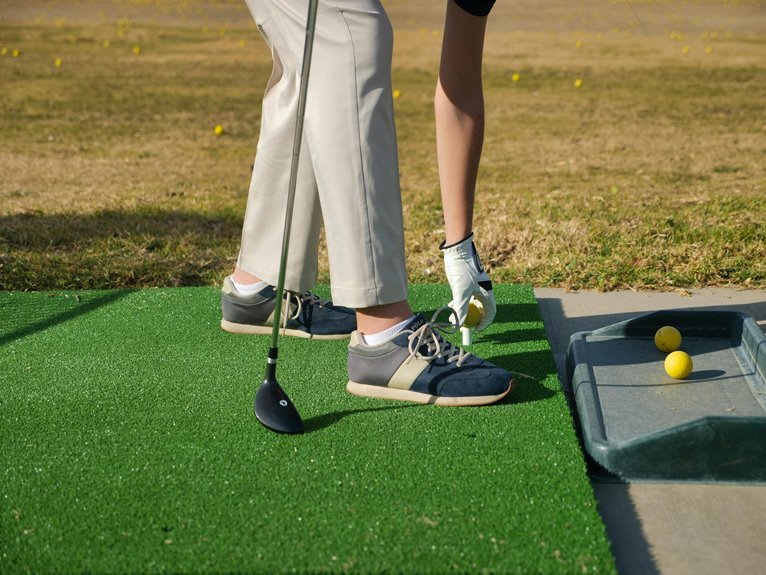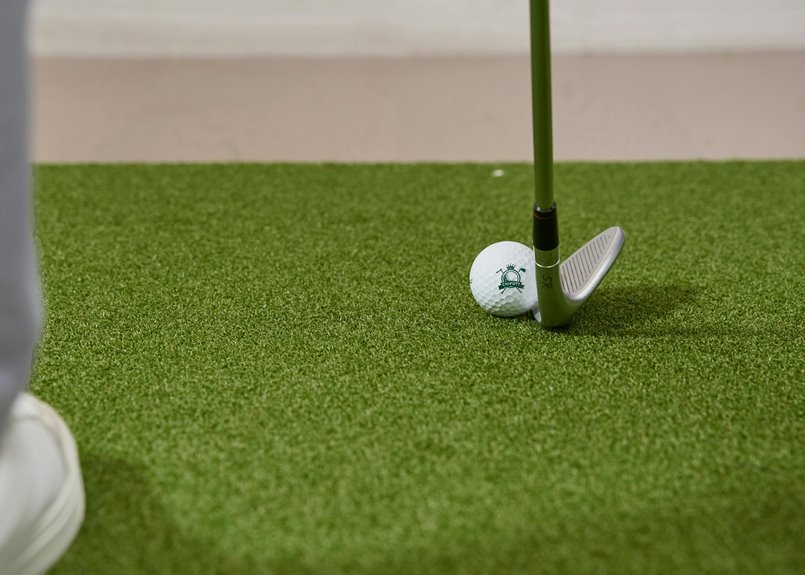

A solid golf setup sends the ball straighter. Alignment, stance, posture, and ball position all shape your direction before the club even moves. Small adjustments here can tighten your aim fast. A few quick checks before each shot can calm doubts and help your swing start on the right line.
Why Golf Setup Affects Shot Accuracy
Because your setup starts the whole chain, it has a huge impact on shot accuracy before the club even moves.
At the moment you build setup consistency, you help your ball flight stay predictable and your shot shape feel familiar. Your grip influence, wrist stability, and swing tempo all work together, so small changes can grow into big misses.
That’s why alignment importance matters, even before impact interactions take over. A calm, repeatable stance gives you better flight control, and it helps you feel part of the shot instead of fighting it.
With the right practice techniques, you can train your body to trust the start line, keep your motion simpler, and play with more confidence.
Over time, your setup becomes your quiet edge, and your game feels more like home.
Set Your Alignment First
You need a clear target line before anything else, because it gives every part of your setup a job.
Next, set your feet parallel to that line so your body doesn’t aim left or right without you noticing.
Then check your clubface against the target, since even a small mistake there can send the ball off track fast.
Target Line Basics
A clean target line is the initial thing that steadies your golf shot, and it often matters more than players believe. You can feel part of the game right away when you pick one clear spot beyond the ball.
Use target line visualization to envision the shot, then match your target line alignment to that vision. Whenever your eyes, clubface, and mind agree, you stop guessing and start aiming with calm purpose.
Keep the line simple, because extra thoughts only crowd your setup. Then check that the clubface points at your chosen start line before you move on. That small habit builds trust, and trust helps you swing free.
With practice, you’ll stand over the ball and feel ready, not rushed, just like your best playing partners.
Feet Parallel Setup
Once you’ve picked that clear target line, the next move is to get your feet working with it, not against it.
Start with foot placement so your toes, knees, and hips feel even and calm. Then set your stance width to match the club, usually narrow enough to stay athletic, but steady enough to keep you from swaying.
As your lower body feels lined up, you can settle in with more trust and less second guessing. You’re not trying to look perfect; you’re trying to feel connected to the shot and ready to move as one unit.
Small setup habits build belonging on the range, because you start to feel like every swing has a home.
Keep it simple, breathe, and let your body stand where your target line already lives.
Clubface Alignment Check
Lock in the clubface initially, because that’s the part most likely to fool you during the moment the rest of your setup feels fine. You can stand well and still miss left or right should the face point off target.
So, before you consider swing path, check the leading edge and match it to your aim point. A square face gives you cleaner starts and better clubface control.
Next, set your feet, hips, and shoulders after the face is right, not beforehand. That order helps you trust your setup and makes shot shaping easier whenever you want it.
Should you rush this step, you’re guessing with your hands. Take one calm look, reset, and feel like you belong over the ball. That small habit saves a lot of frustration.
Square Up Your Feet, Hips, and Shoulders
Keeping your feet, hips, and shoulders square to the target line gives you a cleaner start and a lot more control. Start with foot placement that feels natural, then check body alignment before you swing.
Whenever your stance width fits the club selection, your posture stability stays calm and your swing consistency improves. Keep your shoulders quiet, let your hips match them, and avoid extra hip rotation at address.
A small grip adjustment can help you feel square without forcing anything. Keep your weight distribution even, so you don’t lean into shot shaping accidentally.
Whenever you and your setup work together, the ball has a better chance to launch on your line, and you’ll feel more connected every time you step in.
Build a Balanced Golf Stance
A balanced golf stance starts with your feet about shoulder width apart so you can stay steady through the swing.
Keep your weight centered, not stuck on your toes or heels, so you can move with control instead of fighting yourself.
Add a slight athletic knee bend, and you’ll feel more ready, stable, and confident before the club even moves.
Feet Shoulder Width
Your feet do a lot more than just “stand there” at address. They set your base, and smart foot placement helps you feel ready before the club ever moves.
Keep your stance width about shoulder width for most shots, because that gives you room to turn without feeling stiff or loose. Should your feet sit too close, you might wobble. Should they spread too far, you can feel trapped.
So, stand tall, then let each foot settle naturally under you, like you belong there. From that simple setup, your body can work as one unit.
You’ll notice your swing feels calmer, and your direction often gets cleaner too. Small setup choices can make you feel more confident, and confidence matters.
Weight Centered
Once your feet sit about shoulder width apart, the next step is to center your weight so you feel calm and solid over the ball. You don’t need to lean hard on your toes or heels. Instead, let your weight distribution rest evenly across both feet, with enough pressure to stay steady.
That steady base helps you stay in control as the club moves back and through. Should you feel your body swaying, reset and find balance maintenance again before you swing.
A centered stance also helps you trust your setup, and that trust matters at the moment you want to belong in the group of players who strike the ball cleanly.
Small checks now save messy shots later, and they keep your setup simple, repeatable, and friendly.
Athletic Knee Bend
Each time you add a slight knee bend, your golf stance starts to feel more alive, stable, and ready to move. You don’t need a deep squat, just enough flex to build an athletic stance that feels natural.
Keep your feet grounded, then let your knees soften so your body can balance over the middle of your feet. That small bend gives you better knee flexibility and helps you stay quiet through the swing.
As your lower body feels springy, your upper body can stay relaxed, which makes setup less tense and more connected. You’ll also find it easier to turn toward the target without losing posture.
As your knees stay athletic, you fit in with a better golf posture and give your swing a steady base.
Use Posture That Supports a Clean Swing
What does a clean golf swing really need? It starts with posture that lets you move freely and stay in control.
At the moment you hinge from the hips and keep your spine long, you give yourself posture benefits that help the club travel on a smoother path. That’s where swing efficiency shows up, because your body can turn without extra strain.
Keep your chest relaxed, your arms hanging naturally, and your weight balanced from heel to toe. Also, avoid hunching or standing too tall, since both can make your motion feel cramped.
With this setup, you’ll feel more connected to the shot and more at home in your swing. Small changes here can steady your motion and help you play with more confidence.
Find the Right Ball Position
You can change your shot more than you realize just through moving the ball a little.
Start through learning the basics of ball position, then match the ball to the club you’re using so your swing works with you, not against you.
After that, check your alignment each time so you keep your starts clean and your contact stays steady.
Ball Position Basics
Finding the right ball position is one of the simplest ways to clean up your golf shots, and it often fixes more than you’d expect. You want the ball to sit where your body can deliver it without rushing or reaching. As it drifts too far forward or back, your ball height and swing tempo can feel off, and your contact loses its rhythm.
| Position | Feel |
|---|---|
| Too forward | Thin, high, rushed |
| Centered | Balanced, calm |
| Too back | Low, quick |
| Slightly forward | Smooth, steady |
That small shift helps you stay with the group, because good golfers build trust in setup initially. Check your stance, then let the club swing from there. You’ll feel more control, and your shots can start on a cleaner line.
Club-Specific Placement
Because each club asks for a different setup, the right ball position changes with the shot one wants to hit.
With irons, place the ball near the center of your stance so the club can strike it cleanly.
With a mid-iron, let it sit just forward of center.
With a driver, move it closer to your lead heel because the club height is greater and the club rises through impact. That small shift helps you launch it better without forcing extra effort.
Should you use wedges, keep the ball a touch back for a sharper strike.
Keep your grip angle steady too, because it helps you return the club the same way each time.
Once you match the ball to the club, you feel more in control and part of the shot.
Check Alignment Consistently
Whenever your ball position feels off, your alignment is often the real culprit, so it pays to check both together every time.
Stand behind the ball, pick a target, then set your feet, hips, and shoulders parallel to that line. Next, place the ball where your club can return cleanly, because a small shift can change launch and direction.
Should you use alignment feedback from a mirror or stick, you’ll spot drift before it turns into a bad miss. That kind of setup consistency helps you feel like you belong in your own swing, not fighting it.
Then rehearse the same start line with each club, so your body learns one trusted pattern. A calm routine beats guesswork, and your contact usually gets better fast.
Adjust Your Setup for Each Club
Your setup should change a little from club to club, and that small shift can save you a lot of trouble on the course. At the moment you match ball placement to the club, you help the shot start where you want it and feel more natural.
- Put the ball more forward with longer clubs.
- Move it back a touch with shorter clubs.
- Keep your stance width matched to the club.
- Make small swing adjustments, not big fixes.
This simple rhythm keeps you in the group of players who trust their setup.
With a driver, a slightly forward ball can help you launch it cleanly.
With irons, a centered ball often gives you better control.
The key is staying calm and making one clear change at a time, so your swing can stay smooth and your direction can stay true.
Check Grip Pressure and Hand Position
Start with checking that your hands aren’t squeezing the club like it owes you money. Keep your grip pressure light, so the club can sit naturally in your fingers, not clamp tight in your palms. That calm hold helps you stay relaxed through the swing and gives you better control as the pressure rises.
Next, check your hand positioning on the handle. You want both hands to work together, with the lead hand matching the target line and the trail hand supporting it without crowding.
Once your grip pressure and hand positioning stay steady, you feel more connected to the club and more at home over the ball. That small comfort can make your setup feel repeatable, confident, and ready for a straighter shot.
Fix the Most Common Setup Errors
A few setup mistakes can quietly steal your accuracy before the club even moves, but the positive aspect is that they’re easy to identify once one knows what to check. You’re not alone when your shots start offline from setup drift.
Build setup consistency through checking these four points:
- Feet, hips, and shoulders should feel parallel to the target line.
- Keep ball position steady, since small shifts can change direction and flight.
- Match your stance width to the club, so you stay balanced and centered.
- Set your hands and wrists the same way each time for better impact awareness.
When these pieces work together, you give yourself a cleaner start and a more trusted move.
That’s how you stop guessing and start belonging to the group of players who aim with confidence.
Do Quick Pre-Shot Checks
Three quick checks before you swing can save you from a lot of scratch-your-head misses.
Initially, glance at the clubface and make sure it points where you mean it to start. Then check your ball position, because even a small shift can nudge the shot higher, lower, straighter, or a touch off line.
Next, confirm your feet, hips, and shoulders feel square to the target line. These fast habits fit neatly into your pre-shot routine and keep your mental focus from drifting as nerves try to join the party.
Take a breath, trust the image you built, and let the club do its job. As you stay calm and check the basics, you give yourself a better chance to start the ball on line.
Build a Repeatable Setup Routine
Whenever your setup stays the same, your swing gets a much easier job. You build setup consistency through following the same steps before every shot, and that brings real routine benefits.
Begin with your feet, then square your clubface, then set your posture, then lock in your ball position. This rhythm helps you feel calm, ready, and part of a steady golfer’s group.
- Pick one target initially.
- Place your feet parallel to it.
- Check your hips and shoulders.
- Take one final breath.
As you repeat this order, you waste less energy and trust your motion more. Should your body know the script, you can focus on contact instead of guesswork.
That simple habit makes practice feel friendlier, and your direction gets cleaner without extra stress.
Adjust Setup to Shape Your Shots
Whenever you want to shape a shot on purpose, small setup changes can do a lot of the work before the club even moves. You can move the ball a touch forward for a higher draw, or a touch back for a lower fade, while keeping your clubface calm and square to the target. That’s the heart of shot shaping, and it starts with smart body alignment, not a wild swing.
Keep your feet, hips, and shoulders matched to the line, then let your wrist mechanics support the face you want at impact. As you stay balanced and adjust only a little, you give yourself room to belong in the fairway more often. Trust those setup choices, and the ball flight starts to feel friendlier.
Practice Drills for Straighter Shots
A few simple drills can make your shots straighter faster than trying to “fix” your swing on the fly. As you practice with purpose, you build trust in your setup and stop guessing.
Use alignment aids to square your feet, then check ball adjustment so the club meets the ball cleanly. Next, focus on grip awareness and wrist stability, because both shape your face control and shot path.
- Make half swings to enhance swing consistency.
- Hit short shots with a bucket to feel pressure control.
- Use a preset over-stick drill to study path influence.
- Finish with a left-hand twist drill to sharpen face control.
You’ll start to feel the ball start online more often, and that confidence matters.
Keep the reps easy, repeatable, and honest, and your group will notice the difference.
Frequently Asked Questions
How Does Clubface Angle Change Shot Direction?
The clubface has the biggest influence on shot direction. At impact, its angle largely determines where the ball starts. A square face helps the ball begin straighter.
What Wrist Positions Help Control the Clubface?
Use a stable trail wrist extension and lead wrist flexion, along with a preset wrist hinge. Keep grip pressure light enough to sense the clubface, and you’ll control direction more consistently with the group.
How Should Setup Differ Between Driver and Wedges?
With the driver, set a wider stance, place the ball forward in your stance, and let your swing create the launch. With wedges, shorten your stance, move the ball slightly back, and keep your alignment more compact.
Which Drill Improves Clubface Awareness Fastest?
The left hand twist drill sharpens clubface feedback fastest because you feel the face change right away. Pair it with alignment drills, and you will build confidence, hit with better strikers, and start aiming straighter in fewer reps.
Does Ball Position Affect Shot Height or Just Direction?
Ball placement influences both launch height and shot direction. A more forward ball position can increase launch and slightly promote a draw, while a back ball position can lower flight and encourage a fade. Swing path also plays a role, but small stance changes usually affect direction only modestly.