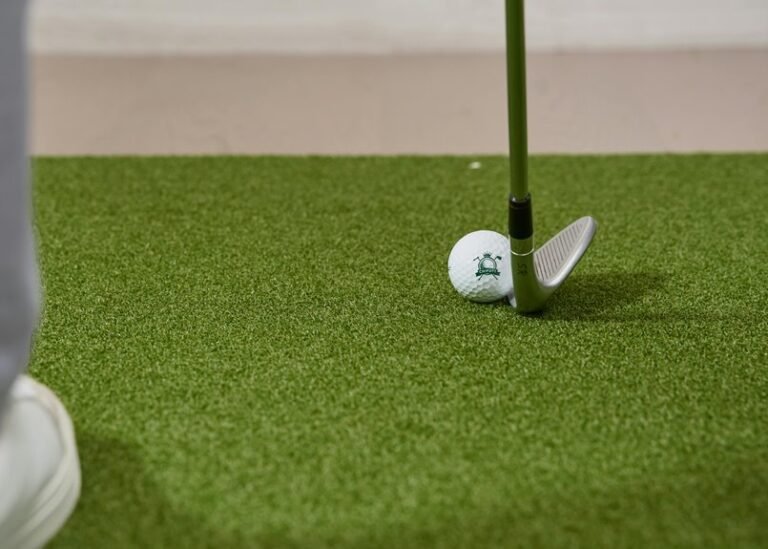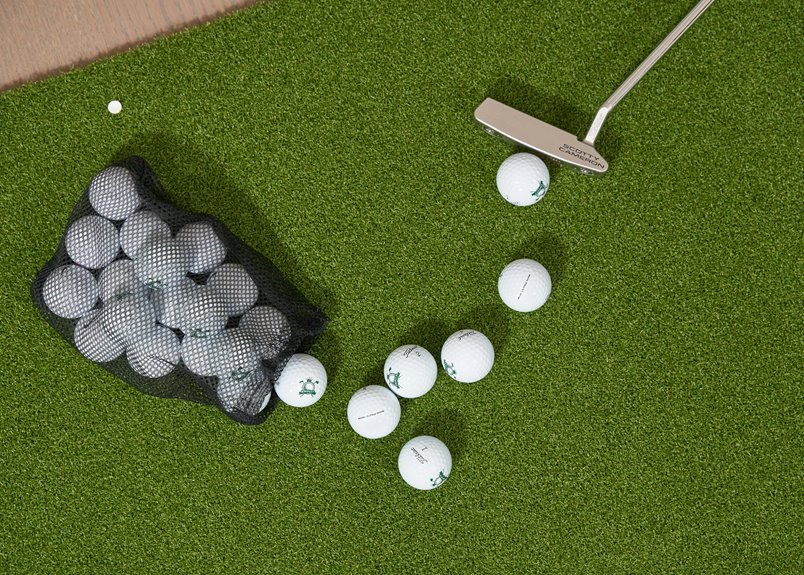

Want better control around the greens? Chipping drills help you save strokes by building cleaner contact and better distance control. Start with a simple practice area and a clear landing spot, then give every chip a purpose. From there, you can sharpen touch, improve strike, and handle tricky lies with more confidence.
Set Up Your Chipping Practice Area
Before you start any chipping drill, set up a small practice area that feels simple and repeatable, because the less you have to contemplate the space, the easier it’s to focus on contact and distance.
You’ll feel more at home once you choose one flat spot and keep it steady. Then compare chipping surface types, like tight grass, thin rough, or a mat, so you know how the club will slide and react.
Next, pick one wedge and use clear club selection strategies that match your usual chip shape.
Lay down a towel, coin, or tee markers to define your space, and leave room to swing freely. As your area stays tidy, your practice feels calmer, and your touch grows more confident with every rep.
Pick a Landing Spot for Every Chip
A smart landing spot makes chipping feel a lot less random, and that’s good news at the moment the pressure is on. You belong in that calm space where target visualization guides your shot selection.
Pick a landing zone on the green, then read the chip path that gets you there. Your club choice should match the carry, the grass, and the bounce you expect.
Keep your mental focus on the spot, not the hole, so your hands stay quiet and your swing rhythm stays simple. With better distance awareness, you’ll trust the scene before you move.
That trust helps you commit, strike cleaner, and feel like you’re playing with the group, not chasing it.
Drill Your Chipping Distance Control
Now that you’ve picked a landing spot, you need to teach your hands how to send the ball there on command. Set up the chipping speed drill with five balls on the same patch of turf, then hit each one to a spot about five yards away. Keep your chipping rhythm steady, and let your upper body do the work.
Next, try the hula hoop drill by aiming at a circle and spacing balls at different distances. This trains distance consistency without guessing. Stay patient whenever one shot runs long or comes up short. You’re building a repeatable motion, and that takes time.
As you practice, trust the same setup, same tempo, and same target image. That’s how your touch starts to feel like home.
Use One-Club Golf Chipping for Feel
Using one club for your chipping practice can make the game feel a lot less messy. You stop chasing every option and start trusting your feel mechanics. Pick one wedge and stick with it for a session, then notice how the same swing sends different shots based on stance and tempo. That steady club selection helps you belong to your own process.
| Focus | Benefit |
|---|---|
| One club | Builds trust |
| Same setup | Sharpens rhythm |
| Small changes | Improve touch |
| Repeated reps | Grow confidence |
You’ll learn faster because your hands, eyes, and body speak the same language. Next, keep your motion simple and listen to the feedback each chip gives you. That calm routine makes practice feel welcoming, not random.
Practice Chipping From Tight Lies
Tight lies punish a lazy strike, so you need to clip the ball initially and let the club skim the turf after impact.
Keep your backswing short and controlled, then stay focused on a precise landing spot so the ball checks up where you want it.
Once you get this right, your chips feel simple again, even at the time the grass looks stingy.
Ball-First Contact
Whenever you practice chipping from tight lies, ball-first contact has to be your main goal, because the club must hit the ball before it brushes the ground. You’ll build trust once you set the ball a touch back and keep your eyes on its back edge.
Then let your stroke mechanics stay simple and steady, so the club keeps moving through impact. That clean strike gives you better chip path and more control on firm turf.
Next, make a few practice swings that skim just over the grass, then hit soft shots with the same feel. Should you miss, don’t panic. Every player in your group has been there.
Keep breathing, stay patient, and chase that crisp contact again. Over time, you’ll groove touch, confidence, and cleaner results around the green.
Compact Backswing
A short backswing can make tight-lie chipping feel a lot less scary, because it gives you more control right away. You’ll feel steadier as you keep the club moving in a compact arc and let your body stay quiet.
Those compact backswing benefits show up fast: cleaner contact, less panic, and a smoother strike.
Try compact backswing techniques like setting your weight forward, turning your chest a little, and stopping the club before it gets too long.
Watch for compact backswing mistakes, like snatching the club back or trying to help the ball up.
For compact backswing drills, hit short chips with your lead arm soft and your tempo calm.
Then repeat from different tight lies until it starts to feel natural and you trust the motion.
Landing Spot Control
As you’re chipping from a tight lie, landing spot control gives you a lot more peace of mind, because the ball is small but the target feels even smaller. Pick a spot, not a hope. Then use target alignment to set your feet, hips, and clubface square to that point. | Drill | Benefit |
| — | — |
|---|---|
| Mark a dime-sized spot | Sharpens landing spot strategies |
| Aim your chest there | Improves target alignment |
| Hit three soft chips | Trains touch and trust |
| Watch the initial bounce | Builds feedback fast |
You’ll feel calmer whenever you repeat the same setup and swing. Keep your weight forward, make a short motion, and let the turf tell you the truth. Should you miss, stay with the group. Everyone learns this part together, and that’s part of the fun.
Add Rough-Lie Chipping Drills
Whenever you move from tight lies into rough, you need to expect the grass to grab the club a little.
You can still make solid contact by hitting down through thick rough and keeping your motion smooth.
With a clean exit, you’ll pop the ball out instead of fighting the turf.
Thick Rough Contact
Thick rough can make a simple chip feel like a small battle, but you can handle it with the right drill work. Try rough lie strategies that keep your chest steady and your hands calm. Use club selection tips like choosing more loft as the grass grabs the face. For mental focus techniques, pick one location on the green and trust it. Your shot visualization practices should envision the ball rising, then landing soft. Here’s a quick guide:
| Lie | Key Move |
|---|---|
| Deep grass | Open stance |
| Heavy grass | Firmer grip |
| Short rough | Shorter backswing |
| Wet lie | More speed |
| Tight target | Hold finish |
Mix in swing adjustment methods, grip pressure variations, and follow through importance. At the moment you set up, make stance adjustments so you stay balanced and connected with your group.
Clean Exit Practice
A clean exit starts with one simple idea: you want the club to brush the turf after the ball, not smash into the ground like it owes you money.
In rough lies, set the ball a touch back, keep your weight on your front foot, and let your chest stay quiet while your arms swing. Those clean exit techniques help the club slide through grass instead of digging.
Next, make small exit angle adjustments by opening the face a little more as the grass grabs the club, or lowering the handle as you need a tighter flight. You’ll feel more control, and that matters while you’re trying to belong to the group of players who get up and down without drama.
Practice three balls from one spot, then move deeper into the rough and repeat.
Improve Chipping Contact With a Towel
Should you keep hitting chip shots fat or thin, a towel drill can help you clean up contact fast.
Place a towel just behind the ball, then test your towel placement so the club must miss it and strike the ball initially. That simple barrier gives you clear feedback and builds better trust.
Whenever you brush the grass cleanly, notice the towel feel in your hands and chest. You’ll sense a shorter, smoother strike instead of a digging hit.
Keep your feet steady, shift a little weight forward, and make small swings with calm rhythm.
In case you clip the towel, adjust your low point and try again. Soon, you’ll feel more control, less panic, and better contact around the greens.
Build Better Chipping Motion With Gates
Gates provide your chip shot a clear path, so one can stop guessing and start building a cleaner motion. Set up two tees just wider than your clubhead, then make your gates setup at the start line and again near impact.
You’ll see right away whether your target alignment drifts, and that instant feedback mechanism helps your chipping precision. Keep your stroke consistency by matching the same swing tempo each time, because the club should pass through without snagging.
As you repeat the drill, your motion fluidity grows, and the ball starts to launch with more control. That gives one better practice efficiency and more execution confidence.
You can also vary the gate width to challenge shot variety while still staying connected to the same simple feel.
Practice High and Low Chips
Each time you practice both high and low chips, you learn how to fit the shot to the green instead of forcing one swing for everything.
Start with a short target, then try a longer landing spot, so you can feel the difference right away.
For high chip techniques, open the face a little, let the club slide under the ball, and make a smooth, steady motion.
For low chip strategies, keep your stance narrow, the ball back, and your hands quiet as you brush the turf.
You’re not chasing perfection here; you’re building trust in your touch.
As you repeat both shots, your eyes, hands, and feet begin to work like a team, and that makes you feel right at home around the green.
Practice Downhill and Sidehill Chips
Downhill and sidehill chips can feel awkward at the beginning, but you can handle them better once you learn how the slope changes the shot. You’re not alone at the moment the ball seems to run away or grab too fast.
Use these downhill techniques and sidehill adjustments to stay calm and connected:
- Set a slightly narrower stance
- Lean your weight to the lower side
- Keep your chest steady through impact
- Choose a shorter backswing
- Let the slope guide the landing
On downhill lies, keep the club moving down the hill and strike cleanly.
On sidehill lies, match your shoulders to the slope and aim a little carefully.
At the time you practice both, you build trust in your touch. Then those tricky slopes start feeling like part of your game, not a surprise.
Test Your Chipping With Scoring Games
You can make chipping practice more fun and useful whenever you turn it into a scoring game.
Try point scoring challenges, up-down competitions, and par-target games so every chip gives you real feedback. These games help you feel pressure, track progress, and build trust in your short game.
Point Scoring Challenges
Once practice starts to feel a little too quiet, point scoring challenges can bring your chipping back to life. You test yourself with scoring strategies that reward smart choices, not just pretty shots. That way, your chipping techniques start to feel useful under pressure, and you don’t practice alone in your head.
- Give one point for landing inside a towel-sized zone.
- Add two points for stopping the ball past the hole.
- Lose a point should you miss your target line.
- Switch clubs and compare results.
- Track your best round and try to beat it.
This game gives you a small crew feeling, even while you’re on your own. You stay focused, laugh at a bad bounce, and keep learning.
Up-Down Competitions
Pick scoring variations that reward a chip and one-putt, or add pressure scenarios through starting from rough, tight lies, or downhill spots. Keep a consistency focus, because the same setup helps you trust your mental approach whenever nerves show up.
Should you practice with friends, teamwork interactions can keep everyone honest and upbeat. Track every result, too, so performance tracking shows where you save shots and where you leak them.
That way, you build skills, confidence, and a crew that gets the grind.
Par-Target Games
Turn practice into a mini scoreboard, and chipping gets a lot more useful fast. You can test par target strategies through setting practice objectives for each lie, then track scoring methods like par, bogey, or save.
Choose smart target selection, observe distance assessments, and rotate chipping variations from tight grass, rough, and fringe.
- Pick one hole as your par target.
- Hit three balls and score each finish.
- Judge shot execution by landing spot and roll.
- Use feedback mechanisms right away.
- Repeat with another club or slope.
This keeps you honest and gives you a crew-like challenge, even while you’re practicing alone.
Should one pattern keep missing short, adjust your setup before the next round. Your observations will show which chips need more touch, and that makes your next session feel sharper, calmer, and more connected.
Frequently Asked Questions
How Do I Fix a Yips-Like Release on Chip Shots?
Fix it by simplifying the chip: keep a Y shaped setup, lighten your trail hand, and let the club move through the ball. If the release feels stuck, use a simple yips explanation and a steady pre shot routine to calm the mind, restore rhythm, and rebuild trust in the motion.
Which Ball Position Should I Use for Different Chip Trajectories?
Place the ball left under your armpit for higher, spinnier chips, at your sternum for a neutral bounce, and under your right armpit for lower, running chips. That placement helps you control the flight.
How Can I Stop Chunking and Blading My Chips?
Keep your weight on your lead side, place the ball slightly back in your stance, and keep your hands ahead of the clubhead to help prevent chunked chips. Chunking usually happens when the low point falls behind the ball. To avoid blading, let the club brush the turf after contact and keep your chest turning through impact.
What’s the Best Drill for Keeping a Triangle Shape in Chipping?
Use the Y or Triangle Drill to keep the triangle shape intact during chipping. Hold the structure in your arms and chest, reduce wrist hinge, and let your shoulders control the motion. That steady setup helps you stay connected and repeat the same contact more easily.
How Do I Practice Chipping Feel Without Changing Clubs?
Use one club and change only the length of the swing and the target distance, like in a speed drill. Keep the tempo smooth, pay attention to how each shot feels, and repeat the same routine before every ball.