
The short game is crucial in golf. Mastering it can help you save strokes and improve your overall score. Many golfers struggle with shots around the green. Common issues include poor chipping or misjudging distance. By focusing on specific short game techniques, you can tackle these challenges head-on. Let’s dive into the skills that will make a real difference in your game!
Key Takeaways
Master your short game to save strokes and improve your overall golf score.
Focus on key areas like wedge play, distance control, and technique fundamentals for better performance.
Practice specific drills regularly to enhance your chipping and putting skills.
Avoid common mistakes like overthinking shots and poor alignment to boost your accuracy.
Keep a practice log to track your progress and stay motivated in your short game improvement.
Short Game Basics
The short game is a vital part of golf. It includes all the shots you take from around the green, typically within 50 yards. This area of your game can make or break your score. Here’s a quick look at what the short game encompasses:
Aspect of Short Game | Description |
|---|---|
Definition | The short game involves shots played from around the green, typically under 50 yards. |
Included Shots | Putting, chipping, pitching, bunker shots, and specialty shots. |
Key Areas of Focus
To improve your short game, focus on these key areas:
Wedge Play: Wedge shots account for nearly half of all strokes in a typical round. Mastering these can significantly lower your score.
Distance Control: This is essential for accuracy with wedges. It improves your chances of getting up and down from around the green.
Technique Fundamentals: Proper technique in chipping and pitching includes weight distribution and ball position control. These basics can make a huge difference in your performance.
Importance of Mastery
Mastering the short game can lead to significant score improvements. Techniques developed by experts like James Sieckmann show that golfers can reduce their scores by 4 to 6 strokes. Many amateur and professional golfers have shared testimonials about how focusing on their short game transformed their play. By honing your skills around the green, you not only save strokes but also gain confidence in your overall game.
Golf Chipping Tips
Grip and Stance
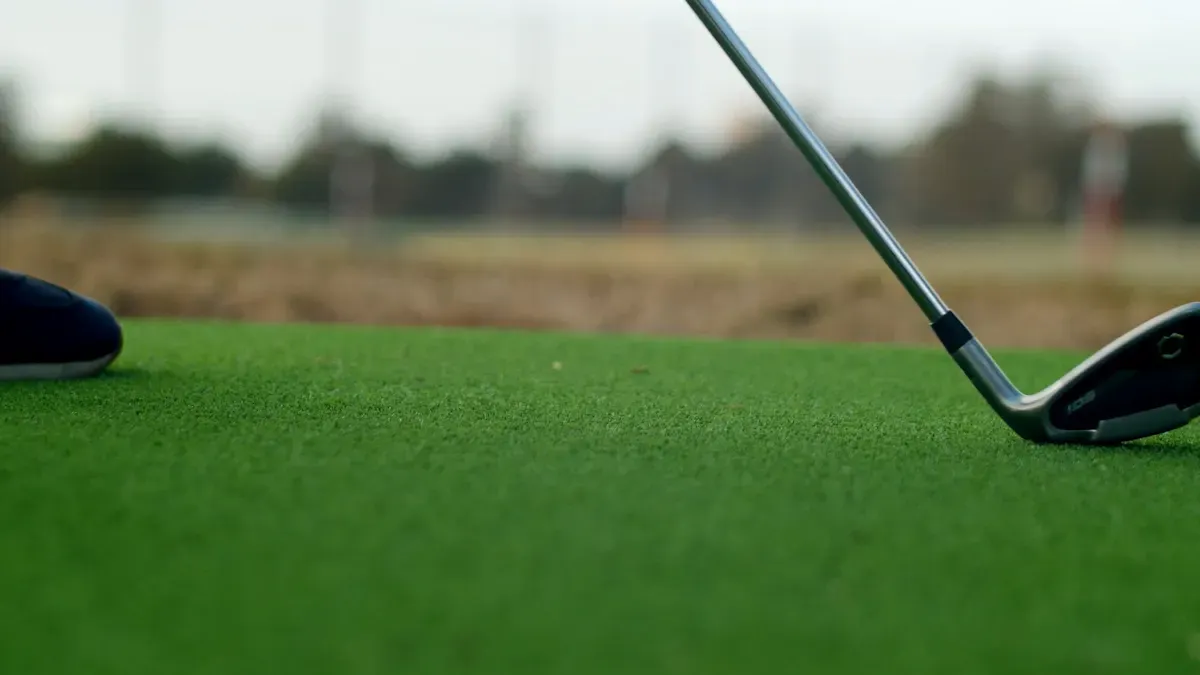
When it comes to chipping, your grip and stance play a crucial role in your success. A solid grip helps you maintain control over the club, while a proper stance sets you up for a consistent shot. Here are some key tips to keep in mind:
For short grass, keep the same grip pressure as when you putt. This helps maintain a smooth stroke.
If you’re in the first cut of grass, slightly tighten your lead hand. This keeps your wrists locked during contact, which is essential for accuracy.
In deeper grass, tighten your lead hand but allow your wrists to flow freely. This will help with acceleration through the shot.
“Place the back of the lead hand facing the target and the palm of the trail hand facing the target too! This is simple, effective, and easy to repeat for all skill levels.”
Shot Planning
Good chipping isn’t just about technique; it’s also about planning your shot. Here are some effective strategies to consider:
Using the one-swing method: Position the ball in the middle of your stance and grip down slightly. This setup helps you maintain consistency across different shots.
Swing technique: Keep your swing controlled. Move the club back and through to knee height without hinging your wrists. This creates a reliable motion.
Follow-through: Adjust your follow-through based on the ball position. This will help you achieve the desired shot height and roll.
To enhance your adaptability, try the one-club method. Use just one club and make different swings based on the situation. This approach improves your feel for the shot. Additionally, consider adjusting your ball position to control the shot trajectory. Move the ball back for low shots, keep it in the middle for standard chips, and shift it forward for higher shots.
By focusing on these golf chipping tips, you can improve your chipping game and save valuable strokes around the green.
Pitching Techniques
When you’re around the green, mastering your pitching technique can make a world of difference. Pitch shots are essential for getting the ball close to the hole, especially when you need to carry hazards or rough. Let’s break down the different types of pitch shots and how to choose the right club for each situation.
Shot Types
There are several types of pitch shots you can use, depending on the situation. Here are the primary ones:
Pitch Shot: This shot flies higher and stops quickly. It’s perfect for carrying rough, bunkers, or uneven lies before reaching the green.
When to use it: From 30–50 yards or when you need to clear obstacles.
How to hit it: Use a lofted wedge, control your wrist hinge, and maintain smooth acceleration through impact.
Understanding these shot types helps you adapt to various situations on the course.
Club Selection
Choosing the right club for your pitch shot is crucial. Here are some factors to consider:
Lie of the ball: Is it sitting cleanly or in thick grass?
Type of grass: Different grasses can affect how the club interacts with the ball.
Distance to the target: Know how far you need to carry the ball.
Desired trajectory and spin: Decide how high and how much spin you want on the shot.
To select the right club, follow these steps:
Assess the lie: Determine if the ball is sitting cleanly or if grass will interfere.
Choose the appropriate club based on the lie: Use a higher loft for deeper rough and a lower loft for clean lies.
Adjust your technique: Change your ball position or swing path based on the lie.
For example, if you have a clean lie, you might opt for a 7-iron to allow for a smooth roll. However, if the ball is in fluffy grass, switching to a sand wedge ensures clean contact and a controlled trajectory.
Also, varying your ball position can influence the trajectory and spin of your pitch shots. Great pitchers often take very little divot, flight the ball low, and create high spin rates. Lower trajectory shots are easier to gauge than higher ones. When struck correctly, lower trajectory shots will have more spin than higher lofted ones.
By mastering these pitching techniques, you’ll find yourself saving strokes and feeling more confident around the green.
Putting Techniques
Reading Greens
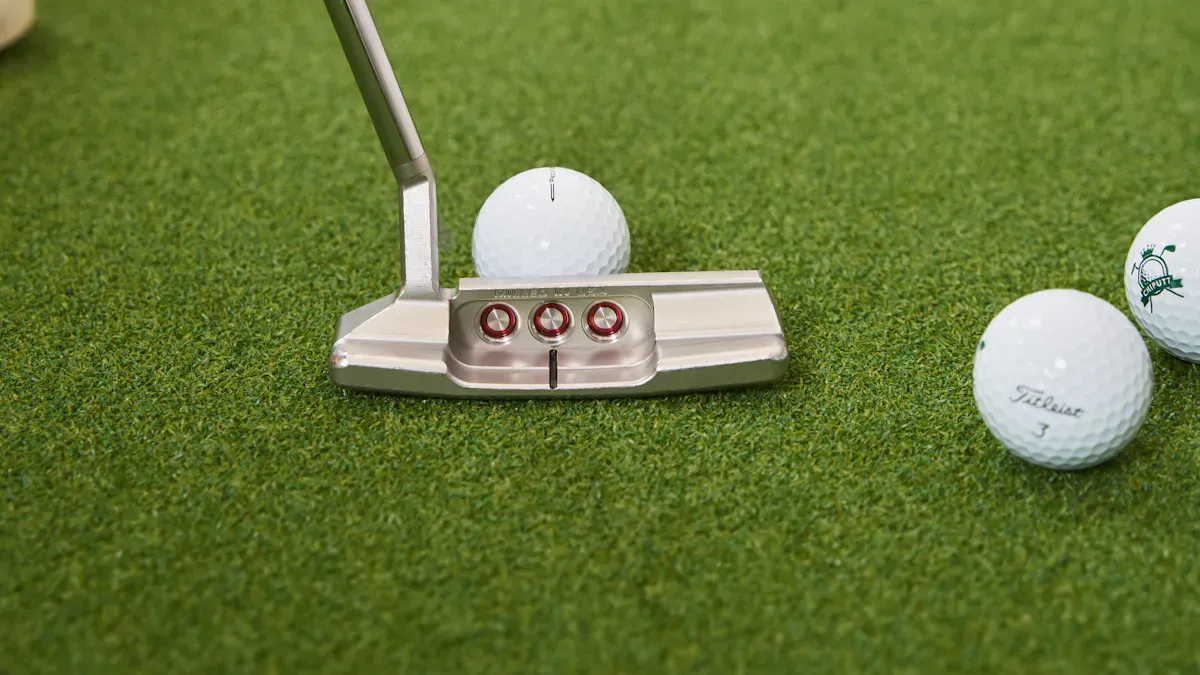
Reading greens effectively can elevate your putting game. Here are some key elements to consider:
Trace a line: Visualize the entire line of your putt as a trace. This helps you see the path the ball should take.
Find the apex: Focus on the highest point of the putt. This is where you should aim to ensure a smooth roll.
The ‘hole’ approach: Aim outside the hole to make the putt feel straight. This mental trick can help you stay relaxed.
Understanding the grass grain is also crucial. It affects how the ball rolls and breaks. Pay attention to environmental factors like sunlight and shadows, as they can impact your perception of the green. You might even try the plumb-bob technique to gauge slope.
When reading greens, remember these steps:
Identify the high point of the green to determine where the ball should break.
Consider the speed of your putt; faster putts break less than slower ones.
Visualize the ideal path the ball should take to reach the hole.
Stroke Fundamentals
A consistent putting stroke is vital for success. Here are some fundamental components to keep in mind:
Establish a practice routine: This helps you identify and improve weak spots in your stroke.
Implement a pre-shot routine: This ensures mental and physical consistency before each putt.
Manage pressure effectively: Staying focused during putting can make all the difference.
By mastering these putting techniques, you’ll find yourself more confident on the green. Remember, the more you practice reading greens and refining your stroke, the better your scores will be!
Practice Drills for Improvement
Improving your short game takes practice, and specific drills can help you sharpen your skills. Here are some effective chipping and putting drills to enhance your performance around the green.
Chipping Drills
Ladder Drill: Set up several balls at increasing distances from your target. This drill helps you practice various distances and improves your feel for chipping.
Clock Face Drill: Place balls around a clock face. This drill enhances your direction and distance control, making it easier to chip accurately.
Hula Hoop Drill: Chip the ball to land within a hula hoop. This sharpens your precision and helps you focus on your target.
Up-and-Down Challenge: Chip from different spots and try to make the putt. This simulates real course scenarios and improves your overall short game performance.
Tip: To maintain proper arm and club position during chipping, use an alignment stick. This simple tool can help you develop consistency in your technique.
Putting Drills
10 Yard Chip Drill: Focus on hitting a target 10 yards away. This drill teaches you the feel of the shot and how to control distance, which is crucial for reducing strokes around the green.
Pressure Putt-Off Drill: Add a competitive element by challenging a friend. This drill simulates pressure situations and helps you stay calm during actual rounds.
To see measurable improvement, practice these drills regularly. Aim for three times a week, spending 30 to 90 minutes per session. Consistency is key to mastering your short game!
Practice Frequency | Duration per Session |
|---|---|
3 times per week | 30 to 90 minutes |
By incorporating these drills into your practice routine, you’ll find yourself saving strokes and feeling more confident around the green.
Common Mistakes to Avoid
Overthinking Shots
Overthinking can be a real game-changer, and not in a good way. When you start to analyze every little detail of your shot, you might lose your natural rhythm. Studies show that athletes often struggle when they focus too much on mechanics. This can lead to a breakdown in performance, especially in high-pressure situations.
Here are some common pitfalls of overthinking:
You might hesitate before taking your shot, which can lead to poor execution.
Focusing too much on your swing mechanics can disrupt your fluid movement.
You may find yourself ‘choking’ under pressure, causing you to miss easy shots.
Instead of overanalyzing, try to keep your focus external. Concentrate on your target rather than your swing. This shift can help you maintain your confidence and improve your performance.
Poor Alignment
Alignment is crucial for accuracy in your short game. Many golfers overlook this aspect, leading to missed shots and higher scores. Here are some common alignment mistakes:
Standing too far from the ball can throw off your swing.
Poor weight distribution can lead to a lack of control during your shot.
Misaligned feet and shoulders can cause you to aim off-target.
To improve your alignment, consider these tips:
Stand closer to the ball than you would for a long shot.
Position the ball under your sternum and distribute your weight slightly forward (60/40 or 70/30).
Use alignment sticks during practice to ensure consistency.
By avoiding these common mistakes, you can enhance your short game and save valuable strokes on the course. Remember, a little attention to detail can go a long way in improving your overall performance!
Improving your short game is essential for scoring well on the golf course. By focusing on techniques like chipping, pitching, and putting, you can save valuable strokes around the green. Remember these key takeaways:
Practice specific drills that target your weaknesses.
Keep a log of your practice sessions to track your progress.
Embrace creativity in your short game instead of overthinking.
By implementing these tips and drills, you’ll see real improvement in your game. So, get out there and start practicing! Your scores will thank you.
FAQ
What is the short game in golf?
The short game includes all shots played from around the green, typically within 50 yards. It involves chipping, pitching, and putting, and is crucial for lowering your overall score.
How can I improve my chipping skills?
To improve your chipping, focus on grip, stance, and shot planning. Practice drills like the Ladder Drill and Clock Face Drill to enhance your distance control and accuracy.
What should I consider when selecting a club for pitching?
When choosing a club for pitching, consider the lie of the ball, the distance to the target, and the desired trajectory. A higher loft is better for thicker grass, while a lower loft works for clean lies.
How often should I practice my short game?
Aim to practice your short game at least three times a week. Spend 30 to 90 minutes per session focusing on chipping, pitching, and putting drills to see improvement.
What are common mistakes in the short game?
Common mistakes include overthinking shots and poor alignment. Focus on maintaining a relaxed mindset and ensure your stance and grip are correct to improve your performance.