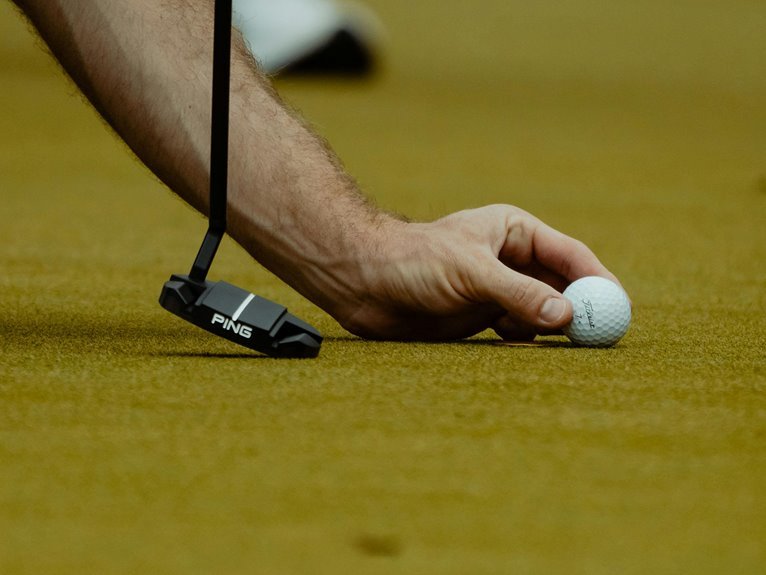

Reading a green starts with three things: slope, grain, and speed. Those clues work together to show how your putt will roll. A simple routine helps you pick a target and read the line from more than one angle. With a little practice, putts feel clearer and your confidence goes up.
How to Read a Golf Green
Reading a golf green gets easier once you stop guessing and start looking at the whole scene. You can walk to the putt, then pause behind your ball and take in the visual cues around the cup, the slope, and the land between.
Next, visualize the ball path as it leaves the face and rolls toward the hole. Then move to the low side and compare what you see from another angle. That shift helps you trust your read instead of chasing doubt.
You don’t need fancy words or perfect eyes, just steady attention and a calm routine. As you gather the scene from a few spots, you feel more connected to the putt and less alone over it.
Look for Slope, Grain, and Break
Before you ever take the putter back, you need to spot the three things that shape the roll: slope, grain, and break.
Start with slope assessment through looking at the green from behind the ball and from the low side. That angle helps you see tilt better and feel where the putt wants to wander.
Then check grain effects by noticing how the grass shines and which way it leans. Grain can add a touch of move or take some away, so don’t ignore it.
Finally, trace the break from start to cup and visualize the ball curving through that line.
At the time you read all three together, you give yourself a calmer, smarter putt and a better chance to join the players who trust their reads.
Judge Green Speed Before You Putt
Before you putt, you need to judge how fast the green will let the ball roll, because firmness changes everything.
Feel the surface with your feet, observe the grain direction, and watch how a test putt moves so you can trust your read.
Once you match speed to slope, you’ll make better calls and avoid those maddening tap-ins that stop short.
Read Green Firmness
When you judge green firmness, you give yourself a much better chance to choose the right pace and line. You can test it by tapping a few steps with your putter or foot. Soft turf usually holds the ball a bit, while firm turf lets it roll sooner. That matters because green moisture and surface texture change how fast your putt starts moving.
| Clue | What it means |
|---|---|
| Soft feel | Slower start |
| Firm feel | Quicker roll |
| Damp touch | Less skid |
| Dry snap | More speed |
| True bounce | Trust your read |
When you notice these signs, you fit in with calm players who trust the ground. Then you can set a smoother stroke and feel more settled over the ball.
Spot Grain Direction
Whenever you spot grain direction, you give your eyes and hands a big head start on the putt. Look for grain patterns in the turf color, shine, and leaf tilt, because they tell you which way the grass wants to lean.
Should the surface look darker, the grain might run toward you. Should it look lighter and slick, it often runs away from you. That grain effect can add a little speed with the slope or steal a bit when it fights the break.
Test Putt Roll
A quick test putt roll can save you a lot of guesswork, because it shows you how fast the green really is today. You’re not trying to hole it; you’re learning the pace your group can trust. Roll one ball from each side of the hole and watch how far it finishes. Use calm test putt mechanics: smooth stroke, same length back and through, and no jab. That simple rhythm helps your distance control later.
| Roll | Result | What you learn |
|---|---|---|
| Short | Stops prematurely | Green is slow |
| Medium | Reaches cup line | Speed feels true |
| Long | Runs past | Green is quick |
After that, your read feels less lonely and more shared, like you’ve got the green on your side.
Choose an Aim Point for Your Putt
Pick a stable location on the green that your eyes can trust, then use it as your aim point instead of staring at the hole.
At the moment you line up to the break line, you give yourself a clear target that matches the slope and the pace of the putt.
That simple choice can calm your mind and help you start the ball on the right path.
Pick A Stable Target
Because every good putt starts with a clear visual, you need to choose one stable target before you ever pull the trigger. That target selection gives you a stable focus, so your mind stops wandering and your stroke can stay calm.
Pick a small location on the green, like a dark blade, a tiny spot, or a subtle mark, and trust it. Then hold that visual in your mind while you settle over the ball. As you stay with one clear point, you feel more connected and less rushed.
That shared sense of purpose helps you play with the group, not against it, because confidence grows as you know exactly where you’re sending the ball. Keep your eyes quiet, your thoughts simple, and let that target guide your next move.
Align To Break Line
Now that you have a steady target, you need to place your aim point on the break line so the putt starts on the right path. You’re not guessing here. You’re matching your slope assessment to where the ball should begin turning.
Pick a spot a few inches in front of the ball, then visualize the roll from that point to the cup. Should the green tilt more, move your aim point a touch farther away from the hole. In case the slope feels mild, keep it closer.
This simple choice helps you trust the read and stay calm. You belong on the green when you read with purpose, not panic. So breathe, lock on your spot, and let your stroke send the ball there.
Read Putts From Multiple Angles
When you read a putt from multiple angles, you give yourself a much clearer view of what the ball will do. You’re not guessing alone out there. You’re building trust in your read, one step at a time.
Start behind the ball, then move to the low side, and finally check the hole from both sides. Each angle adds a small clue, so your angle viewpoints stay honest and complete.
As you walk, notice how the slope changes and let that shape your feel. Then visualize the path from start to finish, as though the ball’s already rolling true.
This simple routine helps you settle in, because you know you’ve looked, felt, and confirmed the line like a steady part of the group.
Avoid Common Green Reading Mistakes
One of the easiest ways to miss more putts is to trust your initial look and stop there, so you need to slow down and catch the little mistakes that creep into green reading.
You’ll avoid common errors at the moment you check the putt from both sides and trust visual cues like slope, grain, and shine.
Don’t let mental blocks make you guess prematurely or talk yourself out of a solid read. Instead, compare what you see behind the ball with what you feel from the low side, then commit.
Simple practice routines, like tracing the break with your eyes and hitting putts from different angles, help you build trust fast.
As you stay patient, you fit in with confident players who read greens well and roll it smoother.
Frequently Asked Questions
How Do I Know When to Trust My First Read?
Trust your first read once you have checked it from 25 to 30 yards, from the low side, and from behind the ball. On 1 to 4 percent slopes, your first impression usually stays true.
Can Aimpoint Work on Very Fast Greens?
Yes, AimPoint can be used on very fast greens, but you need more precise reading and a lighter touch with your AimPoint process. On quicker surfaces, small slope changes matter more, so give extra attention to pace, start lines, and break. Blend your AimPoint read with your feel and practice on fast greens until your distance control becomes consistent.
How Much Should Grain Change My Putt Read?
Grain usually changes your read by a small amount, but it still matters. Check the putt from both sides of the hole, then make a slight adjustment: give it a little more break when you are putting with the grain, and a little less when you are putting against it.
What if I Cannot See the Break From Behind the Ball?
If the break is hidden from behind the ball, do not guess at it. Step to the low side, check the line from the hole, and use the slope to picture the roll. A second view can reveal what the first one misses.
How Often Should I Practice Reading Greens?
Practice reading greens in every round and add one short session each week. Use visual aids, note the green speed, and rehearse from different angles so you feel more confident and in tune with your playing group.