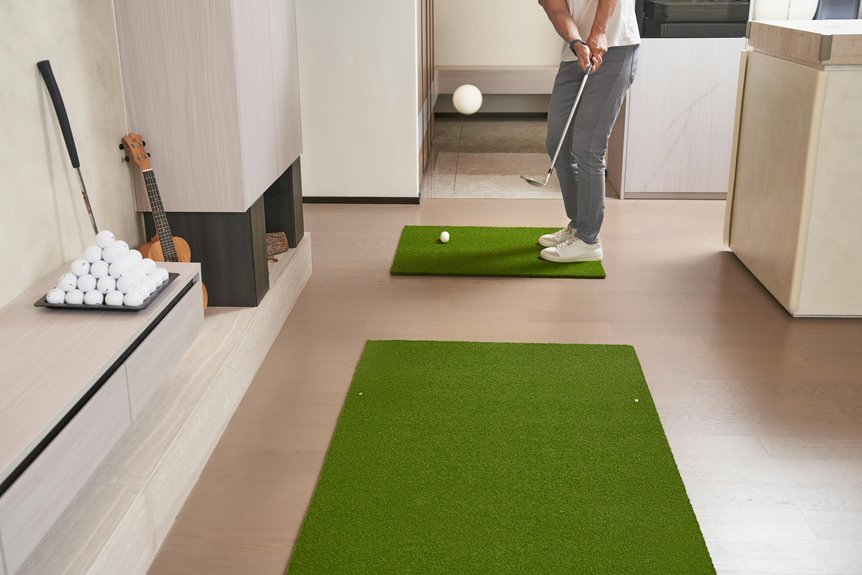

Tired of a swing that feels a little off? Golf practice drills can clean up setup, alignment, contact, wedge distance, and focus under pressure. They help turn random range sessions into real improvement. Use the right drills, and every ball starts pulling more weight for your game.
How to Choose Golf Practice Drills
So, how do you choose golf practice drills that actually help your game? Start with the one shot that costs you the most strokes.
Should your contact slip, pick drills that sharpen face control and strike. Should your speed stall, use speed work built around drill specificity, not random swings.
Next, match the drill to your time, because practice consistency matters more than a perfect plan you never repeat.
Then, keep one clear goal for each session, like better tempo, tighter starts, or more distance. You’ll improve faster as each rep feels useful and measured.
Finally, choose drills you can stick with, so practice feels like your group, not a solo grind. That way, you stay confident, connected, and ready to play better.
Why Warm-Up Drills Improve Every Swing
Warm-up drills improve every swing because they wake up the parts of your body and mind that make golf work together.
You get warm-up benefits that show up fast: better swing efficiency, smoother muscle activation, and steadier rhythm as you step in with your group.
They also support injury prevention through easing tight muscles before you hit harder shots. As you repeat a simple routine, you build routine consistency, so your body knows what comes next and your mental focus stays sharp.
- Start with easy motion.
- Add bigger turns for flexibility improvement.
- Feel energy enhancement before the initial ball.
- Keep your pace calm and confident.
That shared prep helps you feel ready, connected, and part of a golfer’s flow.
Golf Practice Drills for Better Setup
Good setup starts before the club ever moves, so you need to check your alignment initially and make sure your feet, hips, and shoulders point where you want the ball to start.
Next, place the ball in the right spot for the club you’re using, because a small shift can change contact fast.
Then stand tall with soft knees and steady balance, so you feel ready instead of rushed or stiff.
Setup Alignment Basics
Before you chase more club speed or cleaner contact, you need a setup that gives every swing a fair chance. Good alignment fundamentals help you feel calm, ready, and part of the same rhythm as the players you admire.
Start with these setup techniques:
- Lay a club on the ground to point at your target.
- Set your feet, hips, and shoulders parallel to that line.
- Relax your arms so you don’t crowd the ball.
- Check that your chest matches your aim, then breathe.
When you repeat this routine, you build trust in your motion. That trust lets you step in, swing freely, and stay connected to your practice group.
Small setup habits can feel simple, but they make every drill work better.
Ball Position Check
A simple ball position check can save you from a lot of messy swings. You stand over the ball, then set it just inside your lead heel for driver, center for mid-irons, and a touch back for wedges.
That small change helps your club meet the ball at the right time and keeps your impact alignment cleaner. Should shots start flying thin, low, or off the toe, glance down before you chase a new fix. You’ll often find the answer right under your feet.
Use one club, make three calm rehearsals, and feel where the ball sits in your stance. Then hit a few balls and notice the contact.
Whenever you keep this check simple, you’ll feel more steady, more included in your own swing, and a lot less frustrated.
Posture and Balance
Whenever your posture is dialed in, your whole swing feels easier, because your body can turn without fighting itself. You’re not alone should setup feels tricky; small posture adjustments can make the club feel natural.
Initially, hinge from your hips, soften your knees, and let your arms hang. Then keep your chest tall and your weight centered over your feet.
Next, use these balance drills to check your base:
- Stand still for five seconds before you swing.
- Rock gently from heel to toe.
- Make slow practice swings without losing your spine angle.
- Finish with your front foot stable and your eyes steady.
Whenever you stay grounded, you build trust in your setup. That calm feeling helps you join the rhythm your group wants.
Train Your Alignment With Target Practice
Good alignment starts as soon as you give your eyes and body one clear job: aim at a real target and keep your swing tied to that line.
You belong on the range whenever you use alignment drills that start with target visualization. Pick a flag, then place alignment sticks beside your feet and clubface so your setup matches the shot.
Next, hit a few balls while you check whether your start line stays true. Keep your practice routine simple: choose one target, one stance, and one swing thought.
Then switch targets and repeat, because small changes teach you to trust your aim under pressure. Over time, you’ll feel less guesswork and more control, like you’ve finally joined your own swing team.
Build Solid Contact With Towel Drills
You can use a towel under your arms to keep your body connected and stop your swing from getting loose.
Then try a towel behind the ball so you learn to strike it initially and brush the turf after.
Together, these towel drills help you build cleaner contact and more solid ball flight.
Towel Under Arms
A towel under your arms can do more than just keep your elbows tucked in. With this towel technique, you feel arm positioning that supports swing consistency and tension reduction.
It also helps grip stability, body alignment, rhythmic motion, and follow through focus. You’re not fighting the club alone; you’re building a smoother move with the group.
- Place a small towel under both arms.
- Make slow half swings and keep it secure.
- Notice at the moment your chest and arms move together.
- Finish balanced, with the towel still in place.
If the towel drops, your arms got too loose or too busy. Stay calm, breathe, and let your body lead the club.
This simple drill gives you a friendly check on contact without turning practice into a chore.
Towel Behind Ball
Whenever the ball keeps popping up thin or too far off the turf, the towel behind ball drill can help you feel solid contact fast.
Place a small towel just behind the ball, then make normal swings without clipping it. That towel placement pushes you to strike the ball initially and the grass second. You’ll start to sense where the club bottoms out, and that impact feedback gets clear right away.
In case you hit the towel, move it a touch farther back and keep going. Use short irons initially, then try a few mid irons.
Stay relaxed, breathe, and let the drill coach your hands and body together. A few clean reps can make you feel like you belong in every fairway group.
Improve Ball Striking With Tempo Drills
Good tempo is one of the fastest ways to improve ball striking, because it helps your body and club work together instead of fighting each other.
At the moment you build tempo rhythm, you make contact feel smoother and your swing consistency rises with it. You don’t need to muscle the ball. You need a steady count that keeps you in control.
- Start with five slow waggle swings.
- Count “one-two” on the backswing and “three” into impact.
- Match your finish to a balanced pose.
- Repeat with mid irons, then drivers.
As you keep the pace even, your strike gets cleaner and your group can feel like a real crew on the range.
That shared rhythm builds trust, and trust builds better golf.
Golf Practice Drills for Short Game Control
After you’ve built a steadier swing with tempo, your short game needs that same calm rhythm, because touch around the green comes from control, not force.
In your short game, start with simple feel practice. Drop three balls at different spots and use rhythm drills to match each lie.
Next, work on distance control with touch shots that land softly and roll out the right amount.
Then, add lag putting from longer range so your pace stays steady under pressure situations.
Keep your hands quiet, your pace smooth, and your eyes on the target.
These scoring techniques help you save strokes and stay confident as pars matter most.
Whenever you practice this way, you join the group of players who trust their touch and handle tight moments with calm, steady skill.
Sharpen Putting Distance Control
Should you want to shave strokes off your score, putting distance control is one of the best places to start. You’ll feel at home once you build simple putting techniques that match each green.
Try these distance strategies:
- Pace 10-footers with a smooth stroke.
- Match longer putts to a bigger backswing.
- Keep your eyes on the target and trust the roll.
- Repeat each drill with practice consistency, not rushed guesses.
As you work, keep mental focus on the ball’s speed, not just the line. That shift helps you leave fewer second putts and stay calm with your group.
Whenever you practice this way, you’ll build confidence fast, and the putter starts to feel like a friend in your hands.
Practice Wedge Gapping on Purpose
Whenever you practice wedge gapping on purpose, you stop guessing and start building a club set that truly fits your game.
Start with gap analysis: hit each wedge to know your wedge distances, then match club selection to your common yardages.
| Club | Carry |
|---|---|
| 48° | 95 yd |
| 52° | 85 yd |
| 56° | 75 yd |
This simple map helps your shot selection and keeps flight control steady. Use a consistency focus and repeat the same motion, then observe what changes after each session.
Your practice frequency should be enough to keep feedback loops fresh, even should that mean a short range visit twice a week.
You’ll feel more settled when your wedges cover tidy gaps, because that’s what makes the whole group belong to your swing.
Use Pressure Drills to Test Your Focus
Pressure drills give your wedge work a real job to do, and that’s where your focus gets evaluated. You step in with pressure scenarios, and you learn to trust your focus techniques whenever the clock feels loud.
Try this simple set:
- Hit one ball to a tight target.
- Reset only after a full breath.
- Add a score goal for each try.
- Switch targets to force distraction elimination.
These concentration exercises build mental resilience because they feel like real golf, not a cozy warm-up.
Whenever performance anxiety shows up, that’s okay. Use your competitive mindset, keep your routine short, and lean on stress management.
Whenever you practice this way, you join the players who stay calm, clear, and ready when the group is watching.
Track Practice Results Over Time
You should record the key numbers from each practice, like swing speed, contact quality, and putts made, so you can see what’s really changing.
Then compare your results week after week to spot small gains before they turn into bigger improvements.
At the time you track it this way, you’ll know which drills are helping and which ones need more work.
Record Key Metrics
Because golf practice can feel messy at the beginning, tracking a few key metrics gives you a steady way to see real progress.
Whenever you record metrics after each session, you and your golf buddies can spot what’s working without guessing. Keep it simple and honest.
- Club speed on your fastest swings
- Fairway or target hits during driver work
- Putts made from 10, 20, and 30 feet
- Solid contact rate on wedges and irons
Write these down in one notebook or phone entry, then track progress after every range trip. That small habit builds trust in your process and keeps you connected to your improvement.
In case a drill feels off, the numbers tell you where to stay patient and where to push a little harder.
Compare Weekly Trends
Comparing weekly trends transforms your practice observations into a useful story instead of a random pile of numbers.
Whenever you review weekly progress, you spot what’s really moving. Look at your performance metrics side by side, then ask whether your skill assessment matches how you felt on the range.
Should your training consistency remain solid, your trend analysis becomes clearer and your improvement benchmarks feel fair, not dreamy. That helps you protect practice efficiency, because you can repeat what works and drop what doesn’t.
You’ll also make better goal-setting choices, since each week provides you a small checkpoint with your golf crew. Keep it simple, honest, and steady.
Over time, the patterns will direct you toward smarter reps, calmer confidence, and real change.
Fix Common Golf Practice Mistakes
Even strong golfers slip into bad practice habits, and that’s normal, not a sign that your swing is broken. You’re just seeing common errors that can improve with a smarter mental approach.
Keep your practice efficient through using feedback mechanisms, like video, ball flight, or a coach’s eye, so you know what changed. Then protect swing consistency with a simple plan:
- Pick one drill.
- Give it a clear goal.
- Track results after each set.
- Switch drills before focus fades.
That mix helps your practice efficiency, time management, and performance tracking all at once.
Add drill variety only once it supports skill retention, not once you’re bored. Should you stay with your group and use focus techniques, you’ll build better habits, feel calmer, and train with more purpose.
Frequently Asked Questions
How Often Should I Do Speed Training Drills Each Week?
Do speed training drills 2 to 3 times each week. Keep each session to 10 to 20 minutes so you can improve speed while avoiding burnout.
Can Speed-Only Sessions Hurt My Accuracy Long Term?
Yes. If you chase speed without balancing accuracy, you can ingrain sloppy swing mechanics. Over time, that can lead to missed fairways and inconsistent contact.
How Many Balls Should I Hit in a Driver Speed Session?
Hit 10 to 12 balls during your driver speed session. Start with a short warm up, then make 10 full speed swings, and finish with 2 smoother shots. This keeps your driver mechanics sharp while helping you hold your rhythm.
What’s the Best Way to Track Clubhead Speed Gains?
You’ll track gains best with a launch monitor or radar, recording clubhead speed and related metrics after each session. Compare your averages over time, look for upward trends, and note which swing changes produce faster, cleaner strikes.
When Should I Progress From Drills to On-Course Practice?
Move on when you can repeat the drill for the full time without falling apart and your sessions consistently produce solid contact, steady balance, and matching speed. That is the point to take it onto the course, start aiming at real targets, and test it with friends.