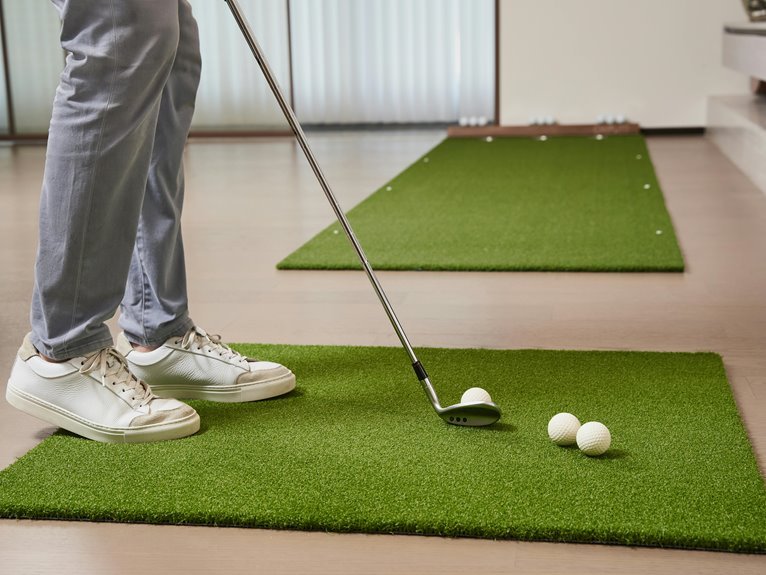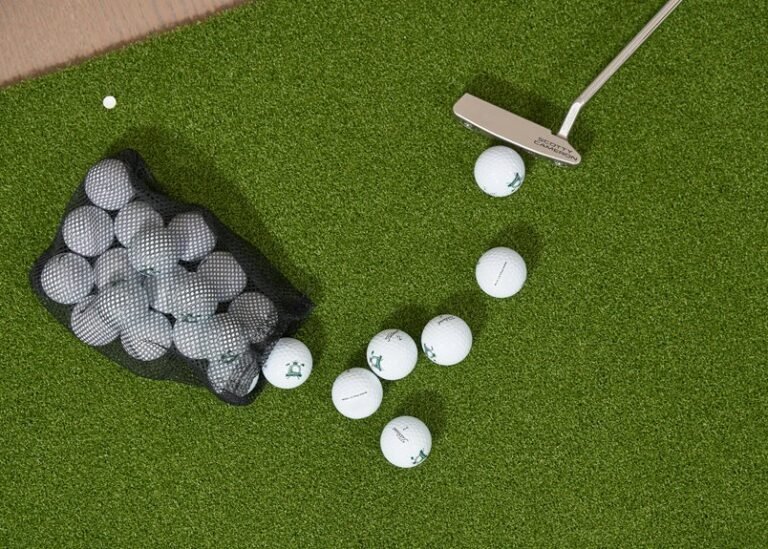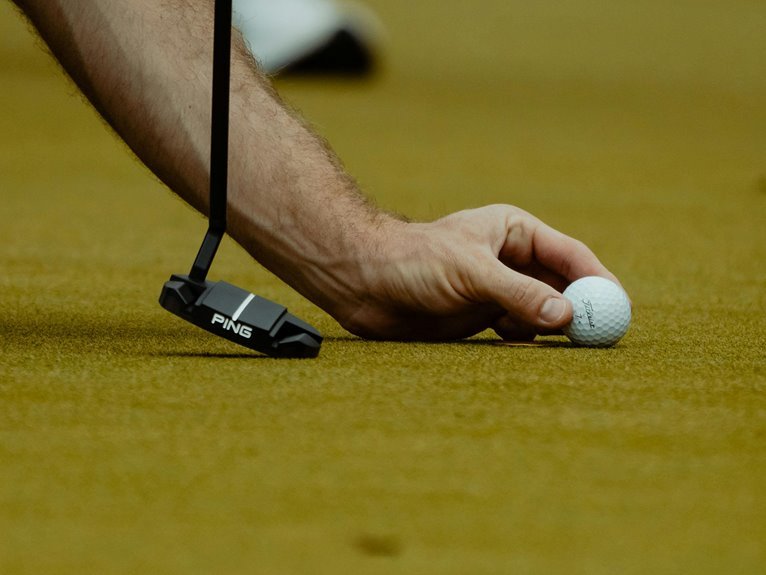

Want better accuracy on the green? Start by reading the slope and choosing a clear target line. Set up with a steady stance and square putter face. Roll the ball with smooth speed and a relaxed stroke. Small habits like these can make short putts feel much easier.
Read Greens Before You Putt
Before you roll the ball, you need to read the green with care, because a putt is never just a straight line to the cup. Your green reading starts with surface texture, slope analysis, and shadow assessment, so you can spot how the ball might drift.
Then check grain influence, light conditions, and wind effects, because these quiet details can change the roll more than you expect. Next, trust the visual cues around the hole, such as worn patches and subtle color shifts.
After that, build line visualization in your mind and match it with honest distance judgment. At the time you do this, you’re not guessing alone. You’re joining every clue the green gives you, and that makes your putts feel more confident, calmer, and far less lonely.
Set Up a Solid Putting Stroke
You can set up a stronger putting stroke as your grip feels natural and your posture lets you stay balanced over the ball.
Next, line up your eyes and shoulders so they point along the target line, because that makes it easier to start the putter on track.
Once those pieces work together, you’ll feel more confident before you even swing.
Grip and Posture
A solid putting stroke starts with a grip and posture that let your body stay quiet and your putter face stay square. Keep your grip pressure light, like you’re holding a bird you don’t want to scare. Set your hand placement so both palms work together, not against each other.
Then build a calm body posture with a steady spine angle and soft knees. Choose a stance width that feels balanced, not stretched. Check wrist alignment so they stay firm through the stroke, and let your arm positioning hang naturally under your shoulders.
Once you set up this way, you give yourself a simple, repeatable motion. You’ll feel more in control, and that confidence can help you roll the ball with a smoother touch and a friendlier pace on the green.
Eye and Shoulder Alignment
Your eyes and shoulders do a lot of quiet work in putting, and as soon as they line up well, the whole stroke feels simpler.
Check your eye dominance initially, because it helps you see the target line with less guesswork. Then let your shoulder alignment run parallel to that line, not open and not closed. This keeps the putter moving on a clean path.
Next, lower your head without reaching, so you stay relaxed and balanced. A small mirror or a trusted practice partner can catch small shifts fast.
At the time you repeat the same setup, you start to feel like you belong on the green, not like you’re fighting it. That calm fit builds trust, and trust helps you roll the ball with a smoother, steadier stroke.
Master Putting Distance Control
Distance control can quietly make or break your putting, because even a well-aimed putt still needs the right pace to finish near the hole. You can learn that feel through watching the ball, listening to the roll, and trusting your touch. Small reminders from each putt give you useful distance feedback, so you start to sense how far the ball will travel on different greens.
- Use tempo drills to keep your stroke smooth.
- Take practice swings before you step in.
- Match your backswing to the putt length.
- Try to leave misses just past the cup.
Whenever you stay calm, your pace gets clearer, and your group feels the same steady rhythm on the green. That shared feel helps you belong out there, even while putts get tricky.
Aim Better With a Simple Routine
Before you putt, check your face, feet, hips, and shoulders so they all point where you want the ball to start.
Pick a tiny aiming target one to two feet in front of the ball, then use that same setup every time so your eyes and body learn the line.
Once you trust this simple routine, you’ll aim with more calm and far less guesswork.
Pre-Putt Alignment Check
Should you want to start making more putts, a simple pre-putt alignment check can save you a lot of frustration. You can feel like part of a steady group as you check your aim the same way each time.
Initially, place the putter face square to your target line. Then let your feet, hips, and shoulders match that line. Use visualization techniques to envision the ball rolling over your chosen path, and pick a marker one to two feet ahead of the ball. That tiny target keeps you clear and calm.
- Check the face initially, because it matters most.
- Stand parallel, not open or closed.
- Trust your eyes, then confirm with alignment drills.
- Keep your focus on the line, not on tension.
Repeatable Aim Routine
How do you make your aim feel automatic every time you putt? You build a repeatable aim routine that starts the same way each time.
Initially, pick your target, then use alignment techniques to square your feet, hips, and shoulders. Next, choose a close spot in front of the ball, because that keeps target focus sharp.
Then, use visualization strategies to see the ball rolling on that line. This mental preparation calms nerves and supports aim consistency.
During practice, repeat the same practice patterns so your body learns the feel. After each round, use feedback analysis to spot tiny misses and guide routine refinement.
Whenever you trust your steps, you stop guessing and start feeling like you belong over the ball. That steady rhythm makes every putt easier to own.
Square Your Putter Face at Impact
At the moment you square the putter face at impact, you give your ball the best chance to start on line and roll true. Trust face alignment, and let impact precision come from simple stroke mechanics, not extra effort.
Keep your ball positioning steady, your body posture calm, and your grip pressure light. That small calm helps you feel swing rhythm and tempo control, which supports putting consistency.
- Pick one aim visualization, then match the face to it.
- Set your shoulders with the target line.
- Hold the putter so the sweet spot meets the ball.
- Check that your hands stay quiet through impact.
When you repeat this setup, you belong to the players who make cleaner contact and fewer unsure misses. Each putt feels more settled, and that confidence grows fast.
Use Speed to Read Breaks
Because break is easier to trust as you know the speed, you can use pace as your initial reading tool on any putt. Start with speed reading through noticing how firm the green feels under your feet and how fast the ball should travel.
Then match that pace to the slope, because a quicker putt will break less than a dying one. For break assessment, envision the ball’s roll, not just the hole, and let speed guide where it starts.
You’ll feel more settled when you read the green this way, because the line makes sense with the tempo. In case the putt feels tricky, give yourself one clear start spot and commit to the pace.
That calm choice helps you fit in with smart putters who trust the green.
Build Confidence With Short Putts
Short putts can rattle even calm golfers, yet they also give you a great chance to build real trust in your stroke. Whenever you treat each one like a small promise, short putt confidence starts to grow.
Use consistency drills like the 3-Foot Circle Drill, then pair them with mental focus and a simple routine development plan. Before you step in, check your target line and do quick break assessment, so you feel settled with the read.
Next, visualize the ball starting on line and rolling true with visualization practice. Then trust your acceleration technique and let the putter move through impact.
- Pick one aim spot near the hole.
- Repeat the same setup every time.
- Keep your eyes quiet and steady.
- Roll a few extra reps with friends.
Avoid Common Putting Mistakes
You can lose easy putts whenever you rush the stroke, because a quick motion usually hurts tempo and touch.
You also need to set up with clear aim, since even a small face-angle error can send the ball off line.
Rushing the Stroke
As the putter starts moving too fast, the whole stroke can lose its calm rhythm and the ball often pays the price. You keep better stroke tempo once you slow your mind and trust your hands. That calm builds mental focus and helps technique refinement.
Try these small habits:
- Use breathing control before you start.
- Make routine adjustments that feel natural.
- Practice consistency with short, steady swings.
- Lean on visualization techniques for the roll.
Once pressure rises, don’t chase the putt; guide it. A smooth pace lets you feel the head move through the ball, not at it.
Should you rush, you usually tighten up and lose touch. Stay patient, stay with your group, and let the stroke finish on time.
Poor Aim Setup
A bad aim setup can wreck a putt before the stroke even starts, so this is where calm golfers save the most strokes. You belong to the players who win here through checking aiming techniques before every roll.
Pick a target one to two feet ahead, then use visualization exercises to see the ball’s path. Next, lock in body alignment so your feet, hips, and shoulders match the line. At the moment you do that, target awareness gets sharper, and your mental focus stops drifting.
From there, trust your stroke rhythm and keep the face square for better impact consistency. Simple practice methods, like aiming at the same small mark, help you build confidence fast.
Then your setup feels natural, not forced, and your putts start looking like they fit right in with the group.
Practice Putting Drills That Work
Great putting practice starts with drills that train the same skills you need on the course, not just busy work on the mat. You’ll get better as you mix putting drills that build grip techniques, stroke consistency, and mental focus.
Start with alignment exercises and pick a spot just in front of the ball so your body learns the line. Then add visualization practice so you can envision the roll before you swing. Use impact training with a gate drill to find the sweet spot, and keep your tempo control smooth.
- Try ladder drills for distance judgment
- Use a 3-foot circle for pressure
- Keep follow through techniques steady
- Repeat short sets, then reset with purpose
Turn Better Putting Into Lower Scores
As you turn better putting into lower scores, the small details start to matter in a significant way. You feel that shift as your visualization techniques stay clear and your mental preparation quiets doubt.
Next, use alignment methods to aim the face, then trust stroke mechanics that keep your shoulders steady. Tempo control and rhythm practice help you roll the ball with a smooth, repeatable motion, while impact consistency gives each putt a true strike.
Then your distance awareness improves because putting drills teach you how far the ball wants to travel. As you build confidence through each calm rep, you stop chasing perfect strokes and start playing with your group. That belonging feels good, and it shows on the card, too.
Frequently Asked Questions
How Do I Choose the Right Putter Length for My Posture?
Putter fitting starts with your address position. Stand as you would on the green, let your arms hang freely, and find a length that places your eyes directly over or just inside the ball line. Try different shaft lengths until your shoulders stay loose and the putter feels balanced through the stroke.
What Grip Pressure Helps Improve Putting Consistency?
A light to moderate grip pressure usually helps you roll putts more consistently. Hold the putter firmly enough to keep it steady, but not so tight that your hands lock up. Test different grip styles and pressure levels until your hands feel stable, relaxed, and in sync with the stroke.
How Often Should I Replace My Putter Grip?
Replace your putter grip every 12 to 24 months, or sooner if it feels slick, cracked, or stiff. Regular care and a well made grip can improve your touch and give you a steadier feel on every putt.
Does Green Grain Affect Putt Speed on All Courses?
Yes, green grain can change putt speed, but its effect varies from course to course. Each green plays differently because grain, slope, and grass type all influence how quickly the ball rolls.
How Can I Practice Putting Without a Full Practice Green?
You can work on putting at home with a putting mat or a piece of carpet. Aim at a cup, coin, or marked line, then check your putter face and start the ball on that path. Repeat the stroke until your contact and aim feel consistent.