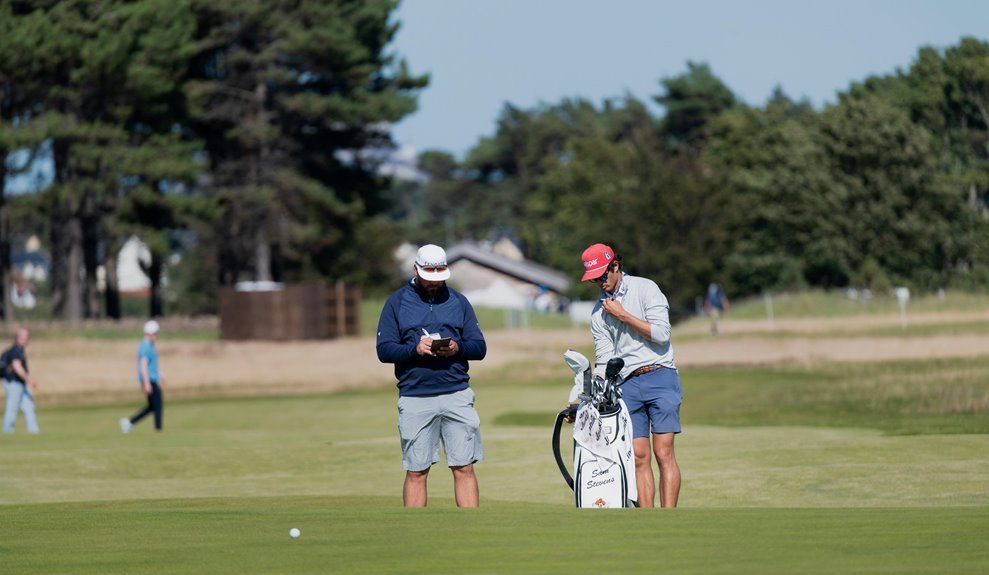

Lower your golf scores by playing smarter, not harder. Aim at safer targets and give your misses a place to land. Skip the hero shot and trust a simple plan. On windier holes and tight approaches, calm choices can save strokes fast.
Think Through Every Shot
Every shot asks for a quick but honest plan, and that’s where good golf starts. You don’t need a perfect swing; you need a clear visualization. Use shot imagery to see the ball flight, the landing spot, and the next move.
Then make a simple risk assessment. Ask yourself whether the brave choice really helps your score, or just feeds your ego. You’ll feel calmer whenever you match the club to your comfort, not the fantasy.
Also, trust your routine, because it keeps your mind quiet and your body ready. Whenever you contemplate each shot this way, you join a smarter kind of golfer, one who belongs on the course with purpose, patience, and a little grit.
Choose Safer Tee Targets
Now that you’ve learned to contemplate through each shot, the next smart move is picking a tee target that keeps trouble out of play. A safe teeing strategy helps you start calm and stay in the group, even as the wind nudges you. Use these target selection tips to choose a line you trust, not the one that looks heroic.
| Tee choice | Why it helps |
|---|---|
| Center cut | Gives you room for normal misses |
| Wider side | Lets you avoid trouble and stress |
| Comfy club | Matches your swing and builds confidence |
As you pick a target you can own, you feel part of the round, not a visitor. That little shift can quiet nerves and keep your swing free, which is pretty handy as the course tries to talk back.
Aim for the Fat Side of the Green
A smart green light starts with one simple habit: aim for the fat side of the green. Whenever you face green targeting, pick the widest section and let that calm you down. Your shot selection gets easier because you’re not chasing a tiny window. Instead, you’re giving yourself room to miss and still stay in play with the group. That choice helps you trust your swing, breathe, and commit.
In case a pin sits near trouble, ignore the cute hero line and choose the safer landing area. You’ll often leave a longer putt, but you’ll also avoid the ugly chip that ruins momentum. Smart players know this: the middle of the green feels boring, yet it usually feels like home.
Make Smarter Layup Decisions
You need to check the yardage to your layup target before you swing, because a smart number can save you from a tricky next shot.
Pick the layup that gives you the best angle into the green, not just the shortest path down the fairway.
Once you choose the right spot, you give yourself a calmer, cleaner approach and a much better chance to score.
Assess Layup Yardages
Smart layup yardages can save more strokes than a perfect-looking full swing ever will. You use layup strategies through checking distance estimation to the safe zone, then shaping shot selection around hazard awareness and risk management.
Whenever you know the carry, you can pick a club choice that stops short of trouble and still leaves a comfortable number. Next, match that number to your scoring mindset and shot planning, so you’re not guessing under pressure.
Course familiarity helps you trust the yardage card, but your eyes still matter. Also, watch how different spots change your approach angles on the next shot.
In case the wind shifts or the hole feels tricky, you don’t force it. You choose the smart lane, stay with the group, and give yourself a calm, playable next swing.
Favor Best Approach Angle
One smart layup can set up a far easier shot than a longer one ever could. You want ideal angles, not ego. Whenever you face a par 5 or a tight par 4, choose approach strategies that leave the cleanest next swing. In case a bunker guards the left side, aim so your ball finishes right of it. Should the pin sit back, favor the wider side of the green.
| Layup choice | Better result |
|---|---|
| Middle of fairway | Safer wedge in |
| Open side | Easier approach angle |
| Shorter is smarter | Fewer misses |
That’s how you stay in the group and keep your game calm. Pick the spot that opens the green, then trust it.
Read Wind, Slope, and Ground Conditions
You need to read the wind before every shot, because even a light breeze can push the ball off line or change how far it flies.
You also need to watch the slope, since uphill, downhill, and sidehill lies all affect your club choice and swing.
As the ground feels firm or soft, adjust for extra roll or less bounce so your ball finishes where you expect.
Wind Direction Awareness
Upon the wind starting to move, your normal yardages can feel a little slippery, so you need to read more than just the flag. Check tree movement, listen for rustling, and notice how your ball flies on the range.
Strong wind effects can turn a smooth swing into a guessing game, so trust weather considerations before you choose a club. Into the breeze, add a little more club and make a calmer swing. With the wind, take less club and stay committed.
In the event that the air crosses your line, aim for the side that helps the ball drift home. You’ll feel more settled at the time you plan with the group, because smart wind reads help everyone play with confidence and belong out there.
Slope And Firmness
A few small quirks in the ground can change a good shot fast, so slope and firmness deserve your full attention.
You can read slope management through watching how the ball will feed after it lands, not just where you aim it. Should the green tilt away, land it short and let it release. Should it tilt toward you, plan for extra spin or a higher bounce.
Then notice the firmness impact under your feet and under the ball. A soft fairway grabs the shot, while a firm surface sends it skidding, sometimes like it has a rush hour meeting.
Play Safer Around Hazards
When hazards start framing the hole, safer golf usually wins the day because one clever swing can save you from a big number. You belong out there, and your hazard awareness starts before you swing.
Scan bunkers, water, and rough, then do a quick risk assessment: ask what miss still keeps you in play. Aim where the trouble fades, not where the pin tempts you. Should the safe side leave a longer putt, that’s fine. Satisfaction can wait.
Trust your routine, pick a target with space, and commit without rushing. Whenever you feel tense, breathe, smile, and give yourself room to miss small. That calm choice keeps you connected to the round and to the players beside you.
Choose Clubs for Distance Control
Good distance control starts with understanding how far each club really carries for you, not just how far you wish it would go.
You can then match the club to the shot you need, whether that’s a full swing, a smooth layup, or a controlled approach.
Wind, slope, and lie can change everything, so you’ve got to factor them in before you commit.
Know Carry Distances
Grasping your carry distances gives you real control over the golf course, because the club in your hands should match the shot you can actually repeat, not the one you hope shows up on a perfect day.
Whenever you know how far each swing flies in the air, your club selection gets simpler, and you stop guessing under pressure. That matters because clean contact today mightn’t look the same tomorrow, so you need numbers you trust.
Start with learning your carry with every club on calm days, then write down the real yardages for full swings and easy swings.
After that, build your plan around those numbers, so you can stand over the ball feeling calm, connected, and part of the group that plays smarter, not harder.
Match Clubs To Shots
Your best golf shots come from matching each club to the shot you actually need, not the biggest number you wish you could hit.
Whenever you face a yardage, choose the club that gives you the safest landing and the easiest next move. That’s smart club selection, and it keeps your shot strategy calm and clear.
In case a full swing feels rushed, go one club longer and make a smooth move. Should you only need position, take the shorter club and trust your tempo.
You’ll feel more in control whenever each choice fits the task, and your group will notice that steady rhythm. Better choices build trust, and trust makes the game feel like yours again.
Pair distance control with purpose, and you’ll stop fighting holes and start playing with your crew.
Factor Wind And Lies
Once the wind picks up or the ground feels tricky, you can’t just grab your usual club and hope for the best. You need wind adjustments that match the day, because a hard breeze can steal distance or push the ball offline.
So take one extra club into a headwind, and choose less club as the wind helps you. Then check lie evaluations before every swing.
From thick rough, a buried lie, or a downhill stance, the ball won’t launch the same way, so your distance control changes fast. You belong on the fairway, not in surprise mode, so trust the setup, make a smooth swing, and pick the club that fits the lie, the wind, and the shot you want.
Plan Your Miss on Every Approach
A smart approach shot starts before you swing, because every good golfer plans where the miss should go. Whenever you use miss management, you stop chasing perfection and start giving yourself room to score.
Smart targeting means picking the safest side of the green, then trusting that choice with full commitment.
- Aim away from trouble, not at it.
- Choose the widest landing area.
- Favor the side with an easy chip.
- Use one clear target, not two.
- Commit and swing freely.
That simple habit helps you feel calmer with every iron shot, and it also keeps you in the group that knows golf is easier when you play together in spirit.
In case the flag looks tempting, recall that the center often protects your round better than a risky dart.
Manage Risk on Par 5s
Even on the easiest scoring holes, par 5s can turn messy fast should one get greedy too soon. You do better whenever you pause for risk assessment before each shot.
Ask whether the reward truly beats the trouble waiting near water, bunkers, or a tight landing zone. Then choose strategic conservatism when the hole asks for it. A smooth fairway wood or hybrid often keeps you in the group plan, where birdie still feels alive.
Should the fairway open, you can press. Should it close, you can lay back with confidence and keep the hole from snowballing. That kind of calm choice helps you belong to the players who score smart, not loud.
Stay patient, trust your distance, and let the hole give back what it can.
Keep a Simple Scoring Plan
A simple scoring plan can save your round anytime your swing feels shaky or the course starts to push back. You don’t need magic, just clear scorecard management and a steady strategic mindset.
Pick one smart goal for each hole, like two-putting, hitting the green, or escaping with bogey, and let that shape every club choice.
- Aim for center targets.
- Protect the big number.
- Take easy pars as they’re available.
- Trust safer layups.
- Keep your pre-shot routine.
As you feel pressure, shrink the plan instead of forcing a hero shot. That keeps you connected to the round and to your group.
You’ll feel calmer, play faster, and give yourself more chances to belong in the low-score conversation.
Frequently Asked Questions
How Do I Build a Pre-Shot Routine That Stays Calm Under Pressure?
Set your pre shot routine like a reliable pocket watch: breathe, pick your target, picture the shot, and commit. Use focused breathing and clear visualization to steady your mind, then step in with a single intention and a calm sense of control.
What Should I Do When My Swing Feels off During a Round?
Simplify your swing by making one small correction at a time, aim at wider landing areas, and stick to the pre shot routine that got you to the course. Focus on clean contact and a repeatable ball flight. Stay patient, protect the scorecard, and you will keep yourself in the mix with steady play.
How Can I Improve My Short Game to Save More Pars?
You can save more pars by tightening your chipping contact and building a reliable putting routine. Focus on landing chips in a specific landing zone, then rehearse five to ten foot putts until your stroke starts rolling the ball on line. Stay committed to each read, keep your setup consistent, and trust the process you have practiced.
When Is It Smarter to Choose a Safer Club off the Tee?
Choose the safer club off the tee when hazards pinch the landing area, the fairway narrows, or a miss brings real trouble. A more conservative choice helps you stay in play, gives you clearer targets, and rewards thoughtful decision making.
How Do I Pick a Consistent Shot Shape to Avoid Double Crosses?
Choose one shot shape and commit to it. Match your swing path to that shape, trust your setup and target, and practice it until it becomes your dependable pattern on the course.