
Better golf accuracy starts with a repeatable swing and a clear target. Small setup changes can tighten your misses right away. Picking the right club and keeping a smooth tempo helps shots fly straighter. Smart course choices and honest feedback from each round can turn scattered shots into more fairways and greens.
Build a Reliable Pre-Shot Routine
Whenever you want to hit more accurate golf shots, a reliable pre-shot routine can calm your mind and set your body up the same way every time.
You belong on the tee when you give yourself the same steps before every swing. Start with a steady breath, then look at the target and choose a clear start line.
Next, use pre-shot visualization to envision the ball flying there. After that, step in, set your feet, and check your grip and posture.
Keep a consistent routine, because your body learns trust from repetition. In case nerves sneak in, smile and reset instead of rushing.
Soon, each shot feels less like a guess and more like a familiar walk with your own game.
Aim Smaller to Hit More Fairways
Should you want to hit more fairways, aim smaller than the whole fairway. You don’t need to chase perfection; you need target focus. Pick a tree, bunker edge, or a safe stripe and use strategic aiming. That sharper target selection gives you mental visualization and calmer swings. | Choice | Result |
| — | — |
|---|---|
| Aim small | Better direction |
| Pick one spot | Less doubt |
| Use precise alignment | Cleaner start line |
| Trust a refined approach | More control |
| Keep focused practice | Stronger habit |
When you practice, rehearse that image and swing to it. Over time, your mind learns precise alignment and your body follows. You’ll feel like you belong in the fairway, not flirting with the rough like it’s a long-term relationship. Small targets make big fairways easier to trust, and that trust brings more solid tee shots.
Fix Misses With Better Alignment
Now that you’re aiming smaller, the next step is to make sure your body points the club at that target the same way every time. Use alignment drills on the range so your feet, hips, and shoulders match your target line.
Then check visual cues like a spot in front of the ball, because target focus gets easier when you can see it. In case your shots still leak, try small grip adjustments and a few stance variations, but keep body alignment simple and repeatable.
Mental imagery helps too. Visualize the swing path starting on your line, then trust it. Build practice consistency with feedback mechanisms such as alignment sticks, mirror checks, or a phone video.
At the moment you stay calm and set up the same way, you feel like part of the fairway crew.
Choose the Right Tee Club
Choosing the right tee club can make your whole round feel calmer, because the club you pick shapes everything that comes next.
Whenever you build your tee box strategy, you give yourself a better initial step and a more comfortable path to the fairway. Should the hole ask for control, choose a fairway wood, hybrid, or long iron instead of forcing driver. That choice helps with distance management, since shorter, cleaner tee shots often leave you a fuller view of the green.
You’ll also stay with the group whenever the hole feels narrow, which can ease pressure and keep you in rhythm. Pick the club that matches the hole and your game, and you’ll feel more settled, more capable, and more at home on the tee.
Improve Golf Accuracy With Smooth Tempo
A smooth tempo can do more for your golf accuracy than a hard swing ever will, because it gives your body time to repeat the same motion over and over. You don’t need to chase speed to belong with the better ball strikers.
Instead, build swing rhythm with simple tempo drills, like counting “one-two-three” as you move back and through. That calm pace helps you stay relaxed, square the face, and keep the club on a steadier path.
Whenever you feel rushed, your contact gets loose and your confidence drops fast. So breathe, grip the club lightly, and let your motion flow.
With enough practice, your swing starts to feel familiar, and that familiar feeling makes every shot easier to trust.
Set Up Better for Accurate Iron Shots
As you prepare for an iron shot, your ball position matters more than you may realize.
Check that your feet, hips, and shoulders line up square to your target, then settle into a balanced posture so you can swing with control.
A clean setup won’t swing the club for you, but it does make solid contact feel a lot easier.
Ball Position Basics
Getting your ball position right can make your iron shots feel a lot easier and a lot more repeatable. Whenever you use smart ball placement tips, you give your body a fair chance to strike the ball cleanly.
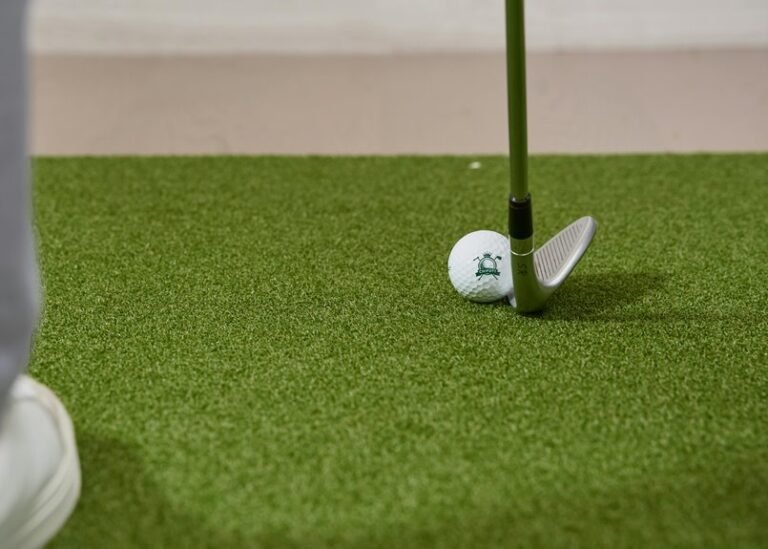
Start with a proper stance, then nudge the ball just ahead of center with mid irons. That small change helps you compress the ball and keep your divot after the strike.
- Short irons: keep it near center.
- Mid irons: move it one ball forward.
- Long irons: place it a bit more forward.
You’ll fit in with better ball strikers when your setup stays simple. In case the ball creeps too far back, you might hit low, sharp shots. Should it sit too far forward, you can lose control.
Keep it steady, breathe, and trust your setup.
Alignment Checkpoints
Because good iron shots start long before impact, your alignment can make or break the whole swing. You want your feet, knees, hips, and shoulders aimed parallel to the target line, not at the flag.
Pick a small target, then use visual checkpoints like a leaf, divot mark, or marker on the range to guide you. Next, place the clubface initially, then set your body to match it. That simple order gives you cleaner alignment feedback before you swing.
Check your aim from behind the ball, then step in and trust the image you built. Once your setup feels clear, you’ll belong to the group of players who start with purpose and hit more precise iron shots with less doubt.
Balanced Setup Posture
A solid aim only helps whenever your body can support it, and that’s where balanced setup posture comes in. You want to feel like you’re part of a steady group, ready to strike the ball together. Keep your weight centered, your knees soft, and your spine tall but relaxed. That posture importance shows up fast with irons.
- Set a balanced grip, not a tight squeeze.
- Bend from your hips so your chest stays over the ball.
- Let your arms hang naturally, then check your feet for even pressure.
As you build this base, your swing feels calmer and more repeatable. Should you rush it, the ball often pays the price with a sad little curve.
Make Simple Adjustments to Control Ball Flight
Whenever you want to control ball flight, start with small, calm changes instead of big swing fixes. You’re not alone should the ball start curving whenever you don’t expect it. Small setup tweaks can guide your swing path and help you feel in charge again.
| Adjustment | What it does | Feel |
|---|---|---|
| Open stance slightly | Reduces a hook | Easier turn |
| Close stance slightly | Helps start the ball right | Simple aim |
| Ball more forward | Raises flight | Softer contact |
Keep your grip pressure light, then swing at a steady pace. Should the ball fly too low, tee it a touch higher or finish more fully. In case it climbs too much, shorten the backswing a little. These changes help you stay connected to your game and trust your next shot.
Choose Safer Targets on Tough Holes
After you calm your swing and trust a cleaner path, the next smart move is to pick targets that give you room to miss. Good target selection starts with honest risk assessment and clear hole strategy. You don’t need the boldest line to feel like you belong out there; you need the smartest one.
- Look for target zones that keep trouble out of play.
- Use hazard awareness to favor the widest safe area.
- Keep shot discipline and play conservatively as the hole asks for it.
That kind of course management protects your mental focus and helps confidence building, because every choice feels calm and planned.
Whenever you aim where the miss is safest, you give yourself a real chance to stay in the fairway or on the green, and your round gets easier fast.
Practice Golf Accuracy With a Plan
Should you want better accuracy, you need a practice plan that gives each ball a job. Start with target practice, then pair it with distance control and mental focus. Use a simple table like this to guide your work:
| Goal | Club | Result |
|---|---|---|
| Fairway | 7 iron | Straight start |
| Green | Wedge | Soft landing |
| Trouble | Hybrid | Safer flight |
| Breeze | 5 iron | Lower launch |
With each block, keep swing consistency by repeating the same setup and shot visualization. Then adjust club selection to match the task, not your ego. That’s how you build course management and calm hazard awareness. At the time you practice this way, you fit in with golfers who trust their plan and play with purpose. Small wins stack up, and your game starts to feel like home.
Track Your Miss Patterns to Score Lower
Start with noticing where your shots miss most often, because that pattern tells you more than one bad swing ever could.
When you miss left, right, short, or long again and again, adjust your aim so you give yourself room where the ball usually strays.
That small change can save you strokes and make you feel a lot calmer on the next shot.
Identify Common Misses
Once you know your common miss, you can stop guessing and start scoring better. You’ll feel less alone as you name your miss patterns and the common errors behind them.
Watch for swing inconsistencies, then observe whether they show up on certain shots, in pressure situations, or as your mental focus slips.
- Log each miss after every round.
- Match it to target selection, club choices, and course management.
- Look for repeat shots, not one bad swing.
As you see a pattern, you can make smarter aim adjustments and better club choices before you step in. That keeps you in the game with your crew and helps you trust the next shot.
A simple remark on your card can tell you more than a long rant in the cart.
Adjust Aim Accordingly
Once you know your miss pattern, you can aim with more confidence and stop fighting every shot like it’s a coin toss.
Should you miss right, adjust aim a little left, not wildly, so your swing can stay natural. Should you miss left, shift your line right and trust the plan.
This smart target selection helps you play with the group, not against it. You’ll feel calmer as you give yourself room for a normal miss. Then you can pick the safer side of the fairway or green and let the ball finish where it should.
Over time, your eyes learn the pattern, your decisions get sharper, and your score starts to drop. That’s how you turn frustration into a steady, confident round.
Frequently Asked Questions
How Do I Know if My Clubs Need a Fitting?
If your clubs feel off in your hands, do not travel well through the swing, or leave you guessing at impact, a fitting can help. Signs often show up as scattered contact, yardage gaps that do not make sense, or clubs that seem too long, too short, too upright, or too flat for your swing. A proper fitting matches club specs to how you actually swing and the results you want.
What’s the Best Way to Use Alignment Sticks at Home?
Use alignment stick drills during home practice to lock in your setup. Place one stick along your target line and a second by your feet. This helps you square your stance, sharpen your aim, and build cleaner ball striking.
Should I Change Tee Height for Different Shots?
Yes, tee height should vary with the shot and club. Set the tee to fit the club and the contact you want, so the ball launches well, the strike stays controlled, and each swing feels more consistent.
How Can I Calculate Exact Carry Distances More Accurately?
Measure each club on a launch monitor, note the carry distance and launch angle for every shot, and create a distance chart. Test from fairway lies, watch for repeat patterns in the results, and refresh the chart whenever your swing changes.
What’s a Good Way to Stay Relaxed Under Pressure?
You stay composed by using deliberate breathing and focused visualization before each shot. Inhale slowly, exhale completely, then picture a fluid swing and clean contact. This routine helps steady your mind, sharpen your focus, and prepare you to perform.