
Driving is a crucial part of your golf game. It sets the tone for each hole and can significantly affect your overall performance. Studies show that players who hit the ball farther often achieve lower scores. For instance, the top 10 players in driving distance during the 2022 season averaged about 69.8 strokes per round, while those at the bottom averaged 71.4. This difference highlights how important it is to improve your drives. In this post, you’ll find 9 effective golf driving tips to help you hit longer and straighter drives.
Key Takeaways
A proper grip is essential for control and distance. Practice your grip to build muscle memory.
Set up a solid stance with feet shoulder-width apart and knees slightly bent for better balance.
Position the ball correctly in your stance to maximize launch angle and distance.
Engage your core for powerful body rotation during your swing, enhancing distance.
Choose the right driver and maintain your equipment to improve performance on the course.
Grip for Better Drives

Importance of Grip
Your grip plays a vital role in your driving performance. It directly affects both control and distance. When you grip the club correctly, you can manage the forces acting on it during your swing. At impact, these forces can reach up to 4,000 pounds! This highlights the need for adequate grip strength to maintain control. Here are some key points to consider:
A strong grip helps you control the clubface at impact, preventing mishits that can send the ball off course.
Proper grip allows for better handling of the forces generated during your swing, ensuring stability and energy transfer to the ball.
Top golfers prioritize grip strength training to enhance their performance, showing its significance in achieving both control and distance.
How to Grip the Club
Getting your grip right is essential for hitting longer and straighter drives. Follow these steps to achieve the correct grip:
Choose the Right Club: Start with a club you feel comfortable with. This will help you focus on your grip.
Position Your Left Hand: Grip the club with your left hand resting diagonally across the base of your fingers. Make sure your thumb points down the shaft.
Position Your Right Hand: Your right hand should complement the left. The club should rest in the base of your fingers, with the thumb also pointing down the shaft.
Check Your Grip Pressure: Maintain a balance in grip pressure. Too tight creates tension, while too loose can lead to a lack of control.
Practice Your Grip: Consistent practice is crucial. Developing muscle memory will make your grip feel natural.
Avoid common grip errors, such as gripping too tightly or having an incorrect thumb position. These mistakes can lead to weak shots or inconsistent performance. Remember, a good grip sets the foundation for a powerful drive!
Stance and Alignment
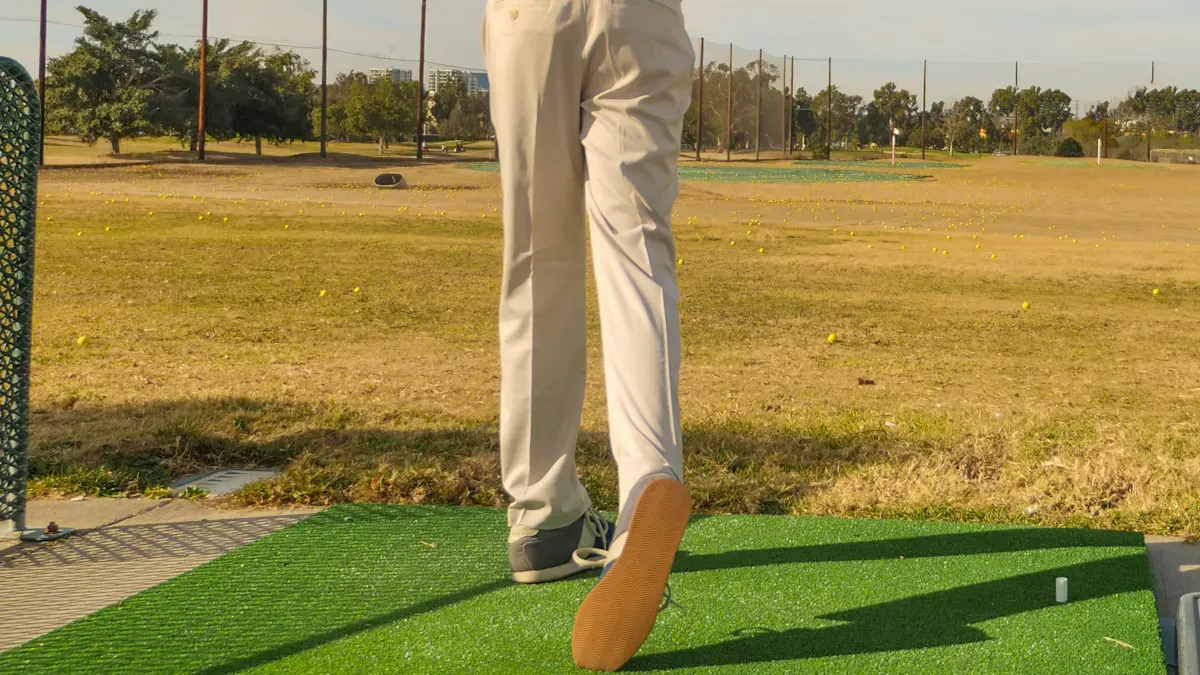
Setting Up Your Stance
A solid stance is the foundation of a powerful drive. When you set up correctly, you create a stable base that allows for better balance and control. Here are some key points to consider when setting up your stance:
Feet Shoulder-Width Apart: Position your feet about shoulder-width apart. This width provides stability and helps you maintain balance throughout your swing.
Knees Slightly Bent: Keep your knees slightly bent. This posture allows for better weight transfer during your swing.
Weight Distribution: Distribute your weight evenly on the balls of your feet. This positioning helps you stay grounded and ready to generate power.
Biomechanical studies show that a proper stance can significantly impact your driving distance and accuracy. For example, research indicates that adding torque and reducing lateral movement during your swing enhances power and stability.
Evidence Description | Findings |
|---|---|
Adding torque | Essential for generating power in your swing |
Reducing lateral movement | Helps maintain balance and stability |
Properly squaring the clubface | Crucial for accurate ball contact |
Aligning Your Body
Alignment is just as important as your stance. Proper alignment ensures that your body and clubface point toward your target. Here’s how to align yourself effectively:
Aim the Golf Club Properly: Start by aiming the leading edge of the club square to your intended target line.
Align Your Body: After aiming the club, align your feet, knees, hips, and shoulders parallel to the target line. This alignment increases your chances of hitting straighter drives.
Optimize Ball Position: Position the ball just inside your front heel. This placement promotes an upward strike, which is essential for maximizing distance.
Research shows that even minor adjustments in alignment can lead to significant changes in your swing consistency and ball flight. For instance, a slight variation in ball position can alter your launch angle, affecting how far and straight your drive goes.
By focusing on your stance and alignment, you set yourself up for success on the course. Remember, practice makes perfect, so take the time to refine these elements in your game!
Ball Position for Longer Drives
Finding the Right Spot
Ball position is crucial for maximizing your drive distance. Placing the ball correctly can significantly influence your launch angle and overall performance. Here’s how to find the right spot:
For Drivers: Position the ball just inside your front heel. This placement helps you strike the ball on the upswing, which is essential for achieving maximum distance.
For Fairway Woods and Hybrids: Place the ball a width of the ball inside your front heel. This adjustment allows for a solid strike while maintaining control.
For Irons: Use the center of your stance for mid and short irons. For long irons, position the ball slightly forward to ensure a clean hit.
Research shows that even a slight variation in ball position can lead to significant changes in your drive. For instance, a change of just ±0.25 inches can alter your launch angle by ±3°. This means that minor adjustments can make a big difference in how far and straight your ball travels.
Study | Findings |
|---|---|
Chen et al. (2007) | Optimum ball position increases club-head velocity at impact. |
Zhang and Shan (2014) | Variability in ball position influences swing consistency; ±0.6 cm change can lead to ±3° change in launch angle. |
Tee Height Considerations
Tee height also plays a vital role in your driving performance. The right height can enhance your launch conditions and overall distance. Here’s what you need to know:
Higher Tee: A higher tee promotes a higher launch angle and reduces spin. This combination can lead to longer drives.
Lower Tee: A lower tee decreases the launch angle and may increase backspin, which can reduce distance.
The optimal tee height aligns the middle of the ball with the top edge of your driver. This setup encourages an upward strike, enhancing clubhead speed while maintaining accuracy. Adjusting your tee height based on your swing speed can significantly influence your performance on the course.
Tee Height | Effect on Launch Angle | Effect on Spin Rate |
|---|---|---|
Higher | Promotes higher launch | Reduces spin |
Lower | Decreases launch | Increases backspin |
By paying attention to both ball position and tee height, you can set yourself up for longer and straighter drives. Experiment with these adjustments during practice to find what works best for you!
Swing Technique
Key Elements of a Good Swing
A solid swing is essential for hitting longer and straighter drives. Here are some key elements to focus on:
Wrist Cock: Timing your wrist cock correctly can boost your clubhead velocity. This increase in speed translates to greater distance.
Body Movement: Use your body in a sequence, starting from your core and moving outward. Engaging your proximal muscles first helps generate power.
Two-Lever One-Hinge Mechanism: Think of your swing as a two-lever system with a hinge. This setup allows for a more efficient transfer of energy.
Teeing the Ball: Properly teeing the ball can help you impart backspin, which is crucial for distance and control.
Grip: A correct grip is fundamental. It ensures you maintain control throughout your swing.
By focusing on these elements, you can enhance your swing and improve your driving performance.
Common Mistakes to Avoid
Even small errors in your swing can lead to significant losses in distance and accuracy. Here are some common mistakes to watch out for:
Swinging Too Hard: Trying to hit the ball too hard can lead to loss of control. Focus on a smooth, controlled swing instead.
Improper Tee Height: If your tee height is off, it can affect your launch angle and distance. Make sure to adjust it according to your club.
Poor Ball Position: Incorrect ball placement can lead to mishits. Always check your position before swinging.
Lack of Follow-Through: A good follow-through is essential for maintaining balance and ensuring a complete swing.
Incorrect Grip Pressure: Gripping the club too tightly can create tension. Find a balance that feels comfortable yet secure.
Not Using the Right Equipment: Ensure your clubs fit your swing style. Using the wrong equipment can hinder your performance.
By avoiding these mistakes, you can improve your swing and maximize your driving potential.
Body Rotation for Power
Engaging Your Core
Your core plays a crucial role in generating power during your golf drive. When you engage your core, you create a strong foundation for your swing. This engagement helps you maintain balance and stability, allowing for a more powerful rotation. Here are some key points to consider:
Increased Pelvis Rotation: Engaging your core allows for better pelvis rotation during the backswing. This movement enhances energy potential from your leg muscles.
Greater Torso Rotation: A well-engaged core enables greater torso rotation. This lengthens the hand path, allowing larger muscles to contribute more effectively to your swing.
Research shows that professionals consistently achieve peak upper-torso and pelvic rotational velocities during their downswing. This consistency is crucial for generating power. In contrast, amateurs often show reduced peak velocities, indicating less effective body rotation and energy transfer.
Finding | Description |
|---|---|
Rotational Velocities | Professionals show consistent peak upper-torso and pelvic rotational velocities during the downswing, crucial for power generation. |
Comparison with Amateurs | Amateurs have reduced peak velocities, indicating less effective body rotation and energy transfer. |
Impact on Performance | Consistent rotational biomechanics in professionals serve as benchmarks for improving amateur performance. |
Timing Your Rotation
Timing is everything when it comes to body rotation in your swing. Proper timing helps you generate power, control, and accuracy. Here’s what you need to know:
Avoid Stalling Your Hips: Many high handicappers stall their hip rotation during the downswing. This can lead to inconsistent strikes. Focus on keeping your hips moving smoothly.
Turn Towards the Target: Low handicappers typically have their hips turned towards the target at impact. This indicates effective rotation and can significantly enhance the distance your ball travels.
Think of your swing as a dance. When you time your movements well, you create a rhythm that maximizes your drive. By improving your body rotation, you can unlock more power and distance in your golf game.
Club Selection for Better Drives
Choosing the Right Driver
Selecting the right driver can make a huge difference in your game. A well-fitted driver helps you achieve better drives by maximizing distance and accuracy. Here are some factors to consider when choosing your driver:
Head Size: Larger clubheads offer a bigger sweet spot, which can help you hit the ball straighter.
Weight Distribution: Drivers with adjustable weights allow you to customize your setup for better performance.
Shaft Length: Longer shafts can increase distance, but they may also reduce control. Find a balance that works for you.
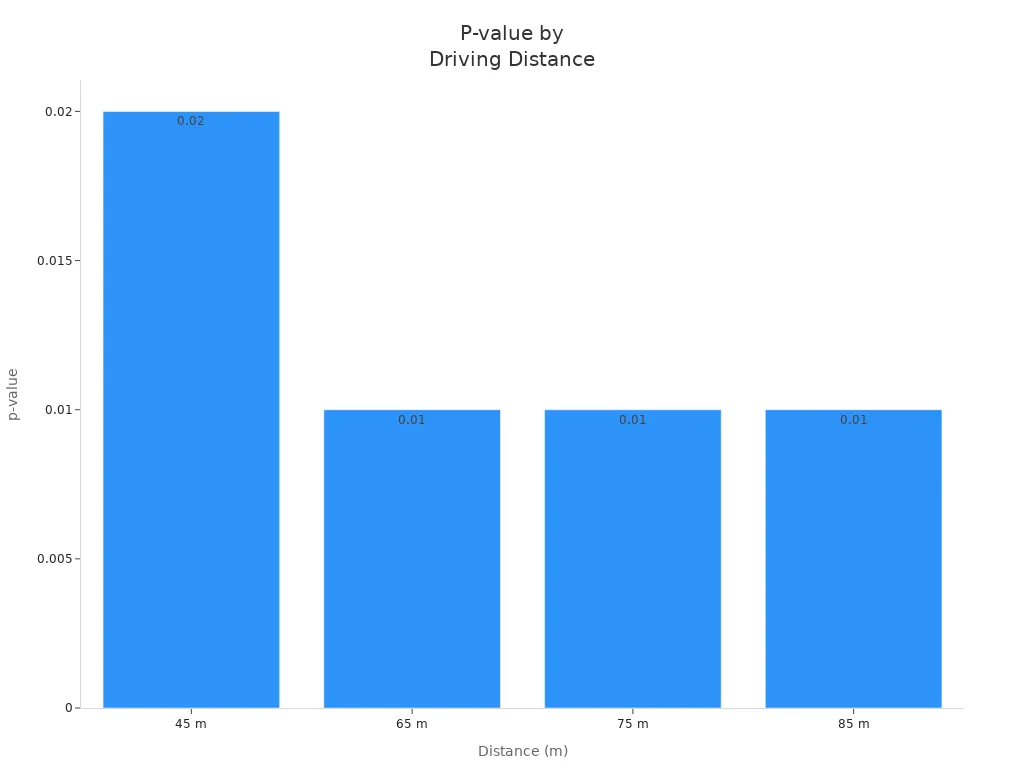
Research shows that the right driver can significantly impact your average driving distance and accuracy. For amateur golfers, using the correct driver can lead to decreased variation in distance, as shown in the table below:
Distance (m) | Coefficient of Variation | p-value |
|---|---|---|
45 | Decreased | 0.02 |
65 | Decreased | 0.01 |
75 | Decreased | 0.01 |
85 | Decreased | 0.01 |
Understanding Loft and Flex
Loft and shaft flex are crucial for optimizing your drives. Loft affects your launch angle, while flex influences how the club behaves during your swing.
Loft: Increasing loft raises your launch angle, which can help you achieve better drives. However, it also increases spin rate. For every degree of loft increase, you can expect a rise in spin of about 270 rpm. This balance is essential for maximizing distance.
Shaft Flex: The flex of your shaft affects the dynamic loft of your clubface. Stiffer shafts can reduce both spin and launch angle, which might not be ideal if you’re looking to increase your launch. A more flexible shaft can help maintain launch while managing spin.
Finding the right combination of loft and flex can be tricky, but it’s key to achieving optimal launch conditions. Experiment with different setups to see what works best for your swing style.
By carefully selecting your driver and understanding loft and flex, you can set yourself up for better drives on the course!
Practice Drills for Driving
Effective Drills for Driving
To enhance your driving skills, you can incorporate specific drills into your practice routine. Here are two effective drills that can help you improve both distance and accuracy:
Weighted Club Drill: Use a weighted club to build strength and speed in your swing. This drill helps develop muscle strength, which can lead to longer drives.
Speed Drill: Grab a lightweight club and practice fast, controlled swings. This drill focuses on increasing your swing speed and power, resulting in greater driving distance.
In addition to these drills, consider the following key practices to improve your overall performance:
Use the Right Equipment: Invest in a driver that suits your swing to improve distance and accuracy.
Perfect Your Setup: Position the ball correctly and maintain a balanced stance for better drives.
Focus on a Smooth Swing: Aim for a controlled motion rather than brute force to maximize distance.
Use Proper Alignment: Align your body parallel to the target to improve shot accuracy.
Learn How to Generate Power: Maximize rotational power for increased distance.
Master the Follow-Through: A strong follow-through enhances shot precision and power.
Practice Regularly and Track Your Progress: Consistent practice and tracking improvements are key to development.
Incorporating Drills into Practice
Consistency is crucial when it comes to improving your driving performance. Regular practice with specific drills reinforces learned techniques and builds muscle memory. Engaging in these drills over time can lead to significant improvements in your driving skills.
Research shows that frequent exposure to various driving situations increases your confidence. This confidence helps you tackle challenges on the course, like hitting longer drives or maintaining accuracy. So, make it a habit to practice these drills regularly.
Remember, the more you practice, the better you’ll become. Set aside time each week to focus on these drills, and you’ll see your driving game improve!
Mental Focus in Driving
Importance of Mental Preparation
Mental preparation is just as crucial as physical skills when it comes to driving in golf. Many players say that golf is 90% mental. This highlights how important it is to get your mind right before you step up to the tee. Here are some reasons why mental preparation matters:
A strong mental performance plan helps you stay calm and execute your shots effectively, even under pressure.
Golf Psychology emphasizes managing stress and improving performance through mental readiness.
Skills like focus and emotional regulation are essential for consistency in your game.
Visualization techniques allow you to mentally rehearse your shots, creating a mental blueprint that can enhance your performance.
By focusing on your mental game, you can improve your overall driving performance and lower your scores.
Techniques for Staying Focused
Staying focused during your drives can make a big difference in your performance. Here are some effective techniques to help you maintain that focus:
Positive Self-Talk: Boost your confidence by reminding yourself of your abilities. A simple phrase like “I’ve got this!” can work wonders.
Present Moment Focus: Concentrate on the shot at hand. Avoid distractions by letting go of past mistakes or future worries.
Visualization: Picture your target before each shot. Imagine the ball flying straight and true to your intended destination.
Mindfulness: Practice being present. This can help you stay calm and centered, especially during high-pressure situations.
Consistent Pre-Shot Routine: Develop a routine that includes checking your alignment, posture, and grip. This helps you concentrate and mentally prepare for each shot.
Sports psychologists emphasize that developing mental toughness is key. Techniques like maintaining focus through a consistent pre-shot routine and positive self-talk can help you manage your thoughts and emotions. By incorporating these strategies, you can enhance your driving performance and enjoy the game even more!
Equipment Check for Drives
Ensuring Proper Fit
Having the right equipment is essential for improving your driving performance. A properly fitted driver can significantly enhance your distance and accuracy. Here are some key indicators that your clubs are well-suited for your swing:
Club Length: This affects your swing speed and where you strike the ball. A good fit helps you achieve better trajectory and distance.
Clubhead Design: The loft, face angle, and moment of inertia all impact how the ball flies. Make sure your driver matches your playing style.
Shaft Length: This should align with your height and swing characteristics. A well-fitted shaft can help you maximize your distance.
Lie Angle: An incorrect lie angle can lead to inaccurate shots. Ensure your clubs are adjusted to fit your stance.
Studies show that newer drivers, like the SIM2 Max, have improved metrics compared to older models. For example, they can reduce spin rates and increase ball speed, leading to longer drives. Here’s a quick comparison:
Metric | Older Drivers (R7 Quad) | Newer Drivers (SIM2 Max) |
|---|---|---|
Spin Rate (rpm) | 2634 | 2127 |
Ball Speed (mph) | N/A | Increased by 13 mph |
Launch Angle (degrees) | 9.1 | 12.1 |
Distance Increase (yards) | N/A | 24.4 |
Regular Maintenance Tips
To keep your driver performing at its best, regular maintenance is key. Here are some tips to ensure your clubs stay in top shape:
Consistently Clean Your Golf Clubs: Regular cleaning prevents dirt from affecting performance.
Keep Your Grooves Clean and Sharp: Clean grooves enhance backspin and control.
Regularly Inspect and Replace Your Grips: Worn grips can lead to less control during swings.
Inspect the Shafts of Your Clubs: Check for damage to ensure consistent performance.
Oil Your Clubheads: A light coat of oil prevents rust and corrosion.
Store Your Clubs Properly: Proper storage protects clubs from damage.
By following these maintenance tips, you can extend the life of your equipment and improve your overall game. Remember, a well-maintained driver can make all the difference on the course!
Improving your drives can transform your golf game. By following the golf driving tips outlined in this blog, you can expect to see real changes. For instance, Nick, a 9 handicap golfer, gained distance by adjusting his lead foot position, which improved his core rotation. Similarly, Gavin, an 18 handicap golfer, enhanced his driving distance by focusing on lower body motion.
Here’s a quick recap of what you can do:
Grip: Ensure a proper grip for better control.
Stance: Set up a solid stance and align your body correctly.
Ball Position: Find the right spot and adjust your tee height.
Swing Technique: Focus on key elements and avoid common mistakes.
Body Rotation: Engage your core and time your rotation.
Club Selection: Choose the right driver and understand loft and flex.
Practice Drills: Incorporate effective drills into your routine.
Mental Focus: Prepare mentally and stay focused.
Equipment Check: Ensure your clubs fit you well and maintain them regularly.
Implement these tips in your practice, and watch your driving performance soar!
FAQ
What is the best way to improve my driving distance?
To improve your driving distance, focus on your grip, stance, and swing technique. Regular practice with drills can also help. Consider working on your body rotation and engaging your core for added power.
How often should I practice my driving skills?
Aim to practice your driving skills at least once a week. Consistency is key. Incorporate specific drills into your routine to reinforce techniques and build muscle memory.
Does my equipment really affect my drives?
Yes, using the right equipment can significantly impact your drives. A properly fitted driver, along with the right loft and flex, can enhance both distance and accuracy.
How can I stay mentally focused during my drives?
To stay focused, develop a consistent pre-shot routine. Use positive self-talk, visualize your shot, and concentrate on the present moment. This helps reduce distractions and boosts confidence.
What common mistakes should I avoid when driving?
Avoid swinging too hard, improper tee height, and poor ball position. Also, ensure you maintain a good follow-through and grip pressure. These mistakes can lead to inconsistent shots.