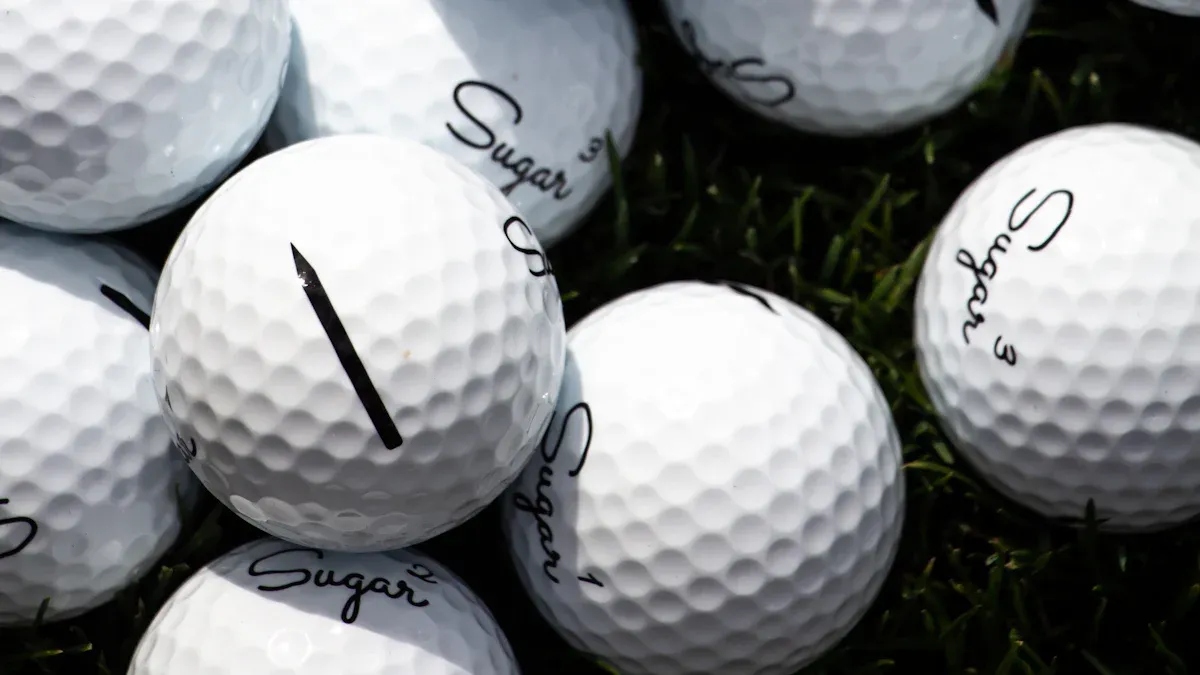
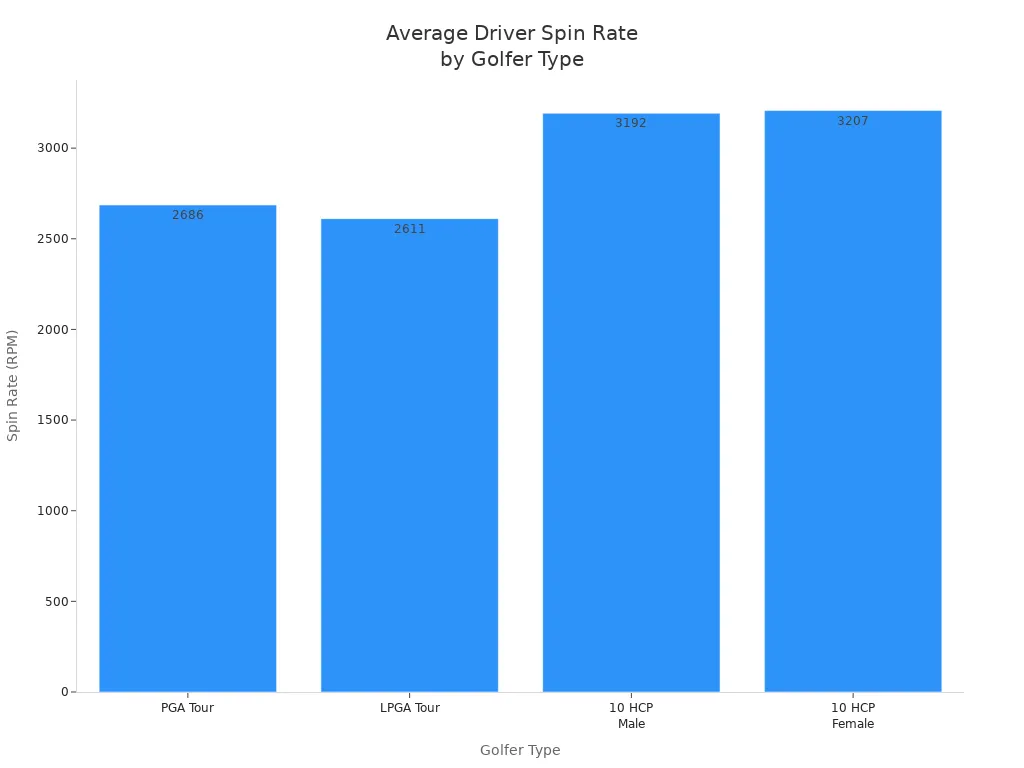
Choosing the right golf ball can greatly enhance your game. Different golf ball types affect your distance and spin, influencing how well you perform on the course. For instance, a well-selected ball can help you achieve longer drives. Research shows that optimizing spin rates can improve your total driving distance by over 30 yards. Understanding how these factors work will guide you in making an informed choice for your golfing needs.
Key Takeaways
Choosing the right golf ball can enhance your game by improving distance and spin.
Understand core materials and compression ratings to match the ball with your swing speed for optimal performance.
Different ball types, like one-piece and multi-layer, cater to various skill levels and playing styles.
Low-spin distance balls help achieve longer drives, while high-spin control balls enhance short game performance.
Consider weather conditions and personal preferences when selecting a golf ball for the best results.
Golf Ball Construction
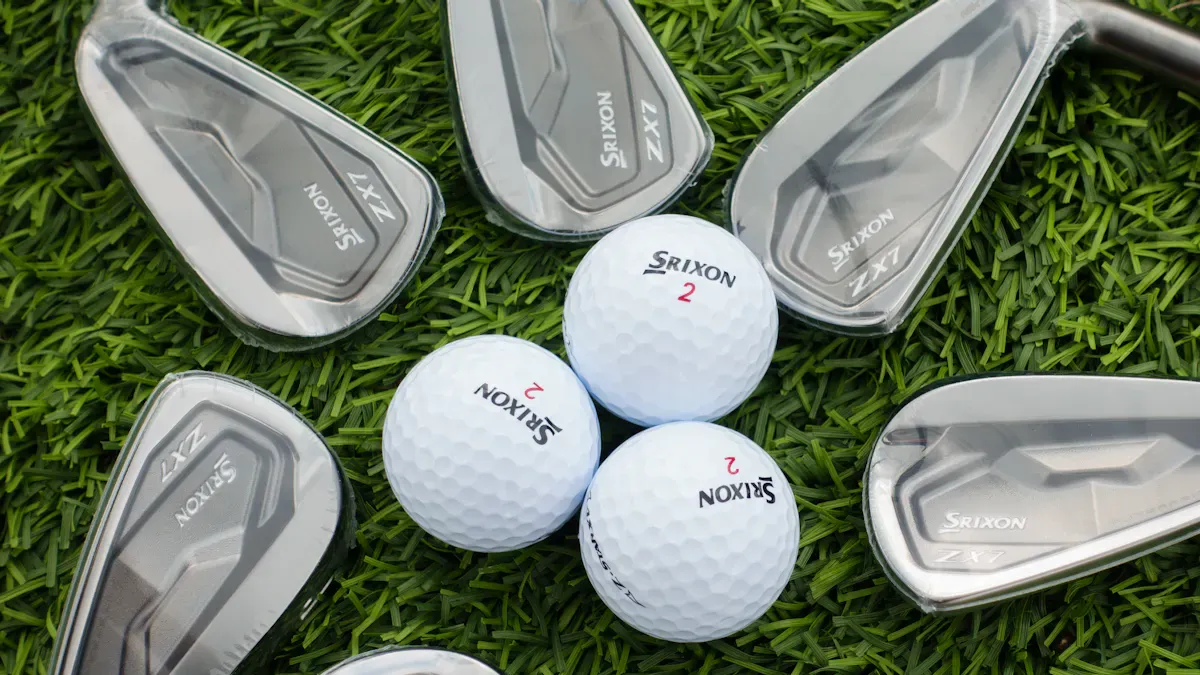
Understanding how golf balls are constructed helps you choose the right one for your game. The construction involves two main aspects: core materials and layer designs.
Core Materials
The core of a golf ball plays a crucial role in its performance. Historically, manufacturers used liquid-based cores. Today, most golf balls feature cores made from synthetic rubbers, particularly polybutadiene. This material optimizes elasticity, which is essential for performance.
Here are some key points about core materials:
Energy Storage: Modern cores store energy that releases upon impact with the club. This energy return enhances ball speed and distance.
Compression Ratings: The core’s compression rating affects how the ball performs. Here’s a quick breakdown:
Low compression (below 70): Maximizes energy transfer for moderate swing speeds.
Mid compression (70-90): Balances feel and distance for most amateur golfers.
High compression (above 90): Optimizes performance for high swing speeds exceeding 105 mph.
Tour compression (95-110): Engineered for elite ball speeds and precise spin control.
The core’s formulation is vital for maintaining the maximum allowable ball speed as per USGA regulations. Lower core compressions lead to reduced driver spins, which can help you achieve longer drives.
Layer Designs
Layer designs significantly impact a golf ball’s performance. Most modern golf balls have multiple layers, each serving a specific purpose. Here’s a look at common layer types and their functions:
Layer Type | Function | Impact on Performance |
|---|---|---|
Core | Determines velocity | Affects initial speed and spin; softer cores yield more spin. |
Cover | Affects feel | Urethane provides better control; ionomer enhances durability. |
Two-piece balls, which consist of a solid core and cover, are ideal for beginners. They offer distance and durability. On the other hand, three-piece balls include an additional layer, providing added spin and control for experienced players.
Understanding these construction elements helps you select a golf ball that matches your playing style. Whether you prioritize distance or control, knowing how core materials and layer designs affect performance can lead to better choices on the course.
Golf Ball Types
When selecting a golf ball, understanding the different types available can significantly impact your game. Each type offers unique features that cater to various playing styles and skill levels.
One-Piece Balls
One-piece balls are the simplest type of golf ball. They consist of a single solid piece of material, usually molded from a durable plastic. These balls are often used for practice or on driving ranges.
Durability: One-piece balls are highly durable due to their thick outer cover.
Performance: They provide maximum distance but offer low spin, making them less suitable for advanced shots around the greens.
Feature | One-Piece Golf Balls |
|---|---|
Construction | Large core, thick outer cover |
Durability | High due to thick cover |
Spin | Low |
Distance | Maximum distance |
Control on Greens | Less control |
Two-Piece Balls
Two-piece balls consist of a solid rubber core and a firm outer layer. This design helps them fly straighter and produce less spin compared to multi-layer balls.
Distance: They are optimized for maximum distance off the tee.
Spin Control: Two-piece balls also provide good spin control for short game shots, making them ideal for beginners and high-handicap golfers.
These balls are popular among casual players who want a balance between distance and control.
Urethane vs. Ionomer Balls
When it comes to the cover material, you will find urethane and ionomer balls. Each type has distinct characteristics that affect performance.
Golf Ball Type | Spin Performance | Control Performance |
|---|---|---|
Urethane | Extremely high spin | Excellent control, especially around greens |
Ionomer | Good short-game spin, but less effective off the tee | Decent control, but not as high as urethane options |
Urethane Balls: Professional golfers often prefer urethane-covered balls for their enhanced control and spin. This preference aligns with advanced players who prioritize performance.
Ionomer Balls: Beginners or high-handicap players typically choose ionomer-covered balls. These balls offer durability and lower spin rates, which help minimize erratic shots.
Multi-Layer Balls
Multi-layer balls feature a more complex construction, usually consisting of a core, one or more mantle layers, and a thin cover. This design allows for fine-tuning performance across various shots.
Advantages:
Fine-tuning Performance: You can adjust performance for different shots.
Enhanced Scoring Potential: These balls help achieve better scores through improved control.
Optimized Spin Rates: Advanced players can achieve higher spin rates for better shot control.
Advantage | Description |
|---|---|
Fine-tuning performance | Multi-layer balls allow players to adjust performance for various shots. |
Enhanced scoring potential | These balls help in achieving better scores through improved control. |
Optimized spin rates | Advanced players can achieve higher spin rates for better shot control. |
Soft feel on short shots | Provides a softer feel while maintaining distance off the tee. |
Superior spin on greens | Urethane covers enhance spin rates, allowing for better control on the green. |
Multi-layer balls are ideal for advanced players seeking both distance and spin. They provide a soft feel on short shots while maintaining distance off the tee.
Understanding these golf ball types will help you make informed decisions based on your playing style and skill level. Whether you prioritize distance, control, or a combination of both, knowing the differences will enhance your performance on the course.
Performance: Distance vs. Spin
Choosing the right golf ball can significantly affect your game. Understanding how distance and spin work together helps you make informed decisions.
Low-Spin Distance Balls
Low-spin distance balls are designed for players who want to maximize their distance value. These balls produce less backspin, which helps you achieve longer drives. Here are some benefits of low-spin balls:
Straighter Shots: They reduce hooks and slices, leading to straighter flight paths.
Added Distance: With less backspin, these balls travel farther and roll more after landing.
Durability: Often made with ionomer covers, they withstand wear better than softer options.
If you have a slower swing speed, low-spin balls can help you compress easily, maximizing your distance.
High-Spin Control Balls
High-spin control balls cater to advanced players who prioritize shot precision. These balls provide enhanced stopping power on the greens. Here’s how they assist your game:
Stopping Power: They check up quickly on greens, preventing the ball from rolling off.
Shot Shaping: You can shape your shots effectively, targeting specific areas on the green.
Feel and Feedback: The greater spin offers a softer feel, enhancing your control on delicate shots.
These features make high-spin balls ideal for players looking to improve their short game performance.
Selecting the Right Golf Ball for Your Game
When selecting the right golf ball, consider your skill level and playing conditions. Here are some criteria to guide your choice:
Skill Level | Recommended Balls |
|---|---|
Beginners | Titleist DT TruSoft, Callaway Supersoft |
Intermediate | TaylorMade Soft Response |
Advanced | Titleist Pro V1 |
Additionally, consider how factors like swing speed and attack angle influence your ball selection. For example, higher swing speeds benefit from high-compression balls, while slower speeds may find low-compression balls more effective.
By understanding the differences between low-spin distance balls and high-spin control balls, you can choose the right golf ball that fits your game.
Choosing the right golf ball can significantly enhance your game. Remember to match the ball type to your playing style for optimal performance. As one player noted, using a ball that aligns with your spin rate can make a big difference in your control and distance.
Prioritize short-game performance since most scoring opportunities occur around the green.
Understand compression types to match the ball with your swing speed for better distance and control.
Consider weather conditions, as lower compression balls can help maintain distance in colder weather.
By considering these factors, you can select a golf ball that meets your specific needs and preferences. 🏌️♂️
FAQ
What is the best golf ball for beginners?
For beginners, two-piece balls like the Callaway Supersoft are ideal. They offer maximum distance and durability, helping you develop your skills without worrying about spin control.
How do I know my swing speed?
You can determine your swing speed by using a launch monitor at a golf shop or driving range. Many facilities offer this service for free or for a small fee.
Can I use the same ball for all conditions?
While you can use the same ball, different conditions may require specific types. For example, softer balls perform better in cold weather, while firmer balls excel in warmer conditions.
How often should I replace my golf balls?
Replace your golf balls when you notice visible damage, such as cuts or scuffs. If you play frequently, consider changing them every 10-15 rounds for optimal performance.
Do more expensive balls guarantee better performance?
Not necessarily. While premium balls offer advanced features, your skill level and swing style matter more. Choose a ball that fits your game rather than focusing solely on price.