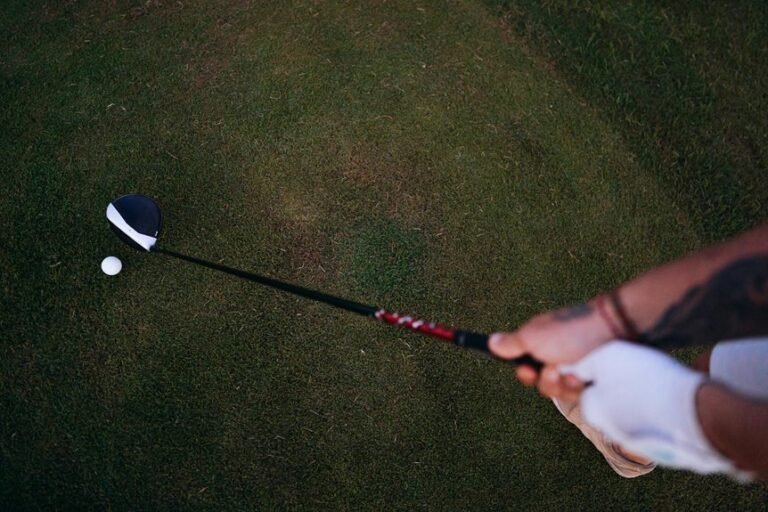

A good golf swing plane keeps the club moving on a cleaner path to the ball. It helps you strike it solid and send it straighter more often. A bad plane usually pulls the club out of sync with your body. In this guide, you’ll see what a proper plane looks like and how to fix common path faults.
What Is Golf Swing Plane?
The golf swing plane is the path your club follows as it moves around your body, and it matters because it shapes how the club meets the ball.
Once you understand it, you can trust your swing mechanics more and feel less lost on the range. Your club should travel on a steady line through the impact zone, not wander all over the place like it forgot its job.
That line helps you strike the ball with more control, better timing, and cleaner contact. You don’t need to force it. Instead, you learn how your body turns, how your arms move, and how the club stays connected.
Then your swing starts to feel smoother, and you can join the golfers who make solid contact look easy.
What a Proper Swing Plane Looks Like
You want your club to track on the same line your hands and body are creating, so the club path stays matched to your plane instead of getting lost outside or trapped inside.
Check that the shaft angle looks right at address, then watch whether the club returns on that same slope through impact.
At the moment you get to impact, the club should feel balanced and controlled, with the face meeting the ball while your body keeps moving through.
Club Path Alignment
Whenever your club path lines up well, everything in the swing starts to feel cleaner and more predictable. You’re not fighting the ball; you’re guiding it with club path, alignment adjustments, and calm swing balance. Small path corrections can sharpen directional control and improve your impact angle without making you feel stuck. Use alignment aids to see where your body, club, and target line connect, then let your swing consistency grow from there.
| Path | Result | Feel |
|---|---|---|
| In-to-out | Gentle draw | Smooth |
| Out-to-in | Slice risk | Rushed |
| Neutral | Straighter flight | Free |
Whenever you set up with purpose, you belong in the group of golfers who trust their motion. That confidence helps you repeat the same motion, keep the club moving on path, and strike it with less stress.
Plane Angle Check
How do you know whether your swing plane is actually on track? You can check the plane angle through watching how your club tracks around your body, not just where the ball starts. A proper plane feels shared and repeatable, like you’re part of a steady crew.
- At address, the shaft should match your posture.
- During the backswing, the club should stay close to that angle.
- On the downswing, it should return on the same tilted line.
- Through the ball, impact interactions stay cleaner as the club doesn’t need a rescue move.
If the club looks wildly steep or too flat, you’re off plane. Small checks like this help you build trust, and that matters at the time you want cleaner contact with the group of golfers who get it.
Impact Positioning
At impact, the club has to show up in the right place, or the whole swing can feel like it’s arguing with itself. You want the shaft to lean a touch forward, the face to match your intended line, and your chest to keep moving. That gives you a clean impact angle and steadier path consistency. Whenever you look at good players, they stay balanced and connected, not stiff or rushed.
| Position | Feel | Result |
|---|---|---|
| Hands ahead | Crisp | Better control |
| Club on plane | Smooth | Cleaner contact |
| Hips open | Free | Better speed |
| Face stable | Calm | Straighter shot |
If your setup drifts, your body will chase fixes. So keep your posture athletic, let your arms return naturally, and trust the plane you built.
How Golf Swing Plane Causes Misses
Whenever your swing plane drifts off track, the club does more than just look messy, it starts sending the ball into familiar trouble. You feel it in your swing mechanics, then you see impact errors, and that can sting a little while your buddies are striping it.
- An outside-in plane cuts across the ball, so you get slices and weak fades.
- An in-to-out plane can push the ball right, then tempt a flip at impact.
- An under-plane move often traps the club too deep, leading to hooks or blocks.
- An over-the-top move steals contact quality and makes your misses feel random.
Whenever your plane and clubface disagree, the ball listens to the louder one. That’s why cleaner path control helps you join the group that hits straighter shots more often.
Check Your Golf Swing Plane at Setup
A crooked swing path often starts before the club even moves, so your setup can save you a lot of grief. Begin with stance alignment. Set the clubface initially, then place your feet, hips, and shoulders so they match your intended swing plane. Small setup adjustments can make your motion feel natural, not forced.
| Check | Feel | Result |
|---|---|---|
| Clubface | Square | Better start line |
| Feet | Parallel | Cleaner turn |
| Hips | Calm | Easier rotation |
| Shoulders | Match feet | Smoother plane |
| Ball | Centered | Solid contact |
When you stand in sync with the club, you join the many golfers who hit it more freely. Should your body feel twisted, reset and breathe. Good posture helps your plane stay on track without extra effort.
Identify Common Swing Path Faults
Should your golf shots keep missing left or right, the problem often starts with the path your club takes through impact.
In swing path troubleshooting, you can spot common faults fast as you know what to look for.
- Outside-in swings send the ball left and often cut across it.
- In-to-out swings can push the ball right should your face stay open.
- Under-plane paths often lead to blocks or hooks as you stay stuck behind the ball.
- Poor wrist angles can twist your clubface and confuse your strike.
You’re not alone here, and these common faults show up for many players.
As you name the pattern, you can start to feel more in control and build a swing that fits you better.
Fix an Over-the-Top Move
Whenever your downswing jumps over the top, the fix starts with how your body drops the club from the top, then lets it fall into the slot instead of throwing it outside the line. You can feel the handle lower as your chest stays calm and your trail elbow works down in front of your hip. That move helps you join the group of golfers who strike it cleaner with less effort.
Next, keep your pressure moving into your lead foot, because better swing timing keeps the club from racing at the ball. These over the top remedies work best once you rehearse slow to fast. Then make half swings and let your arms stay soft, so the club can shallow on its own.
Should you stay patient, you’ll start hitting shots that feel solid and sound sharp.
Stop Getting Too Inside
Should you keep getting too inside, begin with spotting the takeaway and seeing whether the club head pulls behind your hands too soon.
Then check your clubface at setup, because a face that’s already open or closed can trick you into missing the right swing path.
From there, let the club shallow naturally and reconnect your arms and body so the club returns on plane instead of getting stuck behind you.
Identify Inside Takeaway
The inside takeaway can sneak up on you fast, and it often starts in the initial few inches of the swing. You’ll feel the club disappear behind your hands, and that’s your cue to pause.
Use these inside takeaway tips to spot it promptly:
- Watch the clubhead, not just your arms.
- Keep the shaft moving with your chest.
- Notice whether the club drifts behind your body.
- Try small takeaway adjustments and compare the feel.
When you catch it soon, you stay connected and avoid that trapped, lost feeling many golfers know too well.
A simple mirror check or slow practice swing can help you belong in the “clean contact” group, not the “where did that go?” crowd.
Check Clubface Alignment
A quick face check can save your swing from getting too inside, because the clubface often tells the real story before the ball does. At the moment you set up, square the face initially, then let your hands rest naturally. In the event the toe points shut, your swing could tuck too far behind you. Keep a soft grip pressure so the face can stay quiet, not twist open or closed.
| Check | What you want |
|---|---|
| Toe | Square to target |
| Leading edge | Matches your aim |
| Clubface tilt | Slight, not rolled shut |
| Grip pressure | Light and steady |
That small check helps you feel part of a group that swings with control. So, prior to chasing a fix, match the face to your setup and let the club work with you, not against you.
Shallow, Then Reconnect
Once you’ve checked the clubface, you can start helping the club move in a better path without letting it wander too far inside. You want a shallow angle that keeps the club moving down, then back toward the ball with purpose. That’s how you build a reconnect path and stop the stuck feeling.
- Feel the club widen at the outset in the backswing.
- Let your trail elbow fold, not pin.
- Keep your hands from diving behind you.
- Return the club to your body, then the ball.
When you do this, you’ll feel more connected and less trapped. That’s a good place to be, because your swing starts to feel calmer, cleaner, and more like part of your group of smooth ball strikers.
Match Your Path and Clubface
Even though your swing path looks good, the ball can still fly off line whenever your clubface doesn’t match it. You need path control and clubface alignment to work as a team.
Should your path go in-to-out but the face points too far right, you’ll leak the ball. Should the face close against an out-to-in path, you’ll watch it plunge left. That gap feels annoying, but it’s fixable, and you’re not alone in it.
Check your setup, then feel the face square to the path through impact. A small face change can calm a big miss and give you cleaner contact.
Whenever both pieces match, you start sending shots with more trust, better speed, and a lot less guesswork.
Golf Swing Plane Drills for Repeatability
Whenever your swing plane keeps changing from one shot to the next, drills can give you the repeatable feel you’ve been missing. Start with a gate drill, then use a headcover to guide the club and train your body to move on plane.
Keep your swing tempo steady, because rushing ruins the pattern you’re trying to build. Use light grip pressure, too, so your hands stay quiet and the club can trace the same path again and again.
- Set two tees just wider than your clubhead.
- Swing through without clipping them.
- Place a headcover just outside the ball.
- Finish each rep with the same smooth rhythm.
When you repeat these moves, you’ll feel like you belong in control, not fighting your swing.
Frequently Asked Questions
How Does Lie Angle Affect Swing Plane Direction?
Lie angle acts like a built in guide for your club path. If it is too upright or too flat, the club can point your swing direction off line at impact, shifting the ball left or right and changing how the club feels through the strike.
Should Left-Handed Golfers Mirror These Swing Plane Fixes?
Yes, you should mirror these fixes. As a left handed golfer, reverse the path directions, but use the same adjustments to build a smoother, more controlled swing pattern.
Does Uphill or Downhill Terrain Change Path Correction Choices?
Yes, terrain can change your path correction choices. On slopes, about 60% of players adapt poorly. Uphill lies often call for out to in swing adjustments, while downhill lies create tougher in to out control, so factor in the slope.
How Quickly Will a Stance Change Reveal My Natural Swing Path?
Usually within a week, your stance adjustment will expose your actual swing route. Keep your swing motion, body alignment, and grip pressure unchanged, and you will notice the shift quickly while gaining better control.
Can Half Swings Train Plane Better Than Full Swings?
Yes, half swings can train plane better than full swings. They give you a clear reference point and help you return to the correct path. Use half swing benefits with swing plane drills, and you will feel more connected, supported, and in control.