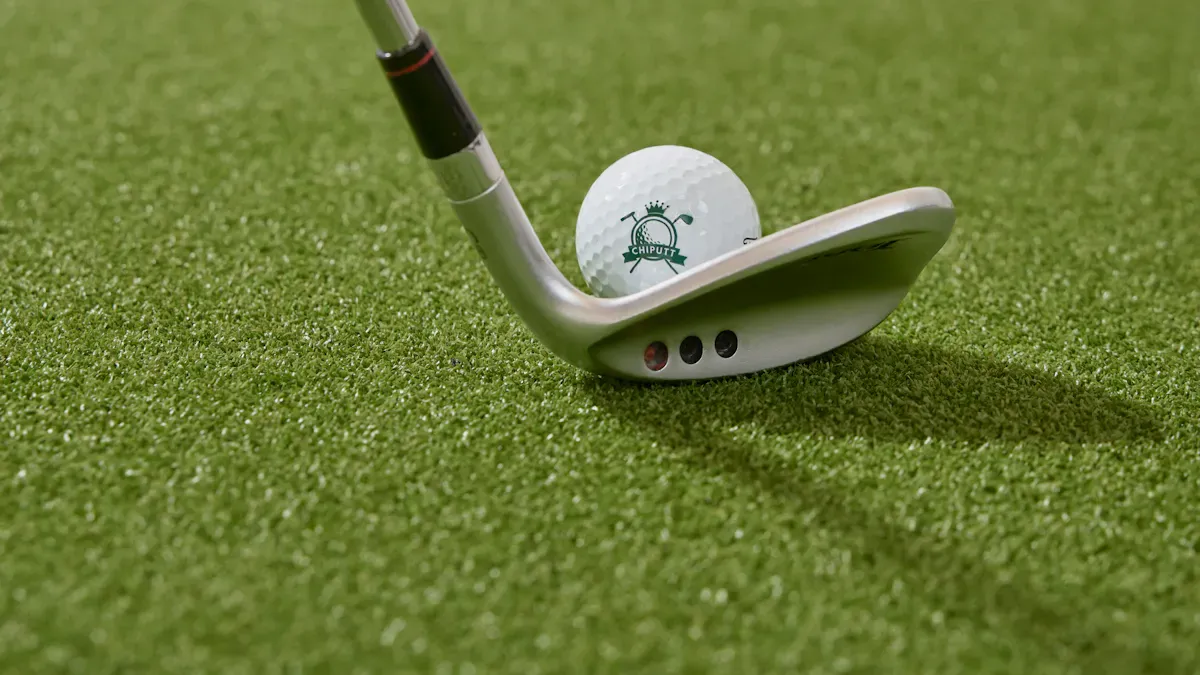
In golf, the short game is crucial. It can make or break your score. Many golfers struggle with various challenges around the green. For example, improper weight distribution on pitch shots can hinder your swing. Also, changing your mechanics unnecessarily often leads to inconsistency. Adapting to different bunker lies is another hurdle that can frustrate even seasoned players. By focusing on these golf short game tips, you can tackle these issues and improve your performance.
Key Takeaways
Choose the right club for chipping based on distance, lie, and green conditions. This improves shot accuracy and distance control.
Maintain a solid setup with feet shoulder-width apart and weight slightly forward. This enhances balance and contact during your chip shots.
Vary the ball position in your stance to control the trajectory of your shots. Experiment with back, center, and forward positions for different results.
Practice specific pitching techniques, like low and high shots, to improve your control and consistency around the green.
Incorporate mental strategies like positive self-talk and visualization to boost your confidence and performance during your game.
Chipping Basics: How to Chip in Golf

Chipping is a vital skill in your short game arsenal. Mastering it can significantly lower your scores. Let’s dive into some essential tips to help you chip effectively.
Use the Right Club
Choosing the right club is crucial for successful chipping. Different situations call for different clubs. Here are some key points to consider when selecting your club:
Assess the Situation: Look at the distance to the hole, the lie of the ball, and any obstacles in your way.
Loft of the Club: Higher lofted clubs, like wedges, help you get the ball in the air quickly. They’re great for short chips. Lower lofted clubs work better for longer shots.
Green Conditions: Firm greens may require less loft, while softer greens benefit from higher lofted clubs.
Personal Comfort: Always choose clubs you feel confident with. Practice with different clubs to see which ones work best for you.
Using the right club optimizes distance control and improves shot accuracy. It allows you to gauge the required power and loft for your desired distance. This leads to more consistent results, especially when chipping from rough or sand.
Focus on Setup
Your setup can make or break your chip shots. A solid setup helps you achieve better contact and accuracy. Here’s how to set up for success:
Shot Type | Club Speed (mph) | Ball Speed (mph) | Launch Angle (º) | Spin Rate (rpm) |
|---|---|---|---|---|
Low | 23 | 27.8 | 29.6 | 2230 |
Mid | 30 | 28.5 | 40.6 | 1630 |
High | 37 | 28.0 | 51.6 | 1250 |
Make sure your feet are shoulder-width apart and your weight is slightly forward. This position helps you maintain balance and control during your swing. Remember, standing too far from the ball can lead to poor contact. You want to feel comfortable and stable as you prepare to chip.
Vary Ball Position
The position of the ball in your stance can greatly affect the trajectory and roll of your chip shots. Here’s how varying ball position impacts your shots:
Ball Position | Angle of Attack | Deloft/Shaft Lean | Launch Angle Change | Carry Effect | Roll Effect |
|---|---|---|---|---|---|
Back | -8° to -10° | -18° to -20° | Decreases by 4/5° | Reduces | Increases |
Centered | -5° | -15° | No change | Neutral | Neutral |
Forward | -2° to 0° | -12° to -10° | Increases by 4/5° | Increases | Reduces |
Placing the ball back in your stance can help you hit lower shots that roll more. Conversely, positioning it forward can give you higher shots that stop quickly. Experiment with these positions to see how they affect your chipping techniques.
By focusing on these chipping basics, you’ll improve your short game and save strokes around the green. Remember, practice makes perfect, so get out there and start chipping!
Pitching Tips for the Short Game
When it comes to your short game, mastering pitching can make a big difference. Pitching involves hitting the ball higher than chipping, which allows for more control over where the ball lands. Here are some essential tips to help you improve your pitching skills.
Master the Loft
Understanding loft is key to successful pitching. Different clubs have varying lofts, which affect how high and far the ball travels. Here’s what you need to know:
Use Higher Lofted Clubs: For pitching, you should typically use a sand wedge or lob wedge. These clubs help you achieve a higher trajectory, which is crucial when you need to clear obstacles like bunkers.
Adjust Your Grip: Gripping down on the club can help you control the shot better. This technique allows for a more precise swing and helps you manage the loft effectively.
Practice with Different Wedges: Familiarize yourself with how each wedge behaves. For example, a gap wedge has a moderate loft, while a lob wedge has a higher loft, perfect for soft landings.
Wedge Type | Loft Range | Bounce Characteristics | Usage Recommendations |
|---|---|---|---|
Gap Wedge | 50-52° | Moderate bounce | Best for approach shots, consistent distance gaps |
Sand Wedge | 54-58° | High bounce | Ideal for bunkers, helps prevent digging in soft sand |
Lob Wedge | 58-64° | Variable bounce | Used for high, soft shots; requires precision in execution |
Control Your Distance
Controlling distance is vital in pitching. You want to land the ball softly on the green, so here are some tips to help you achieve that:
Focus on Swing Length: The length of your backswing directly influences how far the ball travels. A shorter swing will produce a lower shot, while a longer swing will send the ball higher.
Use the Right Club for the Situation: Selecting the appropriate club based on the distance to the hole can simplify your swing adjustments. For example, if you’re close to the green, a lob wedge might be best. If you’re further away, consider a gap wedge.
Practice Landing Spots: Aim to land the ball a couple of steps onto the green. This technique helps you gauge how much roll you can expect after the ball lands. You can even use a towel to measure how each wedge behaves when landing the ball in the same spot.
Remember, distance control is three times more important than direction in your short game. So, prioritize getting the distance right!
Practice Key Shots
To improve your pitching, focus on practicing specific shots. Here are some key techniques to work on:
Low Shots: Move the ball back in your stance and lean the shaft forward. This technique helps you hit lower shots that roll more.
High Shots: Open the clubface, move the ball forward, and take a bigger swing. This method is great for clearing obstacles and landing softly on the green.
Consistent Technique: Develop a repeatable, consistent technique. Use different clubs for various ball trajectories, and aim for simplicity to reduce complexity.
Visualization can also enhance your performance. When you visualize a successful pitch, you activate the same brain regions as when you physically perform the action. This mental practice can lead to better execution on the course.
By mastering these pitching tips, you’ll enhance your short game and save valuable strokes around the green. Remember, practice is key to achieving golf short-game mastery!
Putting Strategies for Better Scores

Putting can be the difference between a good round and a great one. To improve your scores, you need to master a few key strategies.
Read the Green
Reading the green accurately is essential for successful putting. It helps you understand the slope and speed of the green. Here are some tips to enhance your green reading skills:
Look for Breaks: Observe the contours of the green. A slight slope can change the ball’s path.
Check the Grain: Grass can affect how the ball rolls. Pay attention to the direction the grass grows.
Practice Drills: Use drills like the Ladder Drill to improve your distance control and breaking putts.
Research shows that accurate green reading significantly impacts your ability to start the ball on the correct line. For example, golfers who misread the green often struggle, scoring only 1.3 out of 10 on starting the ball on line. In contrast, those who read the green correctly score 8.9 out of 10 on flat putts. This demonstrates how crucial reading the green is for your success.
Develop a Consistent Stroke
A consistent putting stroke is vital for sinking more putts. Here are some techniques to help you achieve that:
Technique | Description |
|---|---|
Use Alignment Aids | These tools help ensure your putter face is square to the target line, improving accuracy. |
Consistent Eye Focus | Keep your eyes focused on the ball to minimize head movement and maintain a fluid motion. |
Pendulum Motion | Swing your putter back and forth in a steady rhythm to maintain control. |
Firm Wrists, Shoulder Movement | Keep your wrists firm while using your shoulders for movement. This provides stability and consistency. |
By practicing these techniques, you can develop a reliable stroke that enhances your performance on the course.
Practice with Purpose
Purposeful practice can lead to significant improvements in your putting. Focus on specific skills during your practice sessions. Here are some characteristics of effective practice:
Characteristic | Description |
|---|---|
Specific goals | Target defined skills, like improving speed control on 15-foot putts. |
Immediate feedback | Use drills that provide instant feedback to assess your performance. |
Focused concentration | Short, intense practice sessions yield better results than longer, casual ones. |
Progressive difficulty | Gradually increase challenges to ensure continuous skill improvement. |
Deliberate practice strengthens your neural connections, leading to better performance. Remember, the more you practice with purpose, the more confident you’ll feel on the green.
By focusing on these putting strategies, you can enhance your short game and lower your scores.
Mental Game in the Short Game
Stay Positive
A positive mindset is crucial for your short game. When you approach each shot with confidence, you set yourself up for success. Here are some effective ways to maintain that positivity:
Engage in Positive Self-Talk: Replace negative thoughts with affirmations. Remind yourself of your skills and past successes.
Set Clear Goals: Establish achievable targets for each round. This keeps you focused and motivated.
Practice Mindfulness: Take a moment to breathe and center yourself before each shot. This helps reduce anxiety and enhances focus.
Golf sports psychologists emphasize the importance of mental resilience. They teach golfers how to handle pressure and overcome self-doubt. By developing these skills, you can recover from mistakes and perform confidently, especially in high-stakes situations.
Visualize Success
Visualization is a powerful tool that can enhance your performance in the short game. Here’s how to effectively use visualization techniques:
Pre-Round Visualization: Spend a few minutes imagining successful shots before you tee off. This boosts your confidence and prepares your mind for the challenges ahead.
Active Visualization: Picture the exact movements you’ll make during your swing. This mental rehearsal stimulates the muscles involved, improving your technique.
Visualize Future Goals: Keep a clear image of your long-term goals in mind. This motivates you to stay focused and committed to your practice.
Research shows that visualization can help control performance anxiety. By imagining positive outcomes, you can calm your nerves and maintain a competitive mindset during stressful moments. Elite golfers often develop a consistent pre-shot routine that includes visualization, helping them stay calm and focused.
Incorporating these mental strategies into your routine can significantly improve your short game. Remember, the mind plays a vital role in your performance, so nurture it just as you would your physical skills.
Improving your short game can significantly lower your golf scores. Remember the key tips we discussed: use the right clubs, focus on your setup, and practice your chipping and pitching techniques. Regular practice is essential. When you consistently work on your skills, you’ll notice measurable progress.
Here are some benefits of applying these short game tips:
You’ll see improvements in chipping and putting.
Simulating real-game pressure helps you perform better during actual play.
Mental strategies like visualization enhance your enjoyment of the game.
Incorporate these strategies into your routine, and watch your confidence grow on the course!
FAQ
What is the best way to practice my short game?
To practice your short game effectively, focus on specific drills for chipping, pitching, and putting. Set clear goals for each session and track your progress. Regular practice will help you build confidence and improve your skills.
How often should I practice my short game?
Aim to practice your short game at least two to three times a week. Consistency is key. Even short sessions can lead to significant improvements over time. Make sure to include various shots to keep your practice engaging.
What clubs should I use for chipping?
For chipping, use a pitching wedge, gap wedge, or sand wedge. The right club depends on the distance to the hole and the type of shot you want to execute. Experiment with different clubs to find what works best for you.
How can I improve my putting accuracy?
To improve your putting accuracy, focus on reading the green and developing a consistent stroke. Practice drills that emphasize distance control and aim. Remember, a solid routine can help you stay calm and focused during your putts.
Why is the mental game important in golf?
The mental game is crucial because it affects your confidence and focus. Staying positive and visualizing success can help you perform better under pressure. A strong mental approach can make a big difference in your overall game.