
The right iron set depends on your skill level and swing. Blades suit skilled players who want more control. Cavity back irons help more with forgiveness and easier launch. Choose the style that matches how you play on the course.
What Are the Main Golf Iron Types?
As you start shopping for irons, the main types can feel confusing fast, but they’re easier to understand once you break them into a few clear groups.
You’ll usually see game improvement, player performance, and tour level irons. Game improvement irons give you more forgiveness, higher launch, and easier distance, so they fit well when you want confidence on everyday swings.
Player performance irons sit in the middle and help you shape shots while still offering some help on mishits.
Tour level irons put control and feel at the forefront for stronger ball strikers.
As you compare iron material options, like forged steel or softer alloys, you’ll also notice iron design trends such as wider soles, thinner faces, and cleaner shaping that match your skill level.
Blade Irons vs. Cavity Back Irons
Blade irons provide the most precise feel and control, so they suit you whenever you want to shape shots with confidence.
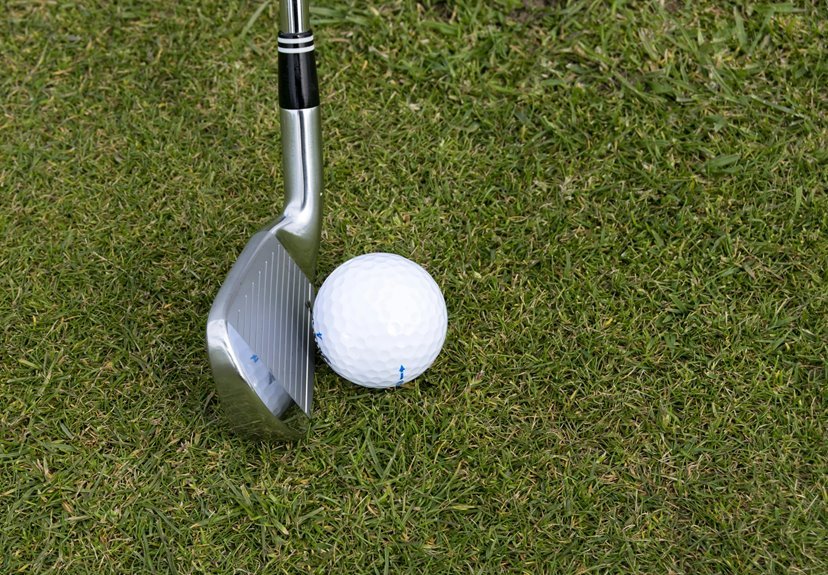
Cavity back irons are designed to help you hit the ball more easily, thanks to added forgiveness and a steadier launch.
Should you be choosing between them, your skill level and how much control you desire will typically guide you in the right direction.
Blade Irons: Precision and Control
Whenever you desire more control over the ball, blade irons can provide you that crisp, precise response that skilled players often love.
Should you enjoy feeling every strike, you’ll fit in with players who value touch and shot-making.
The blade iron advantages include sharper feedback and easier workability, so you can aim for shaped shots with confidence.
Still, the blade iron drawbacks are real, since these clubs ask more from your swing on off-center hits.
- You get clear feedback on contact.
- You can move the ball with more intent.
- You might feel less help on mishits.
Cavity Back Irons: Forgiveness
Cavity back irons bring a different kind of help than blade irons, and that help can make golf feel a lot less punishing.
You’ll notice cavity back designs have more weight around the edges, so off-center hits still fly straighter and farther. That extra stability gives you real forgiveness benefits whenever your swing isn’t perfect.
Instead of feeling like one small miss ruins the shot, you get a club that stays with you and keeps the ball in play more often. Many golfers like this because it builds trust fast.
You can step up, swing with a bit more ease, and feel like your clubs have your back. That support matters, especially whenever you want more good shots and fewer sorry walks after a thin strike.
Choosing by Skill Level
Your skill level should guide the iron style you choose, because the right fit can make the game feel much less stressful. Start with a skill assessment, then match the club to your player preferences and comfort.
- Should you be a beginner, cavity back irons help you launch the ball and forgive mishits.
- Should you be an improving player, a players cavity gives you control without making every miss hurt.
- Should you be a low handicap golfer, blade irons reward clean contact with precision and feel.
You don’t have to pick the hardest option to belong on the course. Choose the set that fits your swing, your goals, and the confidence you want on each shot.
Whenever your irons suit you, practice feels friendlier, and every round gets a little easier.
Which Golf Irons Are Best for Beginners?
Should you be new to golf, game-improvement irons can make the game feel a lot friendlier right away.
You’ll usually want forgiving cavity backs with larger clubheads, since they help one strike the ball more cleanly and launch it higher.
That extra help can save one from a few “how did that even happen?” shots and keep you more confident on the course.
Game-Improvement Irons
- You’ll get more forgiveness on off-center hits.
- You’ll add height and distance with less effort.
- You’ll build confidence faster, which helps you stay in the game.
If your swing is still growing, these irons give you support without making you feel left behind.
They’re built to help you swing freely, smile more, and enjoy each round.
Forgiving Cavity Backs
A forgiving cavity back can make a huge difference during your learning phase of the game or trying to clean up a shaky swing. You get a bigger sweet spot, so mishits still fly straighter and farther. That means you can step onto the tee box feeling like you belong there, not like you’re auditioning for a science project.
These clubs use forgiving designs with perimeter weighting and improved stability. As a result, your clubhead resists twisting at impact, which helps as your timing isn’t perfect.
Wider soles and a lower center of gravity also help you launch the ball easier.
If you want confidence, look for cavity backs in game-improvement sets. They can support your growth, keep frustration down, and make each round feel more fun.
Best Golf Irons for Mid-Handicappers
For mid-handicappers, the best golf irons give you a sweet mix of forgiveness, control, and confidence, so you can keep improving without fighting your clubs.
You want mid handicap features that help on slight misses, plus strong iron performance analysis so you know what fits your swing and goals. Look for a set that feels easy to launch, but still lets you place the ball where you want.
- Game improvement models like the Callaway Mavrik help you hit it higher and straighter.
- Titleist T300 gives you a nice balance of forgiveness and shot control.
- A regular or stiff shaft can match your swing speed and keep your timing steady.
When you play with the right set, you feel like you belong out there, and that confidence shows on every swing.
What Do Advanced Players Want in Irons?
So, what do advanced players really want in irons? You want irons that listen to your hands and reward a clean swing. That means precise turf interaction, tight distance control, and a feel that tells you exactly where you struck the ball.
Advanced player preferences usually lean toward smaller heads, less offset, and enough forgiveness to save a good round if you miss for a hair. Because you care about scoring, iron technology advancements now give you better feedback without making the club feel stiff or harsh.
You can also choose forged heads for softer response and stronger shot shaping. In the end, the right set helps you belong on the course with confidence, control, and a little swagger.
How Does Shaft Flex Affect Iron Performance?
Shaft flex can change how your irons feel, fly, and score, because it controls how much the shaft bends during your swing. Whenever you match flex to your speed, you help shaft performance and swing efficiency work together.
- In case you swing a 6-iron faster than 90 mph, X-stiff can help keep the face steadier.
- Should you swing 80 to 90 mph, stiff flex often gives you a solid, familiar response.
- In the event that you swing 70 to 80 mph, regular flex can load easier and keep your timing smooth.
You’ll usually feel more control whenever the shaft fits your move, and that can make each shot feel like it belongs to your game.
A good fit doesn’t force you to fight the club. Instead, it lets your rhythm shine, and that’s where confidence starts.
Forgiveness vs. Distance vs. Control
At the moment you choose irons, you’re really choosing what kind of help you want on the course, because forgiveness, distance, and control each serve a different purpose.
Should you want forgiveness benefits, game-improvement irons can steady shaky contact and keep your round friendly.
Should you chase distance optimization, long irons and strong lofts can add yardage, but they could ask for cleaner strikes.
Should you care about control techniques, player and tour irons give you more shot shape and a tighter feel around the target.
The best set gives you performance balance, so you can swing with trust instead of worry.
That mix matters at the time you want to fit in with players who value steady results, not just big numbers.
How Do You Match Golf Irons to Your Swing?
To match golf irons to your swing, you initially need to look at how fast you move the club and how much help you want from the clubhead. Your swing speed guides shaft flex, while clubhead design shapes launch, forgiveness, and feel.
Should you still be building confidence, choose irons that make contact easier and keep your misses playable. When you strike it clean and want more control, move toward smaller heads.
- Slow to moderate swing speed: choose game improvement irons.
- Steady swing speed with growing skill: choose player performance irons.
- Fast, consistent swing speed: choose tour level irons.
Once you know your tempo, you can pick a set that fits your game and keeps you in the same groove as your playing partners.
How Should You Test Irons Before Buying?
Before you buy a set of irons, you need to see how they feel in your hands and how they react as you swing them. Visit a shop or range and hit several models with your own tempo.
Pay attention to iron feel at impact, then notice whether the clubhead design helps you start the ball on line. Try a few long, mid, and short irons, because each one should match your game in a different way.
Ask for the right shaft flex, too, since it changes launch and control. Whenever possible, test on grass, not just mats, so you can spot thin or fat contact.
Trust the set that feels like it belongs in your hands and gives you confidence.
Frequently Asked Questions
How Many Irons Should Be in a Standard Set?
You’ll usually carry eight clubs in a standard iron set, from 3 iron through pitching wedge, giving you the core range most golfers rely on for control and distance.
What Is the Difference Between Forged and Cast Irons?
Forged irons usually provide a softer feel and clearer feedback, while cast irons are often more durable, more forgiving, and less expensive. Players often prefer forged clubs for control and cast clubs for added confidence on off center hits, depending on their needs.
Do One-Length Irons Really Improve Consistency?
Yes, one length irons can sharpen consistency because you use the same setup and swing for every club. Their uniform build helps some golfers, but player preference still matters most since comfort, distance spacing, and feel shape the results.
Which Iron Number Is Easiest to Hit?
The 7 iron is usually the simplest to hit. It gives a good mix of launch, distance, and control, making it a solid first choice for many golfers. Start with it and you can build confidence quickly.
Can Women Use Men’s Iron Sets Effectively?
Yes, women can use men’s iron sets effectively if the clubs match their swing speed, height, and lie angle. Shaft weight, club length, and lie angle should fit the golfer, since proper fit matters more than whether the set is labeled men’s or women’s.