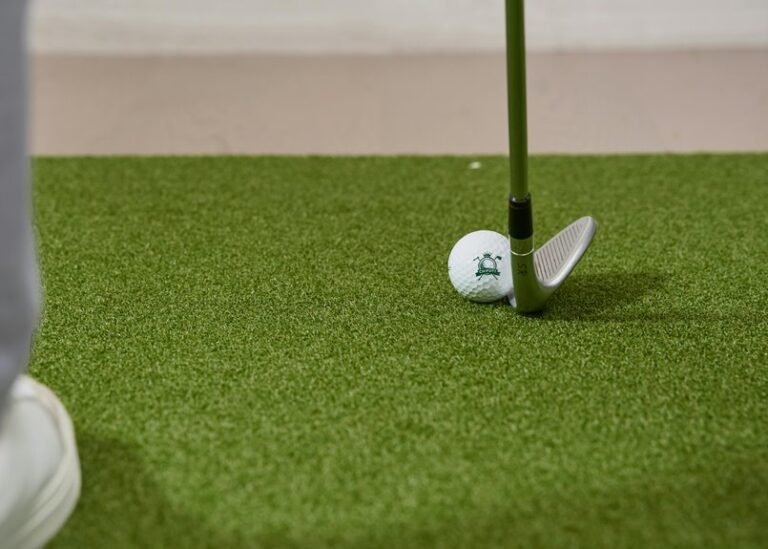

Bad alignment usually starts before the swing, not during it. A square stance, a steady clubface, and a clear target line can help the ball start straighter. Small setup checks make direction much easier to trust. Here are 12 simple golf alignment tips that can fix miss-hits fast.
Set Your Feet First
Start with your feet, because they quietly set the tone for the whole swing. You don’t need a perfect pose; you need steady foot placement that helps you feel balanced and ready.
Set your stance width so it matches the shot and lets your weight sit in the middle of both feet. Should you stand too narrow, you could feel wobbly. Should you go too wide, you can lose flow and tension sneaks in.
So, pick a calm, athletic base, then let your knees relax and your body settle. From there, check that your feet feel parallel to the path you want.
Once your lower body feels organized, the rest of your setup often gets easier, and that confidence can feel like a small win before you even swing.
Check Where Your Clubface Points
Now that your feet feel set and steady, you can give your attention to the part that tells the golf ball where to go: the clubface. Check the face initially, not your shoulders, because clubface alignment sets the shot’s primary direction.
Aim the grooves at a spot a few feet ahead on your line, then pause and breathe. That small move makes target visualization feel real, not dreamy.
In the event the face looks closed or open, reset it before you move anything else. You’re not behind; you’re just building a cleaner habit with the group.
Use your hands to square the face, then let your stance match it. At the point the face starts right, your body can follow without a fight.
Pick Your Target Line
Initially, pick a spot a few feet in front of your ball that sits on your start line, not the flag itself.
Then set your clubface at that intermediate target before you place your feet, so your body can match the line instead of guessing at it.
At the moment you do this, you give your swing a clear direction, and that simple step can save you from a lot of extra correcting later.
Identify Your Start Line
Where should your shot begin? You should pick a start line just in front of the ball, not the flag. That small line gives you a clear path and steadies your target visualization. Then you can trust your swing instead of guessing.
Use alignment drills to pick a spot three to six feet ahead, and aim your clubface through that spot. Once you do, your eyes and body feel more settled, like you finally joined the same map.
Next, check that the ball starts where you planned. Should it begin left or right, adjust your aim before you swing again. This simple step builds confidence, keeps you honest, and helps you feel at home over the ball.
Align Clubface First
Because your clubface sets the direction of the shot, you want to lock it in before you ever worry about your feet.
Pick a spot 3 to 6 feet ahead of the ball on your target line, then aim the grooves at that point. That simple step sharpens your clubface alignment and makes target visualization feel much easier.
Once you see a clear intermediate target, you stop chasing the faraway flag and start building a clean setup that feels natural.
From there, set your feet, knees, hips, and shoulders parallel to that line. In case it feels strange initially, you’re not alone. Most golfers need a few reps to trust it.
Keep the face steady, breathe, and let your body match the line, not the other way around.
Align Your Shoulders to the Target
Your shoulders quietly steer a lot of your golf swing, so getting them lined up the right way can make the whole setup feel calmer and more repeatable.
You want your shoulders to match the line just like your clubface does, not point at the flag. That parallel feel helps your shoulder rotation work from a cleaner base, so you don’t have to fight your own setup later.
Use visual alignment to pick a spot near the target, then let your shoulders sit square to that path. When it feels a little odd initially, that’s normal; most golfers have drifted the other way for years.
Trust the line, breathe, and build the habit. Over time, you’ll feel more connected and less alone.
Square Your Hips and Knees
Now check your hip line so it runs parallel to the target line, not at the flag.
Then match your knees to that same aim so your lower body supports the shot instead of steering it.
Once your hips and knees stay square together, you build a steadier setup and give your swing a much cleaner path.
Hip Line Check
Whenever you check your hip line, you give your swing a much better chance to start on track. Stand tall, then let your hips and knees point where your clubface already aims. Should they drift open or closed, your body can fight your swing before it starts.
Keep your weight calm, and use small alignment drills in a mirror or with a club on the ground. That helps your hip rotation match your setup, not rescue it later. You don’t need a perfect pose, just an honest one that feels repeatable.
After you set your feet, glance at the belt line and ask, “Am I really square?” That quick check builds trust, and trust helps you belong in your own swing.
Knee Aim Alignment
Knee aim can quietly make or break the rest of your setup, because the knees often follow the direction your body really wants to go. At the moment you set your knee placement well, you help your hips stay calm and your whole stance feel steady.
- Check that both knees point with your toes, not at the flag.
- Keep your knee angle soft, so you don’t lock up.
- Match the knees to the body line you built earlier.
- Recheck after you grip the club, since tension can twist you.
If your knees drift open or shut, your body starts guessing. That’s at the moment contact feels messy and trust drops.
Parallel Lower Body
A square lower body gives your golf setup a calm, stable base. Whenever you set your hips and knees parallel to the target line, you help your upper body stay quiet and your swing stay on track.
You don’t need to force anything. Just match your lower body alignment to the clubface line, then check that your knees feel level, not turned open or closed.
Small alignment drills with an alignment stick can train your eyes fast, and that makes the move feel natural with time. In case your feet drift, your hips often follow, so build the habit from the ground up.
You’ll feel more balanced, more connected, and more like you belong over the ball once your setup finally clicks.
Set Ball Position for Each Shot
One smart step can fix a lot of bad contact: set your ball position for the shot you’re actually hitting, not just your full swing. Whenever you match ball position to ball height and shot distance, you give yourself a better chance to start clean and stay on line.
Try this:
- Driver: play it near your lead heel.
- Mid-iron: move it toward center.
- Wedge: place it a touch back.
- Longer shots: keep it slightly forward.
This small adjustment helps you feel like you belong to your setup, not like you’re guessing.
In the event the ball sits too far forward, you could catch it thin. Too far back, and you can dig. Trust the shot in front of you, and your contact starts to feel more honest and repeatable.
Practice With an Alignment Stick
Because alignment feels tricky at the outset, an alignment stick gives you a simple line you can trust. Place it on your target line, then set your clubface beside it before you move your feet. That clear start helps you build habits with less guesswork.
The alignment stick benefits are real: you see where the face points, and you feel as your body drifts off line. Use visual alignment techniques like checking the stick from behind the ball and glancing down the line prior to swinging.
Start slow, then repeat the same setup until it feels normal. In case your shot starts right, don’t panic. That stick is your buddy, not your judge.
Keep practicing with it, and you’ll join the golfers who line up with calm, steady confidence.
Use Posture to Improve Alignment
You can clean up your alignment fast through starting with a neutral spine, because it helps your body stack over the ball instead of tilting and fighting itself.
Add a small athletic knee flex, and you’ll feel balanced and ready to move without reaching or hunching.
Then check your shoulders, since they should sit parallel to your target line and not point at the flag.
Neutral Spine Setup
A neutral spine setup can quietly fix a lot of alignment trouble before the swing even starts. As you stack your chest, hips, and head in a calm, balanced position, you give yourself better neutral spine control and real alignment benefits. That helps you face the shot with less guesswork and more trust.
- Stand tall, then hinge from your hips.
- Keep your back long, not slouched.
- Let your arms hang naturally under your shoulders.
- Check that your eyes stay over the ball line.
This setup helps you feel part of a steady group of players who build good habits on purpose. Once your posture feels stable, your aim feels clearer too.
And yes, your body stops doing that sneaky little twist before you even notice it.
Athletic Knee Flex
With your spine set in a calm, balanced position, your knees can now help lock in that same steady feel. You don’t need a deep bend. Instead, keep a soft flex so your athletic posture feels ready, not stiff.
Whenever your knee position stays centered, your lower body can support the clubface line without extra strain. That helps you settle in with less guesswork and more trust.
Think of it like standing with purpose, not squatting for a workout. A little knee flex gives you balance, freedom, and a smoother start.
Should your knees lock up, your setup can feel tense and shaky. But as they stay relaxed, you’ll feel more connected, more stable, and more at home over the ball.
Shoulder Alignment Check
Once your knees are softly set, your shoulders can do a lot of quiet work for your aim. Check your shoulder positioning so it matches the line your feet and clubface already built. At the moment you stand tall but relaxed, your chest points where you want the ball to start, and that steady shape helps you belong in the shot.
- Set the clubface initially, then let your shoulders settle.
- Keep your upper body square, not twisted toward the flag.
- Feel light shoulder rotation without lunging or opening prematurely.
- Recheck in a mirror or with a friend in case the line feels off.
Should your shoulders drift, your body starts guessing, and that’s at the moment direction gets messy. A calm posture gives you a cleaner visual, so you can swing with trust, not tension.
Correct the Most Common Alignment Mistakes
The most common alignment mistakes usually start prior to you even swing, and that’s good news because they’re fixable. You might chase the flag, trust old alignment misconceptions, or let body orientation drift open or closed.
Instead, pick a spot 3 to 6 feet ahead of the ball, set the clubface there initially, then let your feet, knees, hips, and shoulders run parallel to that line. Should your body turn in too soon, you’ll feel awkward, but that’s often a sign you’re finally closer to true alignment.
Keep your forearms matching the clubface too, so the face doesn’t sneak open. At the moment you practice this way, you’ll start to belong in a setup that supports a straighter shot, not fights it every time.
Build a Simple Pre-Shot Routine
A simple pre-shot routine can calm your nerves and clean up your aim in a hurry. You’ll feel more at home whenever you follow the same order every time.
Start with visual target practice, then move into fluid alignment drills so your body and clubface work as one. Keep it easy:
- Pick an intermediate target.
- Set the clubface initially.
- Match your feet, hips, and shoulders.
- Take one calm look, then swing.
This rhythm gives you a steady place to belong on every tee box. As you repeat it, you stop guessing and start trusting your setup.
Should your mind wander, just return to the sequence. That simple habit keeps your direction cleaner and your confidence stronger.
Train Your Eyes to See the Target Line
How do you train your eyes to see the target line? Start with target visualization. Pick a spot 3 to 6 feet ahead of the ball, then let your eyes lock onto that line before you step in. This gives you a clear image and keeps the flag from pulling you off track.
Next, set your alignment focus on the clubface, then match your feet, knees, hips, and shoulders to that same path. When it feels odd, that’s normal. You’re building a new perspective, and your brain needs reps.
Walk behind the ball, look down the line, then return and trust the image. With steady practice, you’ll feel like you belong over the ball, calm, ready, and much less lost.
Test Your Alignment Under Pressure
Pressure is where your alignment habits either hold up or fall apart, so this is the moment to test them with purpose. You’re not alone during those times the ball feels bigger on the tee.
Use visual pressure to build calm:
- Pick one small target.
- Run your alignment drills.
- Add pre shot visualization.
- Check alignment feedback fast.
These pressure practice reps teach mental focus and target trust. Should your chest tighten, make a small routine adjustment and reset your feet, then your clubface.
Keep your eyes on the same line you used in practice, and let your body follow. As you repeat this under stress, you turn nerves into familiar turf.
That’s how your group starts to feel like your group, one steady swing at a time.
Frequently Asked Questions
How Far Ahead Should My Intermediate Target Be?
Pick an intermediate target 3 to 6 feet ahead of the ball. That distance gives you a clear visual reference, and many golfers choose a point off line to build confidence.
Should I Align the Clubface Before My Feet?
Yes, align the clubface before setting your feet. This order helps you create a repeatable setup, commit to the intended target line, and start each swing with the face aimed where you want the ball to begin.
Why Do My Forearms Look Open at Setup?
Your forearms look open at setup when they aim left of the target line while the clubface points in a different direction. A light grip pressure, not tension, helps you square the face, trust your setup, and set up like consistent players.
How Can I Confirm Alignment Without Sticks on Course?
Pick a nearby target just short of the flag, match your clubface and feet to that line, then run through a brief focus routine. Step away, recheck the aim, and commit to the setup.
Why Do I Aim Right Even When Setup Feels Correct?
Your aim is probably drifting right because of how you see the target and how your grip affects the club, not because your alignment is actually off. Just as a compass can be pulled off by nearby metal, your attention can nudge your aim right. Pick a small spot between the ball and the target, then restart your setup from there.