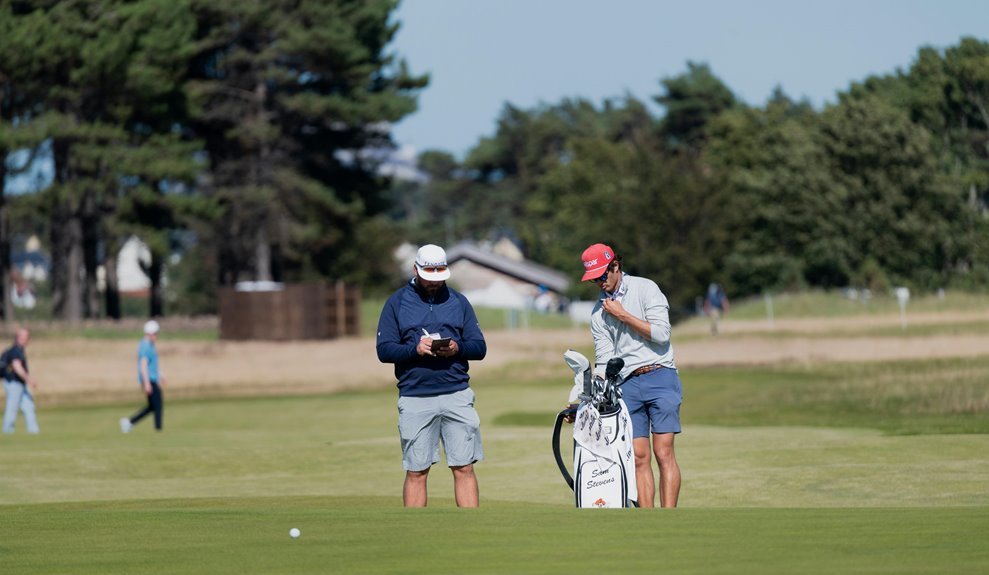

Smart golf starts with better targets and a simple plan. Pick shots you can trust, not ones that just look bold. Stay patient enough to avoid silly mistakes, then attack only on chances that fit your game. After a bad shot, reset fast and choose the next best move.
Start With a Simple Golf Round Plan
Before you hit your opening shot, keep your plan simple and clear. Your pre-round checklist should cover mental preparation, course mapping, and shot visualization so you step in calm, not rushed.
Study the holes, observe trouble spots, and decide where strategic layups help you stay in play. Then use fairway targeting to pick the safest line off the tee. That choice gives you better approach angles and fewer awkward recoveries later.
Once you know your initial move, the round feels lighter, and you can trust your swing more. Should a miss happen, your recovery techniques matter, but don’t let them steal focus from the next shot.
Keep the plan plain, stick with it, and play with the group you came to enjoy.
Set Smart Targets on Every Hole?
You play better whenever you pick a landing zone that you can actually hit, not just the one that looks bold on the card.
Then you aim away from trouble, so bunkers, water, and rough help shape your target instead of wrecking your hole.
Whenever you do that, each shot feels calmer, and you give yourself a real chance to score without forcing anything.
Define Realistic Landing Zones
Real success in golf starts at the moment you stop chasing perfect spots and start choosing smart landing zones that fit the hole in front of you.
You play better whenever your landing zone strategies match your swing, your confidence, and the room you actually have. Start with target selection that gives you a full shot, a clear next step, and less stress in your hands.
Then pick spots you can repeat, not spots you only wish for on a good day. On tee shots, choose the widest area that suits your shape. On approaches, choose the safest patch of green or fairway grass for your next move.
Whenever you trust these choices, you feel calmer, stay connected to the group, and give yourself more solid chances all round.
Aim Based On Hazards
Smart targets start with the trouble spots, because the course is always telling you where not to go. You play better whenever you trust hazard awareness and pick a line that keeps trouble out of play.
On tee shots, choose the side that gives you room from bunkers, water, and trees, then commit to strategic aiming. On approaches, aim at the safe middle when a tucked pin sits near danger. That way, you keep the group calm, the swing simple, and the scorecard friendly.
Should a hole ask for a layup, take it without drama. You’re not playing scared; you’re playing smart with your crew mindset intact. Each smart target gives you a better chance to stay steady, save strokes, and enjoy the walk.
When Should You Attack or Play Safe?
You should attack only whenever the reward clearly beats the risk, not just because the shot looks fun.
In the event that the safe play still gives you a good chance at par or birdie, trust it and keep the big number out of play.
At the moment that the target is right and the miss is manageable, attack with purpose and swing commitfully.
Assess Risk Reward
Upon facing a decision on the course, the best move is usually the one that protects your score initially and your ego last. You don’t need to chase every bold line to belong in the group that talks big after the round.
Use quick risk assessment: count hazards, wind, and trouble spots before you swing. Then make a calm reward evaluation: ask whether the gain truly beats the damage should you miss.
Should the payoff be small, choose the shot that keeps you in play and with your people. Whenever the upside is real and your miss still leaves a workable next shot, you can attack with confidence.
That balance helps you stay steady, avoid panic, and trust your plan as pressure rises.
Favor High Percentage
High-percentage golf means picking the shot that gives you the best chance to finish the hole well, not the one that just looks exciting for a second.
Whenever you face a decision, trust high percentage plays that keep trouble away and make your next shot simpler. In case the green is guarded, aim for the safest side and let the hole come to you.
On tee shots, choose the club that finds room, not the one that only chases distance. Then, on approaches, use strategic decisions to stay below flags and away from big misses.
You’ll feel calmer, and your group will feel that steady rhythm too. Smart golf isn’t timid; it’s disciplined, and that’s how you stay in the round longer and enjoy every step with your crew.
Attack With Purpose
Sometimes the smartest attack is the one you set up before the shot even starts. You use decisive planning to spot whenever the green flag gives you room and whenever the bunkers say, “Not today.”
On tee shots, aim at the widest safe lane, then choose intentional aggression only in case your miss still stays playable. On approaches, fire at tucked pins only at the point your yardage, lie, and wind all match up. Otherwise, you pick the center and keep the round calm.
- Attack from a strong stance
- Trust safe zones initially
- Cut risk on par 3s
- Save bold shots for clean looks
That way, you stay with your group, protect your score, and still feel free to swing with purpose at the moment really invites it.
Choose the Right Club for Each Shot
Choosing the right club for each shot starts before you even step into the swing, because the best choice usually saves more strokes than the perfect-looking one. You can trust club selection whenever you match shot distance with the lie, wind, and your comfort level.
In case you’re between clubs, lean toward the one that lets you swing smoothly and stay in rhythm. That keeps you part of the group that plays smart, not rushed.
On short approaches, choose enough club to reach the target without forcing extra speed. On fuller swings, pick the club that gives you control, not ego.
Whenever you plan this way, each shot feels simpler, and you give yourself a better chance to stay steady, confident, and connected to your round.
Limit Damage After a Bad Shot
Upon a bad shot happening, your main job is to keep it from turning into two or three bad shots in succession. Take a breath, accept the miss, and choose the smartest next move. That’s damage control, and it keeps you in the round with the rest of us.
- Find the safest path back to play.
- Pick the club that gives you room, not heroics.
- Aim for the biggest open area, even if it feels plain.
- Make your next swing a simple shot recovery, not a rescue mission.
Should you be behind a tree, punch out. Should you be in rough, chip to a clean spot.
Then reset your focus and trust your routine. One steady decision can save a score and help you feel like you still belong in the round.
How to Handle Pressure Late in the Round?
Late in the round, pressure can feel like it’s sitting right on your shoulder, but you don’t need to fight it. You can breathe, smile, and trust the same routine that got you here.
Keep your eyes on one shot, not the score waiting in your head. That simple focus builds pressure management and protects your rhythm.
Whenever your mind starts racing, slow down, pick a small target, and commit fully. You belong in this moment, so act like it.
Lean on mental resilience by accepting nerves as normal, not scary. Then choose the safest smart shot, make your move, and stay patient with yourself.
In case you miss, reset fast, because the next swing still matters more than the last one.
Adjust Your Golf Round Strategy for Conditions
Whenever the weather changes, your plan should change with it, because good golf means paying attention, not forcing the same shot every time.
You and your group can stay calm when you read course conditions promptly and trust simple mental adjustments. Wind asks for lower flights, wet fairways cut roll, and firm greens reward safer targets. That means smart strategy shifts, not panic.
- Check the weather impact before each tee shot.
- Pick clubs with equipment considerations in mind.
- Choose targets that fit terrain challenges.
- Keep your rhythm while the day feels messy.
As rain softens bunkers or slopes speed up, you’ll feel more in control provided you stay flexible.
Small changes help you belong on any course, even on tricky days.
Play Smarter on the Final Stretch
As you reach the final stretch, your best move is to stay steady and consider one shot at a time. You’ve got this, and your group feels the same pressure, so lean on that shared calm.
Use final hole strategies that favor safe targets, smart club choices, and clear visuals before you swing. Whenever nerves rise, breathe, pick a target, and trust your routine. That simple rhythm builds mental resilience and keeps doubt from taking over.
In case a hole looks tight, choose the shot that leaves room for a miss. Should you face wind or a tricky lie, commit fully instead of forcing extra heroics.
Stay present, keep your tempo smooth, and let each swing earn the next one.
Finish With Better Scoring Choices
As the round starts to tighten up, you can save real strokes through choosing the smarter scoring play instead of the flashier one. On the final holes, trust your mental focus and make smart decisions that keep you in the group.
- Pick strategic choices that give real scoring opportunities.
- Use pressure management to stay calm over each shot.
- Make last minute adjustments only as the lie truly changes.
- Aim for finish strong golf, not risky hero swings.
As birdie isn’t there, take par and move on. That keeps your rhythm steady and your confidence close.
You belong in the mix as you play simple, clear golf. With steady plans and a calm mind, you protect your score and give yourself one more chance to post a number you can be proud of.
Frequently Asked Questions
How Do I Use Google Earth to Plan Each Hole?
Use Google Earth to review each hole’s elevation changes, spot hazards, and mark landing zones. Zoom in on the fairway, trace your target line from green to tee, and build a clear plan for every shot.
What’s the Best Way to Choose Tee Box Position?
Choose the tee box that gives you the clearest route into the fairway and matches your shot shape. Check the yardage, pick your target line, then set up with confidence and keep pace with the group.
When Should I Favor a Fade or Draw off the Tee?
Choose a fade or draw when it fits the hole shape, wind, and your intended target line. Compare the control of a fade with the added distance of a draw, then choose the shot that gives you the lowest risk and the best chance to land in play.
How Do I Decide Between Driver and 3-Wood?
Choose driver when the tee shot needs maximum length and there is room to miss. Choose 3 wood when you want a little more control or the landing area is tighter. Match the club to the hole, and you will stand over the ball with more confidence.
How Can I Avoid Short-Siding Myself on Approach Shots?
You can avoid short-siding yourself by choosing approach lines that leave room around the green. Aim at the part of the green with the most margin, favor the safer side of the pin, and avoid flags tucked near trouble or steep slopes. A center green target often gives you a cleaner miss and a more manageable chip or putt if you are off line.