
A steady grip helps your clubface stay square and your shots stay more accurate. It gives your swing better control from start to finish. Small hand changes can make a big difference fast. Here are nine golf grip tips that can help sharpen your precision.
Why Golf Grip Pressure Matters
Even small changes in grip pressure can change your whole golf swing, which is why it matters so much. You want enough hold to keep the club steady, but not so much that your hands lock up.
As grip tension rises, your wrists lose speed, and your clubface can get stubborn at impact. Then pressure effects show up fast: shots feel harsh, distance drops, and your rhythm slips away.
Should you ease up, you give your hands room to move, and that helps you swing with more control and feel. You’re not trying to squeeze the life out of the club. You’re trying to stay connected to it.
Consider a firm handshake, not a panic grab. That balance helps you fit in with smoother swings and more confident contact.
How to Place Your Lead Hand
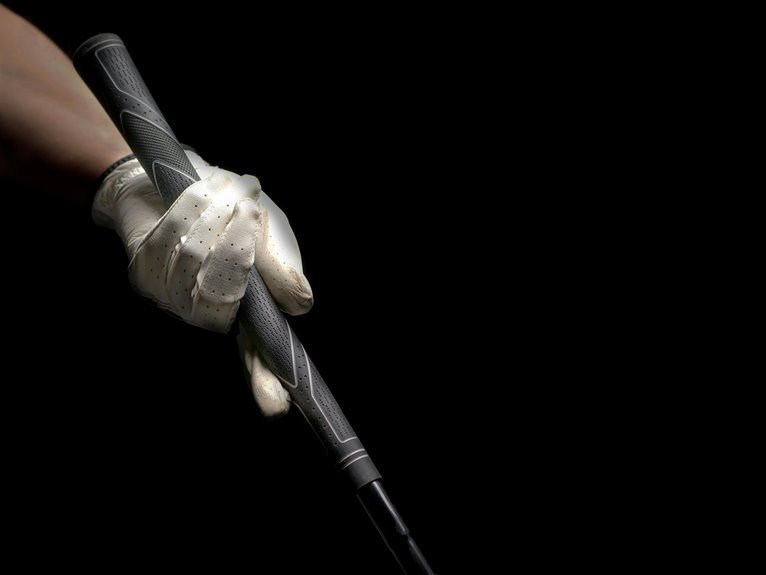
Now that your grip pressure is under control, you can set your lead hand in a way that gives you real control of the club. Place the handle across your fingers, not deep in your palm, so your lead hand alignment feels natural and secure. You should see about two knuckles when you look down. That sign tells you your clubface can stay steadier through impact.
| Check | What you want | Why it helps |
|---|---|---|
| Finger positioning | Grip across the fingers | Better control |
| Knuckle view | About two knuckles visible | Cleaner face angle |
| Glove mark | Pinky dot on target spot | Repeatable setup |
Run one finger along the back of the grip. Should you feel no gap, you’re set. This small habit helps you fit in with a group of players who trust solid basics.
Set Your Trail Hand Correctly
Your trail hand should feel like it belongs there, not like it’s forcing the club into place. Set it so the club rests in your fingers, not deep in your palm. That trail hand positioning gives you room to hinge your wrists and guide the face.
Next, wrap your fingers so the grip sits under the base of your little finger and across the forefinger joint. This grip finger placement helps you feel connected, steady, and ready.
Subsequently, let your palm cover the lead hand thumb without squeezing. You should also feel a clean seal, with no gap at the back of the grip.
Whenever your trail hand fits this way, the club feels familiar, and you can swing with more trust.
Choose the Right Grip Strength
You want a grip that feels secure, but not so tight that your hands turn into claws.
Start with firm, even pressure, then adjust until the club feels steady without extra tension.
As soon as you find that balance, you’ll swing more freely and keep better control through impact.
Grip Pressure Basics
A steady grip starts with the right pressure, because the club should feel secure in your hands without feeling trapped. You want grip pressure techniques that keep your wrists free and your face steady.
Start around a calm 5 or 6 on a 10-point scale, like holding a tube of toothpaste without squeezing it out. That feel helps you notice grip pressure effects right away: too much tension makes your swing stiff, while too little lets the club wander.
As you settle in, check that your fingers stay alive on the handle and your forearms stay soft. Then you can trust your hands, stay relaxed with the group, and swing with the kind of control that makes every shot feel like it belongs.
Finding Your Balance
Once you’ve settled on a calm grip pressure, the next step is to find the grip strength that fits the shot in front of you. You don’t need a perfect squeeze; you need a steady one that feels like you belong in the swing. For full shots, hold firm enough to keep grip stability, yet loose enough to let your wrists move. For touch shots, soften your hands and trust your balance techniques.
| Shot type | Grip strength |
|---|---|
| Driver | Slightly firmer |
| Iron | Medium firm |
| Putt | Light and quiet |
When you adjust well, your club feels calmer, and so do you. That little match between your hands and the shot can make you feel ready, connected, and in control.
Use the Vardon Grip for Control
Many golfers find that the Vardon grip, also called the overlapping grip, gives them the blend of comfort and control they need. You wrap your trail pinky over your lead index finger, and that simple link helps your hands work as one.
The Vardon grip benefits show up fast: steadier clubface control, smoother wrist action, and less tension. Whenever you try Vardon grip techniques, keep the lead hand relaxed, then let the trail hand settle under it without squeezing.
You’ll feel more unity through the swing, which can enhance confidence when the shot matters. In case your hands feel awkward initially, that’s normal. Give yourself a few practice swings, breathe, and let the grip become familiar.
Check Your Grip Alignment
Start with checking how your grip sits on the club, because even a small mistake can throw off the whole swing. You want the handle to run across your lead-hand fingers, not deep in your palm.
Then, let your trail hand support the club from underneath so both hands feel connected and steady. Use grip alignment tips like looking for two knuckles on top and feeling a clean finger seal around the grip.
Next, try simple grip alignment exercises before each round. Set your pinky dot marker the same way every time, then lift the club to see if it stays secure.
Whenever your hands line up well, you feel part of the group, and the club moves with you, not against you.
Fix Common Golf Grip Mistakes
A lot of grip problems come from tiny habits that feel harmless in the moment, but they can quietly wreck your control. You can fix common errors through checking grip alignment before each shot.
Keep your hand placement across the fingers, not deep in the palm, and let the trail hand rest under the grip for better control. Next, match grip types to your hands, because the right style can calm your swing mechanics and help one belong to the group that strikes it cleanly.
Watch your finger positioning, then use tension management to stay firm, not stiff. Hold pressure consistency at a steady level, and build quick practice routines with simple grip checks.
Should you notice slipping or twisting, make small grip adjustments and trust the feel will settle fast.
Adjust Your Grip for Different Shots
Upon changing shots, your grip should adjust with them, because the same hold doesn’t fit every club or swing.
For full swings, keep your lead hand across the fingers and your trail hand under the grip so you can guide the face with ease.
For shot types like chips and pitches, soften your hold a little and let the club sit more in your fingers for touch.
Whenever you face a driver, try grip adjustments that keep your hands close enough for control, but not so tight that you lose speed.
Should a slice keep showing up, set your hands a bit stronger and help square the face.
Small changes can make you feel like you belong with the shot, not fighting it.
Practice Golf Grip Drills Regularly
Drill your golf grip often, because small habits can quietly shape every swing you make.
Whenever you treat grip training like part of the game, you build grip consistency that feels natural under pressure. Start with checking your lead hand, then set your trail hand in the fingers, not the palm.
Next, make a simple home drill using an old club or training grip. Utilize a glove mark or pinky dot so you place your hands the same way each time.
Then lift the club lightly and feel for any gap or slip. In case it shifts, reset and try again.
With steady reps, you’ll join the golfers who trust their hands, swing with less tension, and keep the clubface calmer from shot to shot.
Frequently Asked Questions
How Do Grip Size and Glove Fit Affect Shot Control?
Grip size and glove fit influence control by guiding finger placement and the amount of pressure you apply. When both fit properly, you can hold the club firmly without extra tension, which improves touch, face control, and confidence on each shot.
When Should I Switch Between Overlapping and Interlocking Grips?
Switch grips when your comfort or stability changes. Use overlapping for a lighter hold and interlocking when smaller hands need extra security. Choose the grip that fits your hand size, swing, and confidence.
Can Grip Style Help Reduce Hooks as Well as Slices?
Yes. Your grip style can help reduce hooks and slices by improving hand placement, grip pressure, and clubface control. It can also help you feel more connected, stay relaxed, and guide the club more consistently down the target line.
What Grip Changes Help in Wet or Sweaty Conditions?
In wet conditions, focus on traction by drying your hands and grip with a towel, using tackier grip materials, and applying slightly firmer pressure to keep a steady hold and better control.
How Often Should I Replace Worn Grips for Consistency?
Replace worn grips every 40 to 60 rounds, or sooner if they feel slick, hard, or cracked. Regular grip care with durable materials helps you maintain a secure hold and stay in tune with each shot.